Since the days of Skyrim (and even further back with Oblivion, Morrowind and whatnot), we’ve seen an eclectic bunch of first-person titles with medieval-style combat. Some lean into it further with their own takes on magic, like that one underappreciated Arkane Studios title. Others opt for a more co-op-focused approach like Warhammer: Vermintide, while still others ditch the magic entirely and focus on a more realistic experience such as Kingdom Come: Deliverance. Regardless, nailing that overall combat feel is essential, even when a game tries to be as grounded as possible.
Of course, no one says you can’t have such an experience while still retaining the fantasy veneer, as Fatekeeper has done. The problem is that despite an admittedly stunning world and impressive use of lighting, the core combat execution leaves much to be desired, especially when it’s all that’s really there. For now, at least, but we’ll get to that.
Plot-wise, a lot isn’t explained, and you’re thrown in with little more than a loading screen narration to explain the set-up. From what I can understand, you’re on an island that’s witness to sudden slaughter, and en route to Haven, you have a Spirit Guide – a talking rat – who helps guide you. Upon reaching there, it’s essential to enter this ancient portal for training, which is a physically rending experience, and then return. Why didn’t we just hit some wooden dummies instead? Unclear.
"Though I brought up The Elder Scrolls and Kingdom Come with regards to combat, don’t let that fool you into thinking that Fatekeeper adopts their approach to world design. It’s as linear of an action-adventure as you can get, funnelling you down a very fixed path with very little deviation."
Anyway, it’s off to Mar Guran and its city, braving hostile creatures like the Vrog to access something called the Moon Gate while learning more about the Underdwellers – and the factions they split into.
There’s…something to the world-building, but it’s not in the dull exposition meted out in the loading screens or the banter between your character and the rat. It’s through the environments, which consist of ruined structures, some overgrown and now occupied by the Vrog as they attempt to stop your advance. Discovering massive statues of ancient figures that still stand guard or descending into the Waterways, finding piles of skulls and corpses before encountering what made them, is far more enthralling than simply being told what’s going on and why you should care, especially since your character’s motivation and the necessity of a Spirit Guide are both so excruciatingly vague.
Though I brought up The Elder Scrolls and Kingdom Come with regards to combat, don’t let that fool you into thinking that Fatekeeper adopts their approach to world design. It’s as linear of an action-adventure as you can get, funnelling you down a very fixed path with very little deviation. Which is repetitive in the early going since it feels like the standard rollercoaster protocol – keep all hands and feet inside the ride, barring the peaks and valleys that you’d expect. Things do open up past the first hour when nearing Mar Guran, especially in the larger rooms where you need to dodge arrows and do some platforming to access the two levers necessary to open the way forward.
However, at other points, it’s simply about slaying the Vrog on the ground while archers pelt you from above, as reinforcements occasionally arrive. Otherwise, prepare for stretches where you’re gathering materials, opening chests and coffers, and occasionally happening upon campsites to save and alchemy pots for mixing potions (which actually feels neat since items and ingredients can have different effects depending on whether they’re brewed or used as is).
And because of how the game tracks progress, dying before reaching the next campsite can often set you back by quite a bit. At least it’s nice enough to autosave at stage transitions.
"For some reason, however, investing in any one of these branches locks you off from the rest. I went with melee damage upgrades at first, with an alternate path that could boost attack speed, but couldn’t invest any points in improving my survivability, much less buffing magic."
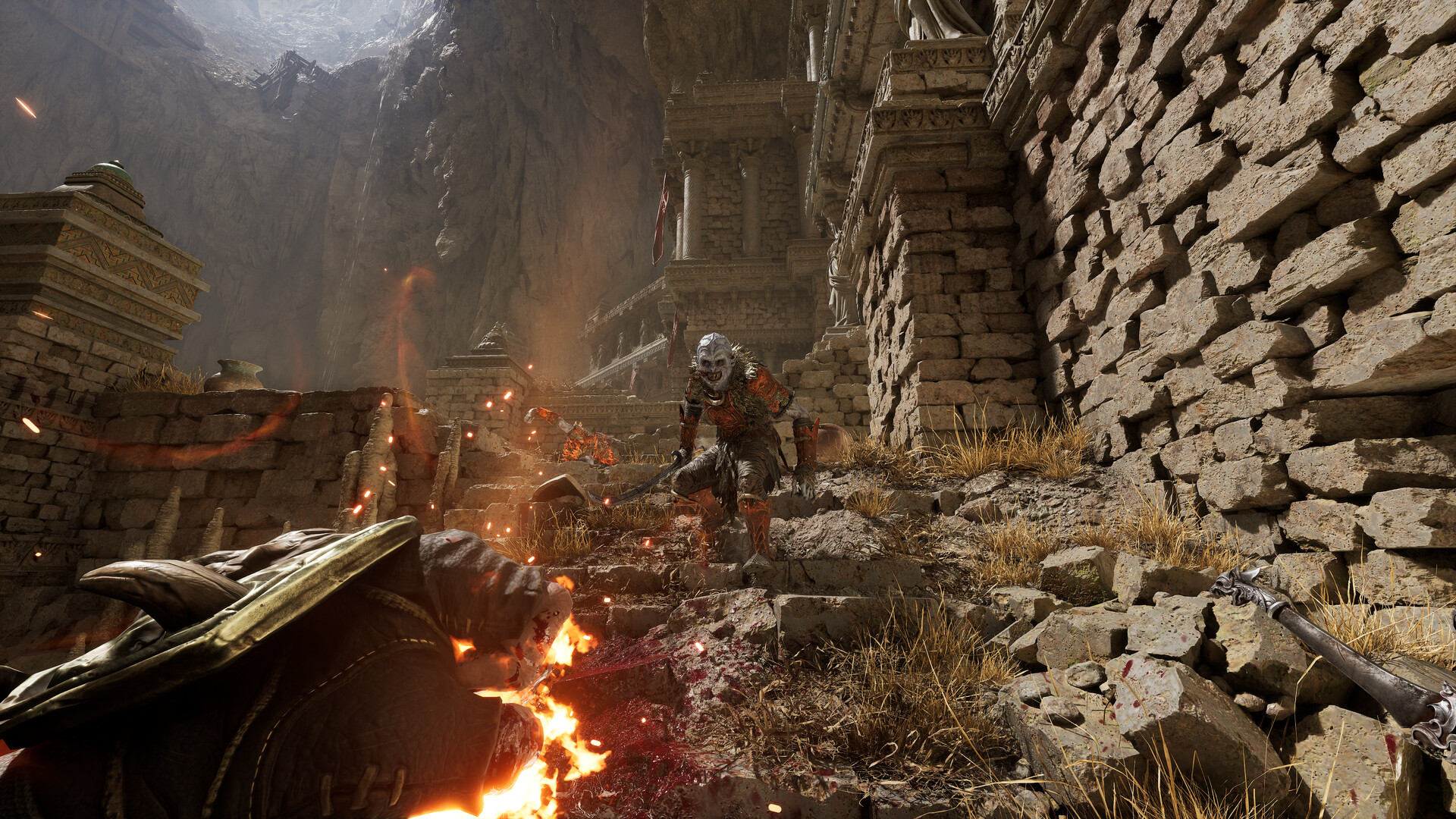
Since there’s really no other way around it, let’s talk about the combat. It’s weighty and slow at first, which takes some getting used to, but it’s even clunkier when transitioning from a dash to a light attack or dodging into a counter. Your character can guard attacks and perfect parry with the right timing, but it’s almost as difficult to nail as a perfect dodge (and failure to land either of these will very quickly decimate you during the first real boss fight).
Attack speed upgrades do little to offset the overall clunky animations and feel, not to mention the pain of feeling like your weapons have more reach than they actually do. Magic adds an intriguing dimension to all this, especially if you leverage the environment. For instance, telekinesis, which can also manipulate switches to open gates, can pull enemies into pits. The gust spell also does the same…sometimes, when it feels like it, while the ice and fire spells feel woefully underpowered.
While some enemies are dumb enough to handle alone at times, Fatekeeper eventually ups the challenge by throwing multiple at you in later sections. The result is having to adopt a hit-and-run playstyle since attempting to stand your ground, blocking all attacks and counterattacking, isn’t always the best approach given your stamina. I could sometimes find appeal in this, especially when kicking Vrog into pits or pulling a rock thrower from afar and lining up for a homerun with a dual-hander.
But the combat still feels so slow and awkward, and I can’t for the life of me understand the logic behind the enemy archer’s design. Magic does nothing to stagger them, much less move them, and they deal extensive damage at a regular clip. It feels like they’re overcompensating to an annoying degree, given how much easier it is to deal with regular foes.
As you slay enemies, you’ll earn XP to level up and gain skill points. These can be invested in a massive skill tree with paths towards improving your alchemy skill, magic, health or melee damage. For some reason, however, investing in any one of these branches locks you off from the rest. I went with melee damage upgrades at first, with an alternate path that could boost attack speed, but couldn’t invest any points in improving my survivability, much less buffing magic. Worst of all, the game never explains why. So you’re stuck taking minimal buffs to attack speed, even when having more stamina and health would be beneficial.
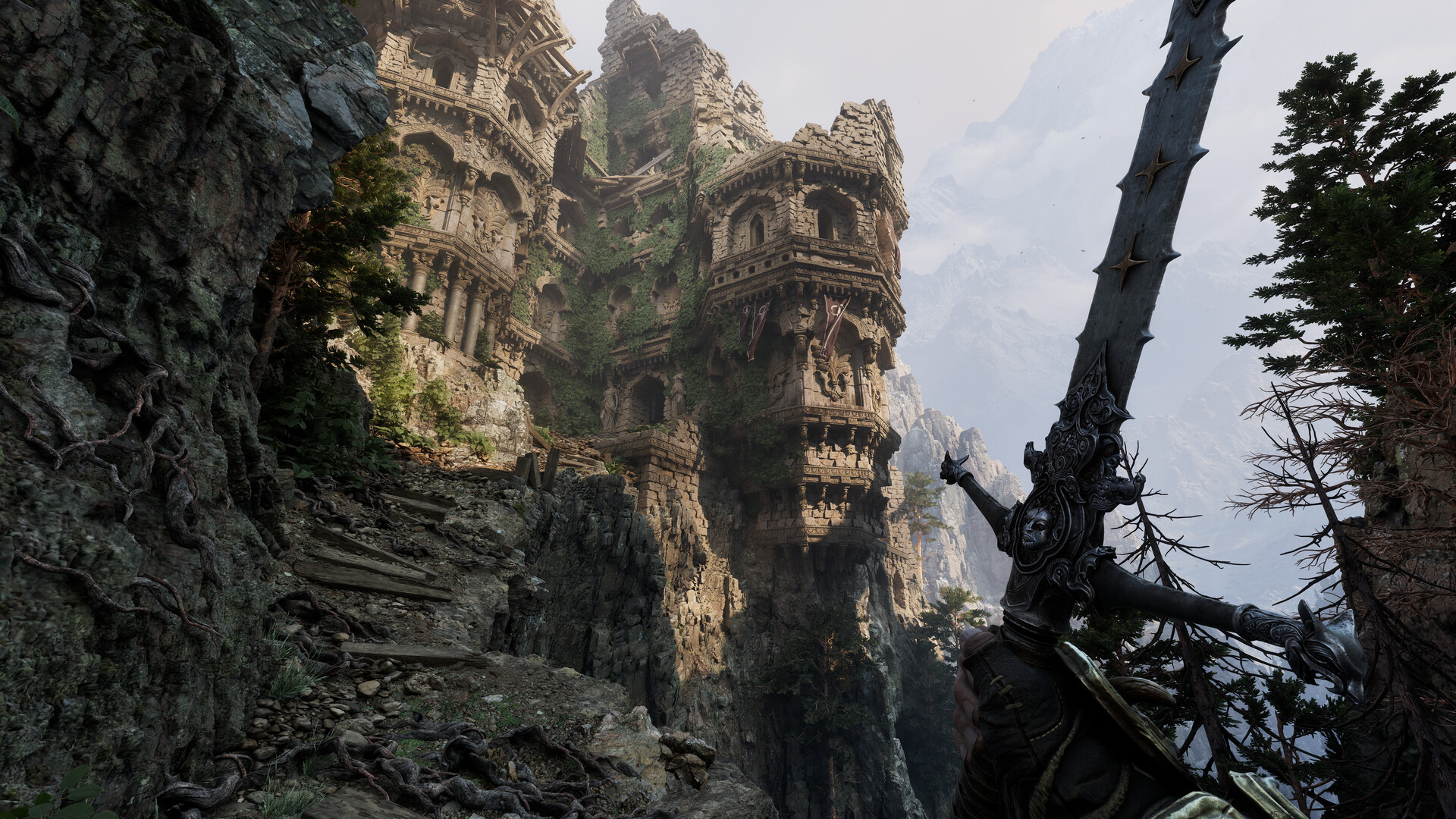
"Fatekeeper certainly has potential, and despite how utterly railroaded the traversal can be, the environmental aesthetics really do stand out for their atmosphere and fidelity."
Otherwise, from a systems perspective, everything that’s here feels very foundational at best. Developer Paraglacial, a fairly small development team, can certainly build on all this and offer more expansive options beyond the simple blades and sorcery that everyone must adopt. But it first needs to make the actual mechanics of combat feel better, besides fixing bugs and other issues – like some enemies simply standing in place if there are multiple corpses at their feet simply because they don’t know how to go around. I also wouldn’t mind seeing more polish for the performance – even in the opening with DLSS set to Balanced and other settings on High, there would be various micro-stutters throughout, even when otherwise sticking to 60 FPS.
Fatekeeper certainly has potential, and despite how utterly railroaded the traversal can be, the environmental aesthetics really do stand out for their atmosphere and fidelity. For $10, with a 20 percent discount currently available for two weeks, the barrier to entry is certainly very low, and the team seems open to changing its plans for the sake of whatever players enjoy most. But even if you’re seeking a dungeon crawler with more grounded, methodical combat, it’s probably best to wait a while before diving into everything Fatekeeper currently has to offer.
This game was reviewed on PC.