Months and months after its announcement, we finally received an in-depth look and extensive gameplay for Ghost of Yōtei. Launching on October 2nd for PS5 but set over 300 years later in Ezo, it follows Atsu, a wandering mercenary on the path of vengeance. While you can expect realistic combat and a massive open world to explore, how does Ghost of Yōtei set itself apart from Tsushima? Here are ten new things we’ve learned, some of which are game-changing for long-time fans.
A Link to the Past
After the Yōtei Six slaughtered her family and left her for dead, Atsu returns to Ezo after 16 years, seeking revenge. Sucker Punch previously teased that you could experience her childhood memories, but revealed how it’s possible with the “push of a button.” The contrasts between the vibrant landscape of the past and the desolate, ruined estate of the present are laid bare, though how extensive this will be throughout the game remains to be seen. It makes sense to have multiple different points for players to venture to the past, perhaps providing some much-needed context on her family and why the Yōtei Six wanted them dead.
Cards and Clues
Sucker Punch promised that you could hunt the Yōtei Six in any order but also touted Ghost of Yōtei as providing the most player freedom in their games yet. We finally discovered how that plays out, and the answer is: Cards. No, not the rogue-like deck builder kind, but cards containing clues. As you interrogate different enemies, you can prod them for specific topics. The example given lets you ask about The Oni, which leads to a new weapon, the yari, and the Ishikari Plain, a new region where combat against samurai opponents (and new abilities) awaits. Opt for The Kitsune, and you’ll venture to Teshio Ridge, where the kusarigama awaits, but this is more than just a snowy area – it’s also the site of an ambush against ninja-like enemies. Survive, and you’ll learn some new shinobi tactics.
And while this may seem somewhat restrictive, several new cards are teased with art for the katana, yari, kusarigama, scorch bomb, bow, and much more. While you could stick to the narrative, it may benefit to travel off the beaten path and potentially unlock some new upgrades.
Bounties
Atsu’s revenge tour attracts a fair amount of attention from Ezo’s populace (making her outright unwelcome in some establishments). But while the bounty on her head is high, there are plenty of targets that she can choose to pursue for money. The two showcased were Black Powder Ippei, seemingly attacking from range with a cannon and fighting up close with a two-handed axe, and Crow Genzo, who utilizes a katana and spear and awaits in a cemetery full of crows (which is disturbing when you learn what he does to his victims). Smiling Yoshimoto is teased as a creepier target who “lures in the weary at a campsite marked by lanterns,” perhaps teasing a cat-and-mouse game instead of a straightforward fight.
Weapons (and Switching)
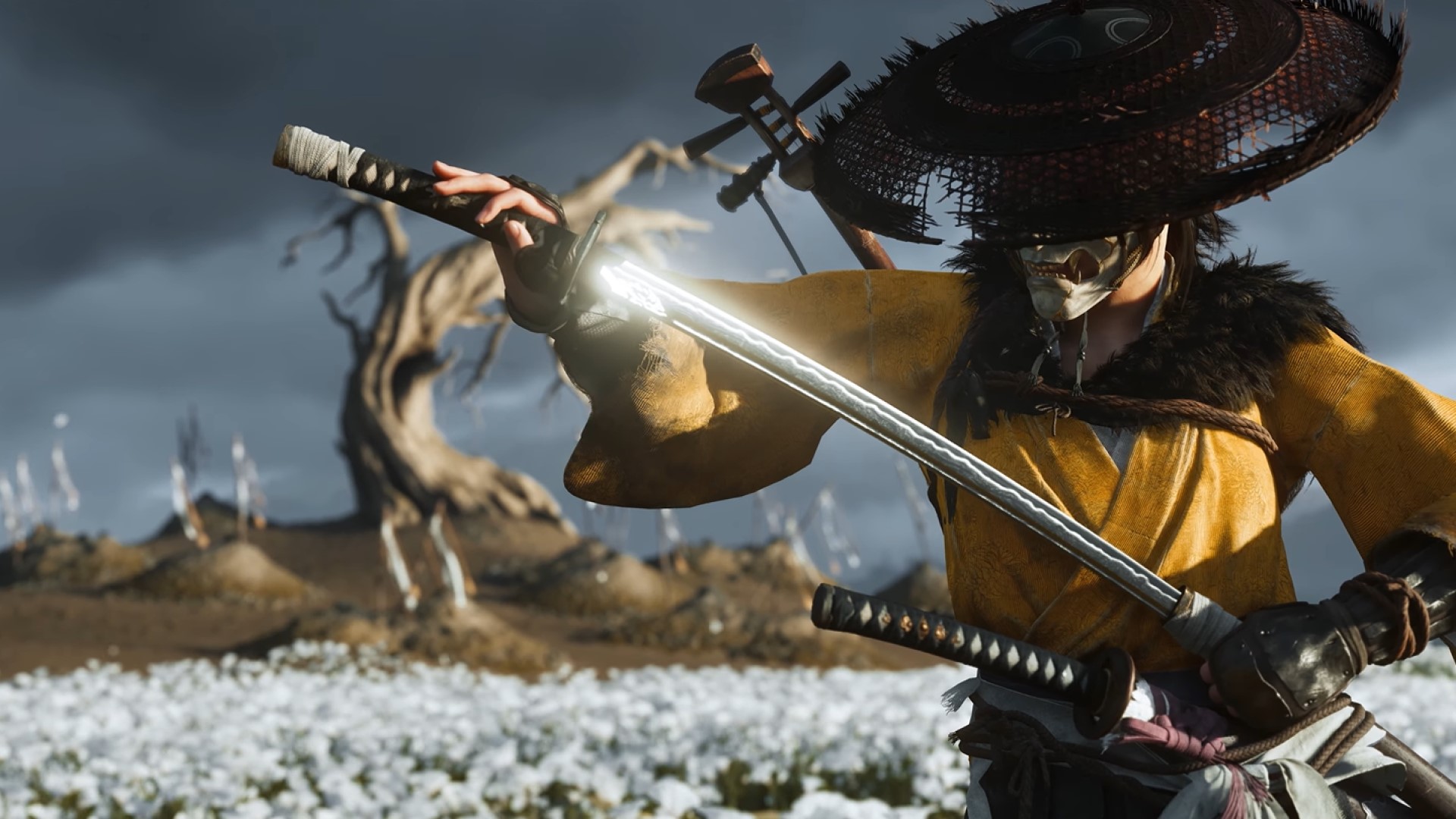
Like Jin Sakai, Atsu uses a katana, but it’s not long before her arsenal grows. Alongside the kusarigama and yari, she can utilize dual swords and an odachi. Different weapons are effective against specific foes, mirroring the Stances from Ghost of Tsushima. The odachi is ideal against heavy brutes, the dual swords are good against spear warriors, and so on. Of course, they each have upgrades and very useful techniques – the kusarigama pulling a target from afar for an assassination.
Atsu can switch out weapons to select the right tool for the job, just like with Ghost of Tsushima’s stances. However, an interesting twist is that some enemies, particularly Elites and bosses, can switch weapons. So, while Inokichi the Hungry will start with a katana, he’ll switch to a spear, which necessitates using dual blades to counter him.
Disarming
The other big twist is that you can disarm enemies. When enemies utilize attacks that have a yellow glint, you can hold Triangle and unleash a Focus Attack to disarm them. This has the benefit of allowing Atsu to pick up a dropped weapon, like a spear, and throw it at enemies from range. However, if that same attack connects, she can lose her weapon instead, creating a disadvantage. It’s a wrinkle in the web of unblockable attacks, parries, and counters, but it makes combat feel that much more realistic.
Traversal and Discovery
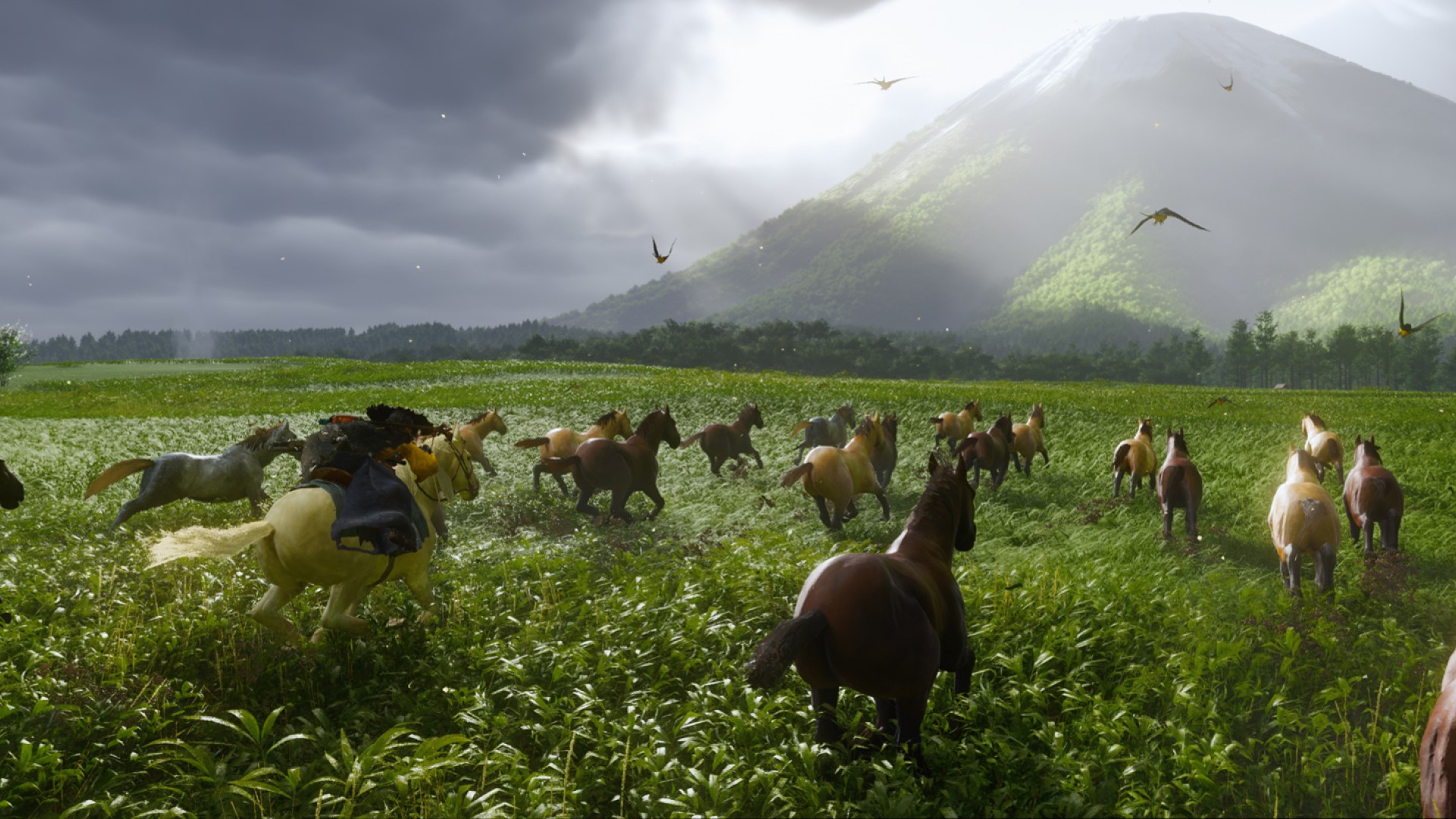
The grappling hook returns, as if its absence were ever in doubt, and Atsu can get around Ezo on horseback. However, it’s also possible to slide down slopes, and while riding around, you can hit flower streams to gain a speed boost, making traversal that much quicker. Some other interesting additions include the spyglass for spotting distant points of interest (and marking them for investigation), and the cartographer, who sells Traveller’s Maps. Placing them on your current map will highlight neighboring locations that may be worth checking out.
New and Returning Activities
Alongside the wild animals that lead you to unlock new skills, you’ll encounter other familiar activities. The Bamboo Strikes and Hot Springs return, seemingly to increase your max Resolve (which is seemingly called Spirit) and Health, but you can also sketch different parts of the environment and engage in coin games. There are also new armor sets catering to different playstyles and dyes to collect, adding that much more to your overall look.
Camping
When Sucker Punch announced that Atsu could camp anywhere in the open world, the question immediately became: Why? Why would you do this if there weren’t some activities demanding the same? As it turns out, there are several, like cooking meals to “ready for a fight ahead” or playing the shamisen, with different tunes seemingly providing unique benefits. Perhaps the Song of Spirit will guide you towards Bamboo Strikes to increase your max Spirit, while the Song of Vanity highlights potential merchants selling new armor and dyes. However, you may also receive some visitors at your campsite, including traveling merchants who might have something interesting to sell.
The Wolf Pack
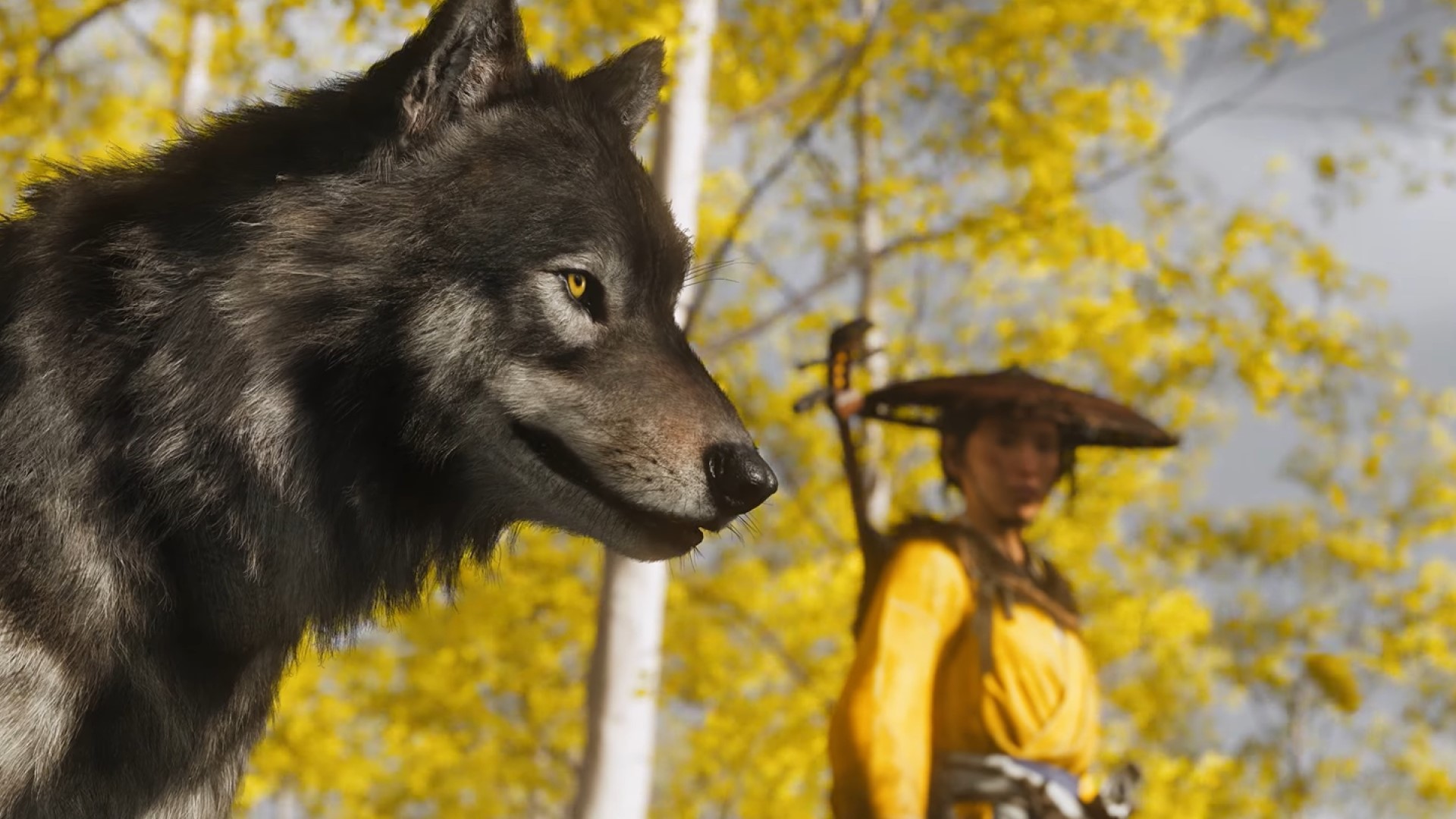
But that’s only the beginning. As Atsu accrues more allies, dubbed the “Wolf Pack,” some will visit her camp whenever they have something new to share. Yumi the Bowyer, for example, may have some new gear to offer (though it won’t be free). On the other hand, Master Enomoto can offer new kusarigama techniques if you complete his tasks, though you’ll need to travel to his dojo to continue training. It’s a big list of allies and even includes the mysterious wolf who sometimes accompanies Atsu and even participates in standoffs. Alongside creating a system where vendors come to you if they have something new, it allows for keeping track of each character and what you should do next, replacing the previous game’s Journal tab.
Kurosawa, Miike, and Watanabe Modes
Photo Mode makes a triumphant return, allowing players to take pictures and adjust features like color grading, focal length, particles, time of day and more. You can also choose to play with English voice-acting or Japanese voice-acting with subtitles (and full lip-syncing). However, Kurosawa Mode also returns, rendering everything in black and white with film grain, increased wind and an audio filter to capture the look and feel of the legendary director’s films.
But there’s more. If you prefer the dirtier, more gruesome work of Takashi Miike, go for Miike Mode, which places the camera closer and adds more blood and mud. Perhaps the most surprising addition is Watanabe Mode, which adds lo-fi beats in exploration and combat to capture the feel of Shinichirō Watanabe’s Samurai Champloo.