Innovation and iteration often go hand in hand. For every new concept, born from every “What if?”, there’s an ideal visual style – photo-realism – that seemingly everyone wants to chase. It doesn’t matter whether we’re traveling to alien worlds, a medieval fantasy continent or the not-so-wonderful everyday. Photorealistic visuals almost all the way.
Then you’ve got Fumi Games’ debut effort, which tosses all that out the window for a rubberhose animation-inspired look. That in itself would probably be enough to have someone check a look – there’s a reason this went viral in the first place. But from the very second that one opens the game, hearing what may be protagonist Jack Pepper humming the theme in his stereotypically gruff voice, you know MOUSE: P.I. For Hire is going to be something special.
"This is a black and white tour de force as much as a well-paced shooter campaign with a heart of gold (and sometimes steel)."
While a dizzying amount of effort went into its visual style – and it is genuinely striking – Fumi Games’ true goals are loftier. Portraying this alternative history where charm and allure meet depravity, class divides and economic depression. Capturing the essence of mob fiction, icons like Dick Tracy, and a dash of Steamboat Willie, to deliver a compelling mystery narrative. Oh, and also delivering a very fun first-person shooter with plenty of wacky weapons, ink splatters (blood would be too excessive, after all), and responsive movement.
Which isn’t to say that MOUSE: P.I. For Hire is perfect in every single way, or couldn’t use improvements. It feels a little too streamlined in some aspects, a little too straightforward in others. But it’s not every day that a developer executes on its vision so well, drawing a sensible chuckle or two before the next over-the-top gun fight to start. This is a black and white tour de force as much as a well-paced shooter campaign with a heart of gold (and sometimes steel).
The scene is 1930s America, and the streets just aren’t the same. No, not because of the anthropomorphic mice (and shrews) or inexhaustible supply of cheese puns. Steve Bandel, the famous magician, has seemingly gone missing. Shrews are disappearing en masse. If that wasn’t enough, Betty Lynch, Steve’s former assistant and an accomplished actor, is also nowhere to be seen. What’s a private investigator and former war hero, Jack Pepper, to do in all this? The only thing he can do: Stick his snout where it doesn’t belong, turn up whatever clues he can, and pull off as many cheesy (in a good way) one-liners as he can.
Tale as old as time, or at least as old as detective noirs go, and delivered with unmatched panache that goes beyond the writing and animated cutscenes. Troy Baker slides effortlessly into the role of Pepper, but even the supporting cast – Florian Clare as the curious but indomitable Wanda Fuller, Camryn Grimes as the sweet but fiery Tammy Tumbler, Fred Tatasciore as John Brown (there’s a reason he’s probably the only John in Mouseburg), and Frank Todaro as the noble Cornelius Stilton – got the memo and knew exactly the kind of performances to turn in. The bit players – some briefly spotted, others unrevealed – also deserve their flowers, including that one goon who went, “I’m not your buddy, pal.” Simply fantastic.
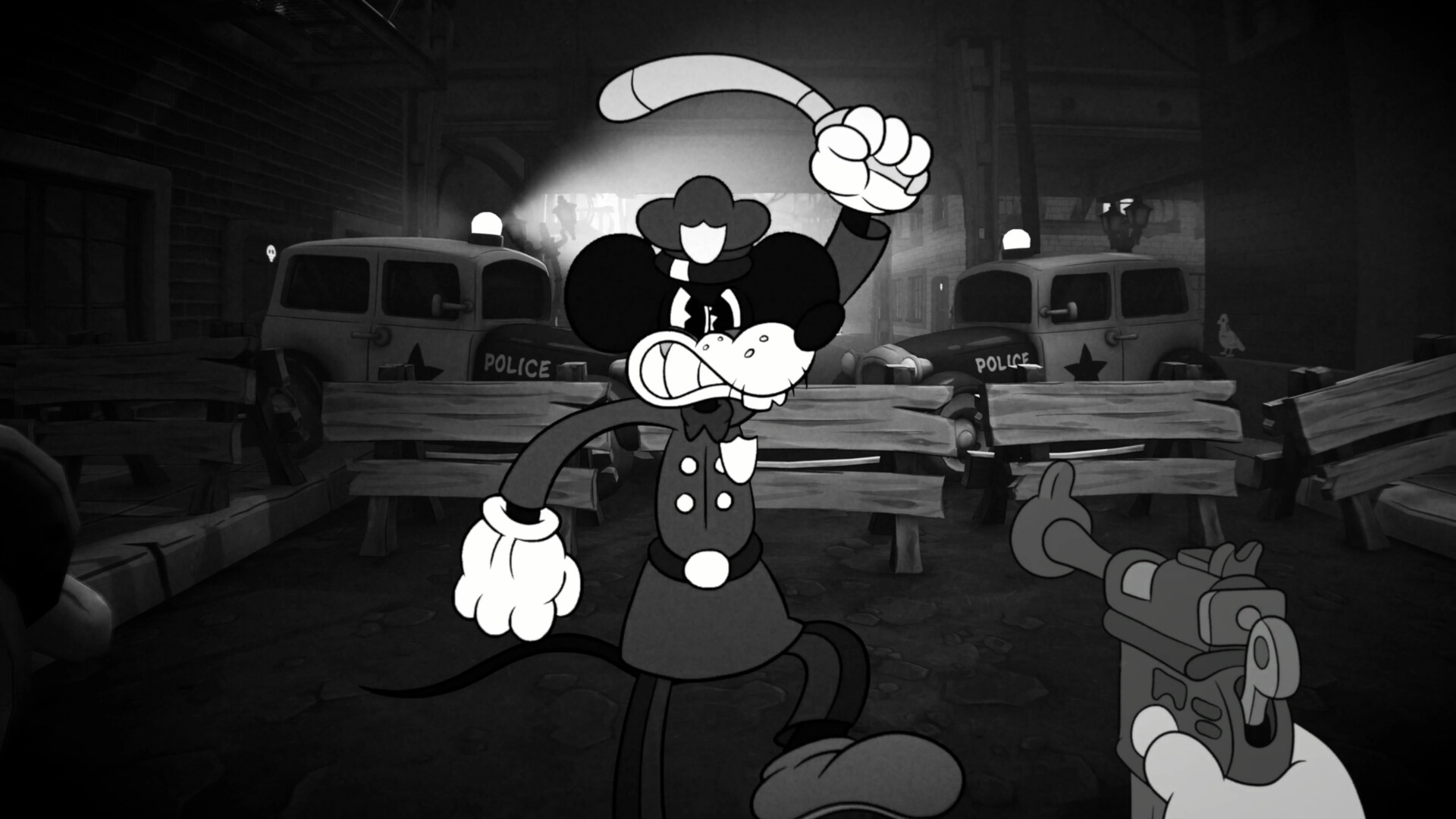
"Don’t let Jack’s slicked hair and questioning stare fool you – he’s a real go-getter when it comes to spilling ink. If you’ve played any boomer shooter of late, then you’ll feel right at home with MOUSE’s shotguns, James Gun, and exotic sci-fi weaponry."
As much as all of this wowed me, however, there was a game to get into it, and I’ll admit: The overall structure of MOUSE can feel a little simplistic at first. Talk to an NPC, head to a location, gather some clues, pin them to the workboard, and with enough moxie, Jack can “resolve” the clue to open up the next location. Sometimes, the supporting cast will have some side jobs, oftentimes coinciding with a location that’s already on your radar. Not really much by way of detailed side quests – more like keeping your eyes open and collecting whatever they ask. And since you’ll be picking up anything that isn’t nailed down, it’s pretty trivial.
Give it enough time, however, and things become a lot more linear. Jack is handling three cases at once, and sometimes, multiple locations may open up. You could also stop at Roadhouses along the way, and collect blueprints to upgrade your weapons. More than a few safes lie in wait with the same…if you can navigate the tail-picking minigame, which can range from incredibly easy to low-key notorious, what with spikes, timers and limited moves.
The benefit of all these intertwining threads is that the pacing never sags and the mystery overwhelms. Every mission feels like a vital step forward, even if it doesn’t seem that way. It’s a testament to MOUSE’s confident writing, pulpy monologues and excellent depiction of mature themes that you’re enthralled all the way through. So much so that you may be left wanting at the very, very end, but what a ride it is.
Past the first level or two, each subsequent area packs the right amount of shortcuts and secrets, from hidden ducts to warp pipes. And while not exactly the kind of backtracking touted many years ago, the different traversal abilities really open things up when it comes to combat. Don’t let Jack’s slicked hair and questioning stare fool you – he’s a real go-getter when it comes to spilling ink. If you’ve played any boomer shooter of late, then you’ll feel right at home with MOUSE’s shotguns, James Gun, and exotic sci-fi weaponry.
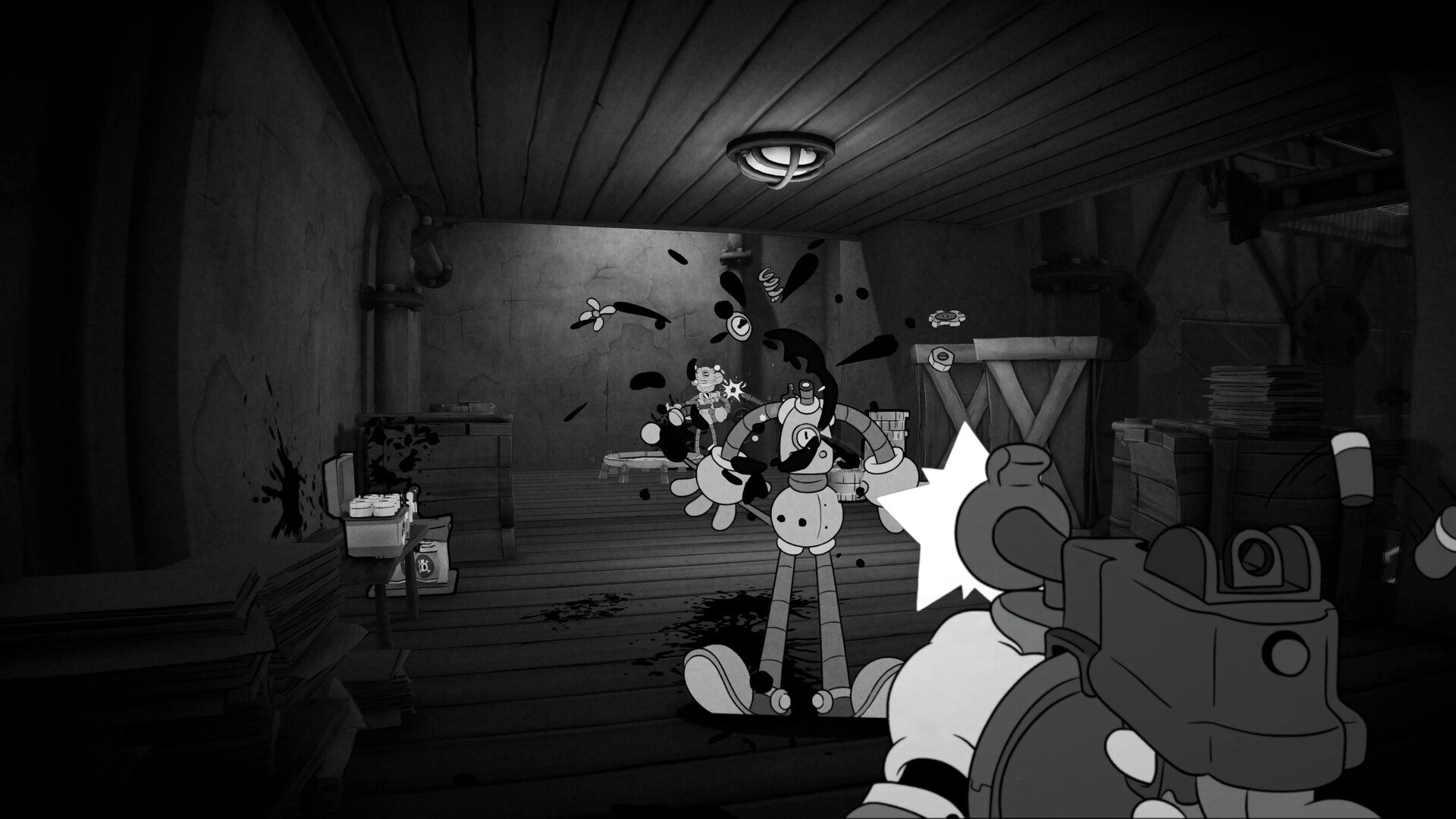
"I’d be remiss not to mention the soundtrack, which is full of noir jazz bangers throughout. And speaking of Steamboat Willie, to say that my heart melted during a boat mission thanks to the piano play would be an understatement."
Each one feels distinct, from the heft of the pump-action shotgun to how exquisitely the Turpentine Gun cleans foes right down to their bones. Things can feel admittedly dull in the beginning when you’ve only got a pistol and your fists. As more weapons unlock and different varieties of enemies appear, you’ll start recognizing the right situations for using certain weapons. While it’s fun to combine different effects – freezing enemies and then shattering them with bullets – alternate firing modes add to the strategy. Nothing quite like a Turpentine pop that corrodes multiple enemies in a vicinity – though it may not be as useful as the MIND-D Conscious Gun’s beam when you need some serious damage to the noggin.
MOUSE keeps its encounters fresh throughout, whether it’s the combat arenas or the objectives and threats, which extends to the boss fights. Aside from one battle, which felt more like busywork than a truly titanic showdown, they’re all memorable, some leaning more into the over-the-top nature of the game while others demand more arena shooter-like skills.
I’d be remiss not to mention the soundtrack, which is full of noir jazz bangers throughout. And speaking of Steamboat Willie, to say that my heart melted during a boat mission thanks to the piano play would be an understatement. Of course, you should expect plenty of swing jazz as well – lots of heavy drums, trumpets, and saxophones, adding to the energy of encounters. Then there are the sound effects, which are the cherry on top. The sproing of your shoes when double-jumping, the little distortion filter – I could go on, but you probably get the point.
As for notable downsides, progression is too straightforward. Collect blueprints, spend them to upgrade weapons and unlock a neat little perk at the highest tier (or not, because several weapons don’t have them).

"It’s not trying to rewrite the book on first-person shooters or detective games, so much as present a stellar detective noir story with incredible characters, larger-than-life incidents, and a bit of magic."
Enemies also occasionally had some pathfinding issues, especially the flying ones that end up stuck in corners. Playing on Supersleuth, aka Hard Mode, presented enough of a challenge, but the ammo and health pickups felt a little abundant. Either way, if you’re well-versed in shooters, it’s the setting I recommend most.
All these complaints aside, though, MOUSE: P.I. For Hire is a great experience. It’s not trying to rewrite the book on first-person shooters or detective games, so much as present a stellar detective noir story with incredible characters, larger-than-life incidents, and a bit of magic. Even after completing it in about 15 hours, I rarely felt bored or disengaged, much less checked out of any dialogue. So whether you’re someone who loves the art style, wants another fun shooter, or seeks to dive into this glitzy but messed-up cartoon world, it’s well worth your time and money.
This game was reviewed on PC.
THE GOOD
The presentation is more than just beautifully animated characters and a black and white aesthetic, as it's backed by fantastic voice acting, slick attention to detail, and a jazz noir soundtrack that channels the classics. Combat is similarly fantastic with an impressive array of weapons, fluid movement, and fun encounters. A fairly meaty and diverse adventure for its price.
THE BAD
Upgrading weapons feels a little too shallow, and not all of them benefit from a fresh inherent perk at Tier 3. Some pathfinding issues for enemies.
Final Verdict
Cliches and homages abound in MOUSE: P.I. For Hire, and it gleefully embraces them while offering a compelling detective mystery wrought with over-the-top violence and a cast that's having the time of their lives.