Of the many titles launching in July (and beyond), Leenzee’s Wuchang: Fallen Feathers has attracted a fair amount of attention, in no small part due to its presentation and combat. Launching on July 24th for Xbox Series X/S, PS5, and PC (alongside Game Pass), it retails for $49.99 and offers a surprising amount of content. Perhaps more interesting is its approach to combat, exploration, and story-telling, which is inspired by several other titles while adding its own unique setting. Let’s dive into 15 things you can expect before playing.
What is Wuchang?
At its core, Wuchang: Fallen Feathers is a Souls-like action RPG. Attacks and dodging consume stamina, death causes the loss of some currency, and dodging is oftentimes the best (though not sole) means of survival. There are definite parallels to Team Ninja’s Nioh and Wo Long: Fallen Dynasty – especially in executing critical blows on staggered enemies – but while there’s an emphasis on build-crafting, you won’t exactly be showered in loot. More on that shortly.
Who is Wuchang?
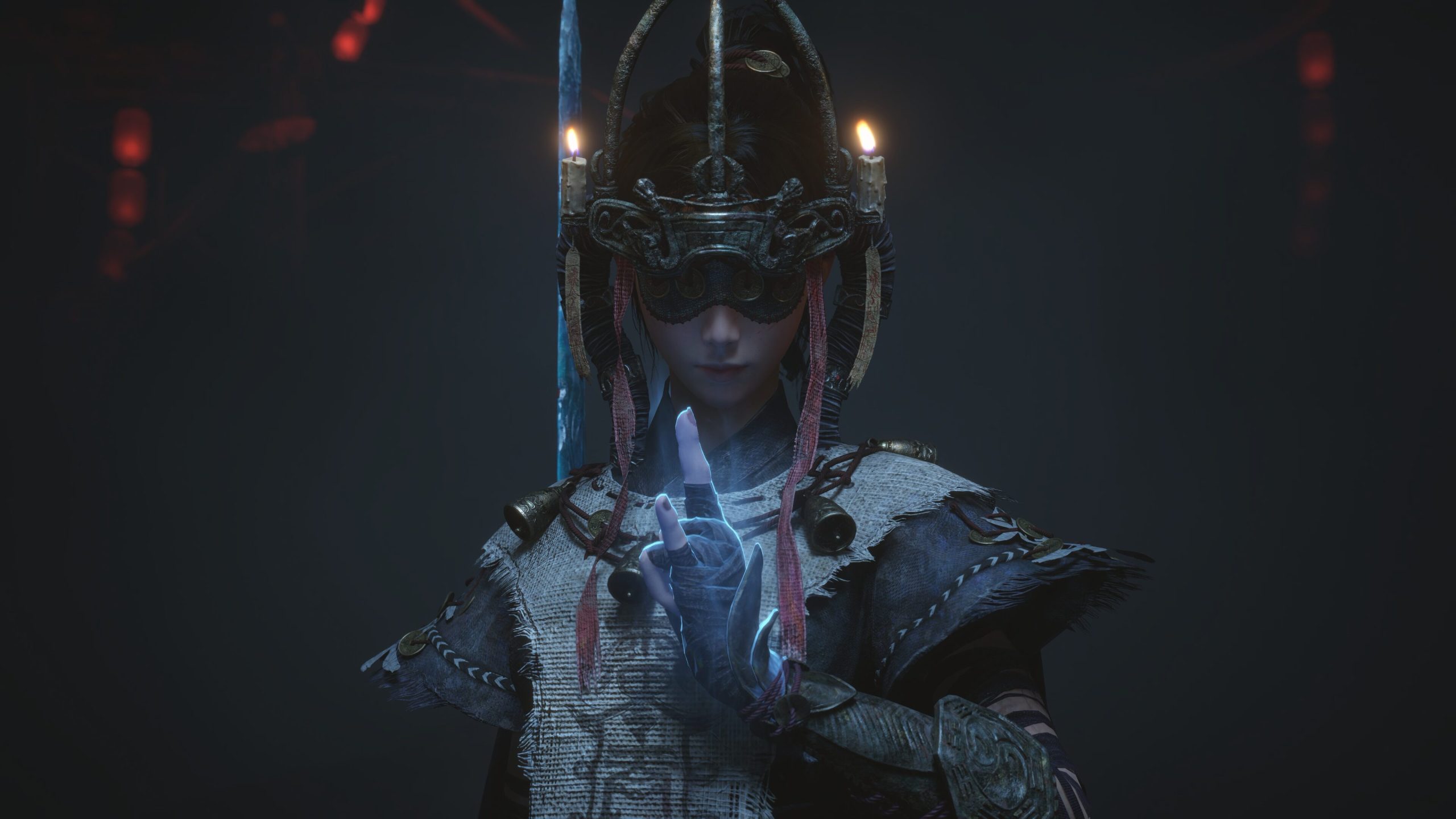
Of course, Wuchang isn’t just the name of the game – it’s also the protagonist, Bai Wuchang, who ends up in the Land of Shu during the late Ming Dynasty. It’s an alternative historical version of the setting, where familiar figures appear, and ancient conflicts have given rise to the Feathering disease. Wuchang is a pirate who lost her memories and doesn’t have much context on how she got the disease (or how to cure it, or what the mysterious Chisel does). Regardless, most people in Shu want her dead, and it has some powerful side effects, though not all of them are positive.
Shifted to Unreal Engine 5
When it was first revealed, Wuchang didn’t garner the most positive feedback due to the visuals and overall polish (though to be fair, it was still early in development). Despite starting development on Unreal Engine 4, Leenzee shifted to Unreal Engine 5, which allows for physics-based effects and better lighting, according to director Xia Siyuan. Furthermore, the engine provided a “more robust framework” for improved fidelity.
World Design
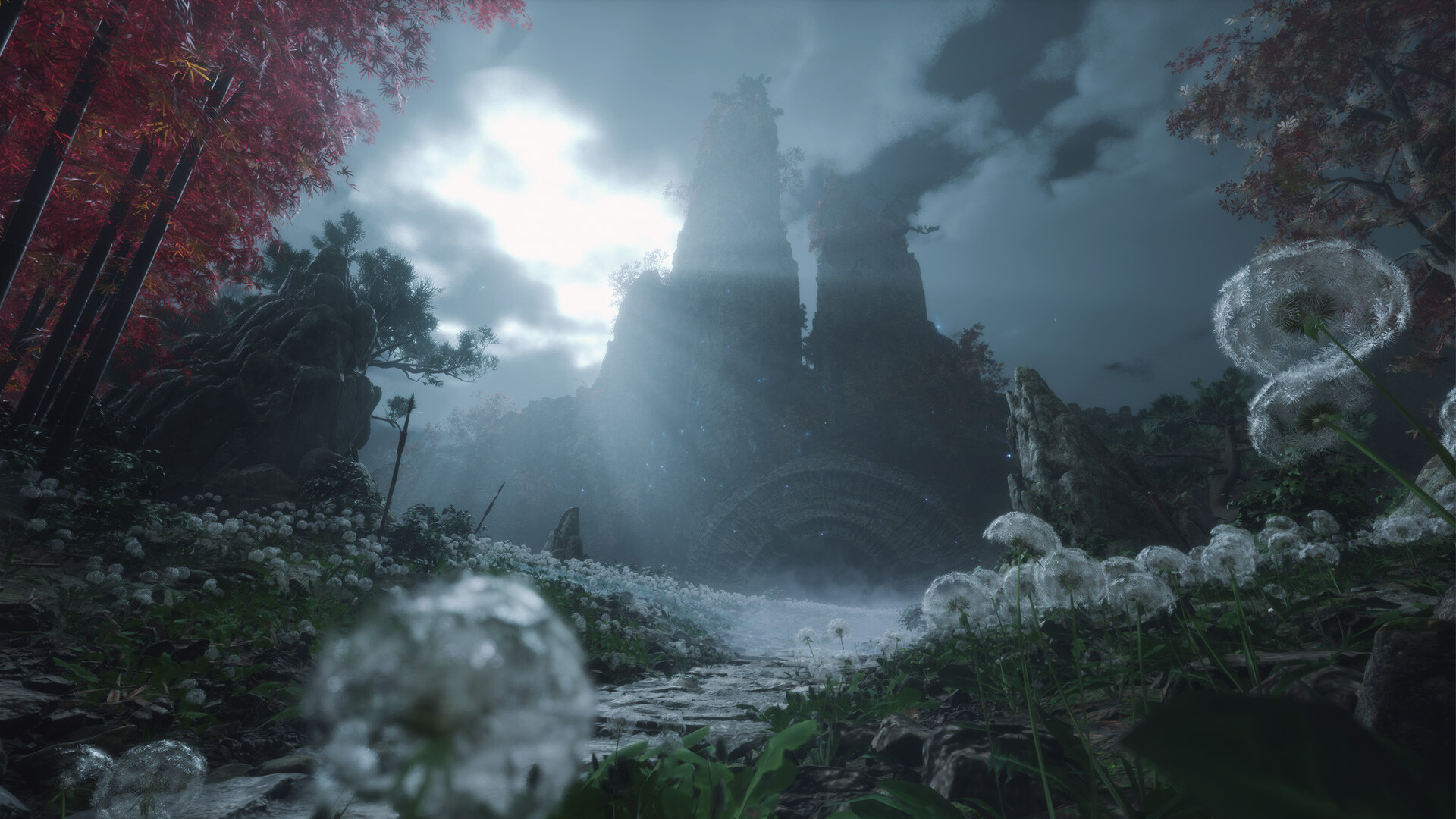
Game director Siyuan Xia has spoken about the team’s approach to environmental design – the desire to offer a Dark Souls 1-like hub with interconnected areas and shortcuts. However, based on some interviews, it seemingly features five massive levels in total, some of which can take hours to fully clear. It’s not an open world like Elden Ring, but the development team reportedly prioritized openness to encourage players to explore.
Choices and Consequences
Leenzee has heavily implied the existence of choices and consequences in the story, with various “Chessmasters” (as TechRadar’s preview describes them) having a hand in ongoing events. Whether you invest in the store or opt to kill everyone, the weight of those choices will ultimately determine Wuchang’s fate (and the ending). Of course, you should also absolutely explore the world and complete side quests since they’ll also affect the story in various ways.
Combat
Combat in Wuchang will look very familiar for Souls-like fans, though Leenzee also tossed in several elements like perfect dodging, which builds up Skyborn Might for unleashing powerful abilities. And it’s best to get accustomed to it since you’ll be dodging a lot in the early going. Parrying is also available, but not for every weapon – some require unlocking it from the skill tree.
Weapon Types
There are five weapon types and 25 unique options spread across them, ranging from one-handed and two-handed swords to dual-blades, two-handed axes, spears, and war clubs. You can equip two at a time with no weight limits, but consuming Skyborn Might allows for seamlessly switching and continuing a combo.
Abilities
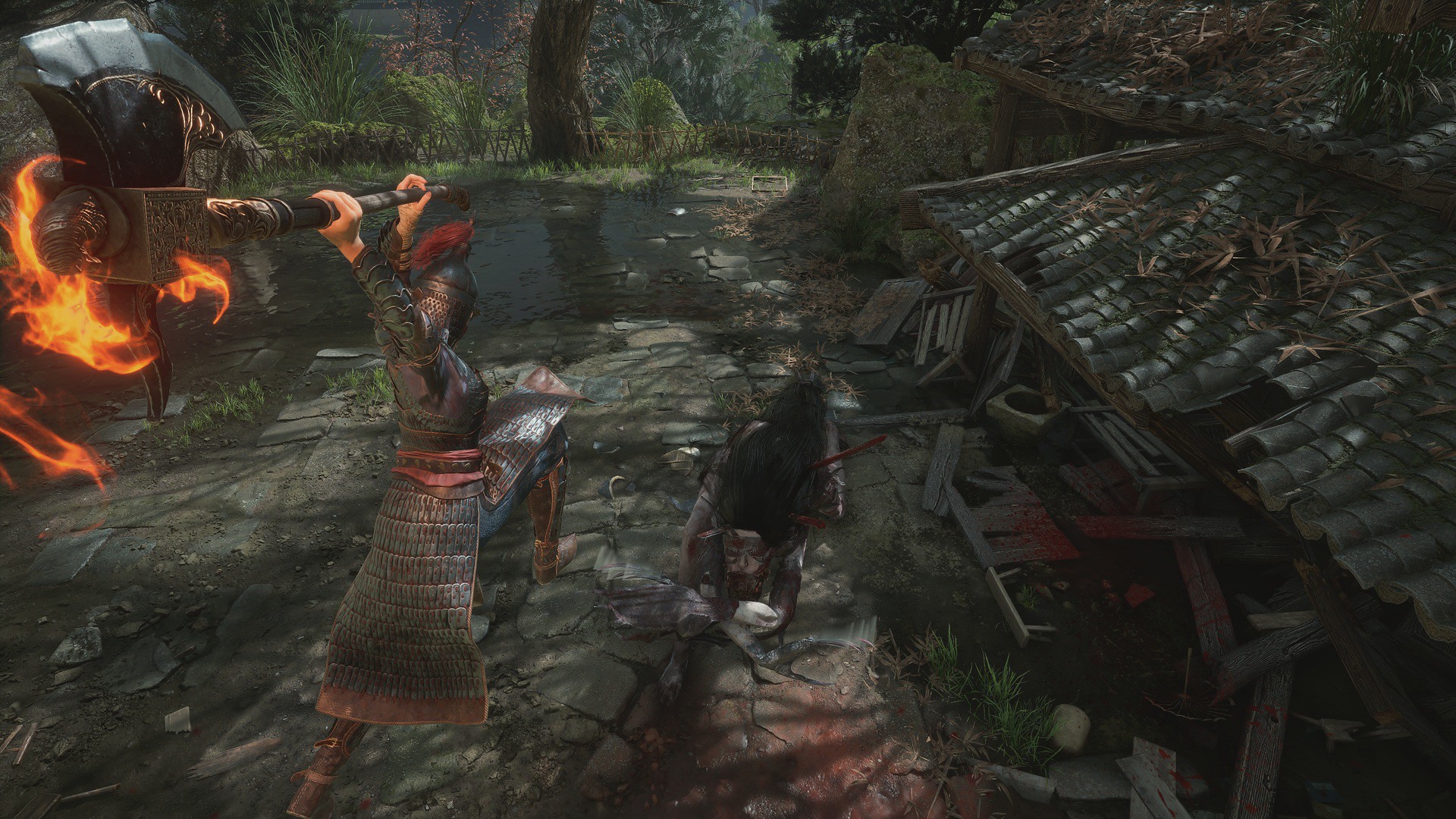
Each weapon also has a unique ability, from Colossal Smash (which deals poise damage and even interrupts some enemy attacks) to Blade Dance, described by the PlayStation Blog as “a whirling assault that slices through enemies.” Vortex Thrust is also useful for spear users since it can hit several foes with its shockwaves. On top of improving each ability through the skill tree, you can also enhance them with Red Mercury.
Armor for Resistances and Stats
Given how leveling, armor is intriguing because it provides stats (at least, according to IGN’s preview). Perhaps the biggest reason to mix and match armor pieces is different damage resistances. Depending on the areas visited, it may be ideal to change out resistances to slashing and bludgeoning damage and instead opt for magic defense. And yes, a transmog feature is available to prioritize fashion while maintaining your desired stats.
Spells
Spellcasting is a potent and destructive tool, and even though there are only 40 available, you have several options. The Lotus Soulflame, for instance, can output extensive elemental damage (per the PlayStation Blog), while Echo of Liu Cheng’en summons a “chilling surge of ice” to knock down enemies. We’ve also seen lightning strikes, purple flames that surge across the ground in a straight line, a lotus that spills out projectiles around Wuchang, and much more, all of which can be used alongside weapon attacks, so there will be plenty of ways to lay the smack down on enemies.
Madness
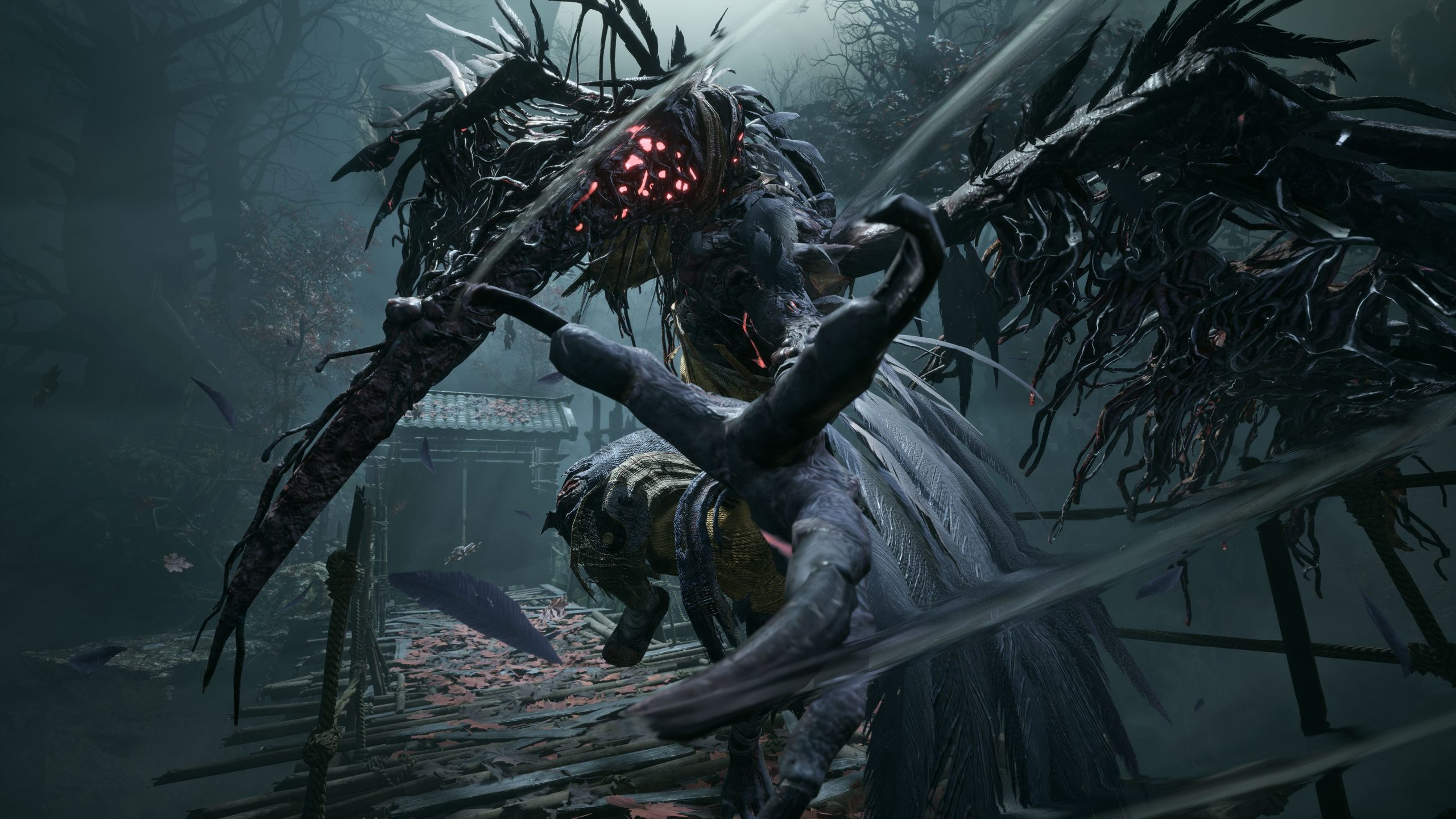
Wuchang can leverage Feathering in various ways, but perhaps the most intriguing is Madness. Those suffering from the disease go mad, but she can control the rate at which it’s gained to deal more damage and even unlock new skills. The problem is that she also takes more damage when the Madness reaches certain points; take on too much, and death will spawn a spectre of sorts, who you must slay to retrieve any dropped currency. Madness is intriguing because it’s raised by taking damage, dying or using specific items, which provides a neat risk vs. reward for more skilled players.
The Massive Skill Tree
Leveling up is also interesting because, based on impressions and previews thus far, you don’t allocate currency and increase stats. Instead, you get skill points, which can be spent on the immense skill tree. This allows for unlocking new weapon abilities, defensive options, healing charges, and more (alongside stats, funnily enough). The full extent of the skill tree remains to be revealed, but 505 Games promises tons of choices.
Bosses
In what’s perhaps the least surprising revelation, there will be bosses, that too with multiple phases (which could even mean “more than two”). While it’s not surprising in the slightest, 505 Games has confirmed that they can be tackled in non-linear order. The bosses themselves range from humanoid threats with extensive speed and agility to beings corrupted by the Feathering, sprouting wings and other appendages, which should make for an interesting ride.
Playtime
For what’s essentially a $50 title, that too one available on Game Pass at launch, Wuchang is a surprisingly meaty experience, requiring 40 to 60 hours on average to complete. You can unlock multiple endings and experiment with different builds, though Leenzee hasn’t gone into much detail on how much side content is available or even if there’s a New Game Plus.
DLSS 4 and Frame Generation Support
Though its PC requirements have yet to be detailed, Wuchang: Fallen Feathers will support Nvidia DLSS 4 at launch. You can also enable Multi Frame Generation for maximum performance at 4K on the highest settings (though that seemingly requires an RTX 5090). Other supported features include Super Resolution, Frame Generation, and Reflex.