Hollow Knight: Silksong is a long time coming, especially since it began as DLC for the first game, and while the vibe and atmosphere that defines the series is intact, there have been numerous changes and new features. There are new ways to outfit your character and assail the many enemies and bosses that await; new spells and resources; and above all else, a vocal protagonist. That’s only the tip of the needle, so join us as we delve into 15 big differences between Hollow Knight: Silksong and its predecessor.
Ascending vs. Descending
As extraordinary as Hallownest was, with players combing its depths to uncover the kingdom’s darkest secrets, Pharloom is looking to be just as endearing in Silksong. The biggest difference thus far is in the objective with Hornet ascending the kingdom to free it from its curse (whatever that may be). Compare this to Hollow Knight, which focused more on descending into the depths of Hallownest. This doesn’t mean there won’t be depths to plunge, though, just as Hollow Knight had its share of elevated locations.
Number of Benches
Between Greymoor being the largest area that Team Cherry has ever created and the expanded number of towns, Pharloom is definitely living up to that promise of matching or exceeding Hallownest’s size. But if you really needed a numerical point of reference, it’s the fact that there are around 100 benches to rest at compared to 51 when Hollow Knight first launched. Almost double doesn’t necessarily mean double the real estate – it could also translate into a far denser, more varied world – but we’ll have to wait and see.
You Say It Best
For lore reasons, the Knight in Hollow Knight couldn’t speak, but if the constant battle cries and “Shaw!”s didn’t give it away, Hornet is no silent protagonist. More importantly, she can converse with different NPCs, sharing her thoughts and observations. I’m curious to know whether this could mean dialogue choices in certain parts with varying results depending on what you say, but time will tell.
Crests vs. Charms
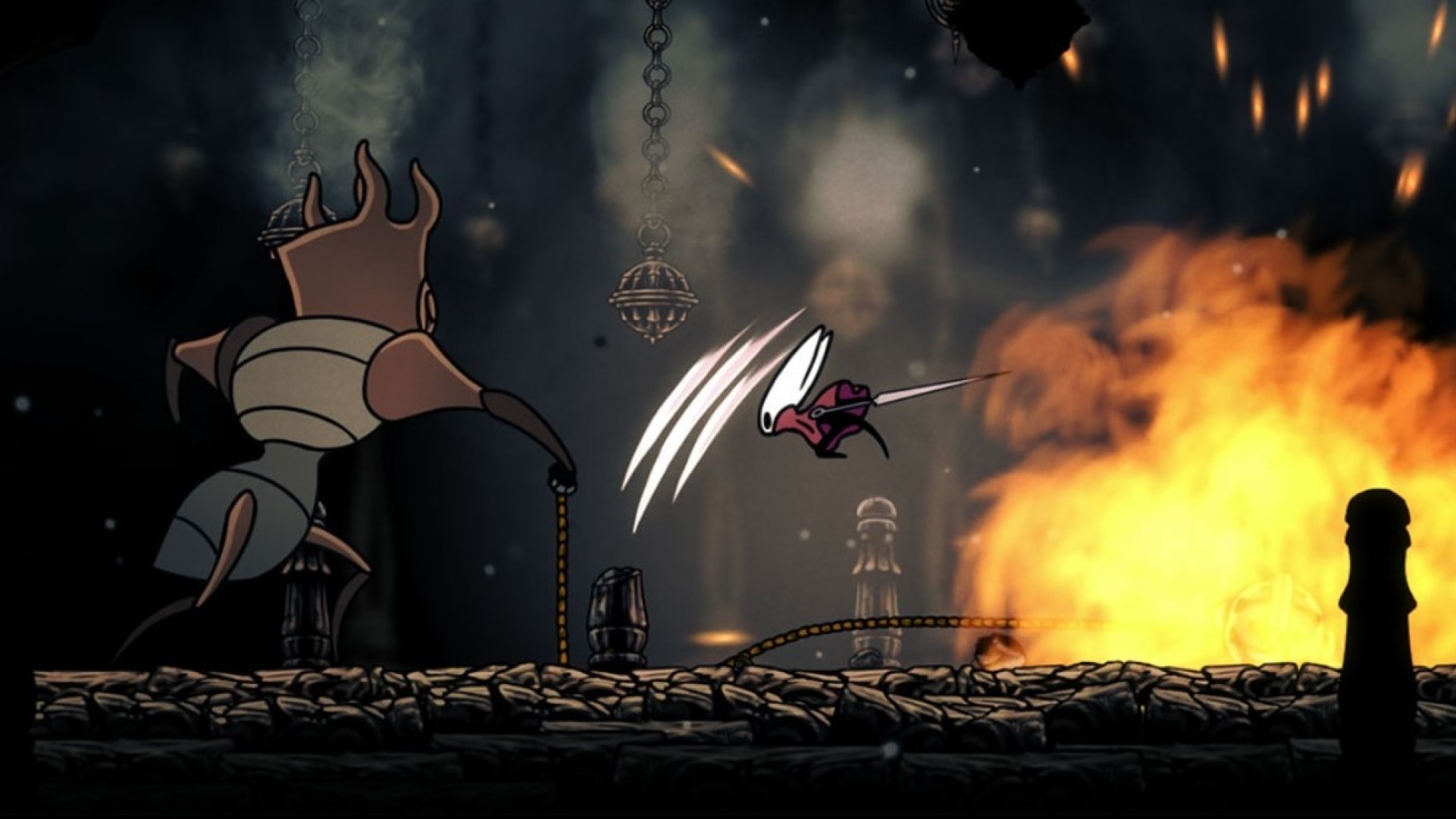
Charms were the de facto method of equipping benefits in Hollow Knight, affecting everything from the range of your melee attacks to persistently showing your current location. A different number of Notches is required for each, but as long as you had the space, millions of combinations were possible. In Silksong, Hornet uses Crests, which have a set number of colored sockets for equipping different Tools. For example, the starting Crest, Wanderer, has red, blue, and yellow sockets, allowing you to equip one of each Tool type. Others have been spotted, however, some with more red sockets (Reaper), allowing you to equip more red Tools.
Passive Crest Effects
However, that’s not all, as Crests will change Hornet’s attacks in different ways. The Claw Crest, for example, changes her default slash into more of a claw slash and her diving attack into spinning saw. Given the number of Crests and possible synergy with Tools, there’s a wide range of possible playstyles.
Potentially Multiple Cloak Types
Equipment was never really a thing in Hollow Knight – you had the one cloak and any obtained movement abilities. But Silksong’s cloaks seem to be different. The movement abilities seen thus far, from the wing-sprouting double-jumping and the floating to the scuttling away from enemies (which sees Hornet moving in spider-like fashion), are seemingly tied to different cloaks. It’s not officially confirmed, but the fact that her default cloak is an item and there’s no footage of two different cloak abilities utilized together is strong evidence.
Silk vs. SOUL
The Knight had SOUL (in more ways than one), and Hornet has Silk. The max capacity can be increased, but it’s a source for similar functions, like Bind for healing, and also allows for some additional mobility, like Grapple for pulling Hornet to a specific point. It can be chained continuously, and upon hitting an enemy, some Silk is restored. Given how some of the more challenging platforming sections panned out in Hollow Knight, the door is open for more deviousness.
Silk Spells vs SOUL Spells
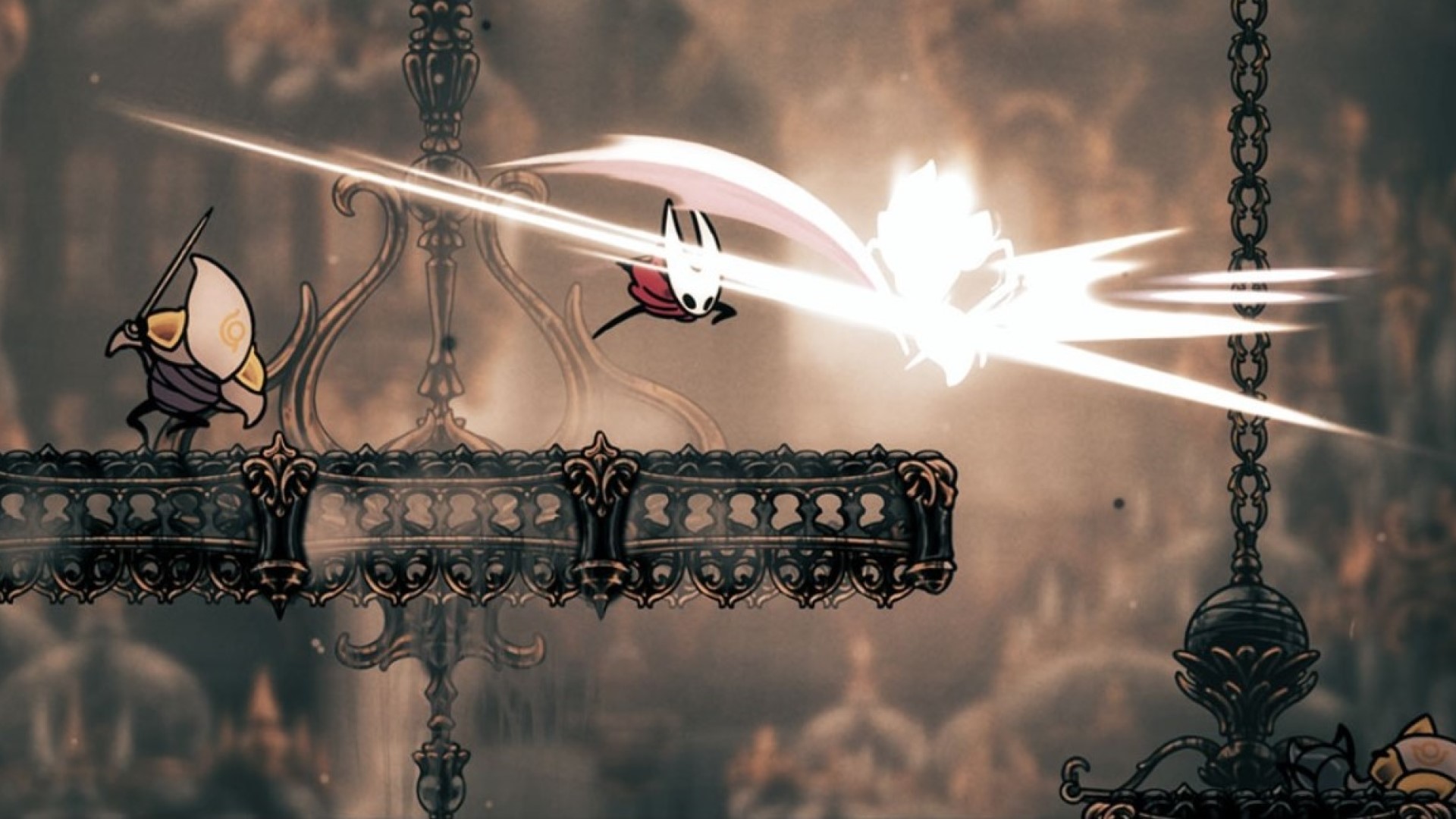
Silk is also used for different attack Spells. The Silk Spear, which pierces multiple enemies, and Gossamer Storm, which is that area attack that sees multiple threads lashing out to attack foes, are a few examples. There’s also Silk Dash, which is used to attack but also provides temporary invulnerability. By comparison, the first game had Vengeful Spirit, a projectile; Howling Wraiths, an upward attack which hits multiple times; and Desolate Dive, a ground slam. Each of these had dark upgrades, so it’s more than likely that we’ll see the same for Hornet’s Silk Spells.
Parrying
“Parrying” by itself isn’t exactly a new mechanic in the franchise. In the original, you could negate damage from some attacks by timing your own to land at the same moment, so it was more like a deflection. However, in Silksong, it’s an actual ability, as Hornet uses some Silk strands to block damage and then retaliate.
Red Tools
Red Tools are your source for everything offensive, but break after a specific number of uses, which means repairing them with Shell Shards. There’s a wide variety, from the Tri-Pin projectile to the Pimpillo, which explodes on hitting a target. Some even grant new types of attacks, like a downward spiralling drill. The full extent of available Tools has yet to be detailed, but it’s certainly a welcome sight for those who wanted more deployables and items befitting the genre in the original Hollow Knight.
Blue and Yellow Tools
Blue and yellow Tools are perhaps the most mysterious aspects of the new system. They grant passive effects, as seen with the Magma Bell, which “wards against the deadly lava and heat” in locations like Deep Docks, but other examples are still unknown. Either way, depending on the Crest, it’s up to you whether to leverage their benefits or not.
More Complex Enemies
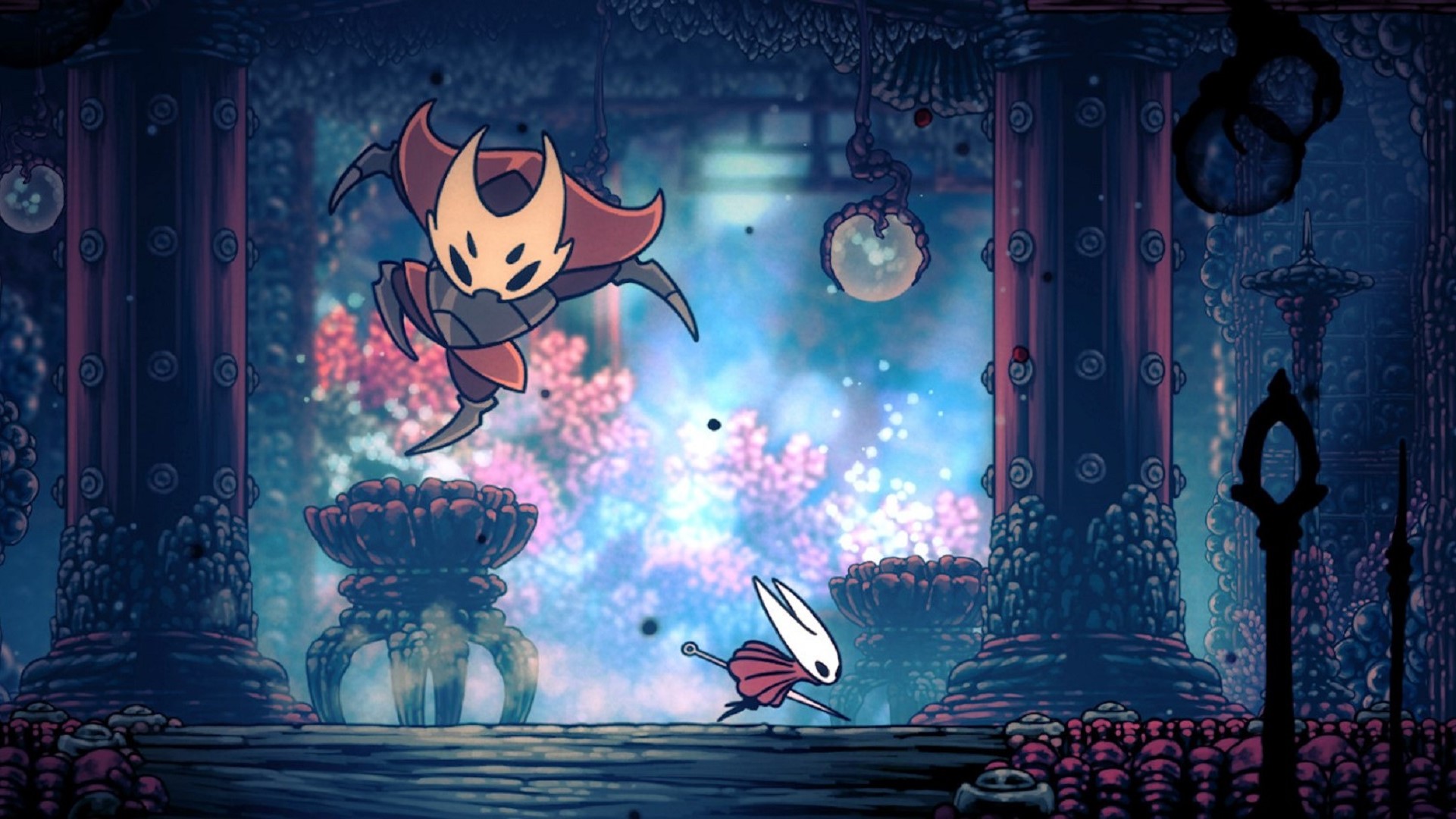
While Team Cherry touts over 200 new enemy types (compared to 140+ in Hollow Knight), it also made them more complex and intelligent, as indicated in an EDGE magazine preview from December 2020. It makes sense, given Hornet’s increased mobility and tactics, but we’ve also seen this in some boss fights. Lace can be knocked into the lava during an encounter, but she’ll just jump right out, unfazed.
More Challenging Than Hollow Knight
This leads to a rather dominant sentiment from those who went hands-on with the recent demo: Silksong is more challenging than Hollow Knight. Part of that is attempting to come to grips with the new mechanics (and the removal of infinite pogo-ing off enemies), but also due to the enemy complexity and overall faster pace of combat. It shouldn’t be that surprising, but Team Cherry has spoken about making the experience more accessible for new players. Perhaps this will mean additional options for toning down the difficulty.
Needolin vs. Dream Nail
The Dream Nail was a pathway to feats that many would consider unusual in Hallownest, like entering dreams and battling challenging foes. In Silksong, however, there’s the Needolin. Spotted in the recent demo, it didn’t do anything. So what is it? The most likely theory is the animation of Hornet playing her Needle like an instrument (besides, it’s also in the name – Needle + violin). Whether she unlocks songs for unique functions and potentially progresses forward, or plays when a compatible NPC is nearby, remains to be seen.
Disabling the HUD
One confirmed option in Silksong that wasn’t possible in the original game without mods is turning off the HUD. It may seem counterproductive, especially since knowing the amount of remaining Silk is key in some instances. But if you want the most immersive experience and an unfettered view of the gorgeous art, this is the way.