To say that Leenzee Games’ Wuchang: Fallen Feathers is releasing under no small amount of hype would be an understatement. Following the success of Black Myth: Wukong, which gave the traditional triple-A games industry a run for its money, and Phantom Blade Zero, which balances sleek visuals with hardcore action, it has a lot to live up to. And to Wuchang’s credit, it has improved by leaps and bounds since its original reveal in 2021. Coupled with a promised 40 to 60 hour playtime, a $49.99 price and some genuinely fun-looking gameplay, there was plenty of reason to be excited.
Of course, if you take a look at Steam, the user reviews will tell a different story. Only 28 percent of the currently 12,479 reviews give it a thumbs-up, resulting in a “Mostly Negative” rating on PC. It’s worth noting that much of this is due to performance issues and optimization. Leenzee has addressed the same, noting that it’s “confident in the game’s performance within our recommended spec”, but it’s working on optimization and should release a patch “as soon as we can.”
And while it’s justified to bring attention to Wuchang’s performance troubles, it’s also a shame because it really does deliver on its combat promises. Not only that, but it improves in so many areas that other Souls-like titles fail to even consider.
The first is in its general approach to build crafting. Compared to Dark Souls 3 or even Elden Ring, the 25 or so unique weapons across five categories and 40 spells may feel underwhelming by comparison. And while they scale with certain stats, like other Souls-likes, there are no restrictions when it comes to deciding your build. If you want to rock a melee-only approach, spells-only or some hybrid playstyle, go ahead, but you’ll quickly discover that some are better suited to your build than others.
One-handed swords are ideal for spellcasting, especially if you get something like the Astral Blade, which can passively regenerate Skyborn Might (the resource used for weapon skills and spells). However, longswords like Flamebringer are better for those who want to deal damage (and build up status effects) while having defensive options like Sword Counter. Even within the same category, each weapon feels unique to use thanks to its varied skills (and how it develops via weapon discipline).
And thankfully, it’s only the start of Wuchang’s combat loop, because you also have Swift Draw. You can equip two weapons and switch between them at any time, which isn’t all that unique in this genre, but Swift Draw adds a unique layer of depth. Upon use, the switched weapon unleashes its skill, and the combo keeps going. Since Skyborn Might regenerates on perfect dodges, you can have occasions where you’re weaving in and out of enemy attacks to build it up, then comboing and activating Swift Draw to pile on the damage. Even better if you counter an attack with a longsword and then switch to dual blades to slash through an enemy multiple times on Swift Draw, then swap back for more defense.
Alongside skills that increase damage resistance and the damage dealt by Swift Draw, there’s suddenly a whole range of potentially deadly combos to unleash on enemies. It encourages playing around with all the different weapons and finding the right combination – or even one that’s unbelievably broken.
Of course, if this were any other Souls-like, of which FromSoftware’s titles are no exception, your first thought would be trepidation. Experimenting with different weapons after pooling all those resources into the current set-up? It’s usually not the best idea, depending on where you are in the game. Elden Ring is good about offering a plethora of materials and making respecs relatively easier, but it’s still a big hassle to suddenly change your entire build.
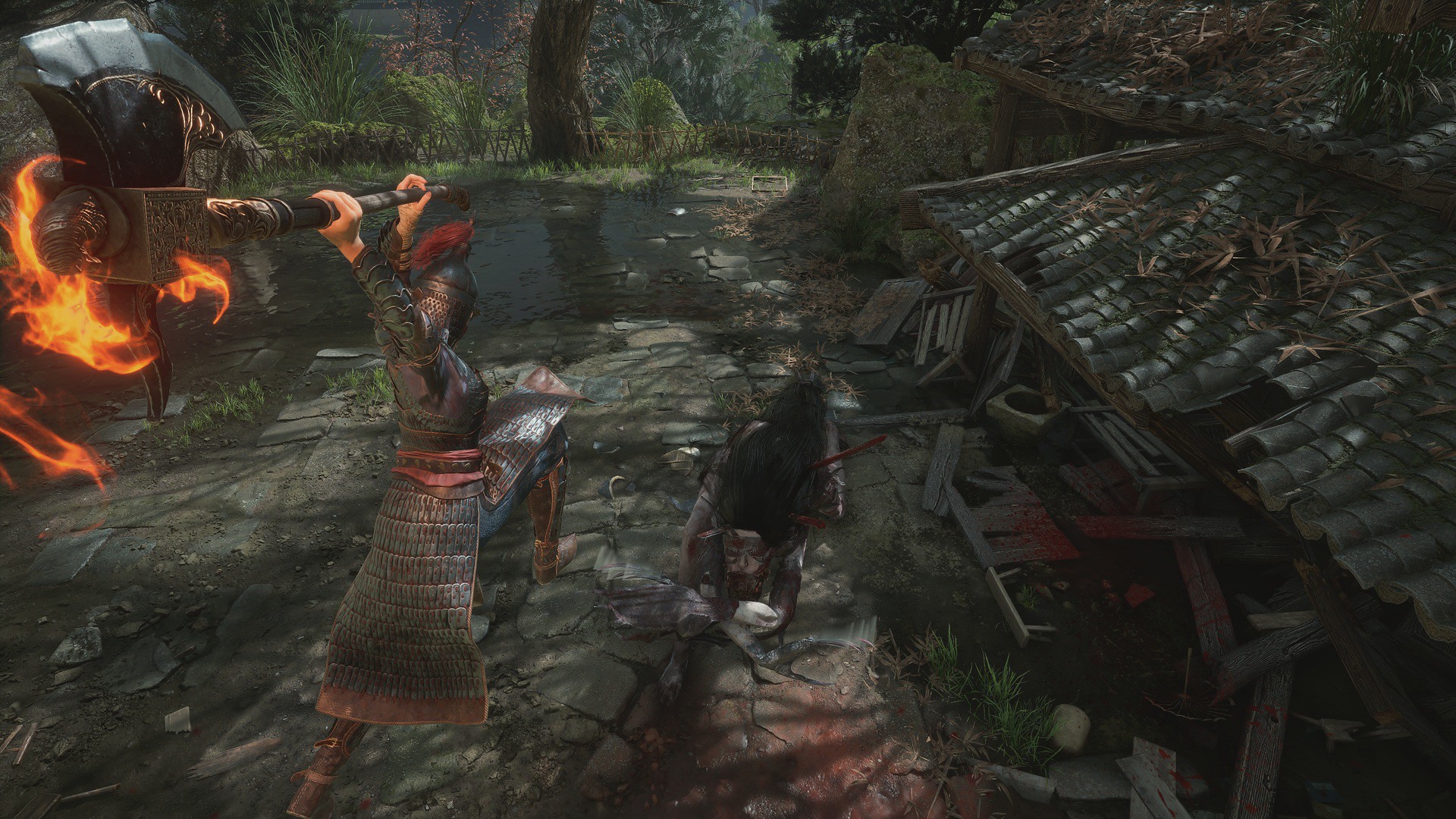
Wuchang: Fallen Feathers easily solves this in two ways. First, respeccing is completely free. You can completely reset everything unlocked in the skill tree and choose a completely different route without any charge. Second, it introduces weapon masteries. Unlike other Souls-likes where you need to invest materials to upgrade a weapon and make it viable, weapon mastery requires investing skill points. Voila, your weapon (or weapons) of choice are now upgraded.
The best part is that it applies to all weapons in that category. Pour enough points into longsword mastery to raise your weapon to +10, and all longswords are suddenly +10. So if you want to play around with a specific longsword that you just found but are worried about pouring resources into it, Wuchang effectively bypasses that hurdle. Furthermore, it encourages speccing into other weapon masteries so you can figure them into your builds with minimal fuss. Read online about a particularly broken weapon combo, and your spear/greataxe set-up isn’t cutting it (literally and figuratively)? Wuchang has you covered.
All this would be enough, but Leenzee adds another interesting dimension to its Souls-like formula with the Madness mechanic. Dying in these types of games usually results in the loss of all your unspent currency, but in Wuchang, you only lose a portion, which can be retrieved from the spot where you died. However, your Madness grows and keeps growing as you slay more humans, increasing the damage dealt. It also increases your damage received, and the amount of currency lost also goes up. When you’re over 90 percent Madness, an Inner Demon can spawn after you die and failing to defeat it results in losing all your currency. But emerge victorious, and your Madness resets.
And if you don’t want it to reset? That’s also fine, because many of the skills provide benefits at higher Madness tiers, from increased damage resistance and attack interruption on Swift Draw to recovering a small amount of health. On the one hand, it’s perfect for receiving an advantage after all those deaths to a boss, especially if you know their movesets but are lacking in the damage department. However, it’s not for free, and one mistake could spell the end if you’re not careful (even if there are ways to provide more room for error). For a game that focuses on aggression, whether you’re squaring up to deflect or dodge attacks, it’s a great mechanic and offers an extensive amount of depth to keep things interesting. Of course, if the Madness mechanic is too harsh, plenty of options are available to reduce it.
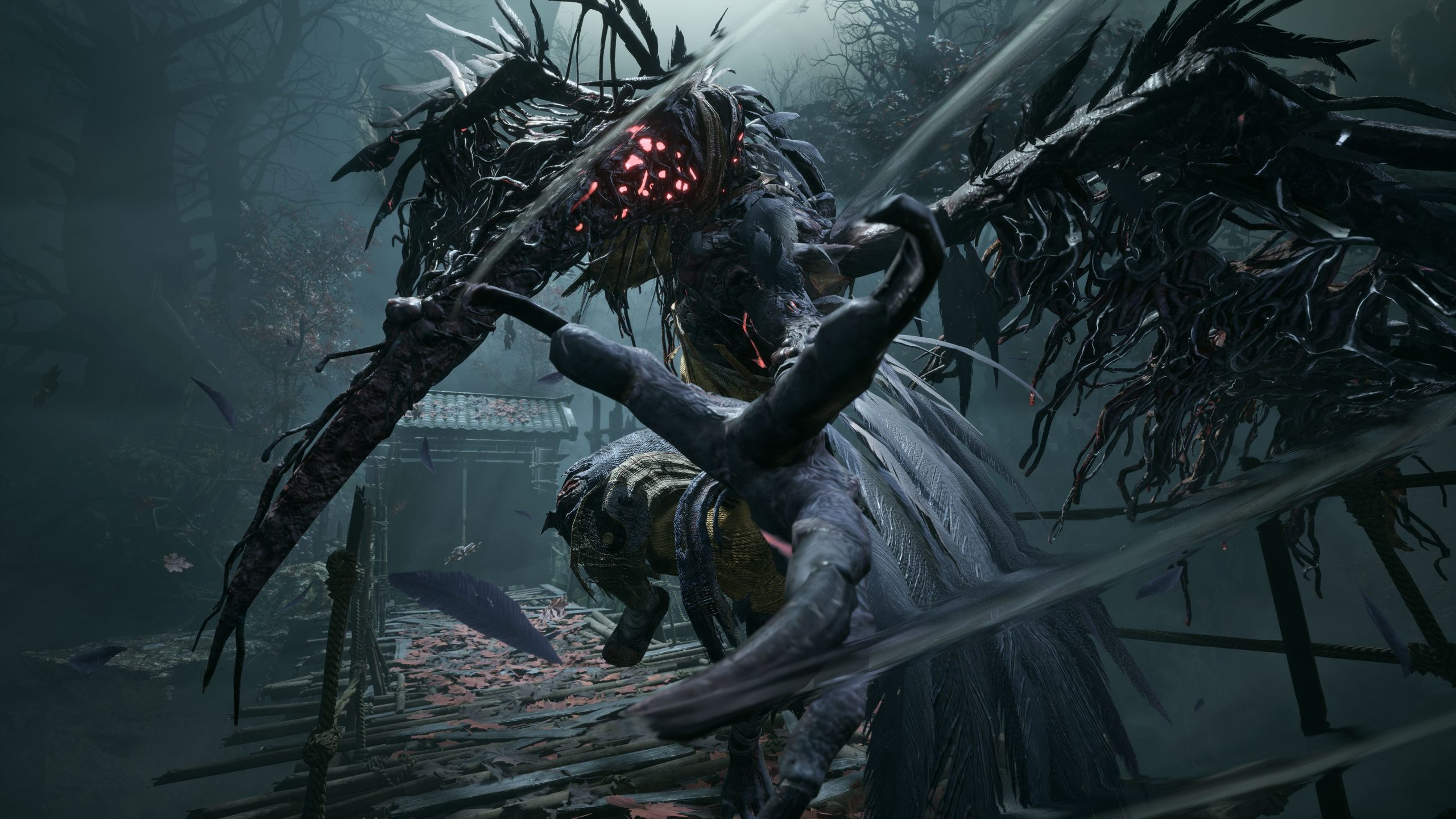
There are other areas where Wuchang: Fallen Feathers makes an impact, whether it’s the art direction and music or the emphasis on exploration, which yield some solid rewards. Granted, it’s not taking too many risks when it comes to the Souls-like loop of defeating a boss, running through a location and wiping out enemies, leveling up and then fighting the next boss, but it does a lot to make the formula feel fresh.
Despite its various problems on PC, Wuchang has crossed 131,000 peak concurrent Steam players at this time of writing. Not bad for a title that’s also available on Game Pass, and it offers some hope that more will appreciate everything unique it has to offer after its optimization has been sorted out. In the meantime, if you’re on the fence and thinking about something akin to Dark Souls or Black Myth: Wukong but wouldn’t mind something in between, Wuchang: Fallen Feathers is worth looking into.
This feature expresses a personal viewpoint. Readers are encouraged to make their own decisions about the game based on personal preferences and boundaries.