So, Highguard is finally out with Wildlight Entertainment, breaking its silence and hosting a showcase to explain exactly what the game is. And yet, the only thought I had before getting to the Developer Vision part was, “Wow, they sound even less enthusiastic than I do to play this.”
You can’t really blame me, or the tens of thousands of other players who were skeptical upon seeing the first trailer, calling it Concord 2. A free-to-play competitive shooter already has an uphill battle to climb, and as gorgeous as those visuals are, nothing about Highguard really stood out as unique, be it in the character design, environments, or premise. Again, that was weeks ago, and we only had a single trailer to go off of. Even at my most cynical, it felt like the right time to really dissect the experience was when we knew more, or, if it ever made that point, to actually go hands-on or not.
Well, kudos to Highguard, because it did reach launch, and one quick peek at the Steam charts revealed that it nearly peaked at 98,000 concurrent players just a few hours later. However, another number – the Steam user reviews – was quickly rising. I would have liked to add, “Another number started falling in the process,” but there’s no way of sugarcoating it. Highguard started at a “Mostly Negative” rating, plunged to “Overwhelmingly Negative,” and has since gone back up to “Mostly Negative.” Of the currently 14,2023 user reviews, a whopping 25 percent recommend the experience.
Now, let’s back up for a second. Clearly, there is a not-insignificant number of people who were simply waiting for its release to leave a negative review. Think Overwatch 2 when it finally came to Steam. This isn’t new territory by any means, but Blizzard’s hero title was coming off the cancellation of PvE, the removal of several core features, the insane monetization, etc. Highguard’s record was relatively clean. Surely they can’t all be on the hate bandwagon, right?
Unfortunately, no. Server queues and disconnections are obviously one of the bigger nuisances, and I’ve seen more than enough games bombarded with negative reviews due to this. Then again, Wildlight probably wasn’t expecting this level of response. Heck, if it followed through on its original plan – which was to shadow drop it at The Game Awards rather than simply releasing a trailer (three guesses on who told them to pivot) – it may have attracted far less.
But there are also performance and optimization issues. PC players whose hardware far exceeds the recommended configuration have reported problems, and that’s on top of the forced TAA and mandatory Kernel-level anti-cheat. Don’t think that consoles are much better, though – they lack a field of view slider, which is secondary to the game itself looking blurry. That’s not even getting into the bugs or glitches, like the tutorial lacking dialogue.
And while these things can be fixed over time, the core gameplay loop needs to snare people from the get-go. Unfortunately, once again, many players are reporting precisely what was feared from the initial trailer – that Highguard is a mish-mash of ideas from other games, haphazardly thrown together.
A quick rundown of the gameplay: You’re a Warden who, along with two others, must ride out from your base into a map to claim the Shieldbreaker, an Excalibur-like sword for assailing the opposition’s base. It takes some time to form, though, so do what King Arthur did (allegedly): Farm some sick loot. Open containers for better guns, gear, amulets, even saddles, to improve your character’s combat capabilities (which are unique, because of course this is also a hero shooter). You can also just…mine ore to obtain Vesper and buy stuff.
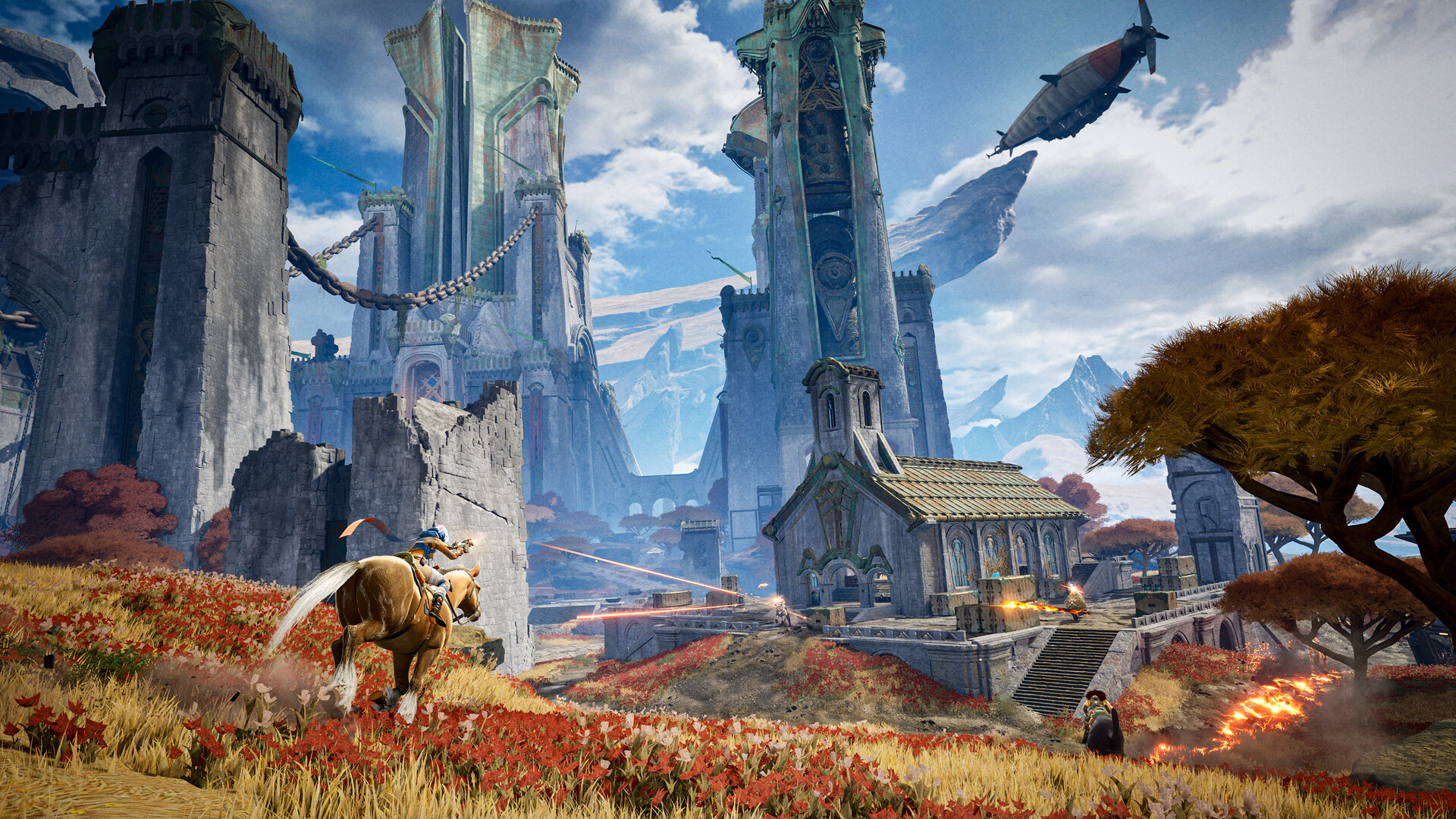
Once you’ve claimed the Shieldbreaker, probably by fighting off the other team, you assault their base, summoning a siege tower to act as a respawn point while your team wrecks their generators. Or directly targets their Anchor Stone to skip due process. Between the guns and magic, there are also Raid Tools for knocking down walls, but never fear defenders – you have limited supplies for building them right back up. And if you somehow miraculously succeed in repelling attackers, well, the process tortuously repeats until a team finally wins.
As thrown-together and derivative as this sounds, borrowing elements from Valorant, battle royale titles, and whatnot, Highguard could have been a chaotically fun experience. Maybe something akin to Tribes, which has been so tragically mishandled through the series’ history that it’s genuinely fascinating. For all the unoriginality on display, at least the maps are pretty sizable, and the option to select a base type from four starting options is intriguing.
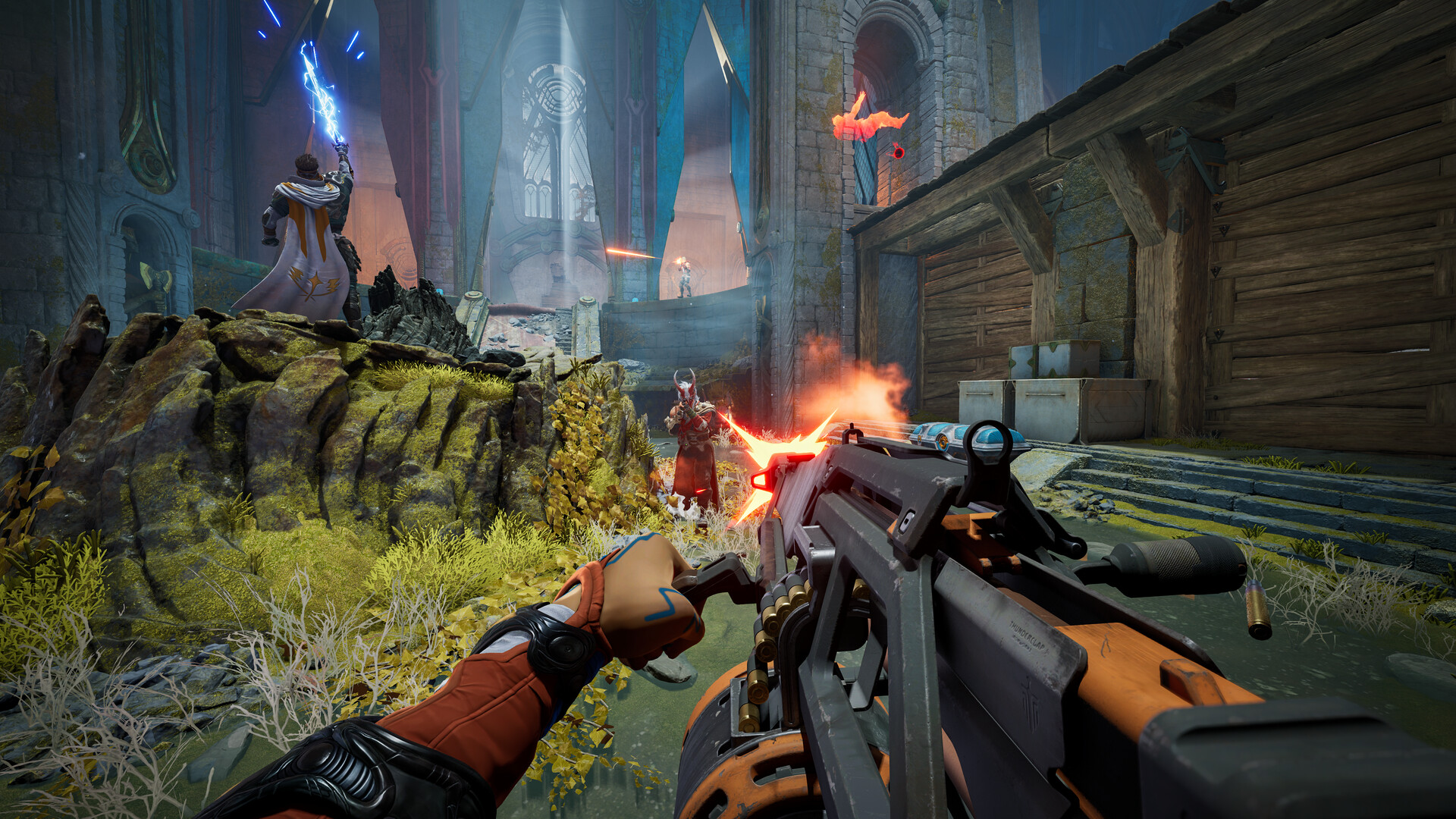
But then you load into a match and realize that it’s only 3v3. Yes, these large maps only support six players, that too across only two teams. The results are about what you’d expect – lots of running around with sporadic fights and significant downtime.
While some players are positive on the feel of the guns – as is to be expected from former Respawn developers – the overwhelming sentiment seems to be that Highguard is just boring. We can discuss how generic its characters come across; how this mix of guns and magic is as middling as it is bizarre; or how there’s only one game mode. None of this seemingly matters when the gameplay is so exceedingly dull, where skirmishes feel so few and far between, and much of your time is spent mining or opening containers.
Keep in mind that better games have tried and failed to really stand out, especially with so much competition. Trying to throw so many random elements together without a compelling hook to call your own is bad enough, but boring gameplay? That’s a death sentence, regardless of how many tens of thousands checked out your game at launch.
But hey, credit where it’s due – at least the monetization isn’t predatory right out of the gate, and there’s a free battle pass. Silver linings and whatnot.
Wildlight Entertainment will certainly spend a significant amount of time to improve Highguard – even with all the controversy, it still put out a roadmap outlining the next year of content. And by year, I mean the next 11 months. It has new playable characters, maps, bases, mounts, loot items, raid tools, a limited-time mode, and more on the horizon (with room for a few surprises). Impressive, for sure, but between games like Suicide Squad: Kill the Justice League that faded away after less than a year or Anthem, which threw its roadmap right out the window just a few months in – let’s not even get into Concord and its two week shelf life – it definitely falls on the “wait and see” side of the scale.
It’s a shame in some respects that veterans who brought us beloved experiences like Titanfall 1 and 2, Star Wars Jedi: Fallen Order, and so on should see the past four years of development – yes, four years – ending like this. However, as much as you want to blame it on a market that doesn’t have much room left for other multiplayer experiences, or those who are simply hating for the sake of hating (and they definitely exist, don’t get me wrong), Highguard looks to be another soon-to-be-forgotten brick in the wall.
Note: The views expressed in this article are those of the author and do not necessarily represent the views of, and should not be attributed to, GamingBolt as an organization.