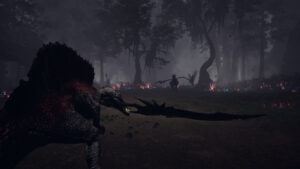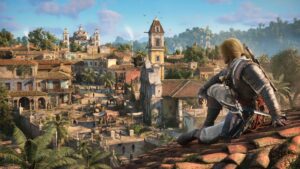






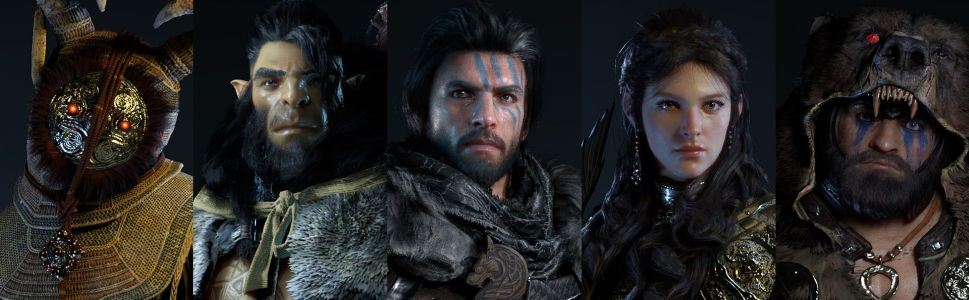
Before we learned about Pywel and the near-endless ways it could entrap you, before we saw the Abyss in the skies and its many mysteries; heck, even before the other playable characters were revealed, one thing stuck out the most in Crimson Desert: The combat. Sure, the sight of Oongka and Kliff walking among a heavy breeze carrying Autumn leaves by the dozens was stunning, but the second it got to tackling, stabbing and body-slamming fools, it’s clear there was something more to this.
Over five years later, and it’s amazing how much more and yet how little we truly know about combat. Not because the development team hasn’t offered up more information or hinted at Kliff’s battle prowess, but due to the sheer complexity of the systems inherent.
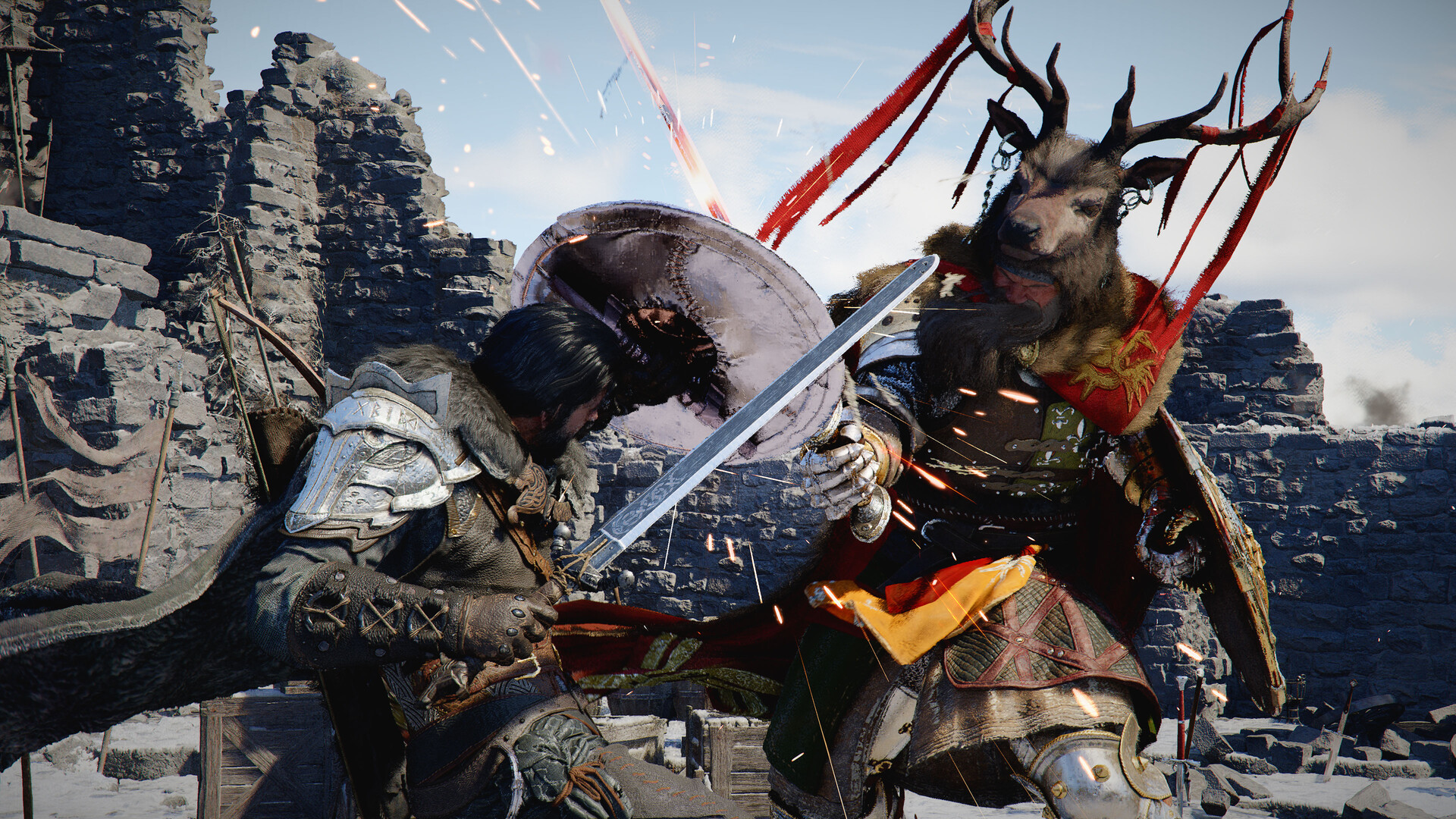
Because while you have the standard face buttons to unleash attacks, you can also hold the trigger down to modify it. While you can execute the standard light attack combo, it can also be mixed up with a heavy attack. And that’s before you start throwing in other variations, like transitioning into a Force Palm to push back a foe with your bare hands, or knee striking them in the face, to a thrust kick and then tossing them off a building. All of this is before you even account for all the elemental interactions or chaining together grapples like it’s a wrestling showcase.
However, what really stands out to me is how many mechanics from other games can be seen in Crimson Desert while it still delivers its own original gameplay.
The first and most obvious point of comparison would be The Witcher 3, and not just because you ride around on a horse or fight in third person (among many other weapon choices). He can channel five different Signs, from pushing back enemies with Aard to unleashing a stream of fire with Igni (after enough upgrades). In the same vein, Kliff can leverage five different elements, including Fire, Wind, Ice, Electricity and what seems to be Nature. So far, so blah, right?
However, it also implements other notable features from Wild Hunt, like wrist-mounted crossbows and exploding arrows. Now, these aren’t necessarily exclusive to that title – simply an example for comparison, which brings me to another title: Where Winds Meet. No, not necessarily in the flow of combat, but in how you’re observing different individuals and acquiring new skills. In a way, Crimson Desert ups the ante further by expanding the range of potential observations. You could be passing and witness the hologram of a figure using Force Palm, and then learn it for yourself, or pick up a belly flop ability during a heated battle against an enemy commander.
And that’s not even getting into the sheer range of weaponry available, as you would see in a game like Nioh. Dual swords, sword and shields, two-handed swords, spears, two-handed axes, great hammers, even pickaxes – the list goes on, and that’s based on what the developers have been willing to showcase. It doesn’t even begin to cover all the higher rarity gear or boss weapons with unique effects, like parrying an attack to summon a spectral soldier that will smack an enemy. Or how you can utilize mobility to deliver slow-mo mid-air shots with a bow like Horizon or Breath of the Wild.
With all the games that I’ve mentioned – and make no mistake, there are plenty of others – it would be easy to look at Crimson Desert and declare that it lacks originality. That it’s not particularly “innovative,” but I disagree. It’s taking all these dissonant combat mechanics and melding them together into a cohesive whole that’s easy to pick up, challenging to master and yet, extremely satisfying when you find a particular play-style.
For example, you might start out using magic to propel yourself into the air, which is great for exploring the world in conjunction with the grappling hook and Crow’s Wings. But what happens if you try it with different elements? You could explode enemies on the ground with fire, electrocute them with shock (thus stunning them) or even freeze them. Imagine then following up with several arrow shots in mid-air while time slows down, as you shatter them one by one. Or just call down an artillery strike as they helplessly watch, unable to move.
What’s also interesting is how you can transition mid-combo between weapons. It’s something we’ve seen in so many games, and yet, combined with everything, it opens the door for even more complexity. There’s that one shot from a Features Overview trailer where Kliff is slashing an enemy and then immediately transitions into hand-to-hand combat, shoulder-checking them through something for a stylish flourish. In that same trailer, we saw him unleash a lightning strike and then seamlessly transition to a spear that unleashed flaming swipes. And if you’re someone who wants to specialize even further in CQC, it looks like you can infuse melee strikes with elements as well, if that charged attack, which knocks back surrounding enemies upon landing, is any indication.
Crazily enough, I haven’t even mentioned things like mounts, the grappling hook (and dive bombing attacks), and so on. It’s like the development team is presenting this smorgasbord of options, simultaneously inviting you to sample them all without restrictions but also challenging you to find ways to make them sing in one violent orchestra. Maybe you’re someone who will lean towards the more traditional playstyles that we’ve come to know and love, like the resourceful slayer of monsters Geralt, or the stylish Wuxia-driven hero that relies on their fists. You’ll probably just call it a day and summon your dragon mount to burn enemy settlements on the ground, not unlike the drakes in Shadow of War.
The fact that we’ve only seen bits and pieces of all these systems – much like the story and the world as a whole – and still have so many questions is a testament to the potential depth of Crimson Desert’s combat. Granted, there are lingering issues – the controls have seen their fair share of criticism, and while they’ve apparently improved, it seems the development team is also working on being able to fully remap them. No easy feat, considering the sheer amount of complexity.
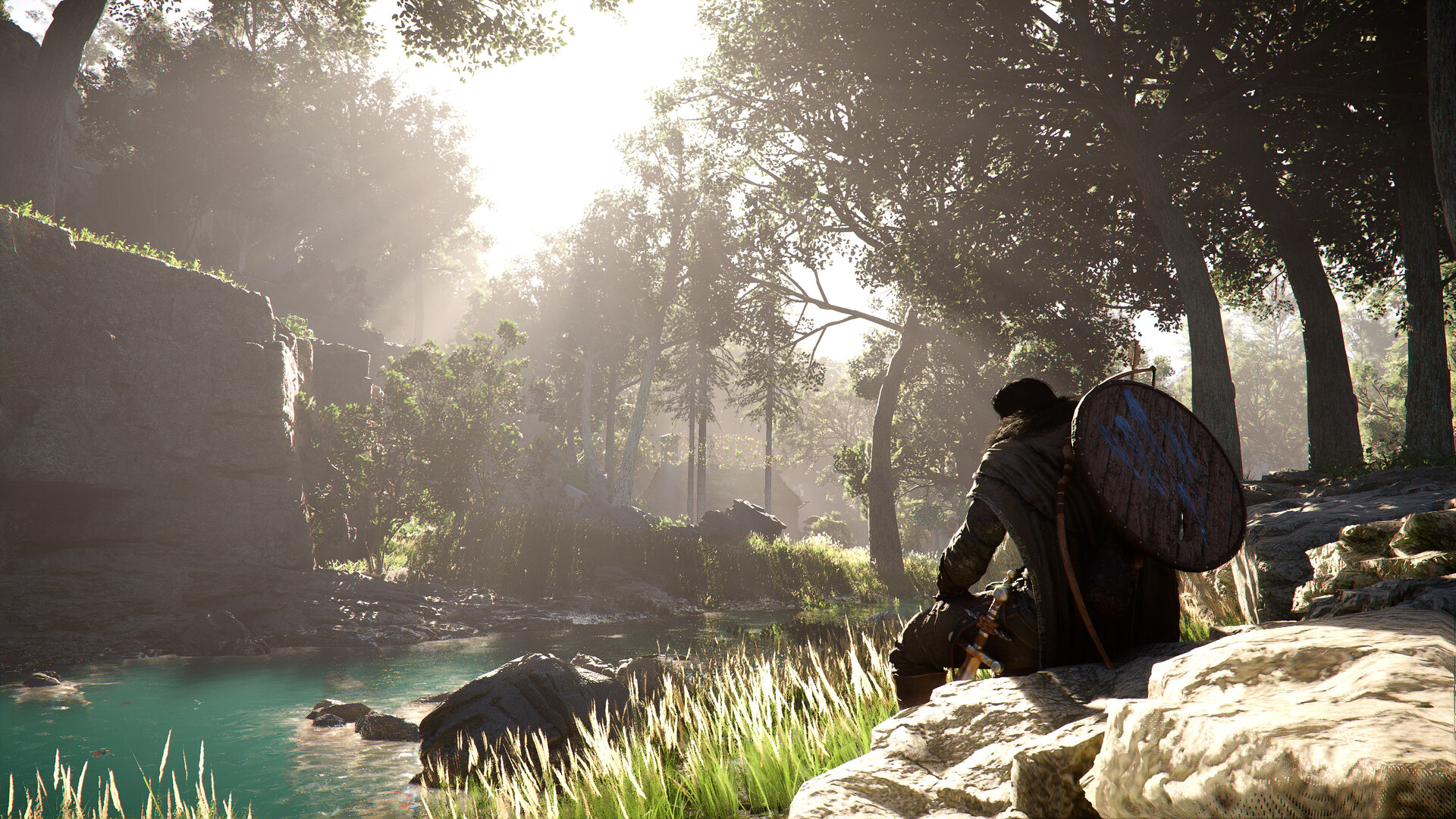
However, I think that if it proves anything, it’s that while iteration doesn’t necessarily equal innovation, it’s also delivered some of the best combat systems in gaming. Elden Ring wouldn’t have happened without Dark Souls; Cyberpunk 2077 may have looked pretty different without Deus Ex’s influence; and so on. Anyone can shove any number of systems into a game, call it a combat system and then break for the day. Sometimes, the results seem decent enough but ultimately fail to really captivate the player – see Dragon Age: The Veilguard.
At other times, they can really draw you in, opening up a world of possibilities and pushing you to master them for no other reason than because it would be fun. It would’ve probably been hyperbole to classify Crimson Desert as such back in December 2020 – all the pieces were there, but it still seemed rough. With how everything has come together since, it may end up setting its own standards when it launches in March, and even if it doesn’t, you can bet we’re going to have an amazing time, picking apart its every nuance.
Note: The views expressed in this article are those of the author and do not necessarily represent the views of, and should not be attributed to, GamingBolt as an organization.