Here we are yet again, not even a month since launch and Crimson Desert has officially sold more than five million copies. Is it a more significant milestone than four million, aside from “bigger number equals better”? Not exactly, though it would be naive to think that being such a major part of the conversation since its release wouldn’t have attracted non-believers to give it a spin.
Such is the current state of the industry. The established franchises will always have their built-in audiences. It’s one reason why Monster Hunter, Resident Evil, FIFA, Grand Theft Auto and so on top the charts, and become a staple of everyone’s daily life. There’s an assurance in the familiar. A comfort.
However, it’s not difficult to see triple-A titles that are overly produced, to the point where the rougher edges have been effectively sanded off. As much as developers stick to an established formula because venturing too far outside of it can invite several issues, both technical and design-wise, playing it safe for the sake of shareholders is also nice. Not that you can blame them too much – even if it can lead to chasing years-old trends and failing time and time again.
Crimson Desert is, of course, different. Because while it takes a lot of inspiration from the likes of Breath of the Wild, Tears of the Kingdom, Red Dead Redemption 2, The Witcher 3: Wild Hunt, it’s, for all intents and purposes, kind of a mess. Put down the bricks. Let me explain.
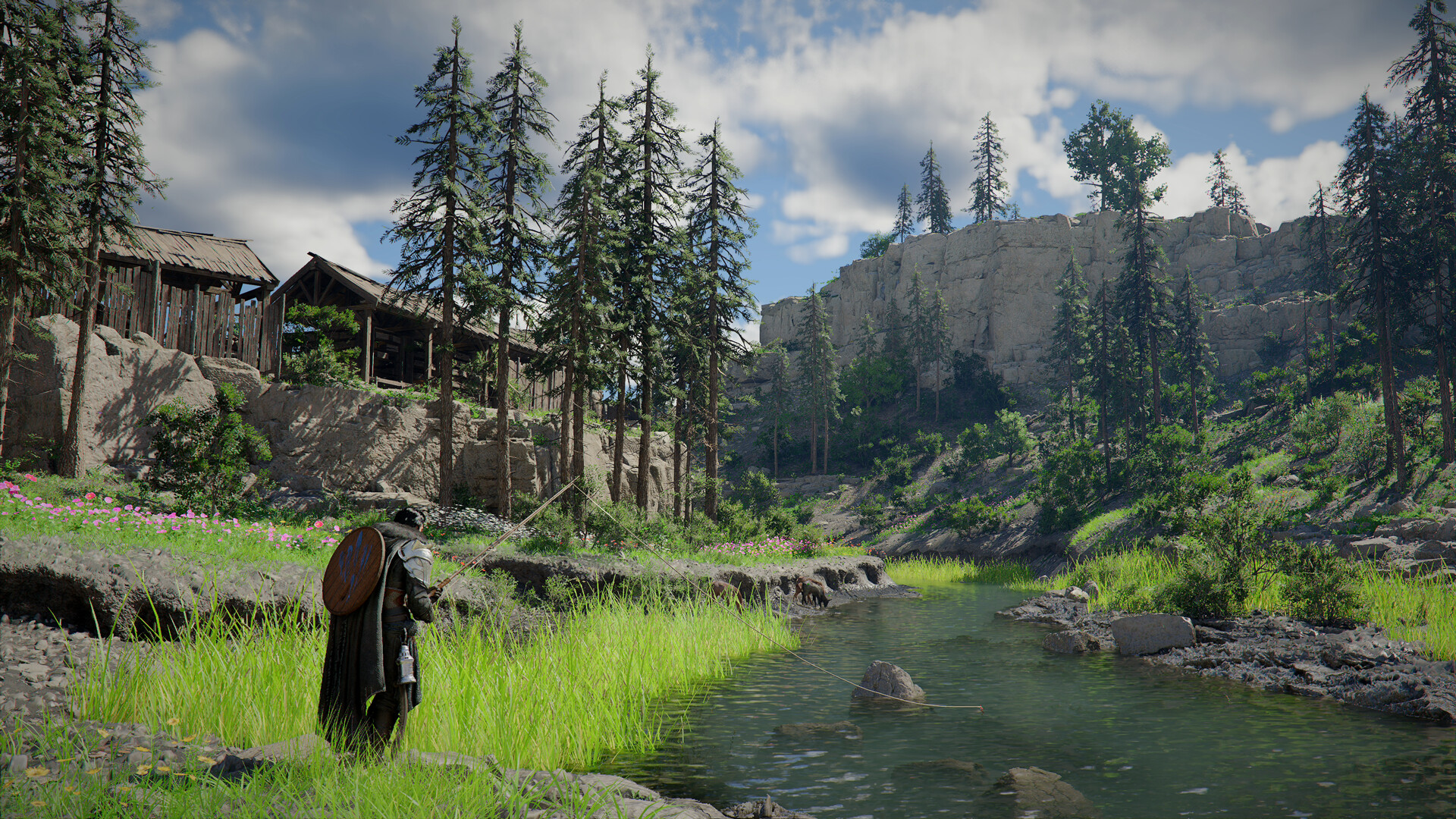
Technically, Crimson Desert is a marvel in more ways than one. The real-time weather simulation, the water physics, all the little details that you can discover – the sheer amount of animation that’s gone into things like dispatched Greymanes repairing a house or a bird swooping down to catch a fish is pretty unbelievable.
The same goes for the combat system. I was content enough to spam R2, unleashing crows, afterimages, and whatnot, occasionally throwing in a Turning Slash and some wrestling moves (before discovering infinite explosive arrows, my beloved). However, other players have been creating kung-fu montages and juggling random bandits like it’s Ultimate MvC3, minus the awful netcode.
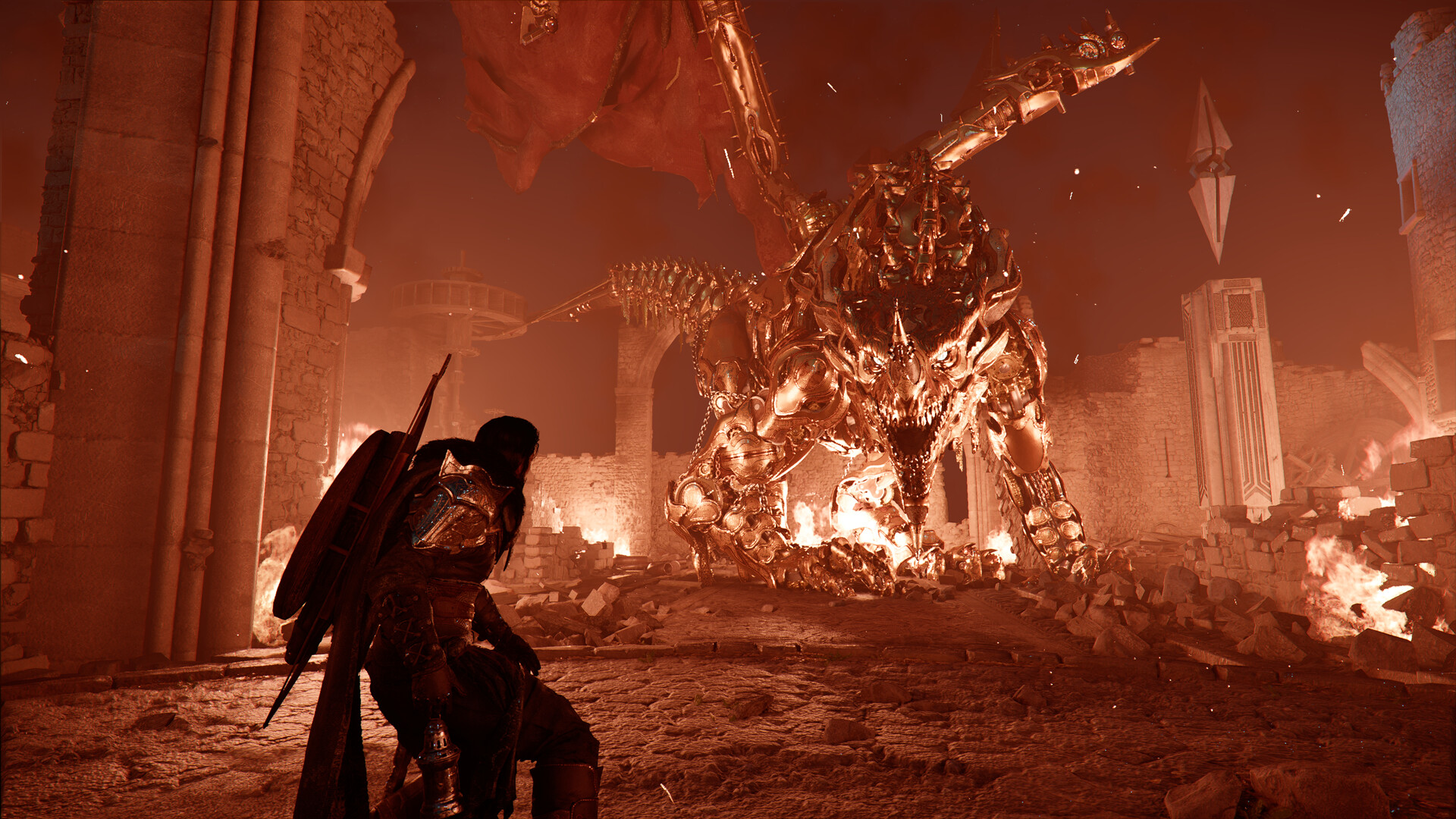
And then you have the puzzles, which range from traveling to three different locations to turn some dials in a cave to randomly punching panels and completing electrical circuits. There’s a checkerboard puzzle that I still haven’t solved, and I hate that puzzle, but man, there’s really no other like it in any other open-world action-adventure game that comes to mind.
That’s the crux of Crimson Desert’s appeal. It’s not just a game stuffed to the gills with stuff, where people have seemingly settled down and started paying rent in Hernand, or incredible graphics that feel lifelike, or a fun combat system to torture the most insignificant fools with. For all my previous talks about iteration and combining different systems to create something entirely new, it almost feels like the unevenness is the real goal here. The audacity of ambition, even when everything doesn’t properly slot together or feed into each other as perfectly as it would in games within the same genre.
“When it’s trying to do as much as it’s doing, issues can creep up more often than not,” is what I wrote in my review of the base game, and that still holds. Depending on the area that you’re focusing on most, it can be a different mess every time, but that roughness ultimately makes it feel more authentic. Less focus-tested, more vibe-based. Just a general, “Wouldn’t it be cool if we did this,” even at the expense of so many other things that need more work.
Don’t get me wrong – depending on the player, that approach can quickly become despised. It’s understandable because people want different things from their games, and when you’re sold a bill of goods for, say, a compelling story, it’s disappointing when it doesn’t live up to those expectations.
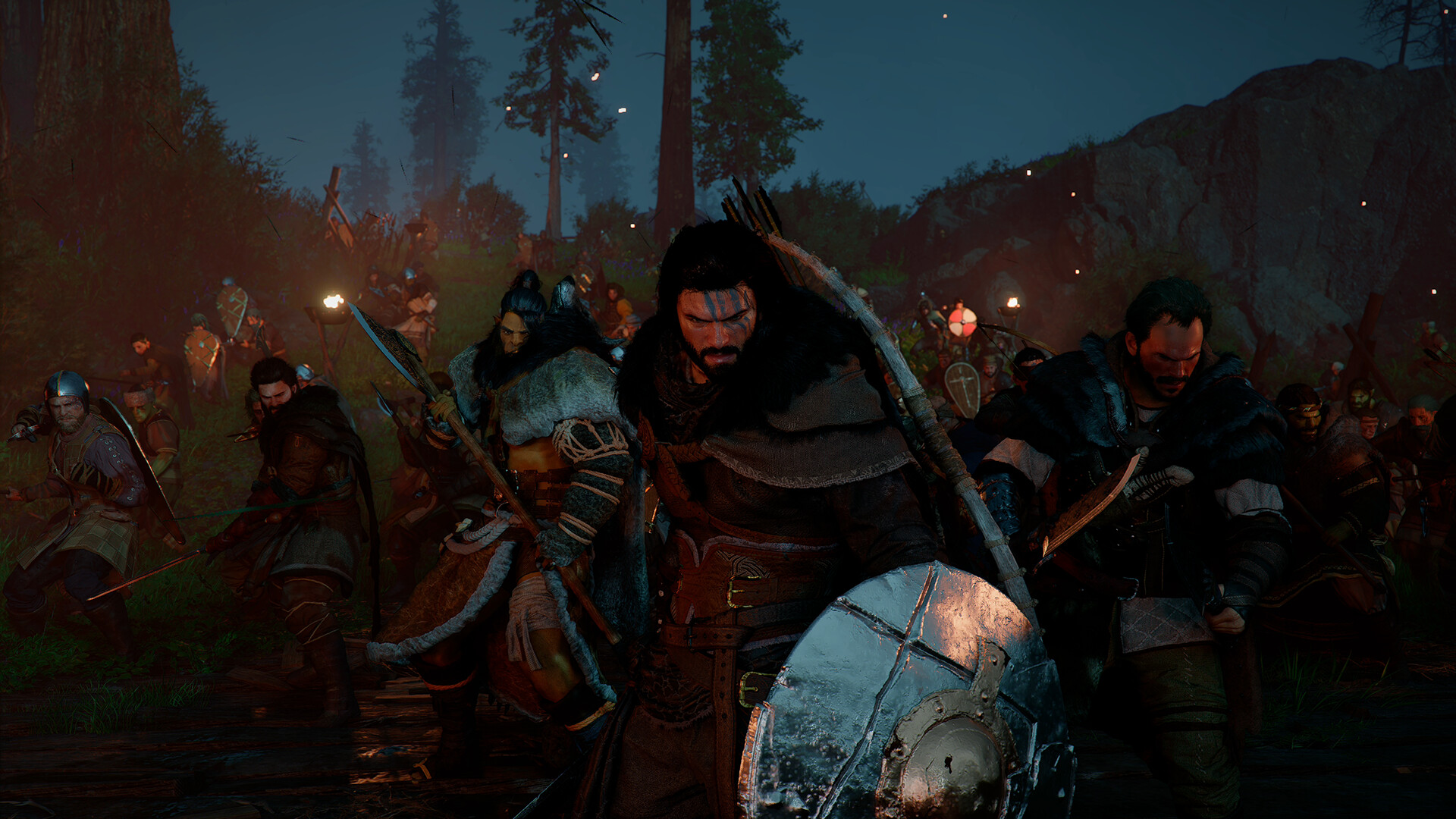
However, for those who enjoy exploring the world, discovering new broken builds, solving puzzles, unearthing mysteries, or just unleashing pure mayhem on crowds of enemies, it’s a wild time. Then again, I don’t believe Crimson Desert is successful in sales purely because it’s such a big topic of discussion, though that certainly makes a difference. It’s also due to the post-launch support, which addresses many bugs and other issues, while still leaning into that “Wouldn’t it be cool” approach.
Having more permanent mounts, especially when marketing seemingly indicated they would be present, is nice. However, no one told the development team to add a Direwolf that can also fight alongside you, Mononoke-style. The bugs with Focus to skip conversations and activate a sick boost while gliding could have been fixed without drawing much ire. But after seeing the positive reaction, the developer made them into features. Now you can fast forward through non-letterboxed cutscenes at four times the speed. Now you can continuously boost with Focused Aerial Roll, even if its usage is capped by your Spirit.
It even identified how some flaws detracted from the experience rather than added to it. Voila, you now have a storage chest, and voila again, it’s much bigger than before. Targeting bosses is less annoying. Damiane and Oongka now also have Nature’s Snare and Axiom Force. Upgrading new weapons is much easier thanks to Refinement Tokens, and if you’re prepared to commit, then you can spend resources as normal (which are also more plentiful).
The fact that the developer has its finger on the pulse about what’s working and what isn’t, while still surprising players with cool stuff, is noteworthy. Even if it doesn’t always get it right, the fact that it goes back to the drawing board is ultimately endearing. No sooner did complaints emerge that the difficulty felt a little too easy with various changes, or that the world lacked stuff to kill, thus breaking the late-game, than it announced solutions for both. And judging by the pace of its recent patches, we likely won’t have to wait long.
This is the part where I would say that if Crimson Desert proves anything, it’s that the triple-A industry shouldn’t be afraid to take risks. Unfortunately, it’s not as cut-and-dry as some of us may want; some games will continue with near-endless polish, ensuring that not a single blemish is observable. Because when you pay that much, why should you expect anything less? Why should the shareholders?
What I will say is that despite such traditions, the era of unbridled ambition in video games isn’t dead, nor is it simply relegated to the double-A or indie space. I don’t see many other big-name publishers following suit, much less considering the risk, but at the very least, Crimson Desert could inspire some studios to take a chance and let their games have a few rough edges. After all, if there’s any constant with the industry, it’s that you never truly know just how many millions of people are into imperfection, or how much it can make your game stand out.
Note: The views expressed in this article are those of the author and do not necessarily represent the views of, and should not be attributed to, GamingBolt as an organization.