When does violence become beautiful? Countless films, TV shows, animations, and books later, the consensus seems to be on the aesthetics and how it’s presented. From a video game perspective, it can work in tandem with mechanical skill, where a symphony of punches, headshots, lacerations, explosions, and executions is the core result of your mastery. It’s arguably what brings us back to so many familiar games – the beauty of such perfect execution – and unsurprisingly, Resident Evil Requiem possesses that innate same quality.
When you think about combat in a Resident Evil title, what’s the first thing that comes to mind? Resident Evil 2 remake? Methodical over-the-shoulder take on a survival horror classic? Where precision in close and long range is rewarded with the video game equivalent of a John Wick showcase? Regardless, you probably didn’t think about how they could reconcile, much less play off each other so well.
Requiem achieves that, but it also proves how combat in a video game can be more than just stylish or allow you to achieve a flow state where every action is second nature. It’s a masterclass in brutality, and when the cylinders are firing, and the blood is pumping (and pouring), it can be beautiful.
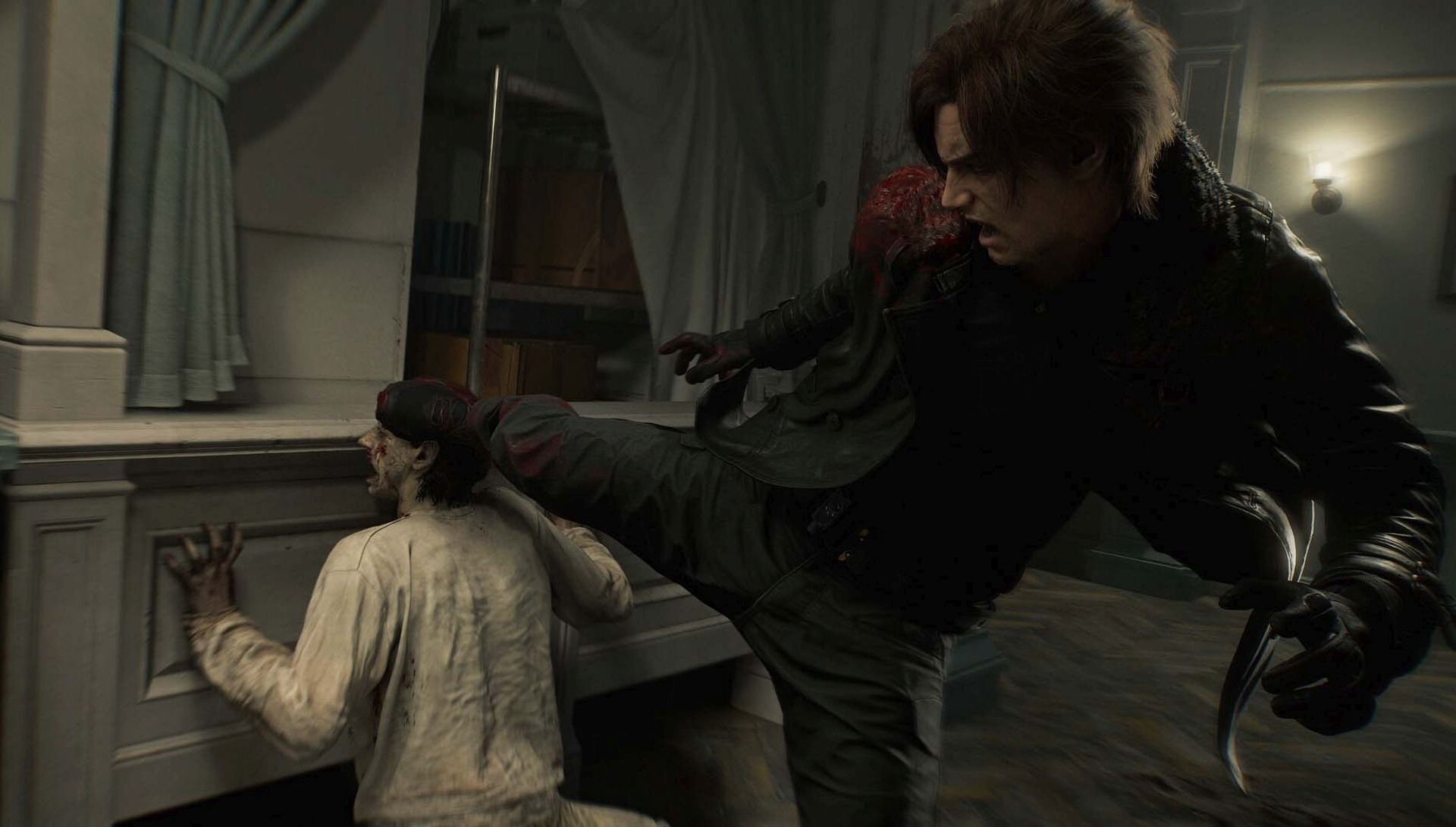
The best part is that it’s not something that’s hidden or downplayed. Once Leon enters the scene and we see that first chainsaw, we’re off. This entire sequence, from parrying the infected to picking up the chainsaw and wreaking havoc on surrounding enemies – blood everywhere, body parts lopped off – is rife with chaos. That same chainsaw could fall on the floor, posing a revved-up danger to anyone who gets too close. Another enemy could pick it up and start swinging until you shoot their arm off. The sheer chaos and spontaneity are only a teaser for what’s to come.
Of course, Leon is really a hatchetman. You can swing it like a regular melee weapon, parry attacks, and even repel grabs. It requires sharpening, which adds to the tension when you’re in the middle of combat, but it’s a great replacement for the knives. Far be it from Requiem to be reduced to a hack-and-slash affair, though. Slash an enemy enough times, and the cuts and blood spatters appear naturally, and you can perform a melee attack to send them flying, maybe even breaking their lower jaw, which hangs limply afterwards.
If they’re still alive, they may take a bit out of you, but if you’re fast enough to follow up, maybe they’ll get a hatchet to the back of the head. Then there’s the sheer range of firearms. Submachine guns, rifles, shotguns, handguns – including the ever-reliable Requiem, whose bullets tear through enemies like they’re paper – they all feel so visceral and satisfying.
And yet, there are still more options, like using your environment to smash enemy skulls against the walls and nearby furniture to immediately execute them. Maybe you’ll risk getting close to shove a shotgun down their gullet. The fact that all of this feels so fluid to control – without necessarily sacrificing the human element of its characters – just further adds to the beauty of it all.
But the other side of the coin is Grace. Unlike Leon, she isn’t executing any fancy moves or carrying around a small squad’s worth of weaponry in a briefcase. Oftentimes, there isn’t enough ammo for her to be going around, killing entire zombie hordes, which offers a throwback to the Resident Evil 2-style of gameplay.
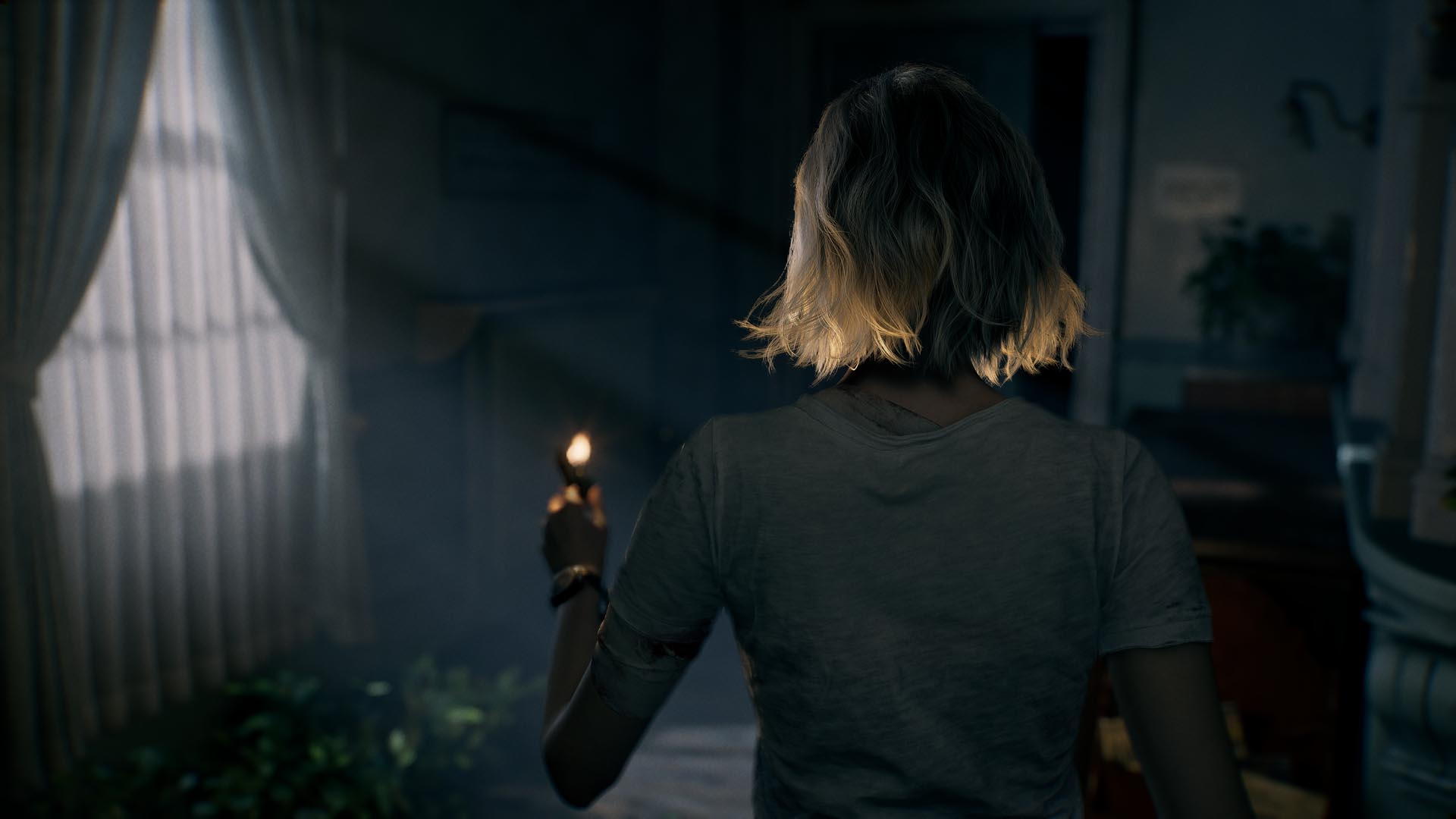
However, there’s no shortage of brutality to be had on her end either. With a hemolytic injector, Grace can sneak up on zombies, inject it into their necks and hang back to watch the fireworks. Is it kind of disgusting and over-the-top? Sure. Is it efficient? Undoubtedly. That it’s tied to preventing some enemies from mutating into tougher variants motivates you all the more to get your hands dirty (if collecting blood for crafting wasn’t already enough). Almost like a complement to burning Crimson Heads back in Resident Evil HD, except way quicker and more spectacular.
The real benefit to Grace’s gameplay – from her initial hesitation at pointing a gun to her lack of control when firing the Requiem – is just how much more methodical it can be. You could try to go guns-blazing when controlling her, but relying on ingenuity, stealth, injectors and yes, even running away to survive. It’s that feeling of powerlessness in the face of the unexplainable while still providing plenty of options to fight back.
Then, when you play as Leon, there’s an immediate catharsis, whether you’re scoring headshots, kicking enemies into each other or parrying attacks with the hatchet. It’s even possible to pick up fire axes and heave them at nearby enemies for quick kills. Did I mention how good it feels to chainsaw fools, especially after all those years running away from Los Illuminados? That’s my requiem there.
And it’s not like Leon isn’t capable of stealth either. The difference is that sneaking behind an enemy and taking them down or planting a hatchet in their head (sometimes both) is far more tactical. He’s also not just cracking a skull with the blade so much as taking off the entire head with each execution. Little bits of brain matter on the ground afterwards, but as gross as it can be for some, it’s just so satisfying.
Obviously, there are places where this contrast in playstyles is much more pronounced – like the Rhodes Hill Chronic Care Center, as you go back and forth between Leon and Grace, which even plays into the items and enemies that each leaves for the other. But it is amazing how the development team took two opposed methods of combat in the Resident Evil franchise – methodical and guns-blazing, never shall the twain meet – and fused them into such a compelling experience. It’s shades of those watercooler moments from 2005, where every corner had something cool to look forward to, and you kept pushing forward.
It’s a throwback to the times when Resident Evil was all about the sheer, unrelenting amount of blood that defined its particular brand of survival horror. The fact that the entire experience looks so gorgeous, with or without ray tracing, as you witness sweat dripping realistically, or clothing becoming more naturally dirty over time, or the environment with its accurate wear and tear that doesn’t feel simply plastered on, is another point in Requiem’s favor.
This level of violence may not appeal to everyone, of course, and make no mistake – this is still Resident Evil. As much as you’re going to get into dust-ups with the undead and other mutated horrors, there’s also plenty of wandering about, gathering keys and items to open the way forward while unraveling everything that’s going on. Furthermore, many deaths only serve to highlight how ugly an end the player can meet if they slip up. Funnily enough, that’s when it goes from beautifully brutal to downright depressing, both because of how real it looks (right down to the innards) and how remorseless it feels.
Then again, it’s also a great motivator to be better, and survive – an succinct overarching theme for this series for the past 30 years, if it really needed one.
Note: The views expressed in this article are those of the author and do not necessarily represent the views of, and should not be attributed to, GamingBolt as an organization.