






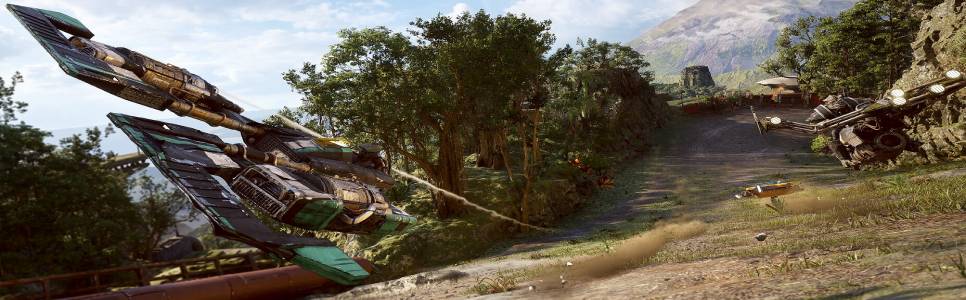
As a teenager, Star Wars creator George Lucas was famously an aspiring street car racer, and though that career wouldn’t pan out for him, you can see his speed freak tendencies all over Star Wars – from cockpit shots during tense dogfights to, of course, the thrilling intergalactic sport of podracing.
It’s no surprise, then, that Star Wars, as versatile as it is as an IP, lends itself so well to racing games- to the point where it’s almost surprising we haven’t had way more of them over the years than we have. Fuse Games’ Star Wars: Galactic Racer zooms onto the scene to fill exactly that void, and does so with flying colours, delivering a thrilling, adrenaline-fueled, wildly addictive racing game that can stand toe to toe with the best arcade racers out there.
"Star Wars: Galactic Racer lets you zip through its courses in one of four different types of vehicles"
Coming from a studio that was created by former Criterion Games talent that worked on the likes of Burnout and Need for Speed, that shouldn’t come as a surprise. Star Wars: Galactic Racer controls like an absolute dream, boasts an incredible sense of speed, and touts unmatched moment to moment game feel.
Moving through courses at constant breakneck speeds never stops being thrilling, and every successful drift around a tight corner comes with a spike of dopamine. There’s nothing quite like zipping and weaving your way through a series of tight, claustrophobic, winding paths fraught with hazards and opportunities to crash, before bursting out onto open land and boosting away at awe-striking speeds. Galactic Racer captures that feeling again and again and again, even after dozens of hours of playtime.
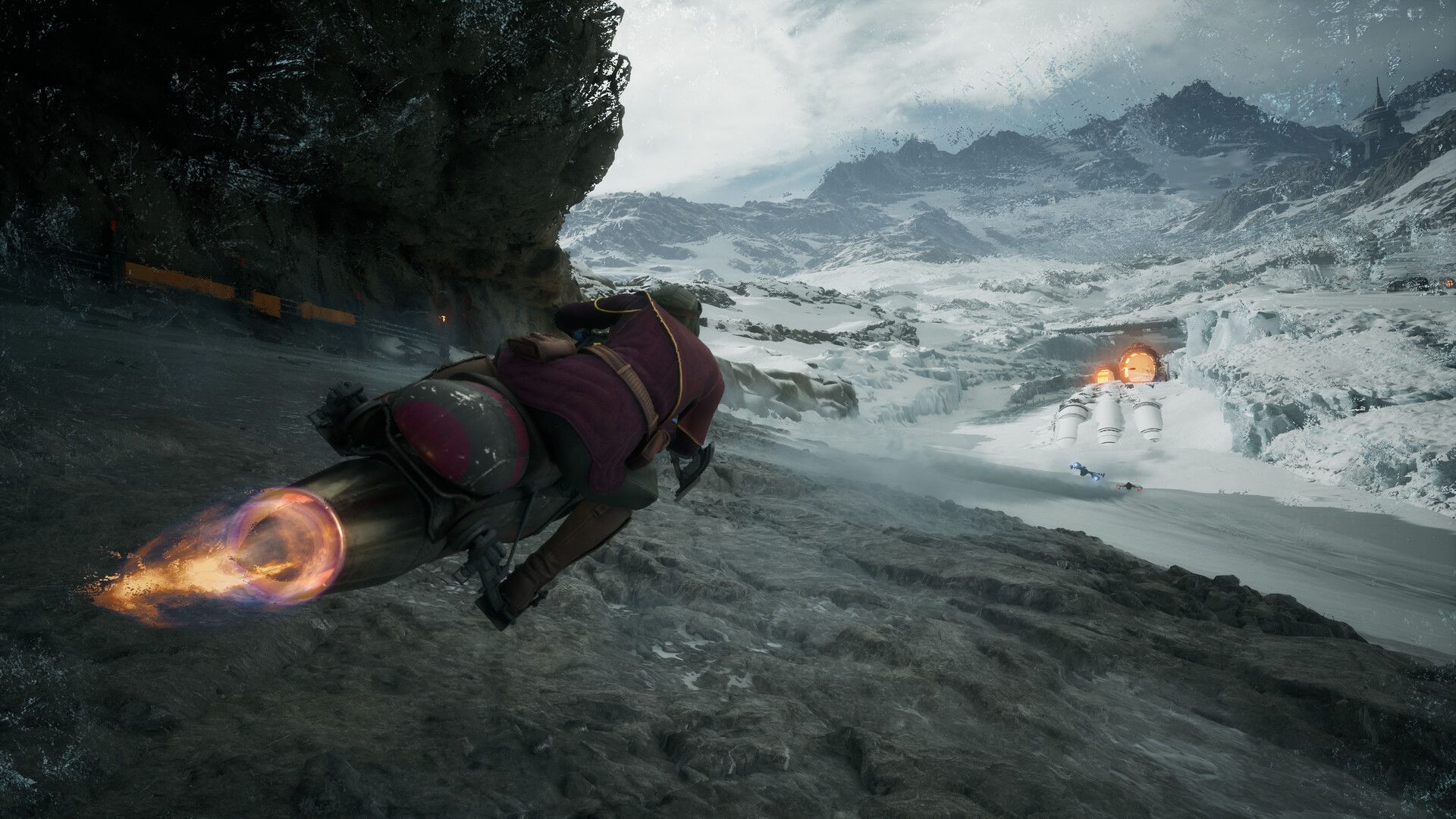
The variety on offer in vehicle types certainly complements those strengths. Star Wars: Galactic Racer lets you zip through its courses in one of four different types of vehicles (or repulsocraft, as the game calls them)- landspeeders, speeder bikes, skim speeders, and of course, podracers. They all handle differently, and especially differ in their individual drifting mechanics, though each is an absolute joy to control.
My personal favourites turned out to be skim speeders, which allow for incredibly tight and high speed, high risk cornering and turning- once you get to grips with them, at least. I would, however, have liked greater granular variety of vehicle options within each individual vehicle class, because right now, the options feel a little limited- even though that is offset by the impressive customization mechanics on offer in the campaign (more on that in a bit).
Meanwhile, Galactic Racer also puts its own interesting spin on boosting- on top of regular boosting, unless you’re in a podracer, you can also use their repulsocraft’s ramjet engine. Once primed, you can activate the ramjet to supercharge your engine and hit even higher speeds for sustained windows- but make sure you turn it off before your engine overheats, lest you literally explode. It’s an excellent risk versus reward mechanic that greatly adds to the high-speed thrills the game already delivers in spades.
Just as fun and satisfying as the act of driving your repulsocraft is the act of sabotaging your opponents. You can, of course, do so through brute force, with high-speed nudges, crashes, or whatever suits your play style (such as different types of offensive and defensive abilities), and predictably enough, that never quite gets boring. There’s always something incredibly satisfying about ramming into an opponent and watching them explode in cinematic cutaways as they crash into an obstacle- the game very much does feel like Star Wars x Burnout in those moments (and there’s no shortage of them).
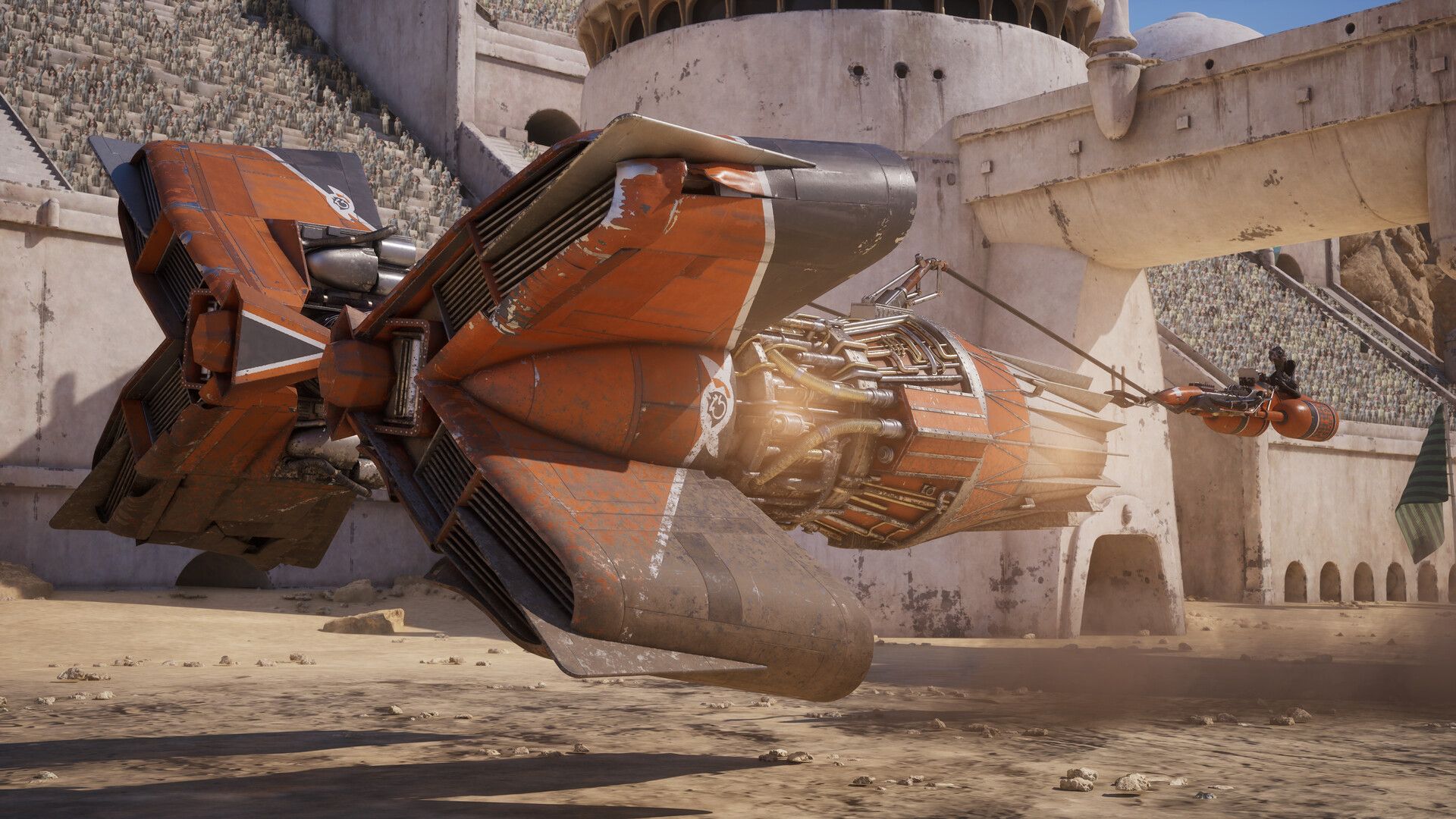
"Just as fun and satisfying as the act of driving your repulsocraft is the act of sabotaging your opponents."
Given how well it plays, Galactic Racer would have been a salivating prospect for racing fans as is, but what makes the game even more interesting is how its campaign is structured. The game is set in the wake of the Empire’s fall in Return of the Jedi, and you play as Shade, a former pilot who joins the Galactic League, an underground racing competition for all professional and aspiring intergalactic speed freaks. What’s particularly interesting about the campaign, however, is that it adopts a roguelite structure- which ends up working remarkably well in more ways than one.
Each run begins with selecting a vehicle, and adopts the overarching structure of a branching objective map that takes you from event to event. Objectives range between regular races, time trial events, and eliminators, which are longer races where the racer in last place is knocked out at regular intervals until one competitor emerges victorious.
Meanwhile, at times, you can also choose to not participate in an event, and instead meet with one of several different characters who might offer you different kinds of deals that could benefit you (or not) in several ways. Personally, I was hoping for a little more variety as far as race event types are concerned- as fun as each event usually tends to be thanks to the game’s core gameplay strengths, repetition can sometimes set in due to the lack of variety in the race event types on offer.
Structurally, however, Galactic Racer’s campaign’s branching objective map works quite well. You always have a choice between multiple events, which makes you can make things significantly more or less difficult for yourself through those choices- though there’s always a lot to consider. For instance, picking the easier option of a time trial where there’s no danger of crashing out of your run can be an alluring prospect, but at the same time, eliminators or races where there’s much greater risk of prematurely failing your run yield much greater and more valuable rewards.
Meanwhile, it’s also important to consider more than just the next event – that low stakes option might look attractive on its own, but there’s always the chance that the event after that is more than you bargained for. Planning ahead becomes important, then, adding further to how well the campaign’s structure captures risk versus reward decision-making.
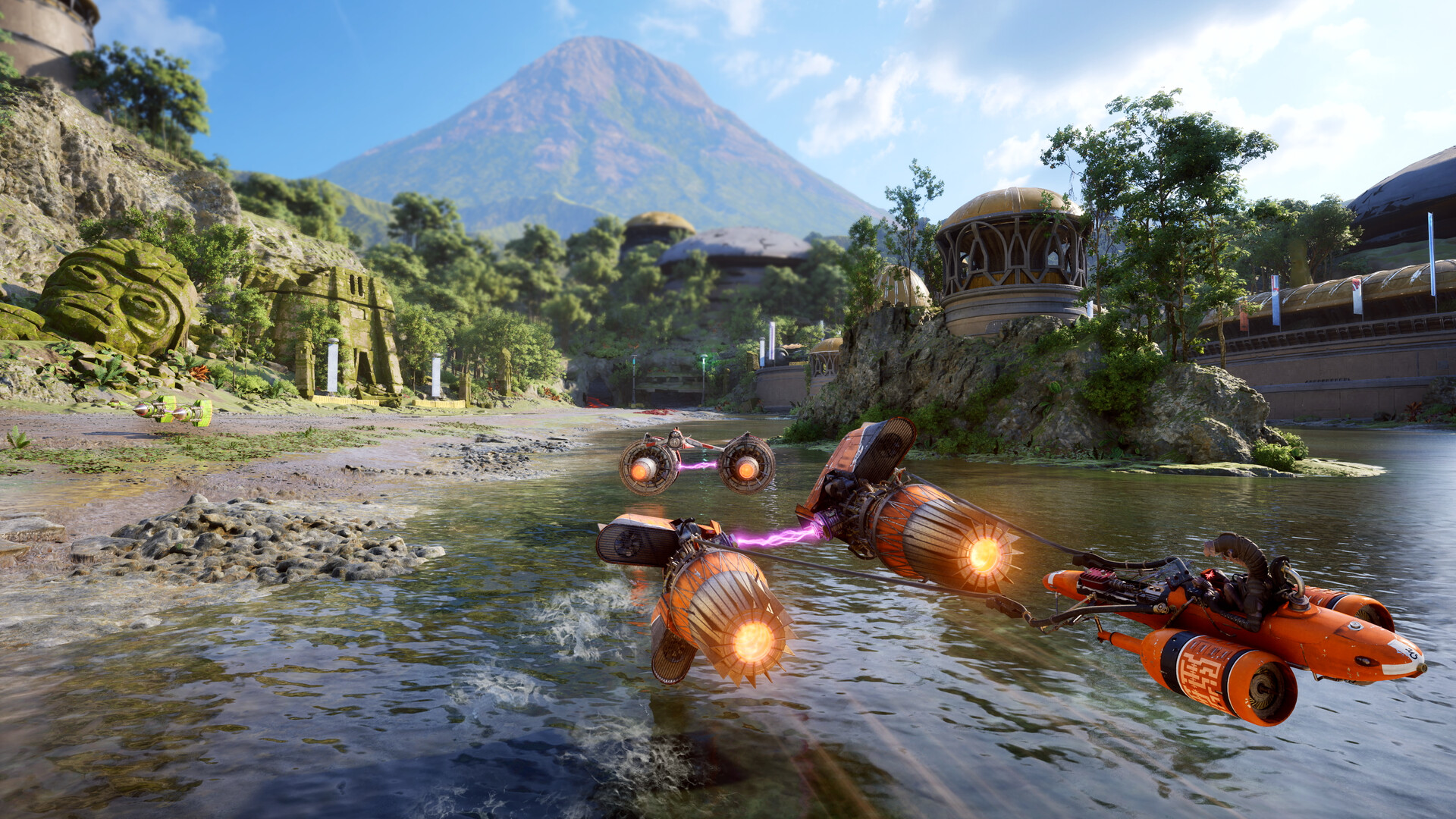
"Planning ahead becomes important"
Other than time trial events, each race lets you crash a limited number of times, at which point you’re out of the race, losing you a league token. Each run also gives you limited league tokens (and initially, only one), and once you run out of those, your run is over, and you have to start again from the beginning. That, of course, means you don’t have to win every race to progress, though the better you perform, the better rewards you earn, in turn increasing your chances of progressing. The rewards you earn at the end of each race, meanwhile, range from weapon parts, credits that you can use to buy new parts or repair existing ones that have adopted malfunctions, or upgrades that you can use to enhance your repulsocraft’s various stats.
This being a roguelite though, when you fail a run, you lose all of the progress you have made over its course, including upgrades and customizations made to your vehicle- though there are ways to make some permanent upgrades nonetheless- such as adding new auto parts to the pool that you buy from in the middle of a run.
Additionally, you can also use upgrade points accumulated over the course of each run to permanently enhance vehicle’s stats, allowing you to kick off runs from progressively stronger starting points as you pump more points into your craft. There’s an impressive range of upgrade and customization options available- though I will admit to being disappointed by the fairly limited cosmetic customization options available for repulsocraft.
By and large, however, thanks in large part to the level of strategy involved on both micro and macro scales, progression in Galactic Racer feels consistently rewarding, and only serves to make the game that much more addictive- yes, this is very much a “one more run” game that will keep you glued to the screen unreasonably late into the night.
Each run sees players moving from one location to another, and successfully completing a run advances you further in the story- and yes, Galactic Racer does have a story. It’s definitely (and unsurprisingly) not the highlight of the experience, but Shade’s quest to climb the ranks of the Galactic League and dethrone the villainous reigning champion Kestar Bool does still serve as a solid, fun framing device for the campaign. The story feels right at home in the fringes of the Star Wars universe, and even manages to rope in some fun appearances and cameos from characters that fans of the movies will recognize in ways that feel organic.
It’s also remarkable just how well the story – and really, the game as a whole – captures the vibe, tone, and atmosphere of the Star Wars universe. From the environments and the vehicles to the characters and more, everything looks and sounds perfectly Star Wars, right down to the details in the repulsocraft’s elaborate dashboards, or the pre-race engine prep you do before the countdown for each race.
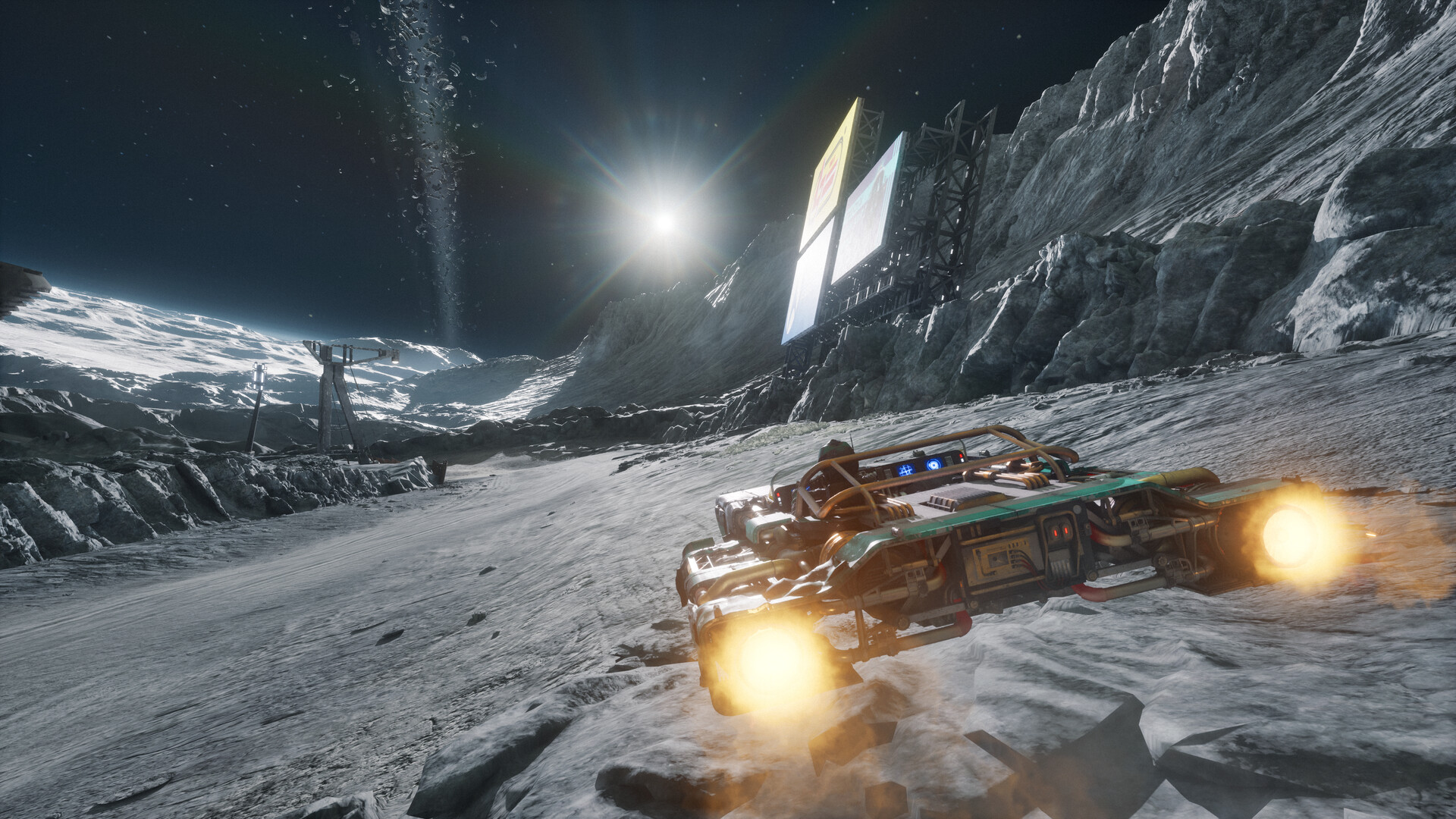
"Each run sees players moving from one location to another, and successfully completing a run advances you further in the story"
There’s impressive environmental variety on offer, which not only sets each locatoiapart from the others in how they look, but also has gameplay repercussions. For instance, the frozen wastes of Ando Prime impact things such as handling, but long stretches of ice on the track also keep your vehicles’ temperatures low, allowing you to use your ramjet for much longer without the risk of overheating.
On the other hand, the lava pools found on Sentinel I will do the opposite, and quickly heat your vehicle up, which means avoiding them is usually key. Meanwhile, each location also comes with multiple different courses, each of which is excellently designed, with a fine balance of large, expansive spaces that let you fly at breathtaking speeds, and tight, winding sections that challenge you to skillfully thread around dangerous obstacles. Without a doubt, track design is one of Star Wars: Galactic Racer’s bigger strengths.
Beyond all that, the campaign does plenty else to keep things varied and interesting for players, which only adds to how addictive it is. For instance, each run allows you to play with one of several different racing styles, with more unlocked as you play more and accomplish various tasks and challenges. Each racing style comes with unique perks and advantages, such as allowing you more crashes per race, or rewarding more aggressive gameplay focused on takedowns, among many others.
Meanwhile, not long into the campaign, you also get the ability to pick between several different backers who provide you with additional boosts and rewards based on your performances, while there are also various favours to earn from characters that you meet throughout the campaign that provide different boosts and bonuses, and more, adding another layer of planning, strategy, and replayability, all of which enhance the campaign’s roguelite structure that much more.
The campaign is easily the star of the show in Star Wars: Galactic Racer then – which is a good thing, because outside of the campaign, the game offers less than I was anticipating. That doesn’t necessarily mean there’s a lack of content. No, on the contrary, across its Scenarios and Arcade modes, Galactic Racer has a solid amount of races and time trial events for players to tackle.
That said, I would definitely have liked more ways to play the game. For instance, I would have loved a longform mode that allowed for more traditional ways to play with the game’s impressive customization toolset, without the campaign’s roguelite trappings, for those looking for a more conventionally structured experience. Or, at the very least, an option to create custom tournaments- hopefully that’s something that gets added in the future.
"The campaign is easily the star of the show in Star Wars: Galactic Racer"
On the multiplayer side of things, I struggled to find many races in the multiplayer sessions held during the review period. I was only able to play a couple of races, which were expectedly fun, but I’m hoping to sink my teeth into that side of the experience in a much more meaningful fashion post-launch, one there’s a larger pool of players online.
From what I have seen so far, Galactic Racer seems to be launching with a decent suite of multiplayer offerings. There’s quick races, quick podracing, and more longform tours that use the campaign’s roguelite structure. Whether Fuse Games and publisher Secret Mode plan to add more multiplayer modes remains to be seen. The developer has promised post-launch content, but details are yet sparse on exactly what that content will entail.
Meanwhile, from a tech and audio-visual perspective, Galactic Racer is an impressive game in more ways than one. For starters, it looks absolutely gorgeous. The vehicles look excellent, the environments are gorgeous and obsessively detailed, and the lighting system on display in particular as absolutely stunning.
Audio design is also absolutely top notch here. Every repulsocraft sounds spectacular, and the sounds accompanying each action in different environments add massively to the experience. Most importantly, the game also runs almost perfectly, which is crucial for an arcade racer. In all my time with it so far, I have hardly encountered any major frame rate drops.
Star Wars: Galactic Racer is an excellent game. It boasts tight, thrilling, action packed racing that not only captures the Star Wars racing vibe perfectly, but also delivers an experience that comes absurdly close to the highs of the Burnout franchise. Meanwhile, the roguelite structure lends itself perfectly to the campaign, making for an immensely addictive and replayable experience. Though the game could do with a little more variety in the content on offer here and there, by and large, this is one of the most enjoyable Star Wars games in recent years, and absolutely unmissable for all fans of arcade racers.
This game was reviewed on PlayStation 5.
Tight core racing mechanics; Takedowns are always immensely satisfying; Excellently implement roguelite structure makes for a wildly addictive campaign experience; Captures the Star Wars vibe perfectly; Rewarding, strategic progression mechanics; Rewarding customization mechanics; Excellent course design; Looks and sounds spectacular; Near-perfect performance.
Vehicle types could do with greater individual granular variety; Cosmetic customization options feel a little limited; Not enough variety in racing events; Needs more modes outside of campaign.