




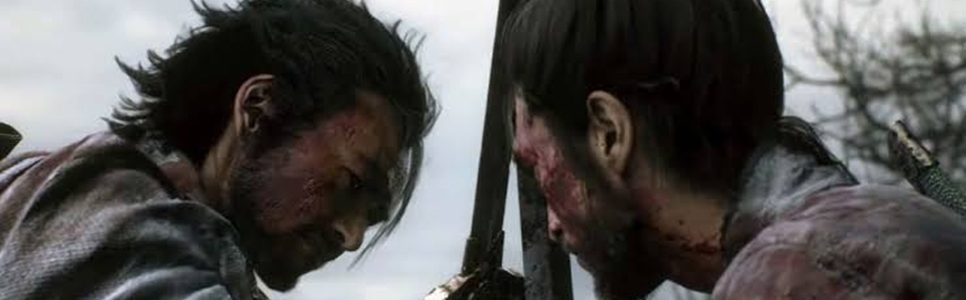
Even as we began to think about how Black Myth: Zhong Kui is already an impressive follow-up from Game Science after Black Myth: Wukong, our minds drifted off to the latter’s several boss fights. The battle against several foes in Wukong were an astounding spectacle, and a showcase of the scale and polish that has underlined 2024’s biggest action adventure game. It could have been easy for Game Science to explore and develop a sequel but no, they have other things in mind.
Well, here we are with the first ever gameplay showcase, a new protagonist spearheading what’s looking like an evolution of everything special Game Science pulled off in its debut outing. Is that new gameplay, and what’s looking like a good balance between fresh and familiar elements be enough to justify taking the spotlight away from the first game’s adventures? We’re thinking yes, and we’ve got a few reasons why. Let’s jump right in!
The Road Less Taken
Aside from the obvious draw of a familiar protagonist in the first game, Wukong 2 would also make sense from a commercial perspective thanks to the first game’s runaway success. But would that have been a worthwhile exploration of the series’s creative vision? Probably not. We’ve known that Wukong was always going to be the first instalment in the franchise, and it’s great from a creative standpoint that Game Science has chosen to expand Black Myth instead of simply taking Wukong forward.
It’s definitely a risky choice that means the new protagonist must make use of the flourish-filled swordplay he brings to the table to enrapture audiences who already have a bit of invested time and effort in the first game. But the switch from a staff to a sword seems to work well, lending the new Black Myth game its own combat identity. A new weapon, new protagonist, and a new background all seem to be working together to make this new game very different from what we might have been used to in Wukong.
Parries are clearly new, and the emphasis on pulling them off to interrupt enemy attacks and combos looks like a new wrinkle to an already solid combat system. The first game’s cool dodges are there, albeit with a new shimmering effect that sets them apart despite how familiar it looks to us Wukong veterans. Timing either dodges or parries looks like it’s as important as the Perfect Dodge mechanic from Wukong, although the window seems far tighter than we might be accustomed to.
We’re especially curious about what looks like a way to effectively respond to unblockable attacks. It looks like some sort of a perfect counter system that brings an element of risk versus reward to attacks that you might be tempted to dodge out of, instead giving you a way to turn even those to your advantage. That would be a game-changer in a combat framework that relied quite heavily on dodges in Wukong, allowing for a wider variety of responses to enemy attacks that the first game might not have been able to pull off with that staff.
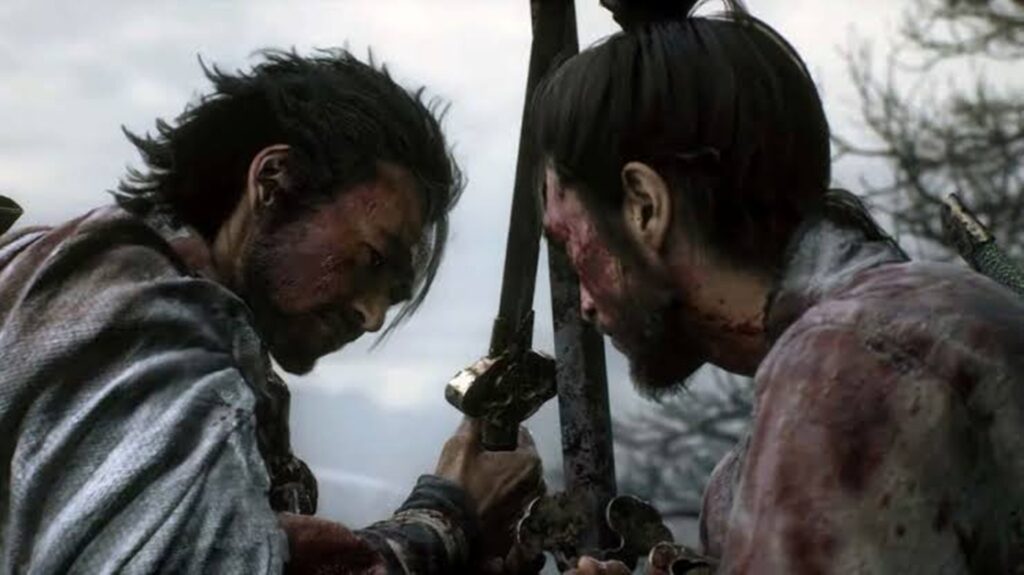
The system as a whole looks duel-oriented and reactive, despite the new lead managing quite well against multiple opponents. It isn’t a mere transplant of Wukong’s mechanics and moves onto a new protagonist, but an extension of its biggest strengths that are being woven into new systems. It’s as focused, if not more, while managing to set itself apart from what’s come before it even as it establishes a new gameplay loop that’s looking quite intriguing right from the get go.
Of course, Wukong’s biggest strengths are already on display even in the limited slice of gameplay footage we’ve seen. You’ve got the spectacle-heavy, multi-phase boss battle that brings Game Science’s talent at animation and visual presentation to the fore. The enemy designs are surreal, as are the environments you fight them in. The action-RPG fundamentals are all there, but they’re ever so slightly different to make them feel new.
But of course, the world, enemies, and weapons are only a part of the fun. There are other factors to consider when thinking about why the new game was a better choice than a Wukong sequel, and a bigger picture to think about when doing so.
A Bold New Direction
We’ve spoken about the new moves that the new lead brings, but how does he use them against foes that behave differently from what Game Science developed before? We already saw elemental attacks being used in the fight, but how important are they going to be against foes that seem indiscriminately biased towards your presence in their world? How will this fit into the game’s systems?
The boss fight we witnessed in the gameplay showcase could hold the answers to those questions, as that shadowy figure that turns up to assist the protagonist seems to have something to do with the old man from the showcase’s beginning. That the protagonist gets to inhabit his body at certain points suggests an entire system that’s designed around harnessing its power, whatever that may be, and being tactical about when and where to make use of it in a tough fight.
When you blend that in with swordplay that’s already quite the departure, it’s easy to see why we believe the new game could take the franchise towards a combat loop that looks familiar, but feels nothing like the one on offer in its predecessor. Everything we’ve seen of it so far points to a combat system that’s been reimagined, weaving in new possibilities based on the best parts of its previous iteration with new mechanics and systems. It’s certainly a better approach than simply adding in new stances or spells, something that might have been inevitable if a Wukong sequel was chosen as the path forward instead of this one.
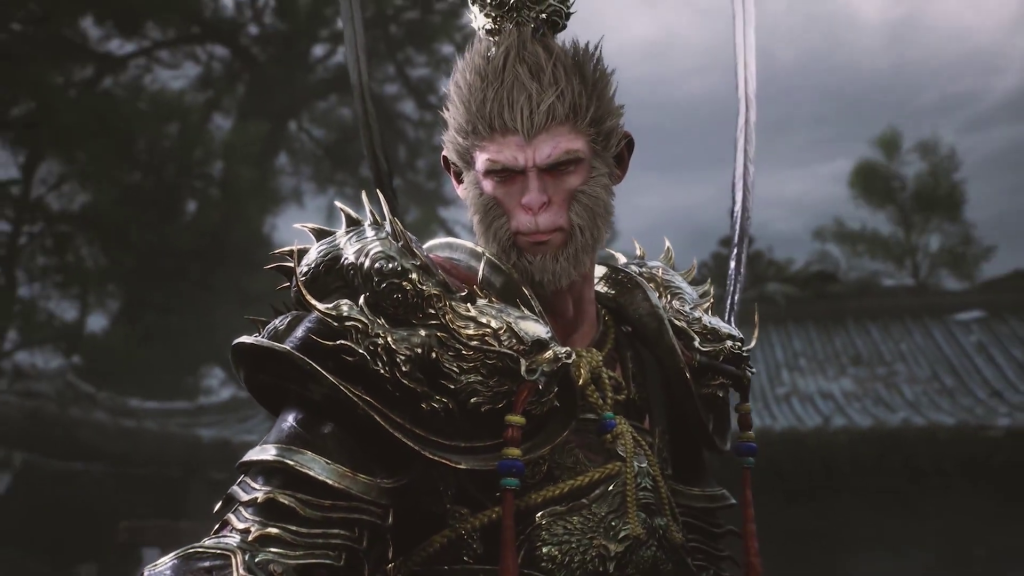
Of course, with the new game being only the second title in the Black Myth franchise, it’s pretty easy to forget what the intention behind making Wukong was in the first place. It wasn’t just to create a great action-adventure title, but one that allowed Game Science to use its creativity and development talent into mechanics they were comfortable with. The world of Black Myth Wukong was worthy of a nuanced look, with rich mechanics that allowed Game Science to flex its creative muscles.
The sequel is an opportunity to explore a different world, one with a markedly darker undercurrent to it that could allow Game Science to touch entirely different gameplay information reserves to get new ideas from. That means new locations, new enemies, new mechanics to underline the world with, and new weapons, gear, and abilities for us to experiment all we want. That same level of potential feels out of reach for Wukong 2 in its current state. The initial title wrapped up its journey so thoroughly that its core gameplay framework already feels essentially whole.
The initial title wrapped up its journey so thoroughly that its core gameplay framework already feels essentially whole, leaving little room for the infusion of fresh mechanics. Consequently, a direct follow-up might have struggled to capture the same level of enchantment found in the original adventure. It may have narrowed both expectations around the new game, and the creative freedom that Game Science now has by choosing to focus on a brand new adventure. Of course, that brings an important fact to the fore: the door is always open for a return to Wukong.
Painting The Bigger Picture
If you look at Black Myth as a series of titles implenting unique gameplay mechanics, this new entry could very well set the franchise up for a proper follow-up to Wukong, one where the player has a real gameplay based challenge to fight against, and potential new mechanis to rally to their cause if things work out for the protagonist we’re due to take control of when the game eventually drops. It’s a good choice to let the franchise breathe, and do its thing on its own terms, and this new game is the perfect opportunity to do that.
We’re the first to admit that one gameplay showcase isn’t enough to automatically declare the new game superior to the one that made its existence possible. But what’s been shown to us already answers the all-important question about Game Science’s decision to not move forward with Wukong 2. It isn’t that the first game doesn’t have enough meat on its bones to warrant a second outing.
It’s just that the Black Myth franchise has new places to go before that time might come. And we’re definitely along for the ride if that adventure lets us wield a blade in the way that this new showcase has promised. But until we get to lay our hands on that pommel, we’re going to be patient, and hope that whatever Game Science is cooking up is able to take things up a notch, and be a worthy sequel to a debut title that was one of the best games in its genre.
Note: The views expressed in this article are those of the author and do not necessarily represent the views of, and should not be attributed to, GamingBolt as an organization.