






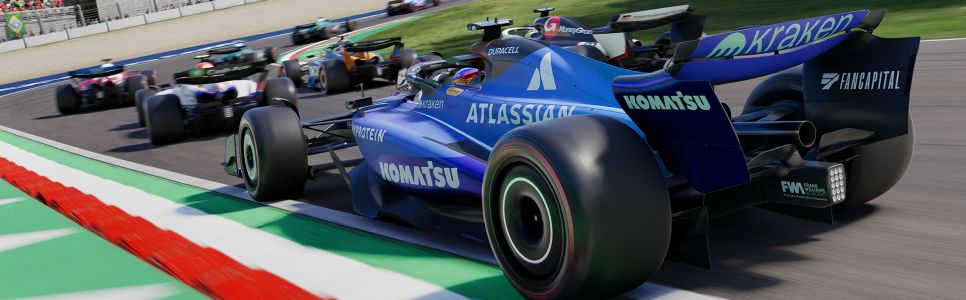
Formula 1’s 2026 season brings a seismic shift in car and engine regulations, with the introduction of an all-new, near-50/50 split between internal combustion and electrical power redefining in-car energy management across every lap. This overhaul isn’t universally appreciated, however, and the teams themselves are still searching for optimal performance.
For Codemasters, the sheer scale of changes – including new aero packages, new teams, and shifting driver line-ups – likely presented too insurmountable a challenge to build into an entirely new entry in time, hence the incoming 2026 Season Pack; a DLC of sorts incorporating the bulk of F1 2026’s regulation overhauls before the series’ purported revamp for F1 27.
Yet, F1 25: 2026 Season Pack is anything but a reskin. Here’s fifteen of the biggest changes coming to F1 25’s established foundation.
Regulation Overhaul Changes How You Drive
So, what do these sweeping regulation changes actually mean for you once you get behind the wheel or pick up your gamepad? Well, this year the cars are lighter, so they’ll feel nimbler, while real-time adjustable front-and-rear wings give you greater control over cornering speeds and straight-line drag. Meanwhile, you’ll take a more active role in recovering battery charge – which, alongside aerodynamics, we’ll unpack later in the feature. In terms of wheel-to-wheel racing, you’ve a broader arsenal to attack and defend, but if the 2026 Season Pack replicates the yo-yoing position swapping of real-life F1, you’ll need to manage and deploy these tools strategically to make a pass stick.
New Regs Mean Strategy Shifts Between Circuits
Scrutinising 2026 regulation aero packages further, the slimmer, narrower profile of both the front and rear wings means cars operate with less downforce, which impacts grip, which, as a result, affects turning ability. Another knock-on effect: on-throttle traction is more sensitive, meaning greater chance of spinning straight to the scene of an accident, depending on the driving assists, if any, that are enabled. Energy management is still the most fundamental change though, and how you recover spent battery will shift between circuits. High speed tracks like Monza, for instance, demand stricter energy management, while Monaco’s narrow streets place less emphasis on battery recovery.
Active Aero Isn’t Necessarily an Overtaking Aid
With the new energy deployment tools, which we’ll get to next, 2026 regulation F1 cars are less-reliant on opening the rear-wing letterbox – the now defunct Drag Reduction System, or DRS – to aid overtaking. Sure, while opening both the front and rear wings provides a noticeable speed boost, the ability for each driver to adjust their aerodynamics throughout every lap regardless of the car ahead means that any competitive advantage gleaned by reducing drag is completely neutralised. Instead, the new aero system enables higher straight-line speed, while still providing ample downforce for cornering grip, albeit not as much compared to 2025-specification cars.
Overtake Mode is the True DRS Replacement
Where aero adjustments no longer yield specific opportunities to pass the car in front, the all-new, battery-dependent Overtake Mode is now your go-to weapon for gaining a significant speed advantage. Like DRS before it, if you’re within one-second of the car ahead at a detection point you’ll be able to unleash Overtake Mode, a powerful surge of electrical energy which will be available to you throughout the entire next lap. It’s up to you when you use it, and if you’ve watched any of this season’s first five races you’ll notice some Overtake Mode-assisted passes occurring at historically unconventional parts of the circuit.
Boost Mode Gives an Additional Power Surge
Like Active Aero, Boost Mode is available to you at any point on the circuit, and it’s a useful tool to deploy electrical energy straight to your car’s drivetrain for extra acceleration. Functioning similarly to the battery-powered speed boosts on 2025 regulation cars, this year’s specification is distinguished by both a more powerful jump in horsepower and a faster battery drain. In other words, where you could deploy battery power consistently across a lap in F1 25, now you’ll have to think tactically on when best to drain your charge, whether you’re attacking or defending.
More Active Role in Recharging Battery
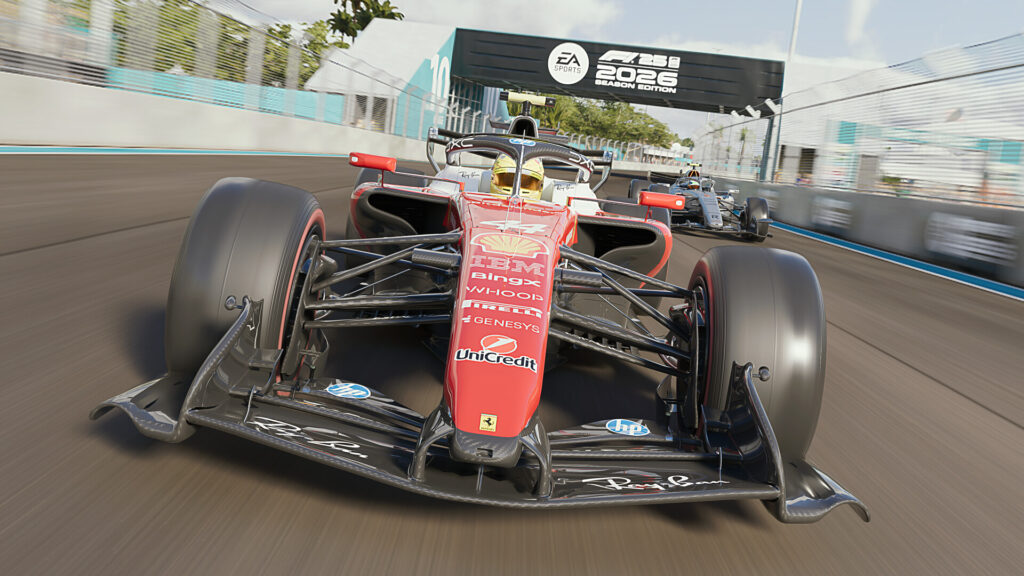
Whereas energy would be restored passively in F1 25, in the 2026 Season Pack you’ll need to adapt your driving style to maximise the rate at which your battery charges. Under braking is still a crucial way to restore spent energy, but partially lifting off the throttle early before cornering is just as vital. If you’ve been paying attention to F1 this season, you’ll know that numerous drivers – four-time champion Max Verstappen included – aren’t especially enamoured with partial throttle’s necessity. It’s undeniably divisive – cars should always be driven flat out, right? Another contentious point: superclipping. That is, when the cars automatically begin harvesting electrical energy once they’re running at top revs, eliciting a noticeable – and jarring – drop in engine performance toward the end of long straights. Now, EA has been relatively quiet on clipping’s presence in F1 25: 2026 Season Pack, but some early previewers are reporting that it is indeed happening at certain points – the high-speed run-up to 130R at Suzuka, for instance.
New Assists Can Manage Active Aero and Overtake Mode
If you’d rather stay focused on the racing, then F1 25: 2026 Season Pack offers two new assists which can manage Active Aero adjustments, energy recovery, and Overtake Mode for you. That said, there are key strategic advantages to deploying these tools at the correct, specific moments, so wrapping your head around how these new systems interact appears more beneficial than letting the game handle it for you.
New Driver Lineup
Perhaps not as noteworthy as last season, F1 in 2026 has still seen a handful of changes across its lineup of drivers. Toward the top of the grid, Isaak Hadjar moved to Red Bull from sister team Racing Bulls, replacing the outgoing Yuki Tsunoda, with rookie Arvid Lindblad taking Hadjar’s place. Elsewhere, Valtteri Bottas and Sergio Perez returned to the grid, forming the lineup for an all-new team.
Two New Teams
Yes, and that new team is the classic all-American brand Cadillac, who opted for experience in Bottas and Perez for their maiden season. While rooted at the bottom of the standings alongside Aston Martin, recent upgrades suggest potential for midfield competitiveness. The other new team is German outfit Audi, who took over Sauber at the end of last season, running their own custom built engine. They’ve endured a turbulent start, but Audi’s racing heritage can’t be ignored.
New Circuit: MADRING
Based in the heart of Madrid, blending public roads with purpose built tarmac, the all-new MADRING is specifically designed to accommodate 2026 regulation F1 cars. With fast, flowing undulation, tight, technical sections, and a track-defining, sweeping banked curve, the new circuit provides plenty of opportunity to maximise the potential of this season’s aero and energy overhauls. Despite still under construction, Codemasters used early CAD data to replicate the circuit’s character in-game, although it wouldn’t be surprising if the track design received a tweak come F1 27, after real-life F1 cars have raced around the completed circuit.
You’ll Need to Start a New Save
In Driver Career and My Team, that is. This season’s updated grid, rules, calendar, and car specifications won’t transfer to existing F1 25 save files. So, in case it isn’t clear, you can only race around the new MADRING circuit in 2026 regulation machinery. Also, if you’re entering a new season via a custom team, you’ll make up the twelfth entry on the grid.
Custom Teams Won’t Transfer
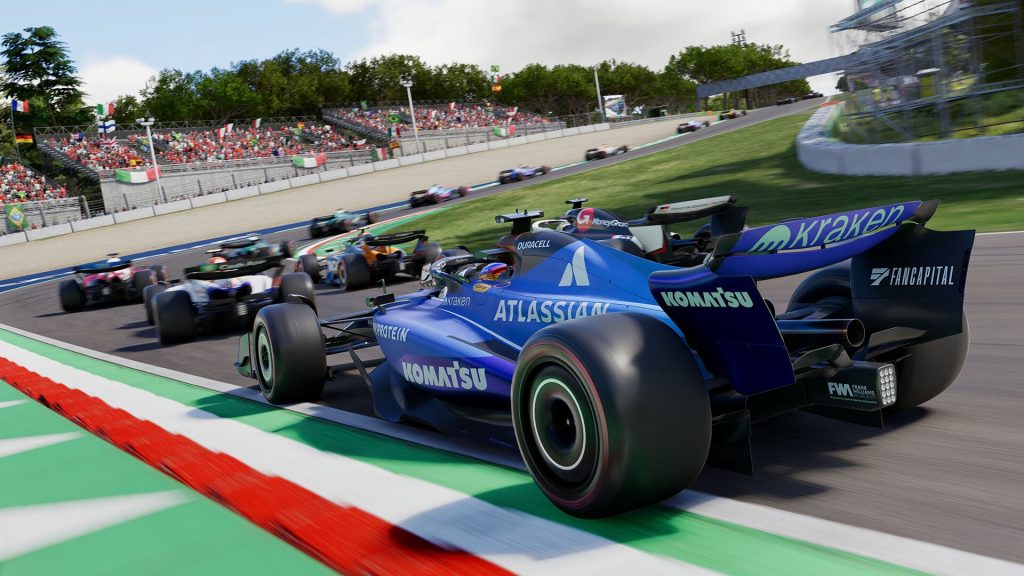
Likewise, any pre-made custom teams won’t be transferable between F1 25 and 2026 Season Pack. It’s clear, then, that these two seasons will function as two separate modes, which might explain why both the Konnersport or APXGP teams can’t be loaded into a 2026 season either.
Practice Programs and Race Objectives are Adjusted
During race weekend practice sessions, the programs you’ll undertake are confirmed to reflect this season’s new regulations. So, we imagine you’ll spend some laps optimising your energy recovery and deployment before qualifying. Likewise, in the race, the dynamic objectives which your engineer offers you will take F1 2026’s changes into account.
Ranked Multiplayer is Not Supported
While the 2026 regulations are playable in time trial, custom grand prix, and multiplayer, ranked multiplayer is not supported. This makes sense from the view that not every F1 25 player will buy the 2026 Season Pack, although, in that case, it might have been better for EA to implement two separate ranked multiplayer platforms. Elsewhere, F1 World, leagues, and challenge careers will remain at the existing specification.
Track Layouts Receive Visual Update
While F1 25: 2026 Season Pack isn’t set to introduce any track layout or design upgrades, meaning more LIDAR-scanned tracks are possibly waiting until F1 27, track-side signage, sponsors, pit lane length (to accommodate Cadillac as the eleventh team), plus a handful of other visual changes are being brought across with the upcoming DLC.