






Sons of Sparta, a 2D side-scrolling platformer, is now available on PS5 and PS5 Pro, and it’s been shadow dropped. We’ve spent time with the game, and we’re here to share 15 things you need to know before you purchase it.
A Canon Setting
Sons of Sparta isn’t just a side experiment or a “what-if” spin-off, it’s a full on canon entry. The game frames its 2D action-platforming around Kratos’ youth in Sparta, depicting the brutal discipline of the Agoge and the formative years that shaped him into the warrior he becomes later. Crucially, it also brings Deimos into the spotlight, positioning Kratos’ bond with his brother as a key part of the narrative.
Smart Level Design and Fluid Movement
Levels are thoughtfully constructed, blending combat arenas with environmental puzzles that demand clever use of your abilities and equipment. Movement feels responsive and precise, and with smooth, expressive animations tying everything together, traversal and combat both carry a satisfying flow.
Combat
Combat is built around a spear and shield foundation, with a heavy emphasis on reading enemy patterns, timed parries, and smart positioning. You’re not meant to just mash through encounters; the flow pushes you to defend with purpose, punish openings, and evade cleanly when the safest option is to disengage.
Graphics Style
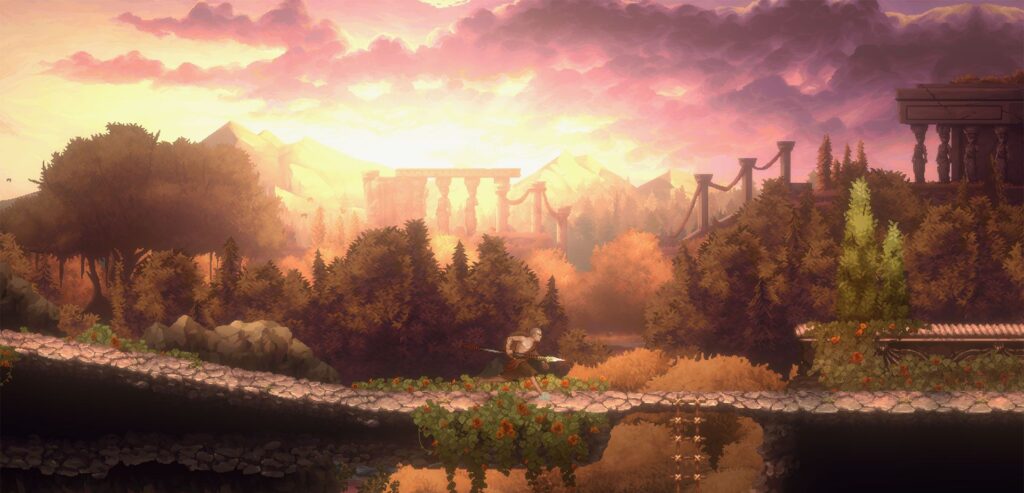
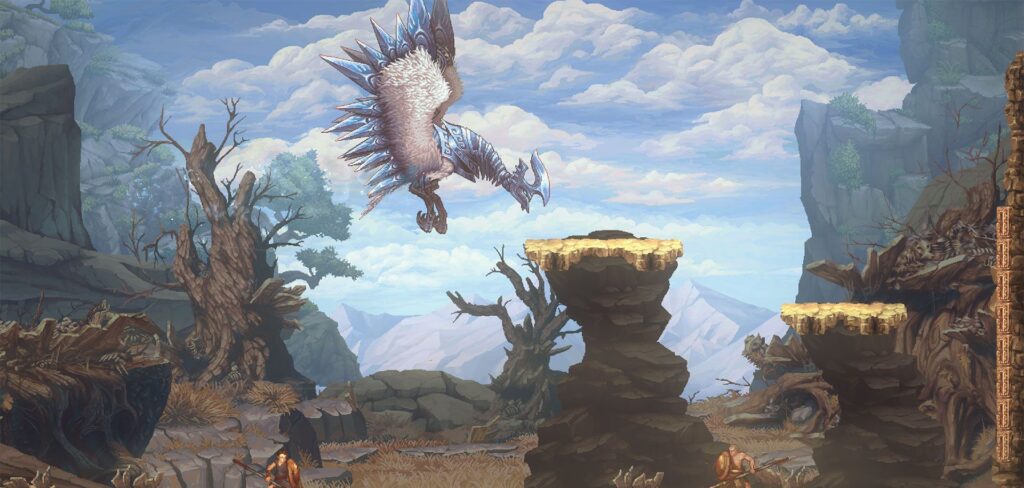
Visually, the game also leans hard into a distinct identity. Instead of chasing realism, it goes for hand-drawn pixel animation, giving characters and effects a striking level of detail and motion in 2D. The result is a style that feels both modern and a throwback to the retro days.
Deep Weapon Customization From the Start
Kratos begins his journey equipped with a Spartan spear and shield, but this isn’t a static loadout. The spear alone can be modified across three distinct components: tip, grip, and tail, each altering how you approach combat. Rather than simple stat boosts, these parts meaningfully shape your build, letting you lean into offense, control, or survivability depending on your preference.
Spear Parts Fundamentally Change Your Playstyle
Each spear component serves a specific purpose. Tips can enhance attacks directly, increasing critical potential, adding protective effects, or inflicting elemental status ailments like burn or poison. Grips alter the finisher of your base combo, adding aggressive enders such as lunging slashes or forceful bashes. Tails introduce entirely new moves, from rapid stabbing flurries to crowd-disrupting strikes. Since every attachment has its own upgrade path, experimentation isn’t just encouraged, it’s essential.
Buffs
As you progress through Laconia, Kratos gains access to buffs. These buffs grant special and super attacks that consume magic and can drastically shift the tide of battle. Some are built for ranged dominance, letting you control space or hit multiple enemies at once, while others enhance close-quarters devastation with brutal melee combinations. Choosing which buffs to equip can dramatically alter your combat rhythm.
Three Resource Meters to Manage
Combat isn’t just about combos, it’s also about resource management. Kratos operates with three core meters: health, spirit, and magic. Spirit fuels enhanced abilities and certain combat actions, while magic powers the special attacks tied to the buffs. These meters can be replenished through orb pickups and permanently strengthened via equipment upgrades, adding a layer of progression beyond pure skill tree investment.
Defensive Builds Matter Just As Much
The shield isn’t just for blocking. Its rim can be swapped out to emphasize different defensive strengths. Some rims widen your parry window, making counterplay more forgiving, while others reward evasive maneuvers by increasing damage after dodges. Much like the spear system, shield upgrades deepen these specialties, meaning defensive focused players have just as many viable build options as aggressive ones.
Skill Trees And Inventory
Character progression runs deep. Kratos begins with two skill trees centered on offense and defense, and later unlocks a third focused on movement. Upgrades can only be applied at campsites, encouraging preparation between major encounters. On top of that, the inventory can be expanded to hold up to six accessories, which grant passive bonuses like damage reduction or enhanced weapon effects. Some of the strongest ones require tracking down mysterious enemies on a secluded island, meaning exploration plays a key role in building your strongest version of Kratos.
Boss Battles
Boss fights are a major pillar of Sons of Sparta, and the game doesn’t hold back on variety. Kratos will square off against a roster of threats, creatures like Cyclops, Ioke, Ponea, and several other formidable enemies, each designed to feel like a proper skill check rather than just a tougher regular mob. Now, because this isn’t a big-budget, full-scale AAA production, you shouldn’t expect epic scale here. But what it trades in sheer scale, it makes up for with style and presentation.
The Price
On the pricing front, Sons of Sparta is positioned as a budget-friendly release rather than a full $70 drop, and it’s being sold digitally on the PlayStation Store in two tiers. The Standard Edition is priced at $29.99 / €29.99 / £24.99 / ¥3480, while the Digital Deluxe Edition bumps that up to $39.99 / €39.99 / £32.99 / ¥4480, so you’re essentially paying a $10 premium if you want the added deluxe perks (which we will discuss shortly). Either way, the base entry point is refreshingly accessible for a new Sony release, and it makes the game an easier impulse-buy if you’ve been waiting for something more straightforward (and cheaper) than the big blockbuster stuff.
Digital Deluxe Edition Contents
If you’re considering the Digital Deluxe Edition, it sweetens the deal with a handful of extras beyond the base game. You’ll get access to a Digital Soundtrack, which offer a deeper look at the game’s musical themes. On top of that, there’s a PlayStation Network avatar featuring the protagonist. In terms of in-game bonuses, the Deluxe Edition includes the Arrow of Virtue (a spear tip attachment), the Unstable Gemstone (a belt attachment), Rusty Scrap as an enhancement material, and a bundle of Blood Orbs to boost your early progression. Just note that some items are unlocked through story progress, so you won’t have everything available immediately from the start.
How Long To Beat
Expect a proper, full-length campaign, not a bite-sized spin-off. On a straightforward story run, you’re looking at roughly 9–11 hours, which puts it right in the same ballpark as the original, meaning it doesn’t feel like a “weekend demo” stretched into a release. And for the asking price we discussed, that runtime lands in a sweet spot: long enough to feel substantial, but still tight enough to keep the pacing moving. If you’re going in assuming this will be over in a few hours, it really isn’t, there’s enough mainline content here that you’ll get a satisfying arc before the credits roll.
Excellent Performance
We played on PS5 Pro, the game ran flawlessly from start to finish. There was no noticeable performance hiccups and it delivered consistently smooth gameplay throughout.