





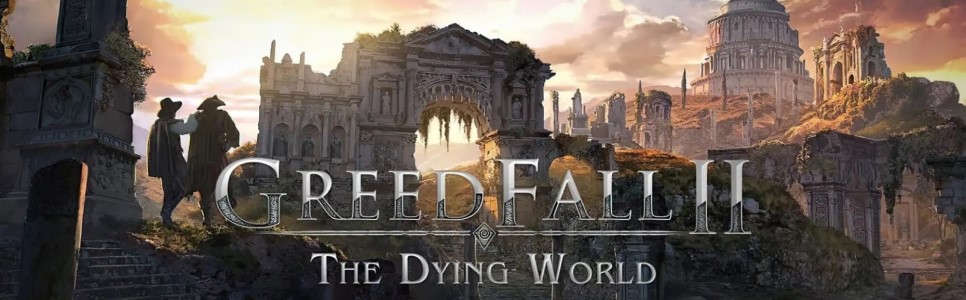
It’s always great when a follow-up to a popular game improves on its predecessor in meaningful ways. GreedFall: The Dying World certainly tries to do that, even if some of its biggest changes are bound to divide players, the continent of Gacane acting as a stage upon which a grand adventure unfolds. It may not look that way in the game’s early hours, though, and you’re going to have to stick with it to see its best features.
Allow me to explain. You begin in Teer Fradee, stepping into the shoes of Vriden Gerr, a native of the island whose name translates to Rootless. It’s a rather puzzling nickname that begins to make sense only as the story unfolds. You’re tasked with solving a couple of pressing issues as part of your initiation to become a Doneigad, one of Teer Fradee’s keepers of nature and guardians of its people.
"Your initiation forms the bulk of the game’s prologue, and it can take a while to get through since Teer Fradee is such a vast place, and discovering ways to achieve your goals entails exploring it to the best of your abilities."
Of course, things aren’t as simple as the Bridge Alliance is in the area, representing the worst of the world as they hunt local game with no regard for ethical conservation, and mine valuable minerals with scant regard for how their processes are causing very adverse effects. You could choose from a bunch of different approaches in dealing with them, ranging from diplomacy and a quid pro quo strategy, violence that affects your standing with the faction, or even stealthy sabotage. It’s all up to you, and your early allies, Nílan and Sheda, have known you since childhood, but the wider companion cast comes from different factions and can react strongly to your decisions.
Your initiation forms the bulk of the game’s prologue, and it can take a while to get through since Teer Fradee is such a vast place, and discovering ways to achieve your goals entails exploring it to the best of your abilities. Don’t be alarmed if you spend hours just uncovering the map and picking up as many resources as you can find without completing even a single objective. It’s just how the game is meant to be played.
Once you manage to solve the problems of the day, your initiation soon follows before the Bridge Alliance springs a surprise attack and you’re whisked away to prison. From there on, things begin to unfold at a rapid pace, and you begin to discover just how much of the world you haven’t seen yet, all through the eyes of a Teer Fradee native who must learn the complexities of unfamiliar societies, and learn them fast.
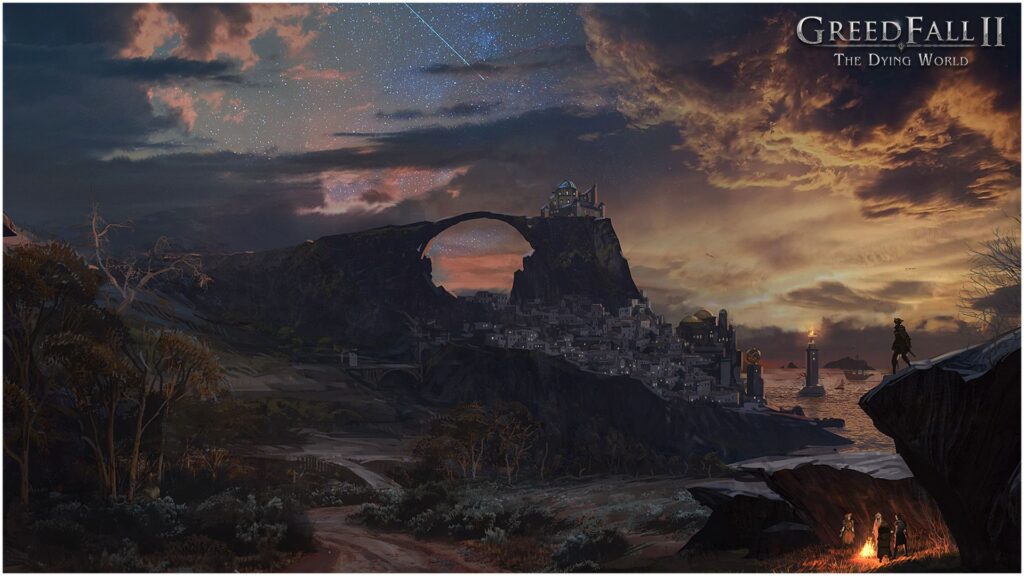
"Don’t be alarmed if you spend hours just uncovering the map and picking up as many resources as you can find without completing even a single objective. It’s just how the game is meant to be played."
The game wastes no time in introducing you to a growing roster of companions drawn from its major factions, and who you keep close can meaningfully shape both quests and conversations. Each of them belongs to one of the game’s many factions, and learning who to bring along and when becomes an important part of the gameplay loop on offer. For instance, a certain Naut captain is going to be of assistance in a mission that involves looking for one of your contacts in the Naut section of a large city.
They’re also useful for world-building, and each companion brings their own unique skill tree and questline, which gives the party-building side of the game some real texture. Their respective stories are compelling enough to have you running missions for them as soon as they come up, and each one uncovers a facet of the world that ties in well with the main story.
If I were to describe the story in one word, I’d pick “opportunities”, as every mission you get, be it a part of the main story or a side mission, is a chance to learn more about the world at large, and perhaps further build on the character you’re trying to create. Want to take on the world as a silver-tongued strategist? Go right ahead. Would you like to bully anyone standing in your way into submission? That’s definitely an option. Would you rather hang back and let your companions handle tricky situations for you? Yep, you get to do that too. There are always multiple ways to achieve your goals, and that’s one of this game’s best features.
As an RPG that has you navigating complicated situations nearly all the time, The Dying World is quite a solid game. Your choices influence your standing with different factions and your companions, and the impact of your decisions is felt at various points in the story. While the game’s approach to RNG-based calculations feels a little too simple, it still does the job well enough to keep things interesting.
I particularly liked how story missions and side content often blend into each other, with progress in either one often opening up new possibilities for you to complete the other. As far as building an intricate world that responds to what you do in it is concerned, Greedfall does a solid job. I’m also a fan of how this prequel puts you in the shoes of Teer Fradee native exploring the mainland, a direct contrast to the first game, where you played as De Sardet, a legate of the Congregation of Merchants, navigating the tensions between settlers and natives on Teer Fradee.
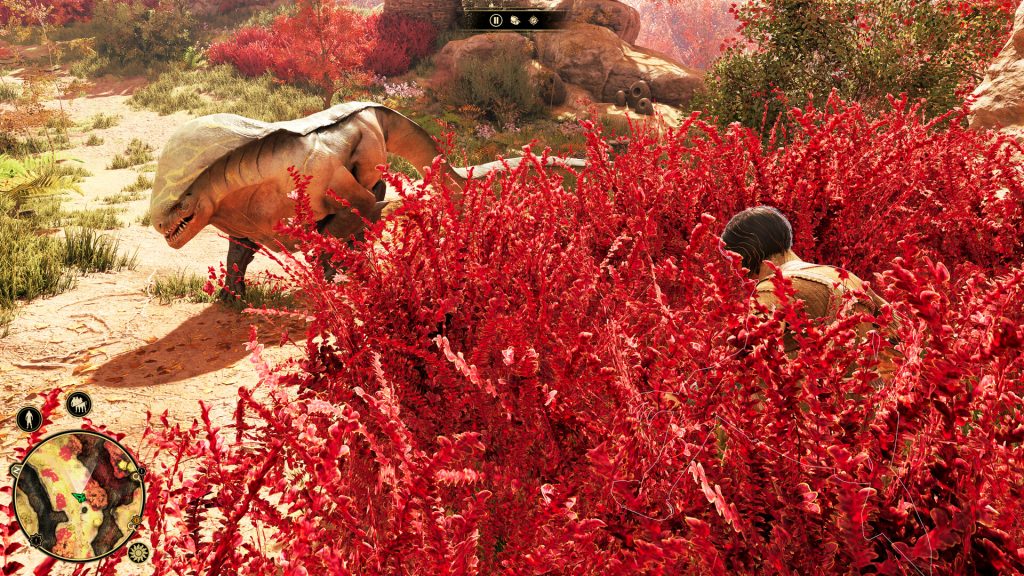
"Combat isn’t this game’s strong suit, and it’s a disappointment considering how the rest of the experience comes together."
With great exploration and a solid story working in its favor, you might think that this one’s an absolute treat. However, there’s one glaring issue to keep in mind: the game’s combat just sucks, and there’s no sugarcoating that. You can lean into a tactical pause and direct the whole party, or play more in real time and let companion AI handle more of the work, but neither of them goes beyond an overly simplistic approach that fails to entertain, let alone inspire.
It was so boring that I found myself choosing to try and avoid combat entirely, either sneaking past enemies or trying to bribe, intimidate, or smooth-talk my way past them whenever I could. It’s nothing more than a loop of basic attacks with some specials thrown in, and the skill trees are equally uninspired. Combat isn’t this game’s strong suit, and it’s a disappointment considering how the rest of the experience comes together.
Another thing that bothered me was the fact that exploring the world has you sticking to scripted paths through it, which can get quite tedious the first time you’re heading to a new location. The fast-travel system works well enough to offset that problem on subsequent visits, though. Your ship is going to be an important part of your travels, letting you get from one landmass to another in a flash.
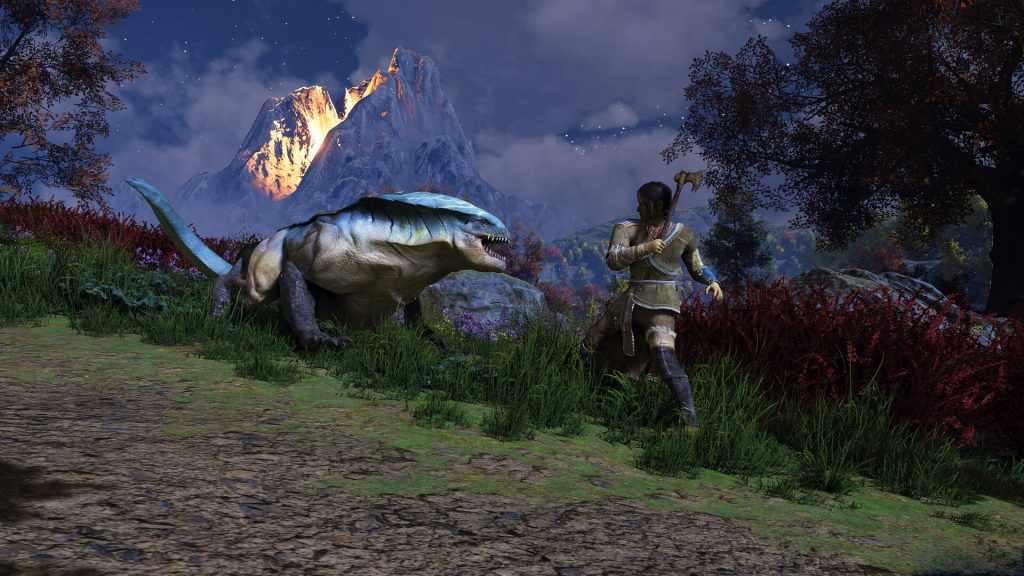
On the visual front, this one does well to create diverse environments with excellent lighting, but it isn’t going to win any awards. There’s a disparity between character models in cutscenes and what you see in-game that can be quite jarring. There was also quite a bit of pop-in on the base PS5, although it thankfully wasn’t so bad that it ruined gameplay.
"Your ship is going to be an important part of your travels, letting you get from one landmass to another in a flash."
The audio design is serviceable, and the cast does a decent job of selling their material for the most part. Performance-wise, my experience on base PS5 was mostly stable, though technical rough edges are still noticeable, and I did encounter one hard crash while loading a new area.
So, would I recommend this one to you? I’d say go for it if a great story with nuanced explorations of complex themes piques your interest. Just don’t expect anything great from its combat system. However, if you’re looking for an experience that does it all, you’re better off looking elsewhere.
This game was reviewed on the PlayStation 5.
Great story, interesting companions, solid world-building and exploration.
Terrible combat systems, character models could have been better.