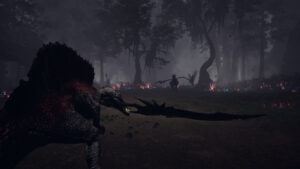







There’s a certain kind of fun to be had in playing a survival game that doesn’t just challenge your reflexes but rather tests your patience, decision-making skills, and your ability to live with long-term consequences. Road to Vostok is shaping up to be exactly that kind of experience, and we are all here for it. Positioned as a single-player hardcore survival first-person shooter with a heavy emphasis on realism and immersion, it immediately stands apart from the more accessible survival titles that dominate the market. It’s quite interesting on its own, but for fans of the S.T.A.L.K.E.R. series, it feels like something truly special.
What makes Road to Vostok even more fascinating is the story behind its creation. The game is being developed primarily by a single developer, Antti whose unconventional background lends a unique authenticity to the project. With experience rooted in military training and a deep interest in realistic systems, the solo developer isn’t just building a game but an accurate simulation of survival under extreme conditions. His development approach has been refreshingly transparent, with frequent updates and detailed breakdowns of mechanics shared openly with the community. In an era where large studios often operate behind closed doors, this kind of transparency has helped build trust and excitement around the project which is quite important given the large scale of the experience.
Having a solo developer at the helm means a strong singular vision for the game, and that becomes a lot clearer the more you look at the game’s core design. Road to Vostok is structured around a persistent world divided into interconnected maps, where players scavenge resources, engage with hostile threats, and attempt to push further toward the mysterious “Vostok” zone. There are no safety nets here; supplies are scarce, enemies are lethal, and the environment itself can be just as dangerous as any firefight. The design philosophy leans heavily into nailing realism. Weapons have weight and unpredictability. Inventory management is deliberate and restrictive. Healing isn’t instant. Every action carries friction, and that friction is what creates tension.
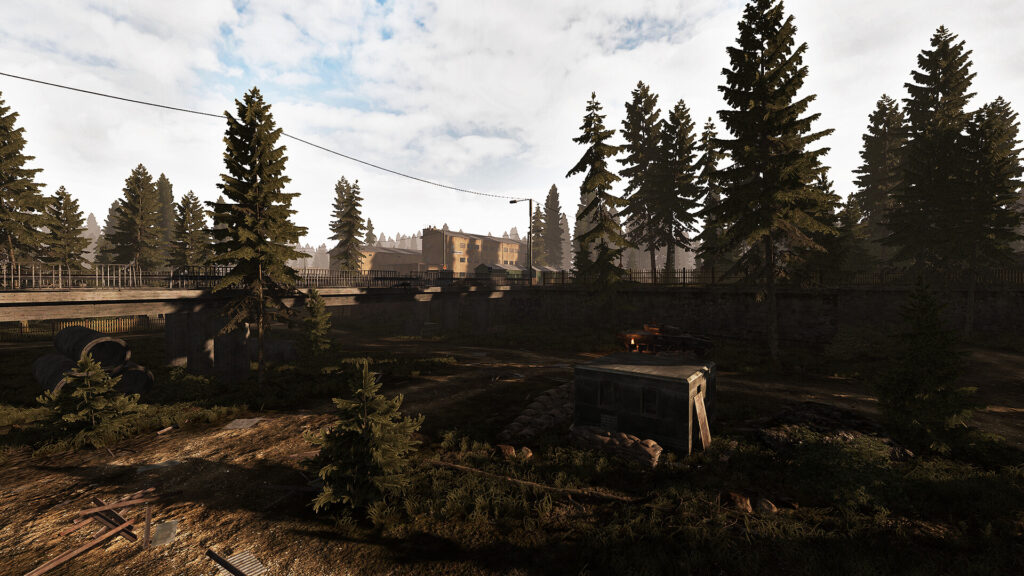
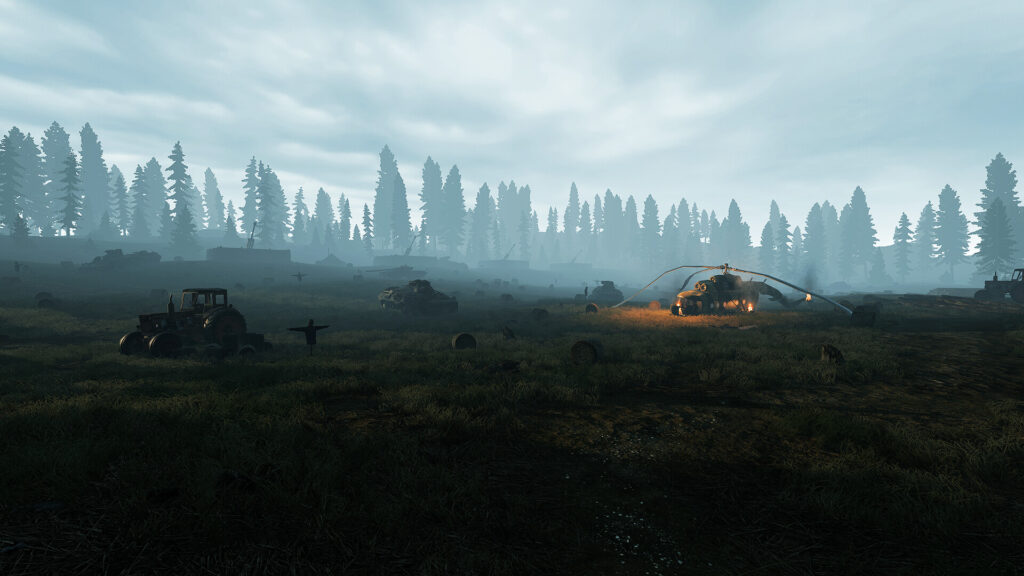
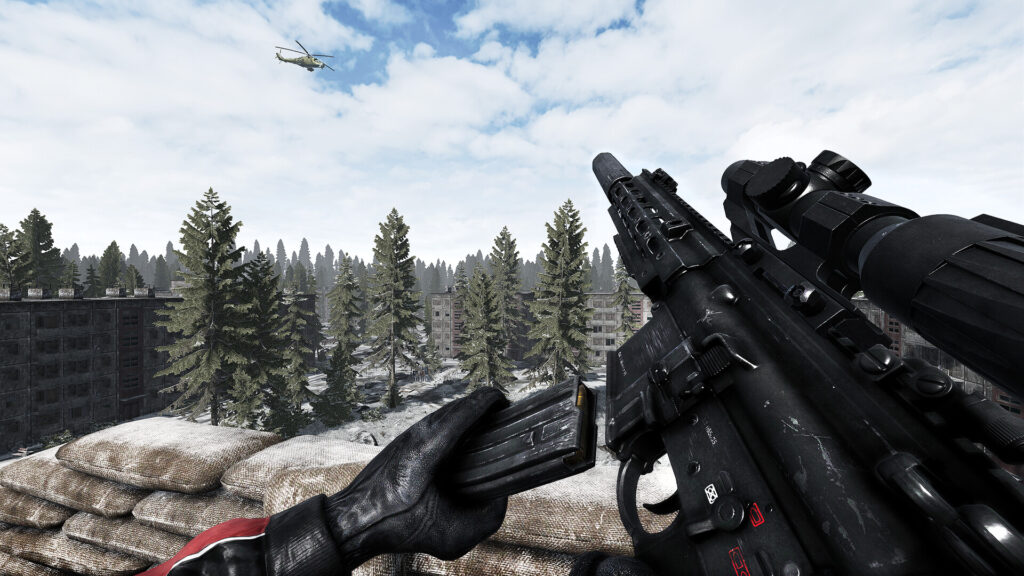
For fans of S.T.A.L.K.E.R., that tension is instantly familiar. GSC Game World’s survival outings thrive on atmosphere and unpredictability, creating a world that feels indifferent to the player’s existence. Road to Vostok captures that same spirit, and the environments carry a haunting sense of isolation. From bleak forests to long–abandoned structures and snow-covered outposts, Road to Vostok’s map flaunts a sense of haunting quietness that feels intentional. Dynamic weather and lighting further enhance that atmosphere, transforming familiar locations into entirely different experiences depending on the time of day or environmental conditions.
But what truly elevates Road to Vostok beyond a simple homage to the S.T.A.L.K.E.R. series is its commitment to player-driven storytelling. There are no scripted hero moments here, but rather the game heavily relies on emergent narratives – dynamic stories that arise naturally from systems intertwining with each other and reacting to the player’s decisions. You might spend an hour carefully navigating a hostile zone, avoiding conflict and conserving resources, only to lose everything in a sudden ambush. Or you might stumble upon valuable loot in an abandoned building, turning a desperate run into a triumphant escape. Or you could be stuck in a desperate firefight, and another faction rush in to give you a brief window to escape. These are not pre-designed scenarios; but rather the result of a world that reacts to you without bending to your will.
The star element of Road to Vostok’s design is permadeath which might be its most defining feature. When you die in this game, you don’t simply reload a checkpoint and try again. Your progress, your gear, your hard-earned resources are stripped away, and you obviously need to start from zero. That level of consequence fundamentally changes how the game is played, and puts a massive weight behind each decision. Do you risk pushing deeper into a dangerous area for better loot, or do you retreat and secure what you’ve already gained? Do you engage an enemy that might be guarding valuable supplies, or do you avoid the confrontation altogether? These choices carry real weight because the fail state isn’t just a temporary setback but a complete reset to the starting line.
For fans of S.T.A.L.K.E.R., this is where Road to Vostok feels like a dream come true. You see, the original games experimented with this level of tension, but conventional design constraints often softened the blow. Save systems in contemporary titles allow players to experiment without long-term consequences, but Road to Vostok embraces that intensity fully. It doesn’t just want you to survive; it wants you to fear failure. This singular caveat has the potential to alienate a major chunk of the player base, but this is exactly what makes success meaningful.
The game’s systems are designed to reinforce a constantly careful mindset at every turn. Inventory management forces players to prioritize essentials. Ammunition isn’t something you can waste casually, and weapons require maintenance and careful handling. Even navigation demands attention, as the absence of hand-holding mechanics means you must completely rely on environmental cues and your own awareness. It feels like an extension of the systems that we have seen in S.T.A.L.K.E.R. or even Far Cry 2, but nothing compares to the intensity of what Road of Vostok is aiming for.
What’s also impressive about Road to Vostok is the fact that it punches well above its weight, especially considering its indie origins. The environments are grounded and realistic, and the production values are quite convincing. Lighting plays a crucial role in establishing the right mood, with natural shadows and atmospheric effects coming together to create a sense of constant unease. There’s a rawness to the presentation that feels appropriate for the game’s tone. The sound design complements this approach, with distant gunshots, rustling foliage, and environmental ambience creating a soundscape that feels alive and unpredictable.
Another aspect that stands out is the game’s commitment to offline, single-player design. In a market saturated with multiplayer survival experiences and live-service models, Road to Vostok takes a more traditional path. It’s not about competing with other players or grinding through seasonal content, but completely embracing a solitary journey through a hostile world, where your only real opponent is the environment itself. And the best part is that it stays relevant for the long-term through its permadeath mechanic and dynamic systems which ensures replayability is high and the world is open to experimentation.
Of course, ambition alone isn’t enough to guarantee success. Road to Vostok is still in development, and many of its systems would need careful balancing to ensure they feel challenging without becoming frustrating. Permadeath continues to be a double-edged sword. It’s great at creating incredible tension, it can also turn frustrating if not implemented thoughtfully. The key will be ensuring that deaths feel fair and players should understand what went wrong and feel motivated to try again rather than discouraged, and that’s not something that most roguelikes have been able to imitate successfully.
What makes the project especially compelling is also how it taps into a very specific niche within the gaming community. Many players crave experiences that respect their time and intelligence and don’t rely on constant rewards or artificial progression systems to maintain engagement. Road to Vostok speaks directly to that audience. It offers a slower, more deliberate kind of satisfaction – one that comes from overcoming adversity through careful planning and execution rather than brute force or heavy guidance.
For fans of S.T.A.L.K.E.R., it represents something even more significant: the evolution of a beloved formula. It takes the core ideas that made those games memorable – the atmosphere, unpredictability, tension and pushes them into a more uncompromising direction. It strips away the little conveniences that these inspirations offer and asks players to fully commit to the experience. That level of authenticity is rare, especially in an industry that often prioritizes accessibility and mass appeal.
In conclusion, Road to Vostok has the potential to become more than just another indie success story. It could really redefine what hardcore survival games look like in the modern era, and even become an inspiration for other developers to build upon. And if everything falls into place – the systems finally click, the tension holds, and the world remains as compelling in the end product as it looks now – then Road to Vostok might just be a breakout hit. It has great potential to emerge as one of the most talked-about and influential survival games of the near future, and we are hoping that the developer will be able to take those elements and pull off something spectacular.
Note: The views expressed in this article are those of the author and do not necessarily represent the views of, and should not be attributed to, GamingBolt as an organization.