





Sengoku Dynasty is a tricky one. On the one hand, its survival gameplay loop fits well with its core premise, presenting an experience that can get quite immersive when you first pick it up. But that scope for greatness withers away, crumbling in the face of repetitive tasks, fetch and carry missions, and a combat system that deserves an analysis of its own – and for all the wrong reasons.
That’s not to say that it’s a bad game overall. But while it does have its moments, Superkami and Toplitz Productions’ efforts to bring the turmoil of Japan’s Sengoku era to the survival genre largely fall flat due to the poor execution of a fantastic premise.
"Sengoku Dynasty could have explored a plethora of poignant themes, examining the effects of war on the people who inhabit the land it takes place in."
But when it does shine, it does so quite well, bringing a sense of meaningful progress and the feeling that your efforts actually influence the world around you. Building your legend in the Nata Valley, or the Peasant Kingdom if you will, can be quite fun if you can forgive some of the uninspired grunt work that comes with the job.
Rising From the Ashes
Like nearly everybody else in the game, you begin as a refugee who finds themselves shipwrecked after abandoning your village due to the effects of a war. A barebones character creation system lets you tweak things to your liking before you set off on your adventure. In typical protagonist fashion, you exude main character energy, convincing a ragtag group of similarly displaced folks to rebuild their lives at your side.
Things get quite interesting from there as you’re introduced to the game’s village building mechanics, learning about how you need to keep up morale among the inhabitants of your new home while also ensuring that they are well fed and want for nothing.
I soon grew to care about the refugees I invited into my village, wanting to give them new lives while making sure that they were comfortable enough to make their efforts to start over mean something, far away from the turmoil that the rest of the country was facing at the time.
It’s a story that shows a lot of promise upfront, only to present you with a slew of generic characters who only exist to fill up the beds you lay down for them, in addition to automating most of the tasks that you would have to do on your own in their absence.
I would have loved to see my village’s citizens come up to me with requests that suited their backstories, and perhaps a little more variety in the reasons that they chose to leave their old lives behind. There are only so many times you can talk to a refugee to find out that they were on the run from slavers, or fleeing conflict between two daimyos that left them with nothing but their lives and freedom.
Sengoku Dynasty could have explored a plethora of poignant themes, examining the effects of war on the people who inhabit the land it takes place in. Instead, it squanders that potential by relegating the overarching conflict to the background, using it as a prop to justify an endless list of tasks that fall on your character’s shoulders.
Obtuse In All The Wrong Ways
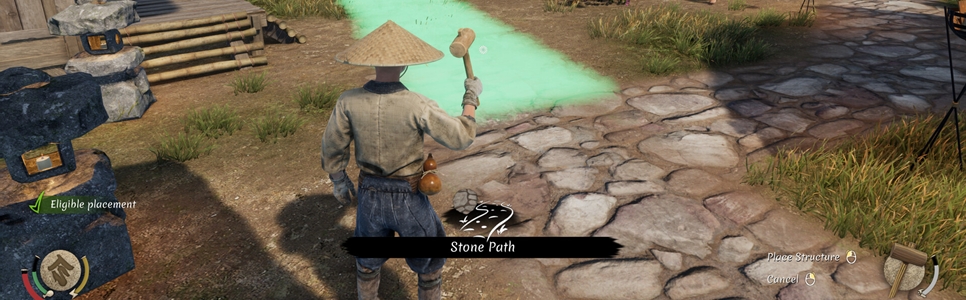
Building up your village involves procuring resources from the world around you and using them to put up houses, storage buildings, workshops for various occupations, and perhaps a few decorations if you have enough of them to spare.
To that end, you craft a couple of tools, each of which serves a specific purpose. The hammer is used in constructing buildings, while your axe and pickaxe are used for harvesting wood and stone, respectively. Rarer materials require higher-quality tools, which you unlock as you level up your Dynasty Level by building more structures or assisting people out in the open world.
As you begin to attract more people to your village, you unlock more building types, eventually being able to assign villagers to procure materials for you – a requirement if you want them to feel like they belong in the new utopia you’re creating. However, they come with needs of their own, and you’re constantly on the lookout for herbs, fruits, meat, and furs to keep them warm and fed.
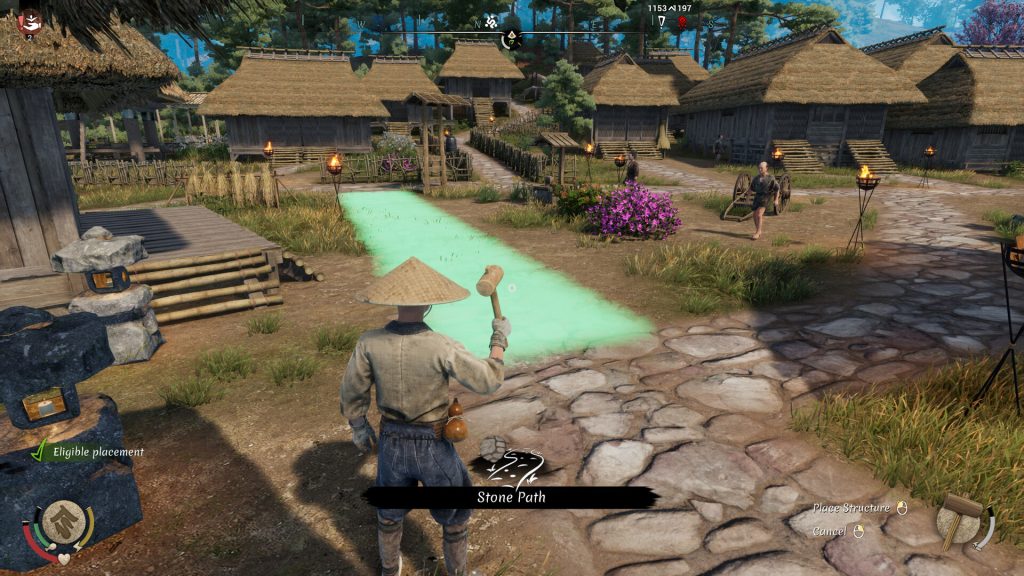
"It doesn’t help that the game is decidedly obtuse, barring a few tutorial pop-ups that do a decent job of introducing you to its core mechanics."
You also begin to observe the effects of the war on the land around you, encountering bandit camps, broken bridges that need repair, more refugees looking for a place to call home, and so on. From there on, you’re more or less left to your own devices with a handful of story missions nudging you towards points of interest.
While all of this seems quite exciting on paper, the bulk of your time will be spent chopping down trees, hammering away at buildings, and cooking at a hearth or campfire. While you might get your villagers to help out, it can be quite hard to figure out how to get your hands on that one rare resource you need to bring new functionalities to one of your buildings.
It doesn’t help that the game is decidedly obtuse, barring a few tutorial pop-ups that do a decent job of introducing you to its core mechanics. For instance, I spent two hours of an approximately thirty-hour playtime running around the map trying to figure out where I could procure some rope to build a halfbow that an NPC insisted I bring along on a hunt I wanted to join.
And don’t get me started on the game’s combat.
Flawed Fighting
I was pretty excited to make my way up in the world of Nata Valley as a Warrior, earning renown thanks to my skill with the blade. However, even with the game on Normal difficulty settings, I found combat to be among my least favorite parts of the game.
For the most part, I felt that my most dangerous foe was the game itself, as its controls and animations had me constantly on the back foot against even the most basic enemies. As someone who doesn’t hesitate to learn the ins and outs of a new Soulslike until I’m parrying or dodging anything an opponent throws at me, the combat system in Sengoku Dynasty felt like an afterthought, existing only to provide a change from constantly stopping to pick up resources for my village on my way to the next generic mission.
What’s worse is the fact that your HP is directly tied to a Food mechanic that requires you to constantly manage the amount of food you have in your inventory. You need to keep eating food in order to keep that meter from running out, and your health slowly regenerates based on how much of it you have in your belly. It’s like the meditation system of Witcher 3: The Wild Hunt, only far more tedious.
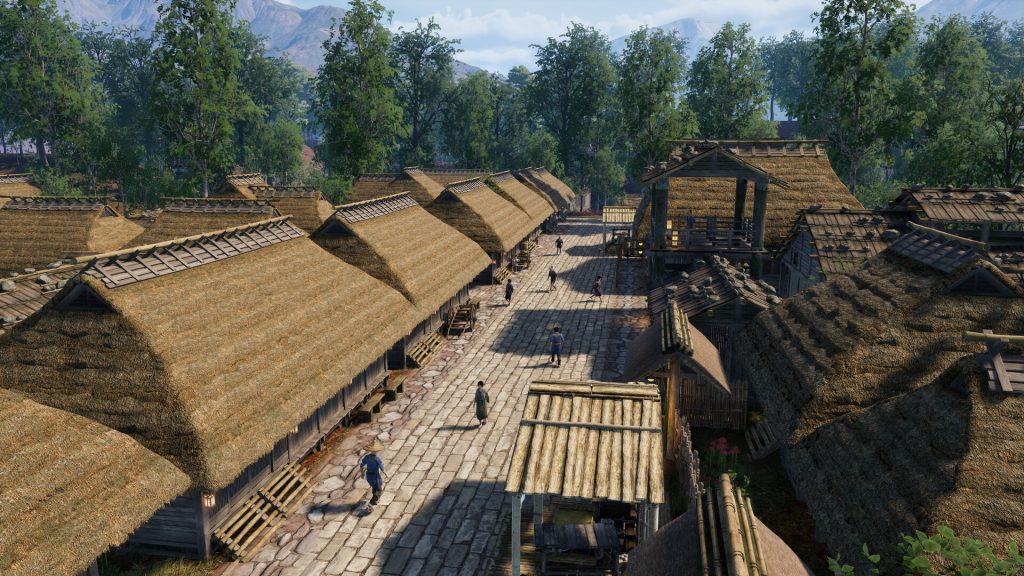
"The Raid mechanic is probably my favorite part of the game, as enemies could decide to launch an attack on your village at any point."
In a fight, that means taking damage can alter the course of an encounter in a matter of seconds, as a few hits can have you scrambling to defend yourself lest you’re sent right back to the nearest village in the event of your death.
While healing items are present, using them requires diving into your inventory menu while your enemies continue to batter you with attacks. If there is a better way to heal in the game, I’m yet to find it, thanks to the unintuitive presentation of its mechanics.
It doesn’t help that progression in the game requires you to liberate regions in the Nata Valley to ensure you’re consistently levelling up. Ultimately, I ended up switching over to a Custom difficulty setting, making my character take no damage from enemy attacks or a lack of food. I told myself vampires could have existed in the Sengoku era, realism be damned.
Inspired Yet Inconsistent
Speaking or progression, earning Dynasty Levels and perks is quite the grind, with a constant loop of building new structures, exploring the world looking for people to help, and taking out enemy encampments. The Raid mechanic is probably my favorite part of the game, as enemies could decide to launch an attack on your village at any point.
While you’re given a warning that an attack is impending, receiving that warning means that you need to find enough food to ensure your health is topped off while waiting for a new day to start in order to be present and fend off the assault. It was an interesting wrinkle that brought a fair bit of variety to the gameplay loop.
However, your overall progression and that sense of building up your legend fade away in the face of how much grunt work it entails. While it does make sense from a narrative standpoint, I’d have much rather chosen to live my life in peace and quiet instead of trying to become a legendary daimyo if I’d known just how many trees I’d have to chop down in the process.
The open world’s allure similarly fades away once you spend a few hours in it. There was a lot of pop-in and multiple frame drops as I went around looking for hares to hunt, and even a hard crash that could not have come at a worse moment, undoing a significant amount of progress I had made over nearly an hour.
The audio design is passable at best, with NPCs merely voicing a greeting and a goodbye, and conversations being relegated to lines of text that you navigate with little to no choices present to make things interesting. Conversations exist to facilitate either lore drops, trade, or the potential recruitment of the NPC in question.
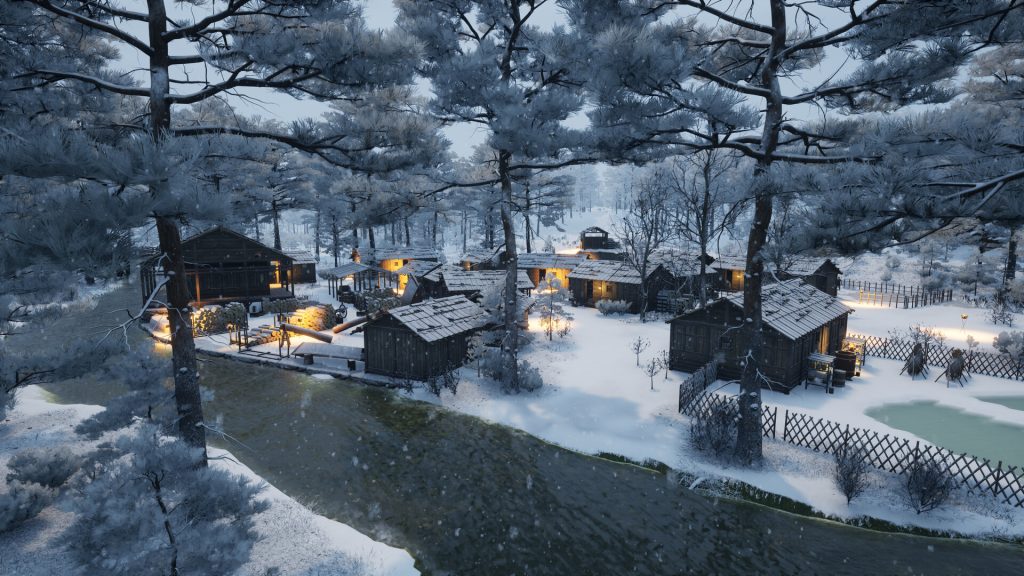
"Pick it up on sale if you’re a fan of survival titles, or if you want an experience that doesn’t push you too far out of your comfort zone."
Overall, Sengoku Dynasty is an inspired title that fails to build on its potential. And yet, I find myself wanting to return to the Nata Valley and check on how my villagers are doing, perhaps adding a new building to my village since I’m already there. I’d say that it’s a game you might choose when you run out of things to play, or if your backlog of titles seems too overwhelming to dive into at the moment.
Pick it up on sale if you’re a fan of survival titles, or if you want an experience that doesn’t push you too far out of your comfort zone. Nata Valley is quite a good spot for some relaxing fun, but doesn’t test your mettle as a player as often as it should.
This game was reviewed on the PlayStation 5.
Interesting survival mechanics, a sense of meaningful progression, and a relaxing gameplay loop.
Heavy emphasis on grinding for resources, obtuse systems, and a poorly executed combat system.