




You could say that the original Watch Dogs wasted a solid premise thanks to a rather lackluster gameplay loop and story, and we’d have to agree. It was still a fun game, to be sure, but not one that would have us chasing down everything it had to offer. It was only logical, then, that we went into Watch Dogs 2 with mixed expectations, a sentiment we think we’ve probably shared with a lot of you who played the game.
Well, it had its own flaws, but the follow-up to the original title is one that we revisit from a time, a rare feat considering that it’s been a decade since it was released. It had a unique vibe, feeling a lot more energetic and more fun overall than its predecessor, while it cemented the franchise’s identity in many ways. What made that the case? We’re glad you asked.
Join us as we take a look at why Watch Dogs 2 manages to keep us coming back to its take on San Francisco even after all this time.
A New Stage And Actors
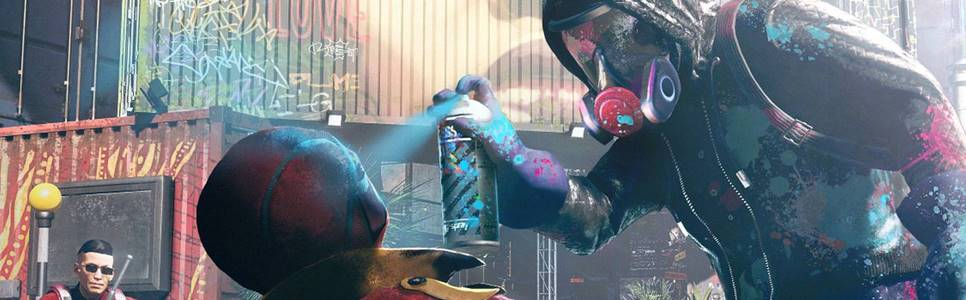
That take on San Francisco is our first stop, and we think it’s quite an upgrade from Chicago. The Bay Area was immediately brighter and livelier than the world from the first game, making it automatically feel like a world that was more inviting and explorable. There was more color, a better tech-focused undercurrent to the world you were exploring, and the sense that it was more than just a grim urban sandbox for us to let loose with our hacking skills. For an open-world game like it, this was a world that supported the fantasy it was selling, and even facilitated it in many ways. It made the standard set of activities feel more inviting, as a result.
Speaking of hacking skills, that’s where Marcus Holloway comes in. On the personality front, we found him instantly more likeable than Aiden from the first game, who came across as a little too somber for somebody with a skill set like his. Yes, his frustration at the situation he was in should be considered as a factor, and perhaps a strong narrative pillar for his lack of a sense of humor, but there are ways to add layers to characters like him. Sadly, Watch Dogs used none of them.
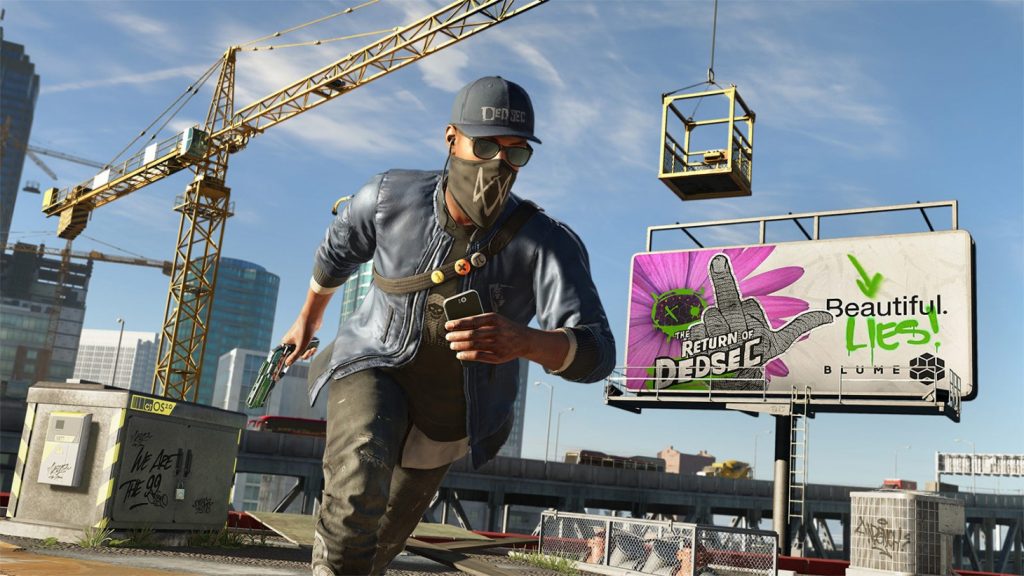
Marcus, in comparison, was then a welcome breath of fresh air. He was more willing to make a joke even in serious situations, for starters, and a whole lot more expressive about the situations he was in and how they made him feel. That made him a relatable protagonist who was still shouldering a heavy burden from the narrative, but didn’t let it get him down to the point where he became too much. It was a solid balance which helped him give the story a human center, while being a better flag bearer for the rebellious hacker character that it was hinged on.
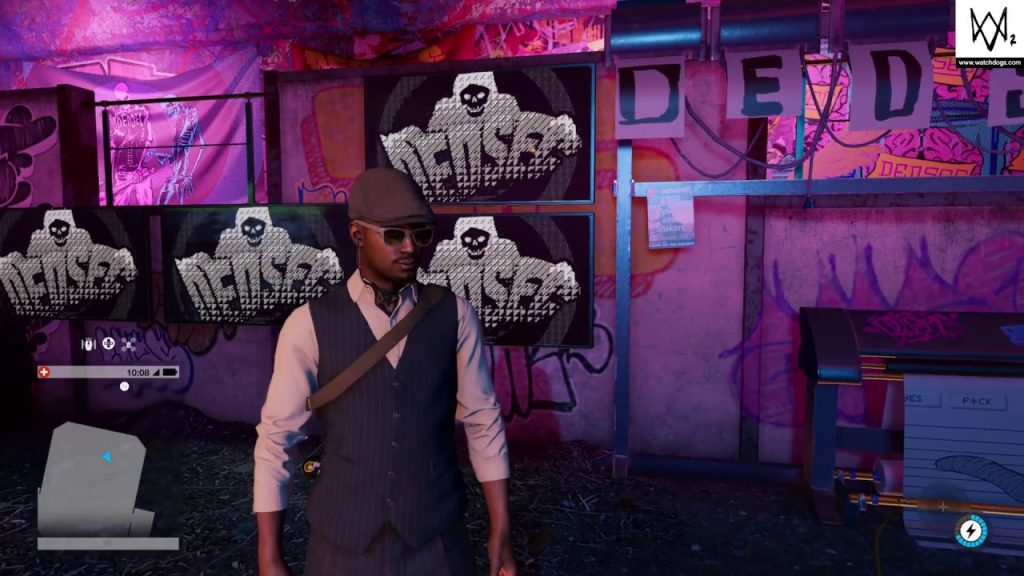
Of course, there was DedSec, and his interactions with the hacker organization could feel a tad too exaggerated at times. The game tried too hard to sell a sort of loyal bond between the two parties, akin to Marcus joining a modern-day Assassin Brotherhood, even. Those parts were a little too cringe for our taste, but hey, we did say that the game had flaws right up top, didn’t we? While we’re on the subject of DedSec, we see it as a great way to bring in characters new and old into the story, but boy, was some of the writing around them awkward.
Clashing personalities and a differing sense of humor across a cast of characters working towards a common goal aren’t necessarily a good thing if the way those characters are interacting doesn’t justify that variety. In Watch Dogs 2’s case, that was a problem that came up too frequently with DedSec. There was humor, the hacker culture that they brought to the table, memes, and that undercurrent of youthful rebellion that was a reflection of their ideals and unwavering convictions, all of which didn’t come together well enough for the group to not feel a tad awkward.
But on the other hand, that awkwardness gave the organization a distinct flavor that worked very well to make them an interesting faction in the story and a crucial pillar of Marcus’s adventure. DedSec might have been occasionally cringe, but they definitely weren’t boring, commanding a presence in the game that might not have worked in some instances but rooted the organization as a key player in San Francisco’s hacking scene.
Well, we’ve talked about the stage, the setting, and the people. It’s now time to look at what they got up to in the game and why that’s a factor in keeping it relevant even today.
One Hack At A Time
Marcus didn’t just bring a dash of personality to the table in Watch Dogs 2. He brought a whole damn arsenal of tricks that made our time in San Francisco, his working relationship with DedSec translating to a gameplay loop that gave you a lot of versatility in potential approaches to a variety of situations. It was a hacking/stealth loop at its finest, and it’s one of the reasons we like to boot this one up from time to time and just cut loose in the city.
It worked best when you played it like it was intended, trying to avoid combat or gunplay as much as possible in a gameplay loop that was clearly built around you diving into the hacker fantasy and doubling down on that style of play. Of course, the option to just brawl it out was always there, but it clearly felt like it was merely a tool to try and get out of sticky situations. The combat is the weakest part of another otherwise solid chain, mainly because it clashed with the kind of character Marcus was presented as, while also clashing with the overall tone of the experience the developer was trying to sell.
We couldn’t help but feel like the game should have pushed nonlethal solutions over violent ones harder than it actually did. This was a game that had a brains-over-brawn approach baked into its very foundations, and failing to double down on that certainly cost it dearly in hindsight. With that being said, for those who embraced the nonlethal way, things were infinitely more entertaining than the first game and continue to be so even after subsequent additions to the franchise’s lineup.
The mission design is another aspect that really shines through in certain areas, the open-ended infiltrations being a great example. There were also hacking puzzles, and a fair share of objectives that were creative enough to have us delighted to take a crack at them. However, they were let down by predictable enemy patrols and control zones, more than a bit of repetitive mission structure, and the general feel of checking things off a list that had already begun to be a problem for the developer’s big releases.
The systems in place were strong, but neither the campaign nor the rest of the experience used them to their full potential. The result is a game that could have, and perhaps should have, been greater than it is, but is still a very entertaining experience nonetheless. Despite its flaws that stemmed from a clear lack of balance between its best features, Watch Dogs 2 managed to feel authored, bringing a specific mood that its cast sold very well, and its own cultural identity that was an important part of a world that was fun to exist in.
It’s fun in a way that even current-gen games that are bigger in their ambition and scope and cleaner in their execution fail to be as memorable as San Francisco with Marcus in it. But that’s exactly where the Watch Dogs franchise as a whole might have shot itself in the foot. While the first game felt too serious, this one went another way while paving the path for future titles to further distil the strong identity that the franchise came with and the specific experience that it was trying to sell.
The developer should have looked to double down on what made Watch Dogs click, refining it into a hacker-stealth game that didn’t need clunky melee and ranged combat. Yes, the first game had potential, and we’d say that it crawled so that the rest of the franchise could fly to whatever heights it could manage. Legion did do interesting things with DedSec’s London chapter, although the lack of one protagonist and a muddled approach to parkour and its cover mechanics were drawbacks.
Nevertheless, Watch Dogs 2 stands out as a title that was arguably the cleanest version of that formula. It may not be a masterpiece, with its uneven tone and gameplay not working in its favor, while the combat and dated open-world design further dilute its value proposition.
But look past its flaws, and you see a game with a vision that had a very vibrant energy to it, with systemic freedom and a whole lot of personality that make it stand out today. And that’s an achievement in a gaming world where there have been several takes on hackers that are now at our disposal.
Note: The views expressed in this article are those of the author and do not necessarily represent the views of, and should not be attributed to, GamingBolt as an organization.