






It’s been an interesting time for Crimson Desert. The game’s launch weekend might have been full of complaints, leading to its reviews being sort of critical about what it has to offer. However, the developer’s timely intervention has managed to get this ambitious adventure back on track, allowing it to earn back the goodwill of players who might have otherwise moved on to other titles.
While its reputation has managed to regain some of the momentum it lost, I’ve been seeing a lot of discourse around the game that raises interesting questions about how modern open worlds are being judged. Specifically, the argument that the game holds nothing interesting in its opening hours, and continues to remain as interesting even after spending upwards of twenty hours in Pywel. While I disagree, I can see where those complaints are coming from, which brings me to the questions that came up as I thought about why people would feel that way about it.
I began to wonder if we’re actually looking at the game objectively enough, and considering the bigger picture that Pywel aims to paint. Should big-budget releases aim to be so front-loaded that they throw all their ideas at their players right off the bat? Yes, your first few hours in Pywel might be spent trying to wrap your head around a multitude of systems that all compete for your time and attention, and not all of it is as amazing as what’s on offer in other titles. But are they really “interesting”, or is a slow burn that delays its payoff by a significant margin being confused with a lack of identity?
That’s what I’m aiming to clarify as I dive into some fond memories I’ve managed to create during my time with Pywel. Let’s get to it!
Pacing Problems
It’s important to think about the assumption that underlines criticisms of Crimson Desert’s early hours. Twenty hours or so should usually give you a good picture of whether a game is going to have you invested in it right until the very end, and that’s a fair take. But when I think about my own time with Kliff, and the numerous other accounts of the game that describe it as a slow burn that could test your patience when you first load into Pywel, things become a little murkier.
Yes, the game’s prologue did have some weird writing, and Kliff’s miraculous recovery from the Black Bears’ assault was not the best way to introduce the Abyss and the narrative’s main premise. But does that automatically mean that there was nothing interesting about it? Does a game have to be an instant hit for it to be judged fairly on its merits?
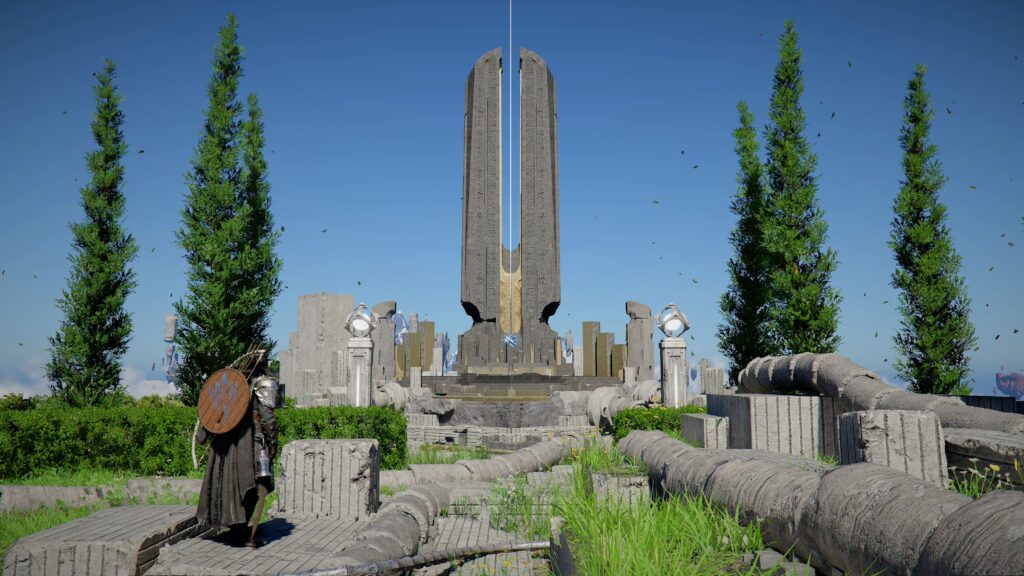
Going into Hernand immediately opens up so many avenues for players to pursue, after all. And while that can be confusing, I would argue that that confusion was a part of what makes Crimson Desert an entertaining open-world title. Slowly discovering various ways to engage with the game’s many systems was among my favorite parts of it, a gradual progression into a Greymane to be feared being a very organic way to get me invested in the kind of experience that the game attempted to sell.
To say that it isn’t interesting in those first twenty hours just because it doesn’t have you hooked right off the bat does it a disservice, and is perhaps missing the point of a title that wants you to learn how to get the most out of your time with it before it truly becomes engaging to play. Could the pacing have been better? Of course. But that doesn’t mean that Crimson Desert isn’t intriguing at all in its early hours.
Which brings me to my next argument in its favor: the assumption that an “interesting” game must have so much spectacle packed into its opening hours for it to get players invested in its gameplay loop.
First Impressions
A lot of modern games, and the discussions around them, assume that to be interesting, a game’s early hours should include big set pieces that bring out their innovations and novelties as early as they can. That’s a great way to ensure an early dopamine hit, and, if a game manages to sustain that momentum, it creates a sort of constant escalation of the wow factor that comes with that kind of presentation. There are tons of games that do this, and there isn’t anything inherently wrong with that.
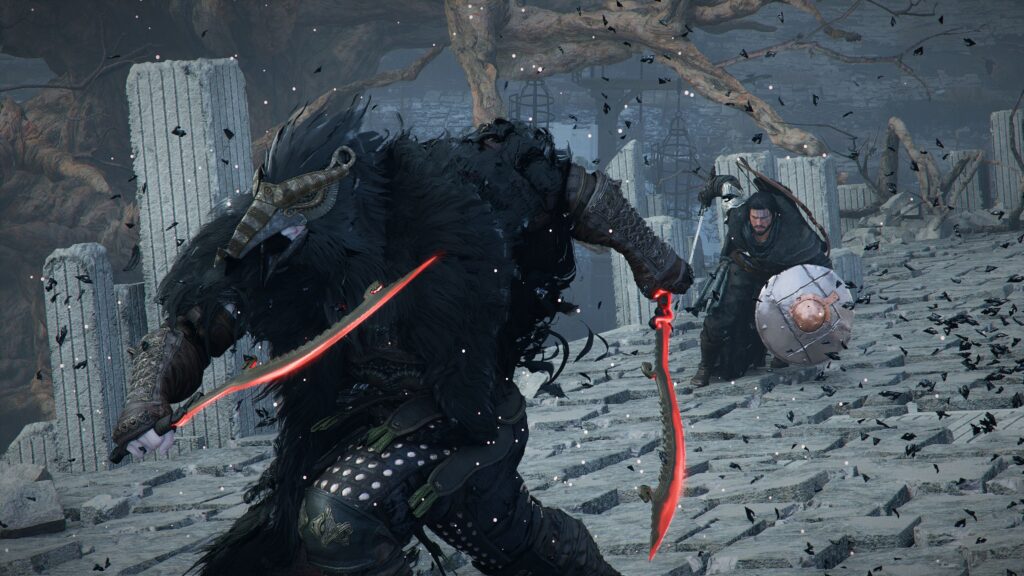
After all, any studio wants its titles to click with its intended audiences, and should aim to capture their attention to the best of its ability. But some games, like Crimson Desert, are built for a slower kind of intrigue that relies on a consistent tone, a great atmosphere and mood, a narrative that slowly builds up to a grand finale, and tension created via the sense that all of its systems are building towards something.
In Crimson Desert’s case, that buildup is towards a sense of adventure that deliberately makes you feel like a very small part of Pywel’s world, gradually getting you to come to grips with what life in that grand fantasy is going to feel like. It relies on the sentiment that you live in that world every time you pick up your controller, and discover something new or cool about it consistently enough to make it grow on you.
I can’t help but wonder if that sentiment is what has led to the game drawing fire for its slow-burn gameplay loop, though.
Risky Design Choices
I’ve already mentioned how I found Crimson Desert’s opening to be a tad too clunky for my taste, and it’s easy to see how it could put off a few players who prefer a more coherent start to an adventure as grand as this one aims to be. That’s fair, and I must concede that the early sections, where you’re left to learn the ropes on your own aside from a few well-placed tutorials, are definitely a risky choice from the developers. But does that really mean that the game is artistically empty in the way that it’s being described?
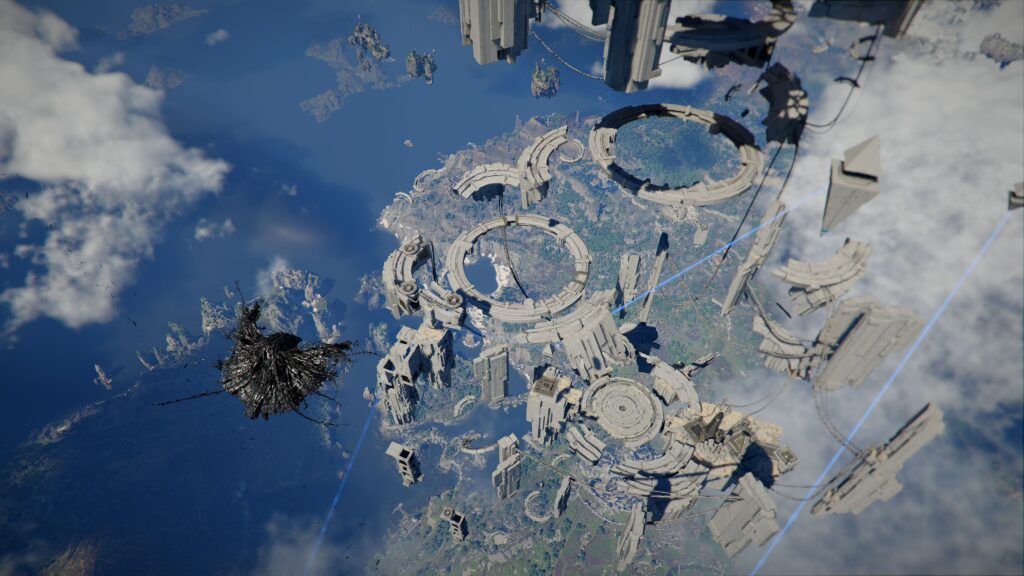
I wouldn’t agree with that sentiment, as I think that the lack of onboarding for players looking to have the game tell them exactly what to do and where to go until they’re ready to be let loose into the open world doesn’t necessarily mean that a game is creatively bankrupt. I’d argue that Crimson Desert respects its players enough to let them figure things out at their own pace, while doing things that they want to be doing.
A great instance is how I came across a puzzle quite early into my adventure once I decided to ignore the story and run amok in Hernand for a bit. I struggled to heave a cube across a crumbling ruin, carefully manoeuvring it with precision onto the device it was meant to power. That took me a while, but I was then met with a disembodied voice telling me that I wasn’t yet ready for this portion of the game. I’m yet to discover what that entire deal was about, but I’m as determined as ever to get to the bottom of it.
However, it’s easy to see how somebody might choose to bounce off from such a design choice, the investment of their time and the lack of an immediate payoff being an annoyance they can’t look past. Crimson Desert is chock full of such occurrences and does demand patience from its players. But that shouldn’t be confused with the game having nothing to give you in its first twenty hours.
Which brings me to how those among you who’ve spent enough time with it are beginning to appreciate the beauty it hides away in its world.
Rising From The Ashes
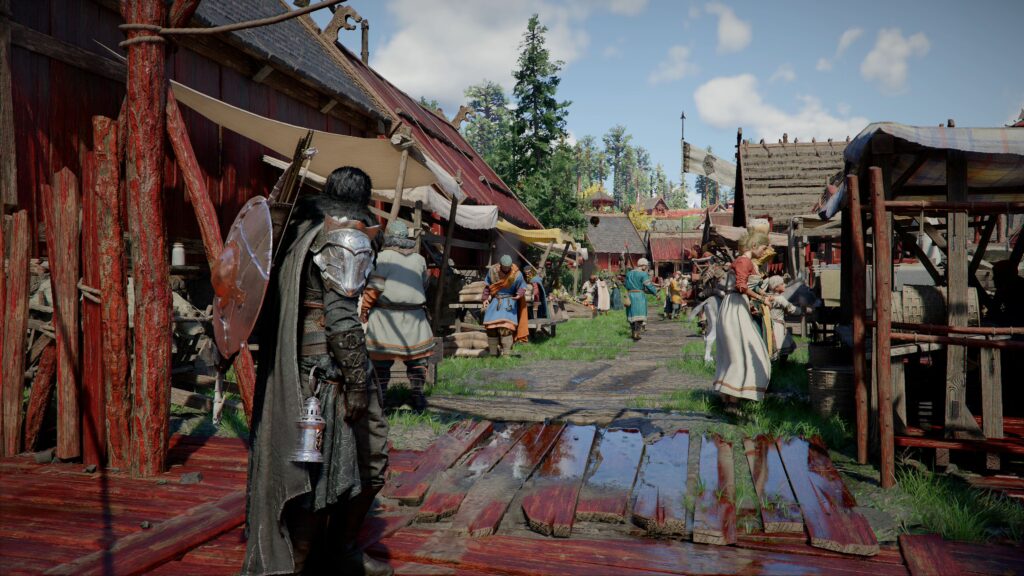
I must say it was heartening to see how the game’s reviews moved from ‘Mixed’ to ‘Very Positive’ on Steam, although that alone isn’t an indicator of its overall quality. But it’s in the way that the discourse around it has changed that shows it gets better as you keep going, and that there are enough players appreciating it to demonstrate that twenty hours with it brings enough entertainment for the game to have them invested.
The negative sentiments around the game and the rapid-fire patching of glaring issues are important components of that shift. It showcased how fixing mechanical problems led to more people being able to better appreciate the kind of experience that Crimson Desert was trying to encourage, and that its appeal comes from more people joining in on its madness.
It’s brought a whole community of players together, bringing a lot of nifty tricks to the surface that others then jump to try out, and a whole lot of conversations, many of which still talk about issues with it, but with an acceptance that it’s a game that’s good, and could be better. It’s then odd that a game that has so many people warming up to it earned complaints that it isn’t interesting enough. But that might be a result of a change in how we’ve been looking at games as they evolve.
Like every other part of popular culture, modern gaming and conversations around it do come with a reliance on great first impressions. They become instant verdicts of a game’s quality, putting pressure on critics and players alike to identify a title’s hook as early as possible in order to deem it worthy of the time and effort it would take to see more of it. But that’s a sure-fire way to miss out on the best parts of games like Crimson Desert. The way it’s structured flies in the face of hasty judgments, and the discourse around it lacking interesting things to do reflects that.
It isn’t a mismatch between the game and its players, but rather one that pits its rhythm directly against modern evaluatory benchmarks that aren’t designed to account for its unique approach. It’s a title whose ambition is unpacked rather awkwardly, but that only serves to show how modern titles have become quite reliant on immediate readability.
I began to think about how the criticism could be reshaped to better reflect the game’s ambitions and approach, which is where we’re going next.
Playing It Cool
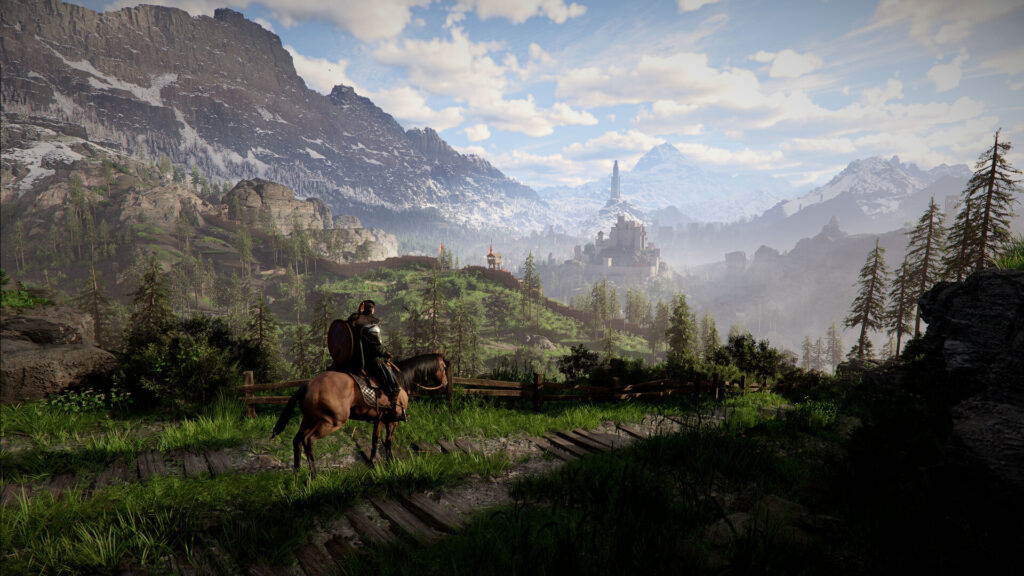
I’d say that Crimson Desert plays things too close to the chest for too long before it truly lets Kliff and company become lethal killing machines who are also quite adept at existing within Pywel’s framework. It buries the Greymanes and their unique talents under story progression that could take too long, thanks to how the open world calls to you at almost every turn. It’s through them, and your camp, that you begin to see just how much there is to do in Pywel, and how you begin to influence the world around you as a result.
That’s a payoff that might have been all the more rewarding if it had been given to me earlier than it was, and I’d guess that many of you might agree. It takes too long to show off what’s made it special, but that’s a far cry from the notion that it doesn’t have anything worth showing in the first place. The former is a more precise summation of what’s wrong, and that matters because it points to some shoddy execution without being dismissive of the game’s artistic value.
Crimson Desert holds itself back for too long, and that’s perhaps why it’s given some players the impression that it doesn’t have too much going for it. But to say it isn’t interesting enough to hold your attention for more than twenty hours is merely a refusal to meet it on its own terms, and to understand that it isn’t trying to be a title that appeals to every type of player as quickly as other open-world games. Instead, it’s one that’s built to gradually draw you into Pywel’s nuanced world-building, and then have you thinking about it almost constantly when you’re away from your console.
That’s definitely a bold design choice, but it’s ultimately one that’s paid off for those among us who’ve given it the chance it’s needed to shine. I just wish it didn’t take as long as it does to get there, only so that players who have dropped off get to join the rest of us in enjoying what is a truly enjoyable open world experience.
Note: The views expressed in this article are those of the author and do not necessarily represent the views of, and should not be attributed to, GamingBolt as an organization.