






The last Game of Thrones game that wasn’t specifically catered to mobile platforms was arguably Telltale’s narrative based adventure game from 2015. Since then, we’ve gotten a handful of mobile-based GoT titles that haven’t exactly impressed core gaming audiences. Game of Thrones Kingsroad aims to change that, providing a dynamic action RPG set in a huge open-world, and all in the graphical richness of Unreal Engine 5. The catch is that Kingsroad is also built like a mobile title with a hefty amount of virtual currencies and daily rewards. But despite these red flags, there’s a lot to like about Game of Thrones Kingsroad. Let’s dig into it.
Early Access Content and Reception
Kingsroad has been in early access since March 26th with a full release set for May 21st. 63 days is not a very long early access period, but the developers at Netmarble are confident in the stability of their game. The early access build is nothing to sneeze at content-wise, boasting a whopping 50 chapters within the main story as well as large number of explorable cities and landmarks including King’s Landing, Winterfall, and Highgarden. That said, regardless of how Netmarble feels about the state of the game, player reception hasn’t been all sunshine and rainbows. Kingsroad currently sits with a ‘mixed’ rating on Steam across over a thousand players. Most critical reviews cite aggressive pay-to-win monetization as a major hindrance to enjoying the game.
Built in UE5
Epic recently released an interview with the devs of Kingsroad, discussing the methods used to craft the open-world mobile title. So, it’s no secret just how proud the graphics engine leader is in this game. One of the key takeaways from the interview is the world partition technique used to lighten the performance load of the open world. This is done by only loading in zones within proximity of the player. Draw distances are pretty impressive as well, with HLOD being employed to keep the 700 foot wall and other towering landmarks detailed from most vantage points.
Open-World Exploration
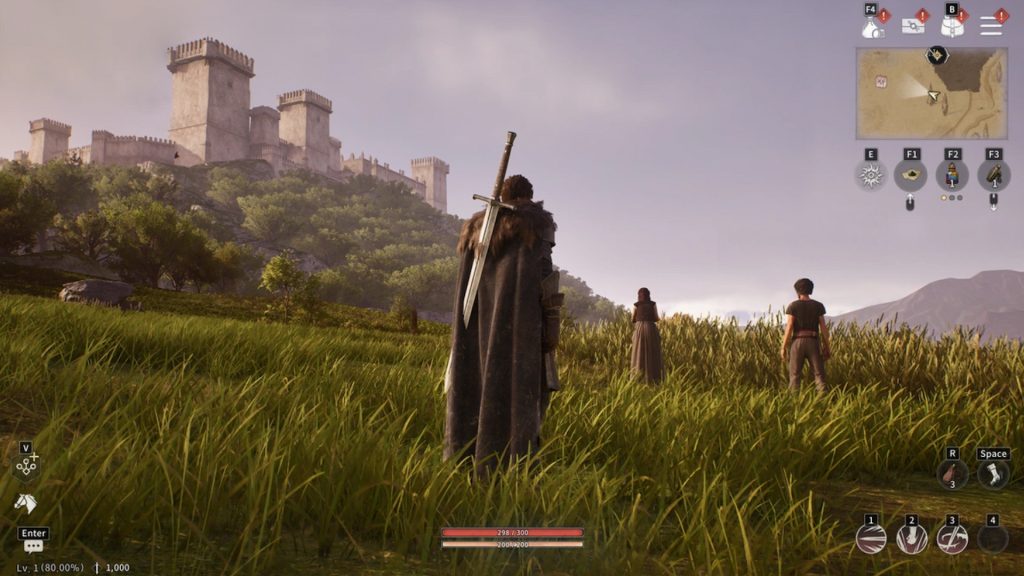
While we don’t know the complete surface size of the game’s map, we do know the early access areas are quite large. Opening up the map reveals all of Westeros with the Kingsroad dividing the center. A majority of the early access areas are in the North, including large zones around Castle Black just south of The Wall. Areas are so large that horse mounts are available early on in the game to traverse around with. Like other open world RPGs, the environment is filled with crafting ingredients, shops, treasure chests, quests, and world bosses. If you’re looking for a bunch of open world activities to lose yourself in, this has plenty.
Crafting and Loot
The most ubiquitous of these activities is, of course, ingredient gathering. Kingsroad has a healthy amount of crafting materials that can be plucked from the environment and some are quest rewards and daily bonuses too. Materials have a rarity tier to them, which determines the quality of items you craft. Some of the more common items that can be made from crafting are potions like HP tinctures, but elemental arrows, bolts, and throwing daggers can be crafted as well. Inventory is limited in the game, so frequently crafting and selling items is well advised.
Quests
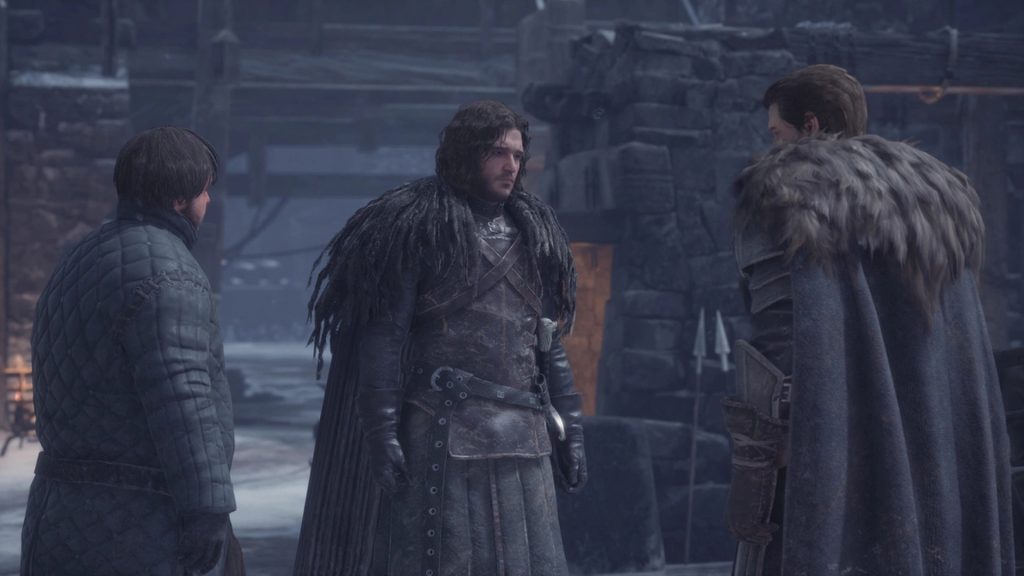
If it’s the story you’ve come to experience, Kingsroad has a very lengthy main quest. You start out as a heir (shocker) to house Tyre in the North and eventually become entangled in the political escapades the series has been known for. There’s a lot of classic Game of Thrones lore found throughout this game’s quests, with the main character’s journey coming to a head with the ultimate showdown between the Nightswatch and White Walkers. The game is set during the later half of the show’s season 4, so it’ll be interesting to see if the story can fill in some of the holes that season ended on. The hundreds of side quests, faction quests, and artifact quests compliment the main story with faction disputes, hunts, and helping popular characters out from the show. Kingsroad is a very story-heavy game, with 10-long talking sessions and cutscenes being somewhat common.
Fun Action Combat
Since this is an action RPG, the player has full range of movement and manual attack inputs during combat. Dodging, countering, and guarding all come into play here, with enemies also performing the same range of defensive moves depending on their intelligence. Oh, and you can even animation-cancel, which is always one of the key hallmarks of a good action RPG for me. Each class has unique attacks that are set on a timer, so don’t go in expecting a thoughtless button masher. There’s a basic attack, heavy attack, and various skill attacks to choose from with the three classes determining more unique abilities.
Classes
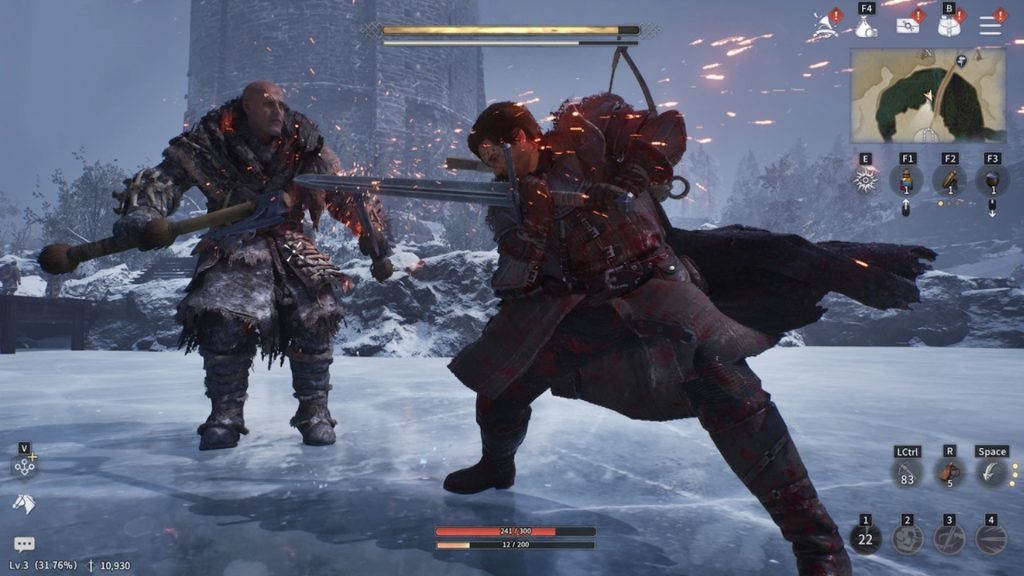
Yes, even the full release of the game is locked to just three classes. Hopefully the limited range of classes is enough to sustain the game for a while. Sellsword is the middle of the line warrior class balancing defense with offense. This is likely the class to choose if you’re planning to use a hybrid swordsman/archer. The Knight is the defensive tank build meant to establish an array of defensive buffs. Knights get the heaviest weapons in the game and excel in heavy attacks. I’m hearing a lot of good things about the Assassin class thanks to their agile DPS output. Flipping around with daggers like a ninja is no doubt going to be the choice for those wanting to really get in close with stealth kills.
Boss Fights
There are plenty of unique boss fights in the game to test a player’s endurance and skill (and maybe bank account but we’ll get into that later). These battles will especially test one’s mastery of cooldowns and inventory management as the pressure to heal and apply antidotes becomes a necessity. The bosses with multiple group enemies require target lock usage more than the larger bosses. If you want a cool Monster Hunter Wilds-like experience, hunt down some of the World Bosses for some jolly cooperation against Westeros’ dragons and the like.
Altar of Memories
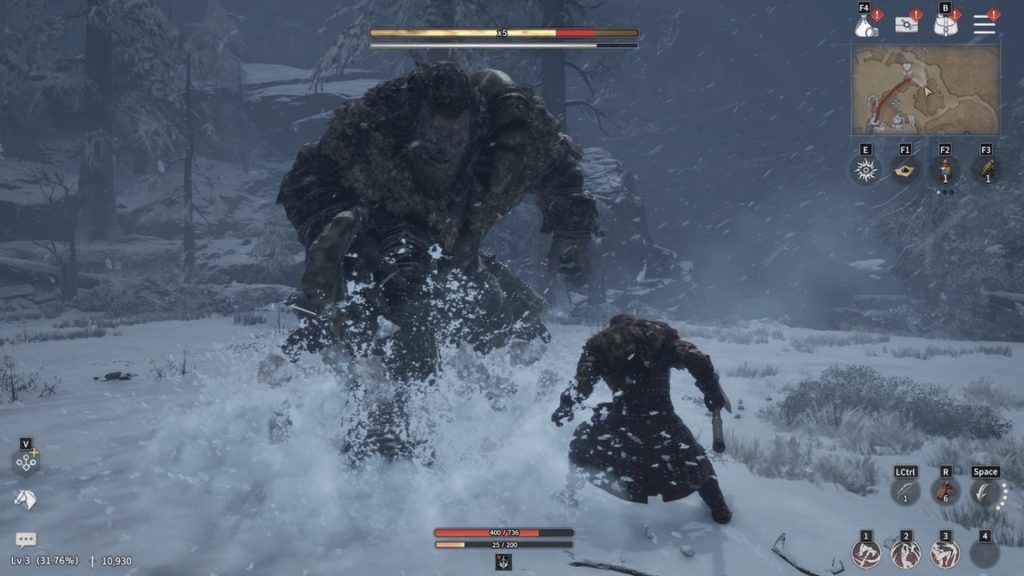
And that’s where this dedicated mode comes in. The Altar of Memories mode is where players can join others in raid type boss battles. Teams of up to four players battle through dungeons, where special traps are used to immobilize large bosses like the Ironbeak Griffin and giant ice spiders.
Skills
Skills grant players the more interesting attacks and abilities in the game. Only a set number of Active Skills can be equipped, and they’re typically unique to the a particular class. Skills like the Riposte Stance and Shoulder Charge require Rage (which accumulates by attacking) to perform. Meanwhile, Basic Skills enhance ordinary basic attacks and cooldowns. Levelling up Active and Basic Skills requires Skill Points, which are attained mostly through quests and levelling up your character level.
Trait Trees
Of course, being the RPG that it is, Skills aren’t the only way to progress a character. Traits confer a variety of passive stat increases along with unique abilities. Attack, Defense, and Support are the three Trait trees, and if you’re like me, you’ll be heading straight to the Parry ability located within the Defense tree.
Estate Management ‘minigame’
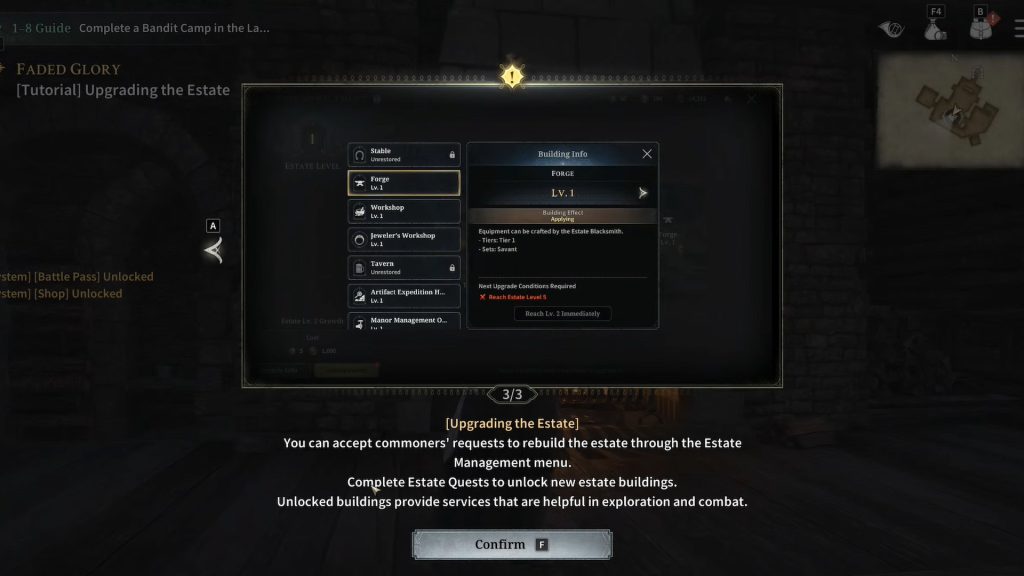
Being the heir to one of the houses comes with some responsibilities. And in this case, one of those is rebuilding an estate filled with various services and buildings. Building materials and currency are needed to upgrade aspects of the Estate, so there’s a potential for some grind, especially given the free to play live service nature of the game. Estate buildings range from workshops that sell equipment to Stables which sell and store horses.
Daily Activity Caps
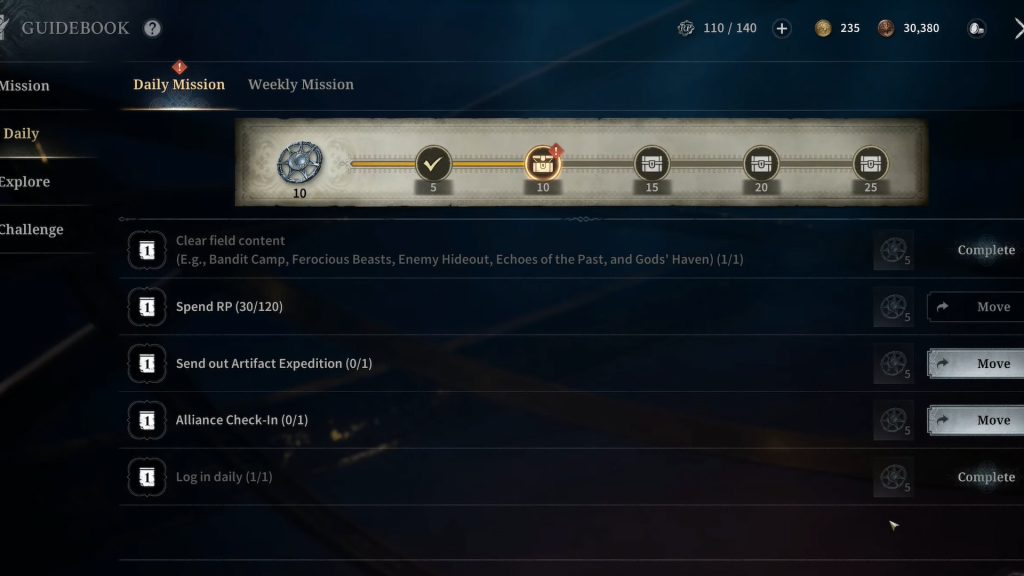
So yeah, back to why the game has a mixed rating on Steam. While basic story progression isn’t exactly gated behind any paywall, it can be restricted based on the Recharge Point system. When RP runs out, the player must either spend virtual currencies to buy more or wait until the next day. The way the developers have addressed RP concerns is not exactly comforting either. Netmarble reassures that the “team is actively discussing balance adjustments to increase the daily amount of RP provided.” So, RP limitations are still a thing with the full release; wonderful. Additionally, there’s timed missions, which just further adds a sense of FOMO in a game where there really shouldn’t be any.
Monetization
Well, this is a mobile live service game after all, so maybe FOMO and monetization is expected. In-game currency can be used to fast travel and share equipment across different characters on the same account. There’s also a lot of cosmetics to purchase within the game’s various menus.
Platforms and Pricing
But at least the game is free to play, right? Well, it will be when it officially launches. To play during the early access period, you have to shell out $24.99 for the standard edition, which grants an additional outfit. Game of Thrones Kingsroad comes out of early access with its official launch on May 21st on PC, Android, and IOS.