






There’s a subtle art to not telling me where to go in a video game. Done right, and all the strings pulling me along only feel like an interconnected web in brilliant hindsight. Done wrong, and you end up with something contrived and predictable, far from a death sentence if you’re touting player freedom and organic exploration. But the illusion shatters, the man behind the curtain is revealed, and so on.
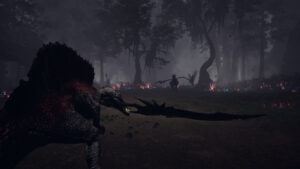
Hell is Us, Rogue Factor’s latest title that’s part Souls-like, mostly action-adventure, maintains it for the most part. It’s been hyping the lack of hand-holding for months, dropping players in a fictional country in the middle of a civil war with little more than a necklace and a handful of leads. Amid the obvious commentary on the horrors of war and the crimes perpetrated by both sides, it dabbles in the supernatural, with an event known as the Calamity spawning Hollow Walkers who terrorize survivors and soldiers alike.
The parallels between them and the real horror have been obvious since day one (it’s us, humanity, surprise). Amid all this, how does Hell is Us tackle one man’s search for his parents and the brutal, uncompromising portrayal of war while maintaining that action-adventure framework, offering just enough of an incentive to progress but also leaving you up to your own devices? Somewhat awkwardly, truth be told, but it’s a combination that still works.
"On the one hand, the dire consequences don’t really have very deep narrative consequences, but being told that someone starved to death because you were too late to realize where milk is obtained can be somewhat haunting."
The setting is Hadea, divided into multiple regions with the Sabinians and Palomists at war. You’re not privy to the frontlines. Instead, the journey unfolds from the perspective of Rémi, a peacekeeper who goes AWOL. Or rather, through his flashbacks, as he’s seated opposite a mysterious individual, drugged with truth serum and forced to recount what went down. While this approach is seemingly only in place for one reason, I do appreciate little details like the save points being polygraphs. Dying also causes some trippy feedback with the individual reminding him that’s not how things went down. A nice bit of attention to detail, even if faster respawns would have been preferred after seeing these scenes several times.
After obtaining some mysterious weapons in the Prologue and surviving his first encounter with a Hollow Walker, Rémi ventures forth with an APC, tablet, and drone to pursue the first leads about his father. From the outset, I really liked the overall vibe of Hell is Us – disparate, bleak, but also mysterious. However, the opening hour can take some time to grab you with its straightforward layouts. Rémi isn’t thrown into the deep end immediately, but thankfully, that changes in Acasa Marshes, which is also where the first town is located.
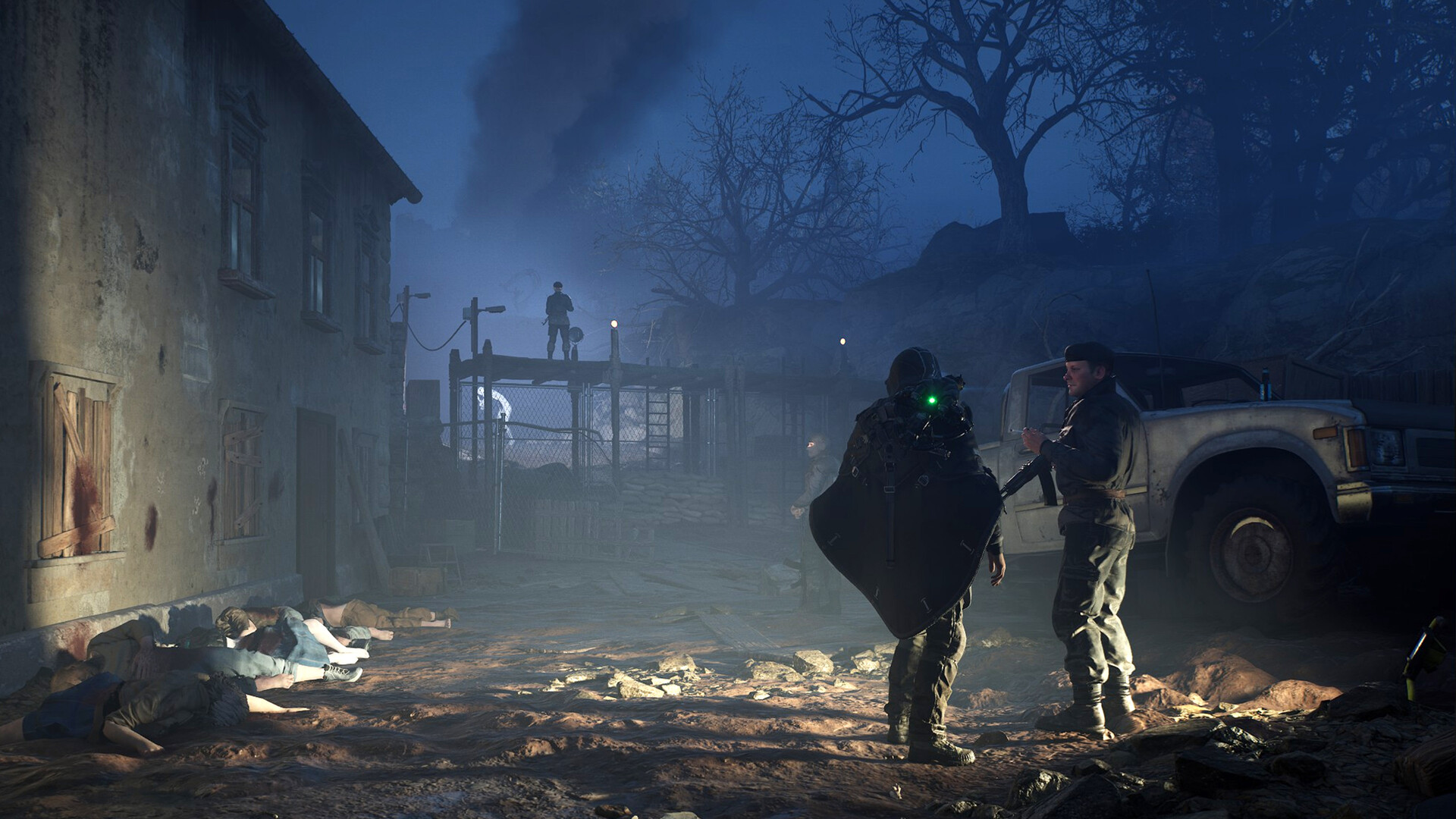
It’s here that the true atrocities of the war are laid bare. Entire families torn apart and executed. Soldiers reveling and disgusted by the slaughter in equal measure. Corpses hanging from trees. Even if some of the NPC dialogue can come across as occasionally stilted or cheesy, Rogue Factor doesn’t hold back from these depictions. Perhaps most depressing about all of this is that there are few happy endings, and even fewer if Rémi doesn’t get involved in some way.
Hell is Us starts as a pseudo-mystery/good Samaritan journey and works out pretty well. As you interact with more characters, more leads and branches open up, spurring you to explore other places. Some can initiate Good Deeds, somewhat akin to side quests, though they usually focus on obtaining items for the person in question or slaying some enemies. In typical FromSoft fashion, not completing these before progressing through the story can result in failure.
On the one hand, the dire consequences don’t really have very deep narrative consequences, but being told that someone starved to death because you were too late to realize where milk is obtained can be somewhat haunting. Some of these Good Deeds are decidedly not time-gated – the people locked underground in the first region seemingly survived for a good long while before I finally found the necessary key, which does hamper the immersion a bit. Otherwise, it’s an endearing loop, where Rémi’s purpose is intertwined with the people he meets.
"With the excessive focus on Hadea, its history, the tie-ins into the Keystones, the Vigil, and so on, it’s easy to forget that Rémi still has some stake in all this, especially since his deeper connection with the people seemingly halts after learning the next location."
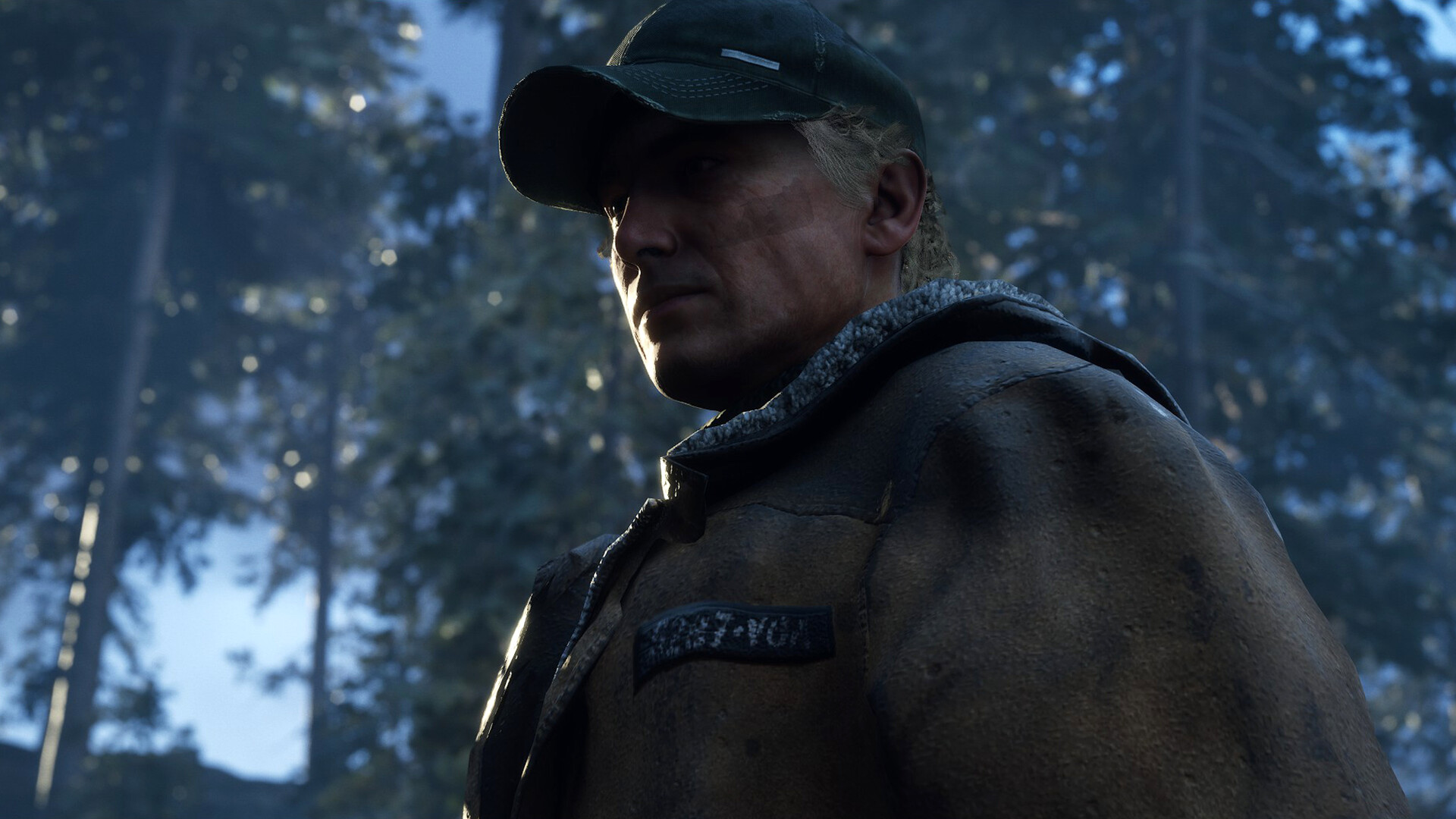
That is, until several hours in, shortly before discovering the Watcher’s Nest and learning more about the Vigil. From this point, the story shifts to a hunt for four Keystones, each representing the same volatile emotions possessed by the Hazes – Grief, Rage, Terror, and Ecstasy. Rémi is joined by Tania, a journalist who deciphers research items discovered in the wild, using the progress to discover Vaults of Forbidden Knowledge. The lore and history of Hadea opens up, and it can be an overwhelming amount.
It’s all compelling stuff, especially with how it ties into some of the puzzles and progression towards the dungeons, but it’s still a lot. Tania is nice enough to compile all the research subjects into neat articles, but that still requires gathering them all.
With the excessive focus on Hadea, its history, the tie-ins into the Keystones, the Vigil, and so on, it’s easy to forget that Rémi still has some stake in all this, especially since his deeper connection with the people seemingly halts after learning the next location. Sure, you might discover some notes and letters from prior days, but forget wanting to know what happened to that father-son duo after they reunited and evacuated from a bombed-out town thanks to your help.
Then there’s the village where every citizen had their hands chopped off by the sadistic soldiers. Restoring power and saving their women is all well and good, but the soldiers are still very much there. It creates this vibe of simply moving along after I got my information. Good luck, everyone else!
The ending is also awkward because it feels like so much is left unresolved. Yet trying to consolidate it with the sheer amount of history and present circumstances of Hadea left me feeling somewhat empty.
I also have some heat with Rémi as a character. He’s a sociopath, which should mean ignoring others’ feelings, their rights, and so on. By the game’s own definition, he doesn’t really feel anything. Except for, you know, all the times that he does. You could explain this away with a late-game revelation, which isn’t spelt out, but even then, his personality comes across as uneven. His collaboration with Tania comes across well enough – common interests and whatnot – but the pivot to an actual friendship feels forced (and some of Rémi’s quips come across as corny).
"Backtracking is a problem, though, especially if you’re trying to figure out everything by yourself. There’s no fast travel between points – only returning to the APC – so if you suddenly decide to return to a Timeloop Rift in a dungeon because you found the correct material to dispel it, be prepared for a long trek."
As you run around Hadea, asking people if they’ve seen these images or heard of these Keystones, Hell is Us fulfills its most basic promise: No hand holding. No guidance. Find your own way. Discovered items could be the key to Mysteries, especially the Lymbic Rods, which open who knows what door or chest. The maps actually look like maps and are more like items you equip to reaffirm rough details rather than using them for knowing precisely where to go. Some Lymbic Roads can be quite important, as they can lead to other Timeloop Rifts in a region, though accessing them requires slaying specific Timeloop Guardians (which you can’t identify without a specific device or by the usual method of annihilating everything on the map).
That feeling of running around and suddenly discovering soldiers huddling inside of a ruined structure or structures that hum and react if you attack them in a specific order is pretty cool. Puzzle solutions can range from obvious (if you even mildly pay attention to the details of the surrounding environment) to occasionally perplexing, especially when manipulating a radio frequency to uncover a hidden safe and sussing out the password from historical dates and numbers on specific paintings. I would have liked it if the Vaults of Forbidden Knowledge involved more code-breaking rather than Tania outright providing the solution upon depositing enough research items, but alas.
Backtracking is a problem, though, especially if you’re trying to figure out everything by yourself. There’s no fast travel between points – only returning to the APC – so if you suddenly decide to return to a Timeloop Rift in a dungeon because you found the correct material to dispel it, be prepared for a long trek. Combined with the design of some environments, why does Acasa Marshes have so many places that you can fall into and die, requiring circling long distances? – and exploration sometimes becomes tedious as a result.
On the bright side, there are the dungeons, perhaps the highlight of the entire experience. From the Lymbic Forge with its dropping water levels to the Fallen’s final resting place with its various trials, from the tower and its pain-inducing timed puzzles to the Museum with its colored switches opening different doors, they feel maze-like and confusing in a good way. Keeping track of locations and where to use certain items is important, if not overtly complicated, and they offer a healthy balance between combat and puzzle-solving with plenty of unique rooms and encounters.
As Souls-like as the combat may seem – light and heavy attacks, stamina bar, et al – it’s actually more akin to Nioh. Upon landing attacks on enemies, small particles gather around, creating a healing pulse triggered with R1. Timing this correctly also restores stamina, seemingly encouraging a hyper-aggressive approach. However, the particles dissipate if you take a single hit, even while blocking, so there is a risk vs. reward approach…except that you can block and trigger a healing pulse at the same time, reducing that risk greatly.
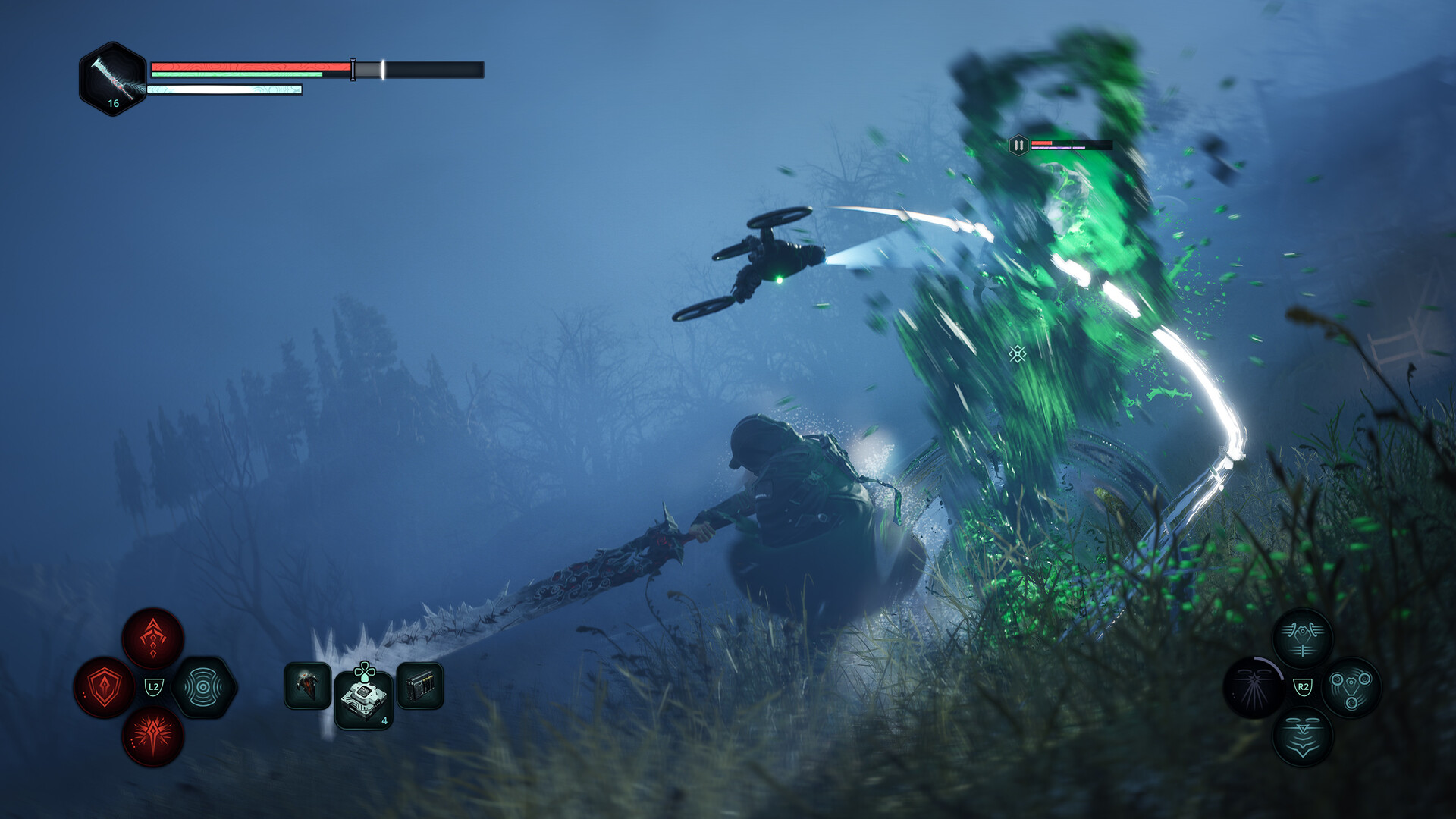
"And yet, combat has more notable downsides because of the enemies and how they work. There are only five types of Hollow Walkers in the game, with three tiers. The higher tiers add a move or two to their repertoires – the real threat is when they’re linked to the Hazes."
Regardless, the overall feel of combat is quite nice. Parrying is responsive, albeit very easy to pull off, and the movement feels crisp more often than not. The dual axes were my weapon of choice, simply because of their sheer speed (the regular sword felt a little too sluggish for my liking). You can also opt for a Greatsword and Polearm, each with unique charge attacks. By improving a weapon’s grade, it can be imbued with an emotion, for lack of a better word, thus allowing for attaching specific Glyphs with unique abilities.
It felt like slim pickings most of the time – some of these Glyphs, particularly Grif, could use some buffs – prompting a more melee-focused approach, but thankfully, Hell is Us has no qualms about allowing that. Equip some gear that grants damage reduction and lifesteal on hit with a Passive Relic that reduces overall Lymbic energy in exchange for 50 percent more melee damage all the time, and go ham on an enemy.
And yet, combat has more notable downsides because of the enemies and how they work. There are only five types of Hollow Walkers in the game, with three tiers. The higher tiers add a move or two to their repertoires – the real threat is when they’re linked to the Hazes. You can’t deal any damage to the main body without defeating the Haze first, and they also have three different tiers, each with more complex attack patterns that prompt you to wait for parries. Things can get somewhat dicey when dealing with multiple linked enemies or multiple Hollows bound to a single Haze.
But you can also just stagger one with a ranged attack and annihilate it before the Haze emerges. Or batter the Hollow, reducing its stamina significantly, allowing you to destroy the Haze and get a free execution. The second method seems intentional, but the first outright trivializes most linked enemy encounters. The fact that most fights devolve into the same pattern – either kill the Hollow before the Haze can manifest or destroy the Haze and then kill the Hollow – means combat can get repetitive. And even then, there are some bugs, such as the stamina of a Hollow failing to reduce when attacked after the Haze retreats, leading to this awkward moment as you wait for it to take damage. The lack of proper boss fights doesn’t help either – outside of maybe two, the others feel more like you’re running around and fighting the same Hazes.
That’s not counting other aspects which could use a balance pass or two. Your drone has some nifty abilities, like dashing through multiple enemies or spinning to win, but it feels like there’s some lag in executing these (which would result in soaking up free damage). Charged heavy attacks seem cool at first, but ultimately fall by the wayside since the damage isn’t worth the time or Lymbic energy required.

"From the outset, Hell is Us knows what kind of experience it wants to offer, and how it wants you to experience it. Novel at times, a throwback to the older days of gaming in others, it’s a solid action-adventure with plenty of rough edges and shortcomings…"
It’s worth appreciating the art direction of Hell is Us. Venturing into the basement of the tower dungeon and seeing those bones shifting on that massive pile, looking out over the fields of gorgeous blue flowers on the shore of Lake Cynon, and even the clean floors and hallways of the Museum look suitably stunning. The combat animations are also pretty solid, especially for the Hollow Walkers and Hazes, and the cutscenes are pretty competently put together. However, optimization can be an issue. “In an Unreal Engine 5 title?”, you say. “No, that’s simply not possible!”
Running the game on a Core i5-11400, 32 GB of RAM, and an RTX 4060 put me above some of the recommended requirements, which anyway mandated upscaling. Regardless, it took a lot of finagling to get performance in a solid place, and even then, some blurry textures were sometimes apparent at a distance (and definitely so when shining a flashlight in dark corridors). Even when it seemed like performance remained consistently at 60 FPS, it would stutter and drop at times while exploring, regardless of anything happening or not. Your mileage will vary, as always, but it’s worth noting regardless.
From the outset, Hell is Us knows what kind of experience it wants to offer, and how it wants you to experience it. Novel at times, a throwback to the older days of gaming in others, it’s a solid action-adventure with plenty of rough edges and shortcomings, yet one that endeared me to venture beyond the next corner to see what’s ahead, even if the rewards were more rudimentary than breathtaking.
The overall lasting impact is up for debate, but it could be an experience you’ll more or less appreciate, even with its many flaws. If nothing else, Hell is Us kind of reminds us there’s no place like home, even if you can never truly go back.
This game was reviewed on the PC.
Realistic depiction of a civil war with plenty of uncomfortable sights. Well-designed dungeons with great art direction. Combat is fast-paced and responsive, and there's room for several unique builds. Dense lore that factors into the exploration and puzzle-solving. Wandering through the world, unsure of what you'll see next, can be addictive.
Lackluster number of enemy types and the linked enemy system make the majority of combat encounters repetitive. Perhaps only two actual boss encounters. Optimization is a pain and even when performance is seemingly stable, there are frame drops. Story veers off in an unexpected and ultimately unsatisfying direction. Backtracking is frustrating, especially with the lack of fast travel between save points.