





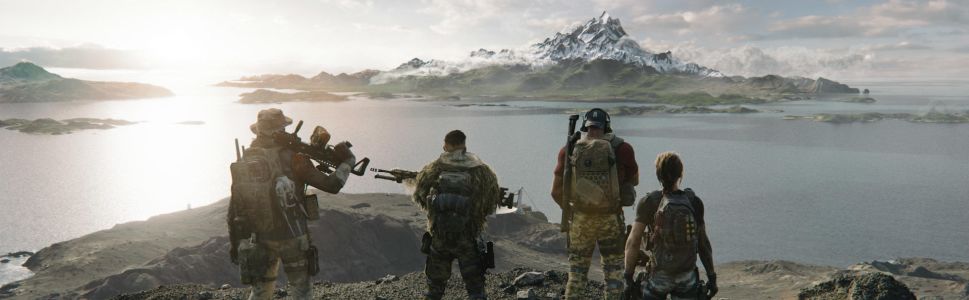
Would you believe it’s been seven years since the last Ghost Recon? Granted, that was Breakpoint, which had such a disastrous launch that its publisher outright said it performed “significantly below expectations” (that too in a year with The Division 2). And while you could list every property we haven’t seen in that interval – how many decades and change for the next Beyond Good and Evil now? – Ghost Recon at least had some hope. After all, a new title was officially confirmed to be in development last August, and surely nothing short of a major internal shakeup to its parent company could distort things. Right?
Oh wait.
This year, it feels like every project from the house of Assassin’s Creed, Far Cry, and Splinter Cell is having problems or cutting back to meet deadlines – including new entries in those very same properties. Assassin’s Creed Codename Hexe has apparently pulled back and laid off 50 members from its team. Far Cry 7 is reportedly in a stage of development referred to as “Hell,” where things reportedly change every single month. And the less said about that fabled Splinter Cell Remake, which may as well be the stuff of legend at this point, the better.
So what about Ghost Recon, reportedly codenamed Project Ovr? A first-person shooter that seemingly takes after Ready or Not, reportedly promising a darker experience against the backdrop of a fictional war, where squad-based tactics are more prominent than ever? You know, everything that hardcore fans of the series have wanted? Well, sources previously told Insider Gaming that an internal alpha was scheduled for last Fall and if everything went well, it could launch this year.
Fast forward to this month, post-reshuffle and things have taken a rather drastic turn. Insider Gaming first reported that the alpha didn’t meet expectations. “Unrealistic deadlines,” “poor planning and management,” and “directors not listening to feedback” were apparently some of the things thrown around. Unfortunately, the head office has seemingly rejected any other arrangements, aside from reportedly bringing in VP of global creative Julien Sansalone and VP of production Jean-Baptiste Duval. Not to really change how the development team actually works, mind you. Just to oversee things. Presumably, they’re to be the eyes and ears for upper management, providing information on actual progress rather than going simply by whatever the studio says.
Then there’s the most recent report. What’s been done to bring the project back on track? A “cut and greatly reduced” scope, for starters, with “many features stripped.” The sources in question didn’t go into much detail on what exactly was removed, but they apparently vary in overall scale (and potential significance).
Furthermore, details on an internal alpha held last Spring have emerged. Ovr is apparently not “stable at all,” and the game is in a “terrible” state. What about last year’s internal alpha, and plans to shift to the final game within 12 months? I’m theorizing here, but it’s possible that after its organizational overhaul, upper management took one look at the game’s state and decided it was far from satisfactory.
It likely gave the developer time to shape up for another alpha test, and well, these are seemingly the results. Based on that, it’s made changes to ensure no roadblocks in deliverables.
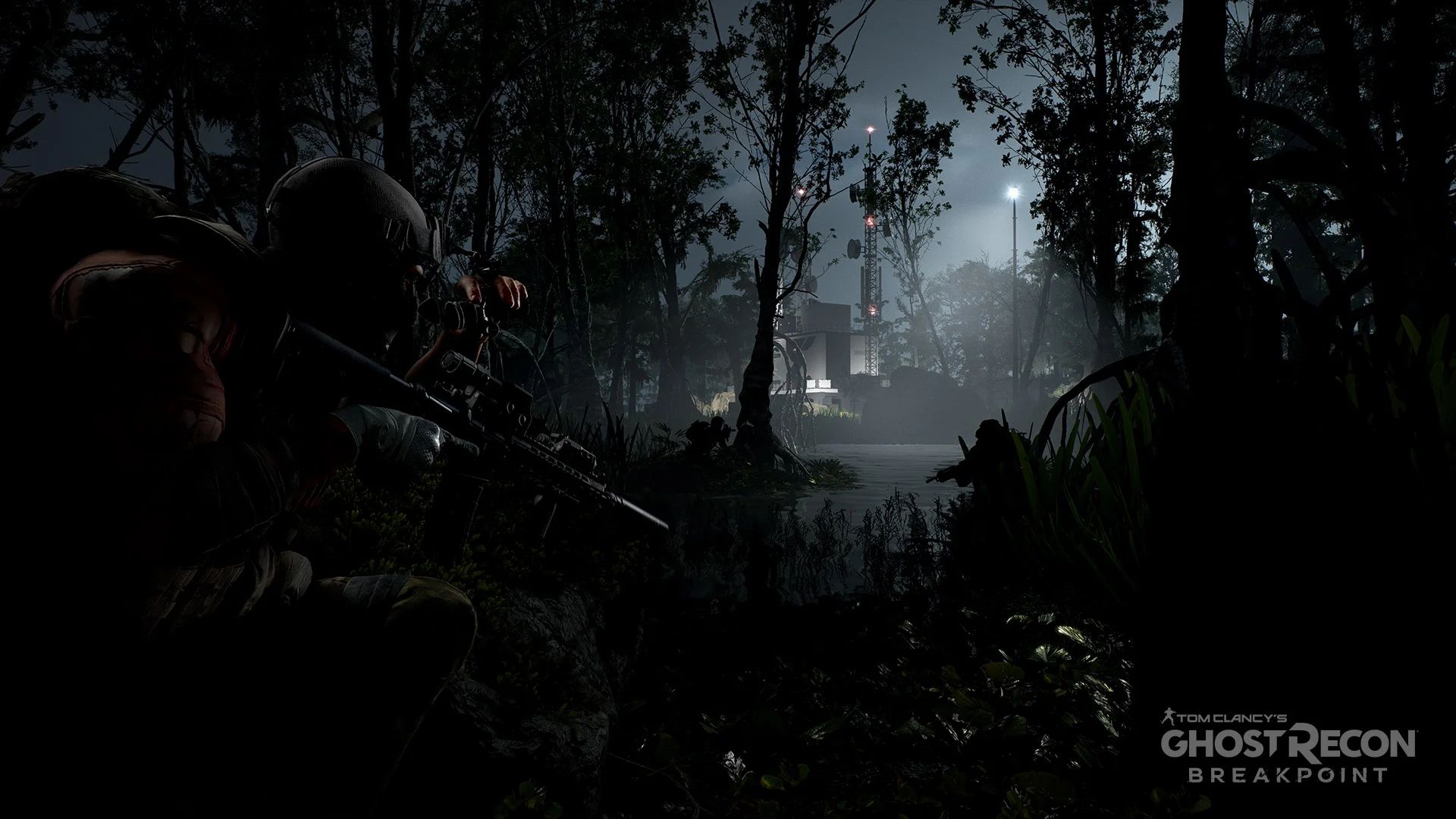
Going back to Insider Gaming’s latest report, a beta is now apparently targeting November. Unfortunately, there’s another problem. Recent layoffs have hit multiple studios under the publisher’s umbrella, including this one, which means those remaining will purportedly have more work on hand. Which apparently means “long days of crunching” for the beta. So if it wasn’t bad enough that the team is working to get the game rolling, that too after abandoning several features, it has even less resources to do it and is under more pressure. Keep in mind that before these changes, some developers apparently expected the project to be outright cancelled.
Why? Because the studio’s management seemingly has no idea what it was doing. This was a concern that emerged with how much freedom these individual Creative Houses would have. But you should think of this as more of the old way of doing things meeting a new approach by management that’s more concerned with cutting costs and actually taking steps to ship the product rather than dilly-dallying.
And while it’s easy to blame the executives in charge at the top, you have to remember that Assassin’s Creed Black Flag Resynced was reportedly meant for March before facing a delay. How that extra time would have helped the remake is anyone’s guess, but based on relatively positive impressions from both fans and media outlets, we’ll default to it being the correct choice.
But this is this, and that is that. One Creative House won’t necessarily operate like the others, and that goes double for its studios. It is the same as handling Splinter Cell and The Division, however – the former waffling about with its remake while the latter has yet to provide updates on The Division 3 for almost three years. Aside from executive producer Julian Gerighty, who had a key role in both titles, leaving the company, of course.
As for Ghost Recon, really, what can you say at this point? As much as this new studio structure ensures that projects actually get going rather than end up mired, it feels like the company as a whole has no clue what it wants to do with the franchise. When Wildlands embraced the open-world approach, there was significant blowback from long-time fans, and its launch state didn’t help matters either. Nevertheless, after strong sales, the company stuck with it, improving and introducing significant new features while showcasing how much fun it could be. It may not have been the true blue Ghost Recon that the hardcore fan wanted, but it was certainly getting there.
Then Breakpoint stripped most of that away, including AI squadmates and introduced a poorly implemented survival theme. The real goal? Taking Wildlands formula and trying to create a looter shooter, complete with a social hub. As noted earlier, this went down horribly and even with massive overhauls, it’s far from the ideal experience.
So what was the plan after that? Of all things, Ghost Recon Frontline, a first-person shooter battle royale that looked to embrace the Fortnite style of building walls. Except you were actually air-dropping them in with a laser pointer. The reception to this was so bad that the publisher ultimately just scrapped it months later. Good riddance.
By comparison, Ovr looked like it was going back to what made the series great while leaning into more grounded, realistic tactical play. Yet again, however, we don’t know where it fell short as to warrant so many changes. Was the squad management terrible? Did the gunplay disappoint? If there’s an open world, did it not have enough checklists of activities? We don’t know, but whatever its problems, the publisher isn’t keen to sit on the sidelines and wait for the development team to suddenly strike gold. And it’s not going to be lenient on them either, even with reduced manpower.
While it’s nice to hope that everything will work out, the past decade or so hasn’t been kind to Ghost Recon. And at this point, wistfully hoping that those in charge just “get it” and deliver an experience that will satisfy both the hardcore and the more contemporary fans feels like a pipe dream.
Note: The views expressed in this article are those of the author and do not necessarily represent the views of, and should not be attributed to, GamingBolt as an organization.