





Every so often comes a title that’s so captivatingly simple, it draws you in so easily before you realize it’s a loop that you just can’t get enough of. You find yourself wistfully thinking about it when you’re away from your gaming chairs, and refusing to call it a day when you do get a chance to dive in. We’ve been hiding amongst all of you, experiencing the absolute tension of being found out when some of you drew too close and feeling euphoric satisfaction when we managed to blend into the world that Mechha Chameleon has made us paint for it.
Shouldn’t that be the other way around, you ask? Well, that’s the secret sauce to how this one has managed to take a game that feels as old as time itself and make it a modern sensation that makes each recorded clip of it a viable advertisement for it. If that sounds too good to be true to you, we appreciate your instincts, but we can assure you that this one does reel you in pretty quickly. Join us and learn more about how that happens, and consider if you might join in on the fun.
The Beginnings Of An Interesting Game of Hide and Seek
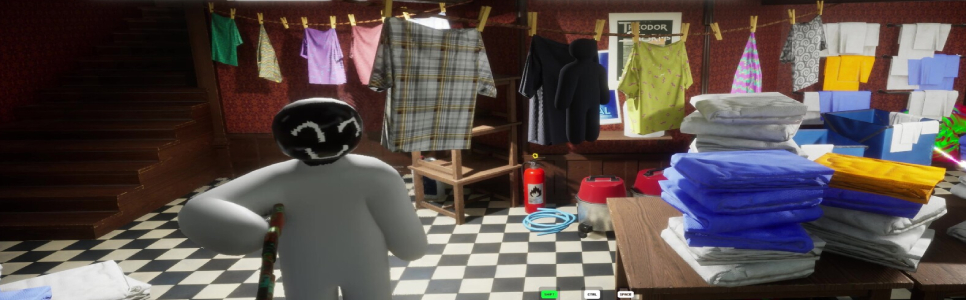
Let’s start at the beginning. Meccha Chameleon puts you in control of a being whose body is fully white, letting you paint over it to allow it to blend into the environment almost seamlessly. One of the most eagle-eyed players or experienced seekers has a chance to find the more devious ones among you, and it’s literally hide-and-seek but with an interesting twist that makes it a great addition to modern gaming.
It’s a testament to how a relatively unknown IP has managed to gain as much traction as it has since its June 9, 2026, release, bringing a relatively simple visual style and no cinematic campaign to the table. Mechha Chameleon clearly bet big on its gameplay being a positive talking point that was significant enough to drown out any noise. The twist, of course, was that as a hider, it’s you who makes the entire thing interesting.
It’s not asking you to just imitate environmental props. They’re there as literal props to let your imagination run wild. You imitate the stage you’re on, trying to find ways to blend in so well that the art of your disguise becomes a reward in and of itself. There’s zero conceptual friction in this one, and of course, that’s considering that hiding is only one part of the experience. As a seeker, having to decipher the world around you, trying to guess what shenanigans your buddy has been up to, isn’t always going to be fun unless you’re an expert at predicting your fellow players, that is.
But like hide-and-seek in real life, it’s the thrill of the chase that matters more than the actual results, and this is an experience where the most convincing lies become shared experiences with a larger community, and one that’s fast-growing thanks to how unique it feels in action. Let’s look into why that’s the case.
Self-Made Solutions
It’s quite impressive how Mechha Chameleon has added interesting layers to both hiding and seeking, making them two similar yet equally distinctive sides of the same coin. Hiding in this one, for instance, is more about using the world around you as a canvas that’s making space for you to make your own hiding spots. That takes things further than just finding a good spot and then just trying to conceal yourself.
You control what the person looking for you sees, which is a great way to give you ownership of half of the game’s addictive potential. It’s great when something you create just works, leaving you able to just stay in place while your hapless seekers walk right past you. We found ourselves chuckling so quietly because we didn’t want our laughter to give us away. That’s how deeply this one pulls you into the experience, and if you don’t invest in making the perfect disguise, getting found out early is still fun thanks to how laughably poor low-effort disguises turn out.
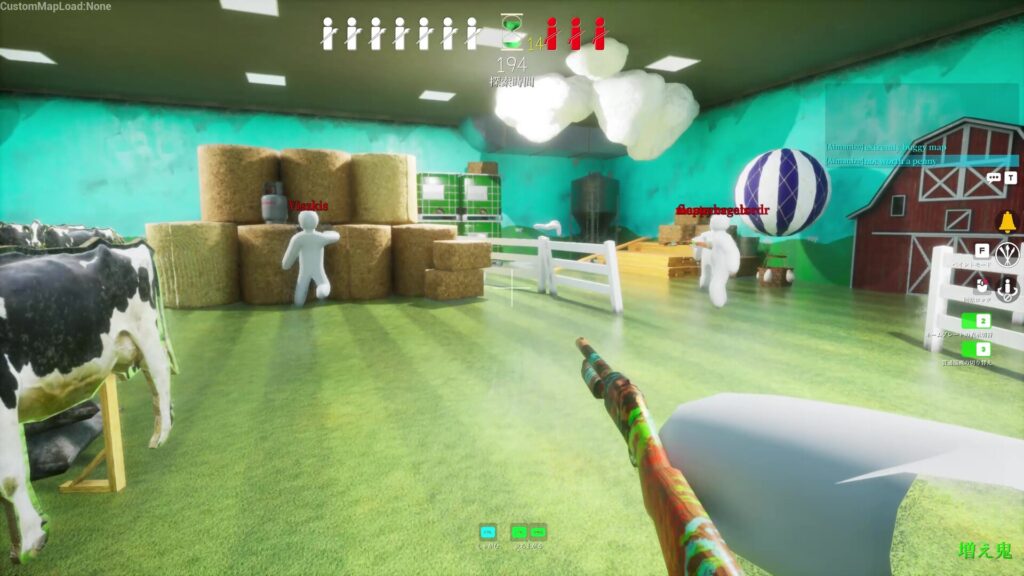
Failure is simply a reason to experiment a little more, or perhaps go an entirely different route, with entirely different results and opportunities. It’s a gameplay loop that spins out so much utility around a unique mechanic without actually investing too much into it, simply because a major part of that investment comes from its players. Creating great disguises isn’t an easy thing, and if you’re thinking that your part as a hider is done, it’s actually where the fun begins.
Once you hide, it’s a very intense game of cat and mouse between you and your seekers, as you wait to see if your efforts to befuddle them are going to bear fruit. You never know if they’ve actually spotted you or not until it’s too late, and the relief you get from a successful attempt makes it very tempting to dive right back into another one. What could be done differently? What worked in the effort to hide? Are there other ways to use the things you discover even more creatively?
These questions, and of course, the smug satisfaction of finding some very well-hidden hiders as a seeker, make the art of blending in a mechanic all on its own, with getting ignored being a very unique reward. It doesn’t need to pepper you with progression objectives when you’re so damn busy having fun, and Meccha Chameleon certainly has oodles of that. But it’s in how the game makes human perception an actual mechanic that things get interesting.
Rewarding Being Human
It’s impressive that a modern game doesn’t make its enemy AI, damage numbers, or build potential the center of its focus, but instead makes another person’s attention your worst enemy. Art is subjective, and it’s that very subjectivity that could expose even the most elaborate disguises you put together. What fools one seeker may not fool another, and given that all you can do is stay put and hope they haven’t really spotted you, things become a series of questions, all flying through your head in the moments that determine either success or failure.
Take to seeking, and that script gets flipped to make you question everything, leading to either success or failure depending on how well you can answer them. Is that obvious-looking prop in front of you a thinly veiled effort at a quick disguise by your opponent? Did you see something move out of the corner of your eye? Could someone who’s clearly visible playing badly on purpose distract you from a larger strategy unfolding in plain sight?
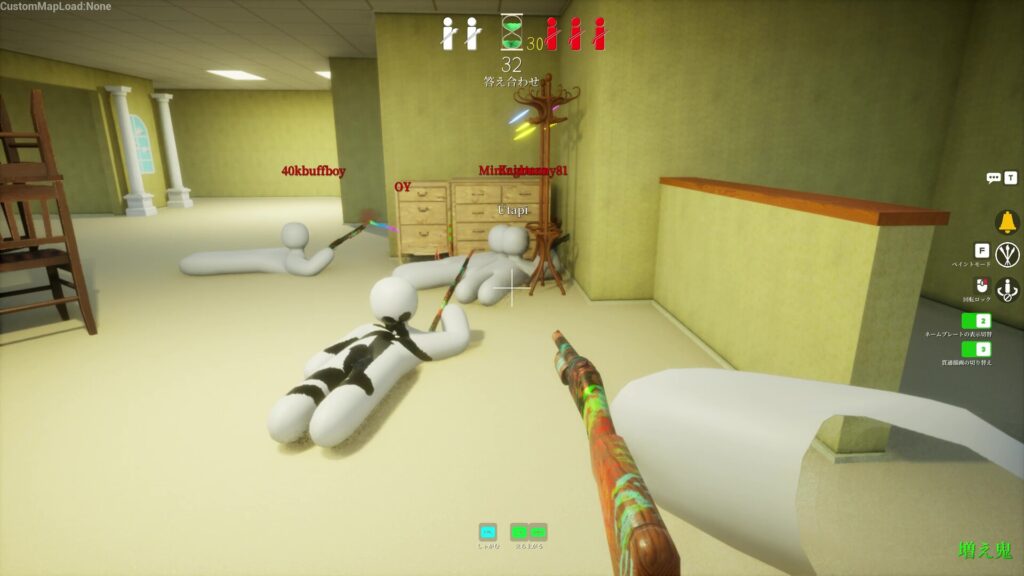
Every surface is suspicious as a result, while even the most minute imperfections can become terrifying threats to a hider’s sanity when they begin to realize that their disguise wasn’t as good as they thought it was. It all comes together to feed into a skill curve that celebrates being human enough to make mistakes, and being enough of a gamer to spot those mistakes with increasing accuracy.
But a detail that blew us away was how welcoming the entire thing was to us when we hopped on as new players. It’s so easy to understand, and yet it gets quite challenging once you get good at both hiding and seeking. You begin to see colors through the lens of the ones available in the game, able to ferret out potential mismatches a little better than before. You begin to look for less obvious locations, using your knowledge of sightlines and map clutter to guide your steps in the right direction.
You could choose to maneuver silhouettes to distract even the best seekers, or strike poses so convincing they barely even realize that something could be amiss. You could even use a disguise’s imperfections to alleviate suspicions if you play your cards right, and it makes this a game of entirely human skills that you sharpen the more you play it, and that’s another facet of why it’s as addictive as it is.
But that doesn’t mean you need to be good at it. Indeed, absolutely sucking at painting is probably what lends this one so much charm and hilarity that it balances out the tension from tougher games with moments of levity. It does so seamlessly, not relying on a story or structured gameplay loop, but instead on human moments where awesome gameplay leads to satisfaction, while terrible gameplay is an unerring source of comedy. That’s hard to replicate, and the lack of any skill requirement to be able to enjoy this one is certainly a part of its allure.
There’s also its potential as a storytelling source to consider.
Many Addictions, One Game
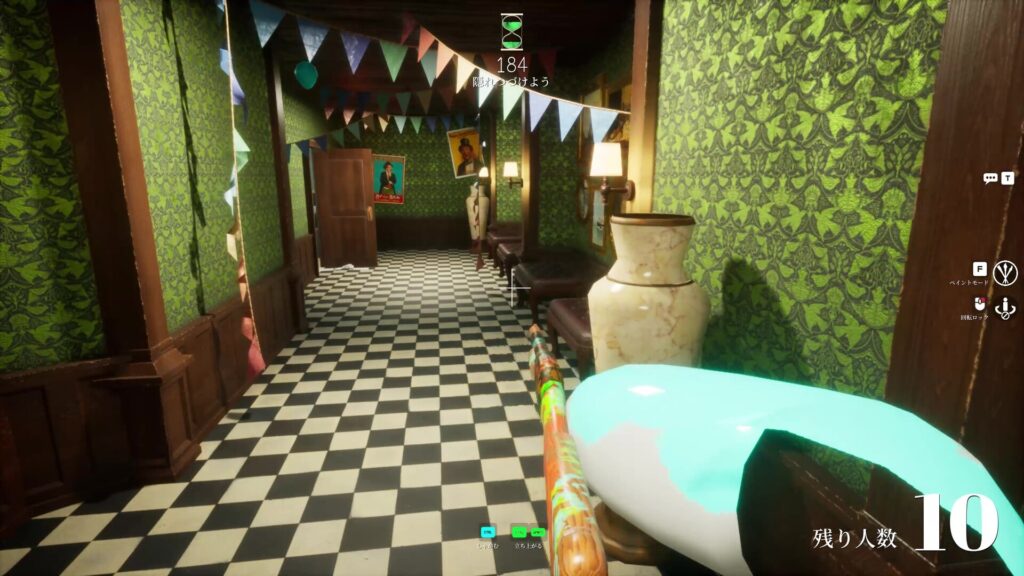
It’s a fun feeling to end a game and find out your target was right in front of you the whole time, or that you were looking directly at them while searching a level. You could have thought that a chair looked mighty suspicious, only to find that you were right all along, but only after a game ended. But irrespective of your individual success or failure, Meccha Chameleon is unique since each round of the game is a story all on its own.
It unfolds with your hider’s efforts to conceal themselves acting as a sort of setup, with the seeker’s efforts to find them bringing in anticipation, the tension of near discovery or the reversal of remaining undiscovered, and the resulting punchline depending on what unfolded in the round. It’s a factory of micro-stories, and it’s all so creator-friendly that it isn’t hard to see how this one managed to build a community around it as quickly as it has.
It’s also great how the hider and seeker roles feed into each other so well: getting good at one lets you learn more about what works against the other, then you use that knowledge to get even better at the game. However, the very simplicity baked into it makes that progress an infinite loop, needing no systems to keep feeding it. It’s just there, enjoyable, and easy for anyone watching to immediately become a part of the fun, in a way that makes the simple visuals endearingly familiar.
As a viewer, you’re automatically sucked into the perspective you’re a part of, and finding so many impressive disguises and finds has become an admittedly large part of our scrolling time as a group. We can’t stop talking about the best ones and, of course, trying to replicate or build on them with varying levels of success when we get together for a few rounds. As content, though, the game’s audiences get the joke before its participants, which can make streams of this one quite entertaining indeed.
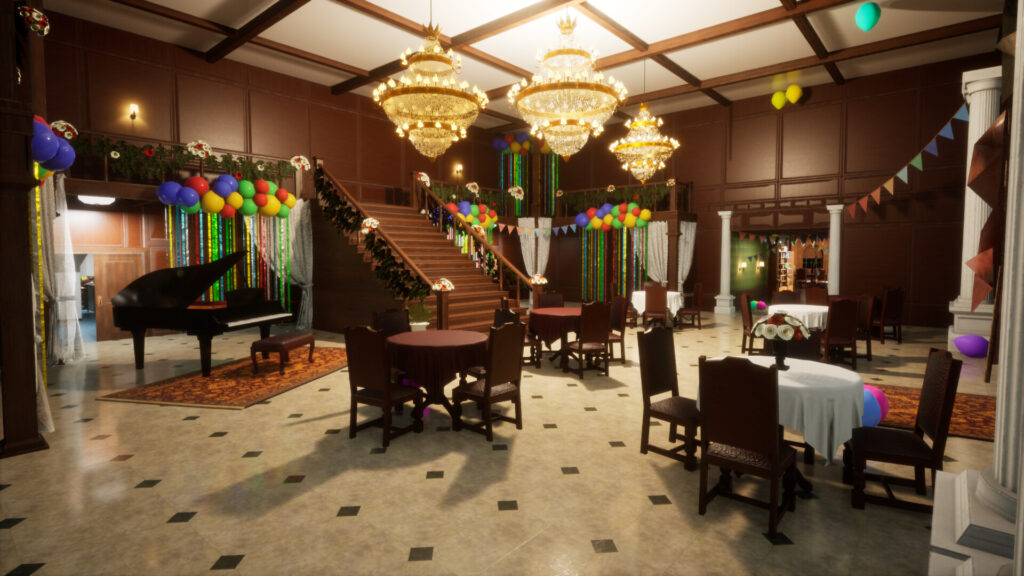
The low price means a lower bar for accessibility and justifies the simplicity of the experience while allowing a wider range of players to discover its actual complexity for themselves. But it’s more than that. As a title that’s banking on massive multiplayer potential, making this one as accessible as it can be is a smart move, as cheaper multiplayer titles are easier to recommend and faster to onboard new players as a result.
For a game like this one, that means enough players, active lobbies, more potential players willing to experiment, and perhaps even a significant number of impulse purchases – a possibility with a game that’s this interesting. It’s a fun game and a funny one to play with your friends, but it’s more than mere friendslop. It’s a title that doesn’t ask too much of you while giving you something justified by its price point, and with a value offering that’s entirely dependent on how much you engage with it. The simplicity of it all is the product, in this case.
But its developers need to be aware of potential pitfalls. Its very success could make it become a familiar hunting ground for talented seekers, while the best hiders manage to fly low under the radar while risking lower engagement since they’ve become as good as they have. There are also reports of cheats being deployed for unfair advantages. Automating an experience that’s designed around being as human as you can get ruins the fun, after all.
Of course, the addition of randomising furniture in a recent update keeps the unpredictability of it all alive for a little longer, but is that a sustainable feat over the long-term? Meccha Chameleon can survive only if its players keep questioning what’s in a room, no longer trusting their own eyes thanks to how the game is structured. It’s going to be interesting to see how it keeps us all coming back for more, but for the moment, we’re happy to get back to painting and seeking to our heart’s content.
Note: The views expressed in this article are those of the author and do not necessarily represent the views of, and should not be attributed to, GamingBolt as an organization.