





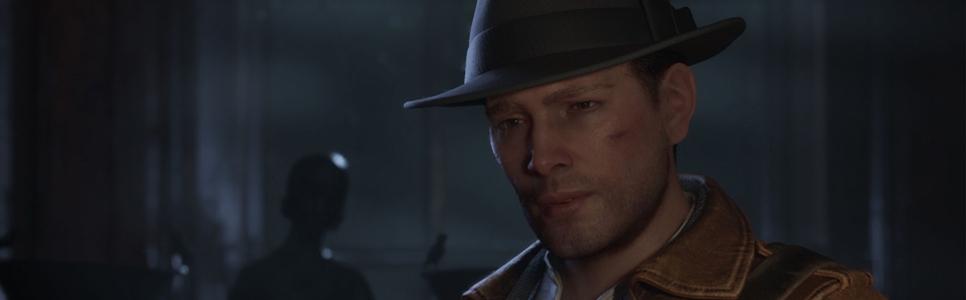
While The Sinking City was an interesting experience that, at its best, was able to masterfully blend horror and investigative gameplay, developer Frogwares’ publishing director, Sergiy Oganesyan, is being more ambitious with The Sinking City 2. In an interview, the studio was kind enough to discuss its plans and thought processes when it came to certain decisions, like focusing on different gameplay styles and some of the biggest inspirations behind the title.
The Sinking City 2 is much more explicitly a survival horror game than its predecessor. What part of Frogwares’ traditional investigation-focused design was absolutely non-negotiable during that transition, and what did you deliberately leave behind?
The answer takes us somewhere slightly unexpected. Every game is built on a core gameplay loop. For a detective game, that loop is explore, find clues, make deductions. For a survival horror game, it’s explore, deal with enemies, get back to safety. Those two loops have almost nothing in common. In TSC1, combat sat on the secondary loop. In TSC2 it sits on the core one. The short version is that investigation moved from the core loop to the secondary loop.
That said, we looked closely at what players loved most about our investigation mechanics and trimmed the parts that could be confusing or outright blocking. The number one fan favorite is piecing clues together, so that’s what we built on for The Sinking City 2. We made it optional, because we didn’t want a situation where missing a clue stops you from progressing the story. Optional doesn’t mean an afterthought, though. Investigation works as a layer that blends into exploration and combat.
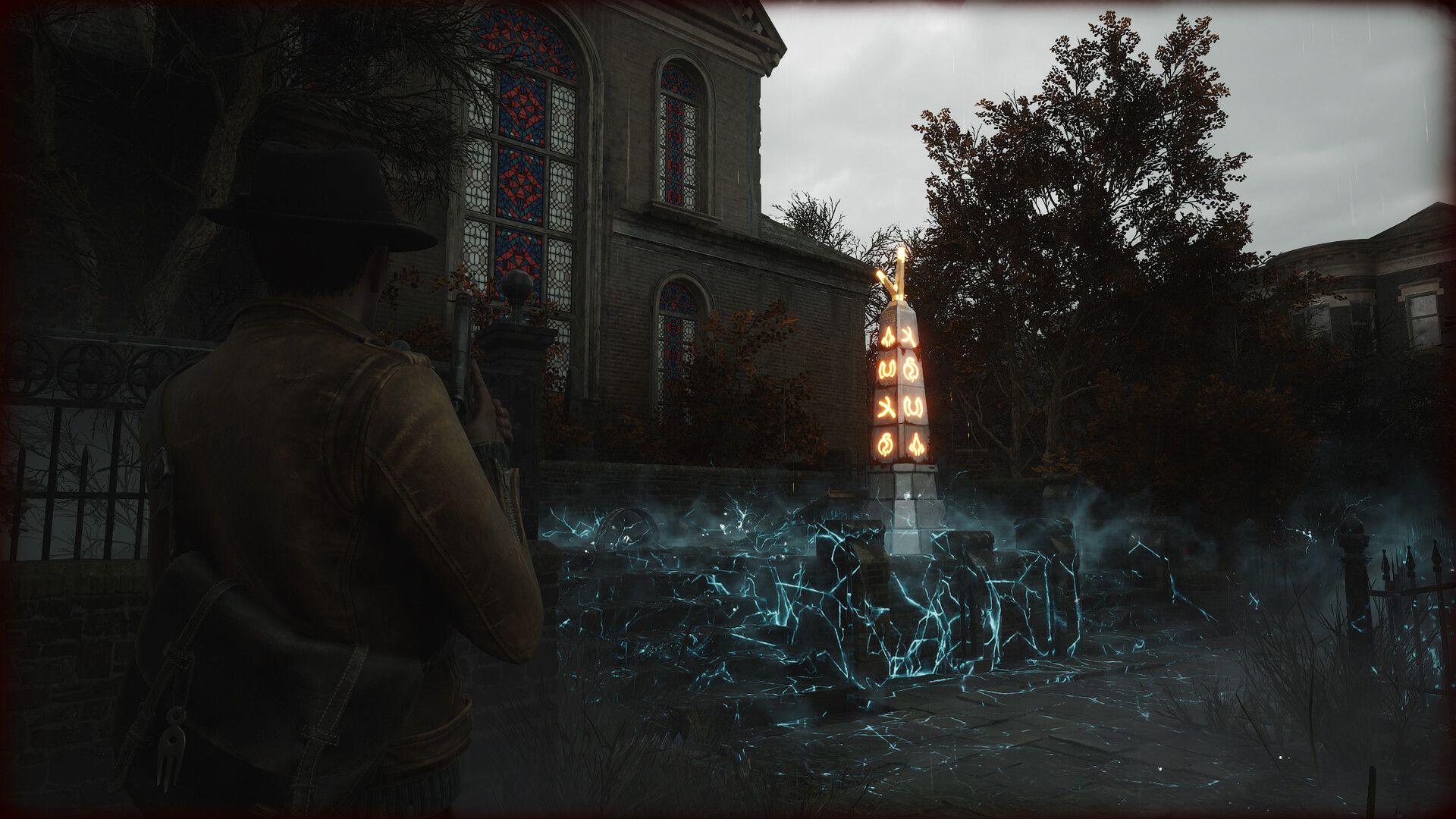
Optional investigations can reward players with safer routes, supplies and upgrades. How do you make those rewards valuable enough to encourage investigation without making supposedly optional detective work feel mandatory?
That’s up to each player in the end, but with scarcity and danger in the mix, players tend to answer their anxiety about surviving by being completionists. We know how investigation works and which triggers get people on board. Having the choice to investigate rather than being forced into it changes a lot. Players approach it with less pressure, and it doesn’t have to interrupt their flow the way it does in a pure investigation game.
The rewards come in two kinds. The first is practical: inventory and weapon upgrades, perk points, and metagame points you can spend on rewards that carry from one playthrough to the next. The second is set pieces, discoveries that pay off on an emotional level, the kind that bewilder and fascinate.
Arkham is a more contained, semi-open environment compared to the first game’s open world. How has that changed the way you approach backtracking, shortcuts, locked areas and resource placement?
Designing the playable area was probably as big a challenge as reimagining combat. A creative process like that needs your full attention, and being absent-minded simply isn’t an option. But the war didn’t only mean constant air raid sirens and sleepless nights. It also meant:
- We could not meet at any point to see and play the game together. We could not build a common experience or share opinions outside of video calls, which can be awkward and not particularly productive.
- We could lose team members for days, for weeks, or completely, because of conscription, or the absence of electricity, water or heating, or worse.
- On the business side it meant no partners, no financing, and no possibility to hire people with survival horror experience.
So we studied the survival horror genre in real depth and created our own system or playbook. Essentially a tension beat method to build the gameplay flow, and to give ourselves some guarantee of success in doing it. The method or system is based mainly around a tension and intensity curve. Nothing in the game happens just for the sake of it.
It covers metrics, the position of key items, shortcuts and backtracking sections. Rooms, discoveries and monsters are all designed and placed to produce a curve of emotions with a beginning, a middle and an end, often reaching a cathartic moment. As a player you can’t really put your finger on when or how it happens, but you still feel on some level that every step you take has deliberate design behind it.
We then trained every team member in this system / method so that we all had the same shared experience and vision. It sounds easy to work on a game together, but it isn’t, especially when it comes to reaching a common vision with everyone physically separated. Once everyone had learned and practiced it, we could start creating the game effectively, with the emphasis on effectively.
We also have our own management methodology for tracking progress, plus internal and external playtesting tied to a deep telemetry system that closes all the loops. That is what it took to create a survival horror game from scratch, and we hope you will like it.
A major part of survival horror is deciding whether fighting an enemy is worth the resources. How are you balancing ammunition, crafting, enemy durability and opportunities to retreat so that combat isn’t always the obvious solution?
TSC2 uses a dynamic soft drop system that adapts to the difficulty the player is actually facing. If you are too good at the game, you may simply find fewer health items and less ammunition.
In practice, the system reads what you are carrying. If you are low on ammo, it will give you ammo for the weapon in your hands, and the same applies in arenas and boss fights, where you can’t run back to a safe room to re-equip. If you already have plenty, it starts pushing you toward the weapons sitting in your stash instead, so you don’t spend the entire game with a single favorite gun. It only does that when you are not in a critical state resource-wise and when you have access to a safe room stash. Say you are playing on Easy with full pockets. The system might start dropping ammo for the Thompson you left behind, and you are free to go back, pick it up and spend all of it to your heart’s desire. Compare that with fixed ammo loot, where the game doesn’t care that you want to play with a handgun. There is shotgun ammo in this room, so you go back to your stash and fetch the shotgun.
That flexibility is fairly new for horror games, where drops are usually hard-coded and identical no matter how you play, and it lets us tune the experience per difficulty level. If you want an easy ride, you can kill everything. On higher difficulties you’ll need other strategies, because you won’t be able to bulldoze your way through every monster. The method I described earlier is what makes room for retreat and for breathing space, which is the “back to safety” part of the core loop. Depending on your skill level, and your willingness to destroy your gamepad sticks, the game will let you either clear everything or use everything at your disposal to survive, including environmental hazards and other enemies.
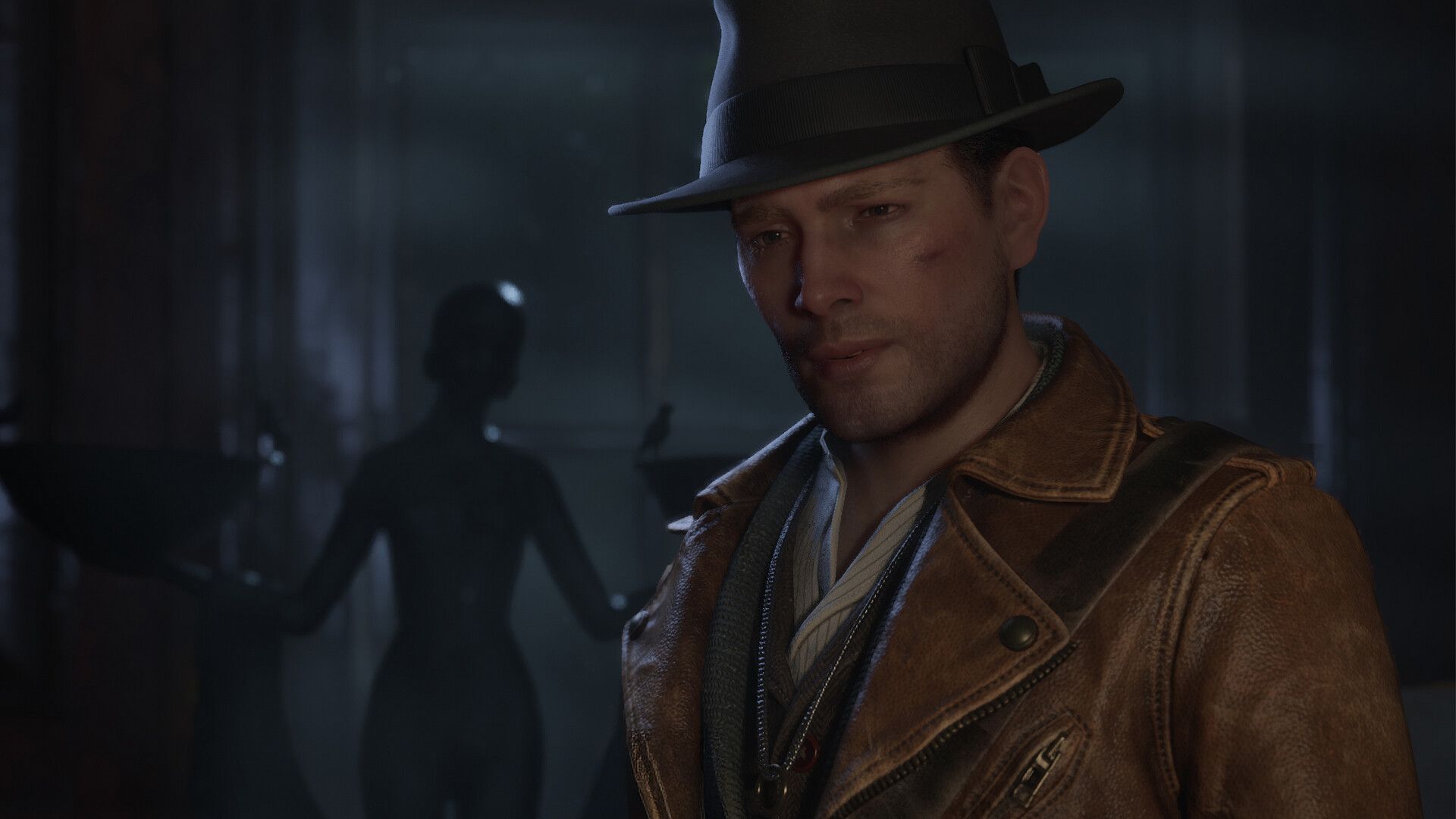
Dream Essence feeds into the game’s Talent system. How dramatically can those Talents change the way a character is played, and can players build meaningfully different versions of the protagonist rather than simply unlocking incremental upgrades?
Just enough, I would say. Perks are not exactly upgrades, they are tactical helpers, and combined properly, they sustain a play style. They also give you a sense of progression and work as a satisfying element in themselves, letting you kill monsters faster and, I might say, cooler.
For example, an axe attachment for your shotgun lets you land a powerful melee hit after firing a single shot. That saves bullets and pushes you toward a more aggressive playstyle. Another example is stacking weapon upgrades and talents that deal extra damage to enemy weak points, so precision shots are rewarded with faster and gorier kills.
Flooding is such a major part of Arkham’s identity. Does the water itself have a systemic gameplay role – changing routes, threats or opportunities – or are flooded areas primarily authored as part of the level design?
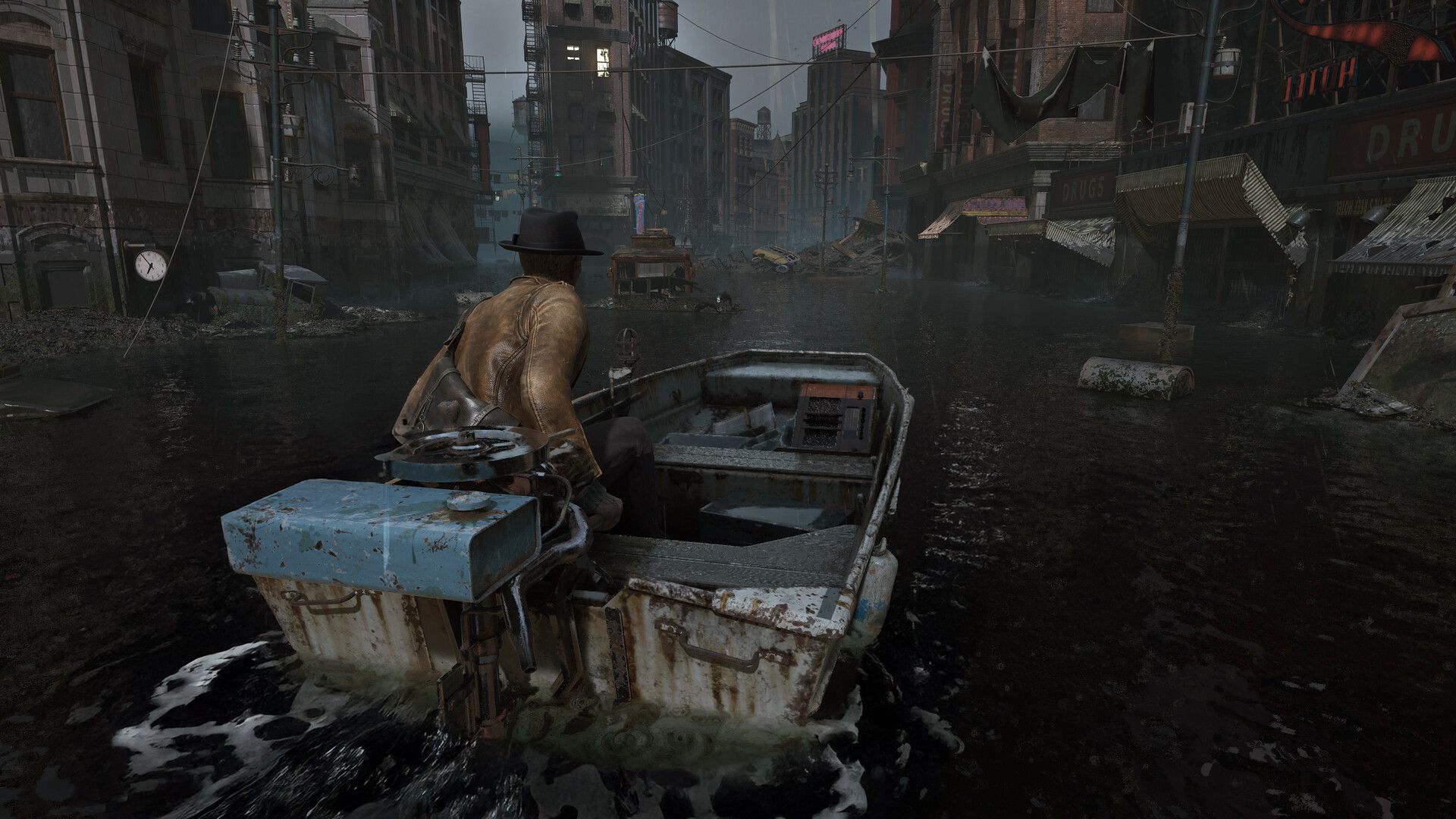
The flood is not a dynamic gameplay element. We played around with the concept at the very beginning of production and eventually decided against it. In our game the flood is part of the setting, inside and outside, a way to enhance the atmosphere and mark the player’s actions. It finds its explanation in the story, and it carries a deeper symbolism as you progress.
It also serves as a respite. Sitting in your boat and taking in the environment can be quite therapeutic after a visceral fight in a tight corridor.
The Sinking City 2 takes place in the same universe and period as the original but follows a new protagonist and story. How much connective tissue should returning players expect in terms of lore, organizations, characters or consequences from the first game?
There is no direct link between the two stories, but there are dozens of small setting connections between Oakmont and Arkham. Anyone familiar with TSC1 will probably catch themselves smiling more than once. Charles Reed even gets mentioned, in unexpected ways.
Because the core gameplay loop is so different, though, there was very little room to bring back characters or organizations. Frankly, that wasn’t our goal for this story.
What resolution and frame-rate modes are you targeting across PS5, Xbox Series X and Series S? Given the game’s reliance on Lumen, Nanite and other UE5 systems, are there substantial differences in lighting, reflections or world detail between the three consoles?
We don’t see a big difference between PS5 and Xbox Series X. Both offer two modes: a quality mode with better visuals at 30 fps, or a performance mode with certain optimizations to reach 60 fps. The Series S runs at 1080p and 30 fps.
Are you planning specific PS5 Pro enhancements for The Sinking City 2, and if so, is the priority higher image quality, improved ray-traced effects or higher frame rates?
At the moment we are focused on shipping the game on all target platforms. Once that is done, we will look at what else can be done. My guess would be higher frame rates in quality mode, since we are quite happy with how the game looks.
The current recommended PC specification is comparatively demanding, targeting 1440p/60 at Balanced settings with an RTX 4070 Ti or RX 7900 XT and 32 GB of RAM. What is the main workload driving those requirements, and which DLSS, FSR, XeSS or frame-generation options will be available at launch?
Starting with the upscalers: the game supports DLSS 4.5 and Frame Generation as well as TSR at launch. FSR will be added as soon as AMD releases its plugin for UE 5.8. Without it, we can’t integrate it.
The Sinking City 2 is a story-driven game, where lighting, shadows, reflections, level detail and even the quality of a character’s hair all play a huge role in creating the right kind of immersion. We built the game to take full advantage of the engine, and we spent a lot of time optimizing it to run on a wide range of cards, including the ten-year-old GTX 1070.