





With A Plague Tale: Innocence and its 2022 sequel Requiem, Asobo Studio crafted two of the finest narrative-driven single player titles of recent memory, delivering a deft blend of tight, linear gameplay and compelling storytelling. Naturally, you’d assume that with its third instalment, the series would stick to its established and successful formula.
However, Resonance: A Plague Tale Legacy – a spinoff that serves as a prequel to Requiem – chooses to deviate from its predecessors’ tried and true path, instead attempting something different. And even though the resulting gameplay experience is quite dramatically different from past Plague Tale experiences in some crucial ways, Resonance still ends up delivering a memorable experience- maybe even one that outshines its beloved precursors.
"Having already made a solid impression in 2022’s Requiem, as the protagonist here, Sophia really steals the show, thanks to mostly solid writing and an excellent acting performance."
Set fifteen years before the events of A Plague Tale: Requiem, Resonance puts players in the shoes of sea captain Sophia, who, at this point in her life, is much younger, less assured, and not quite so capable as we know her from the past game. Building on what little was revealed of her past in Requiem, Resonance expands on Sophia’s backstory and puts her centerstage in a thrilling, swashbuckling hunt story set on Island of Minos, the home of the infamous Labyrinth and the beastly Minotaur. Those mysteries form the heart of Sophia’s journey in Resonance, and form the backbone of a surprisingly engaging hunt, one that keeps finding ways to keep players interested and on their toes.
Sophia herself is, of course, also a strong protagonist. Having already made a solid impression in 2022’s Requiem, as the protagonist here, she really steals the show, thanks to mostly solid writing and an excellent acting performance. She’s joined as well by equally well written and performed characters, allowing Resonance: A Plague Tale Legacy to once again deliver a strong, well-rounded cast of characters that provides plenty of personalities that are easy to invest in, whether you’re rooting for them or against.
No, the writing isn’t perfect: the dialogue in particular can certainly feel a little clunky at times, from occasionally bland banter between the two leads to what has now become a common issue with writing in video games- a protagonist who has a weird habit of constantly talking out loud to herself. Even so, however, Sophia and those who join her largely remain a well written cast of characters.
"Shedding the stealth driven approach of Innocence and Requiem, Resonance instead takes a much more combat-centric approach."
Also central to the story is Sophia’s mysterious, inexplicable connection to Theseus, an ancient warrior who long ago attempted to brave the challenges and horrors of the Labyrinth and the Minotaur in an attempt to claim King Minos’ throne, and now keeps appearing to Sophia in visions and hallucinations as she makes her own way through those same trials.
Every now and then, players get to play as the mighty ancient warrior in sections set in the past; not only are these sections almost always a ton of fun to play, they also often bring impressive visual and narrative reveals. Experiencing the two intersecting stories and timelines remains one of Resonance: A Plague Tale Legacy’s biggest strengths from beginning to end.
Meanwhile, if you’re coming in as a fan of past instalments, another one of Resonance’s highlights is how its story connects to the series’ larger narrative- this is, after all, still a Plague Tale game, for all the many ways it differs from its predecessors. Though Sophia’s hunt for a secret of the Island of Minos is very separate from the story of Amicia and Hugo de Rune in the two previous Plague Tale games, as the game progresses, you learn more and more about how the central mystery is connected to the series’ overarching lore. That in particular is done quite well, and only serves to add to the game’s storytelling strengths. It’s especially fun to see how Resonance puts a Plague Tale twist on its take on mythology.
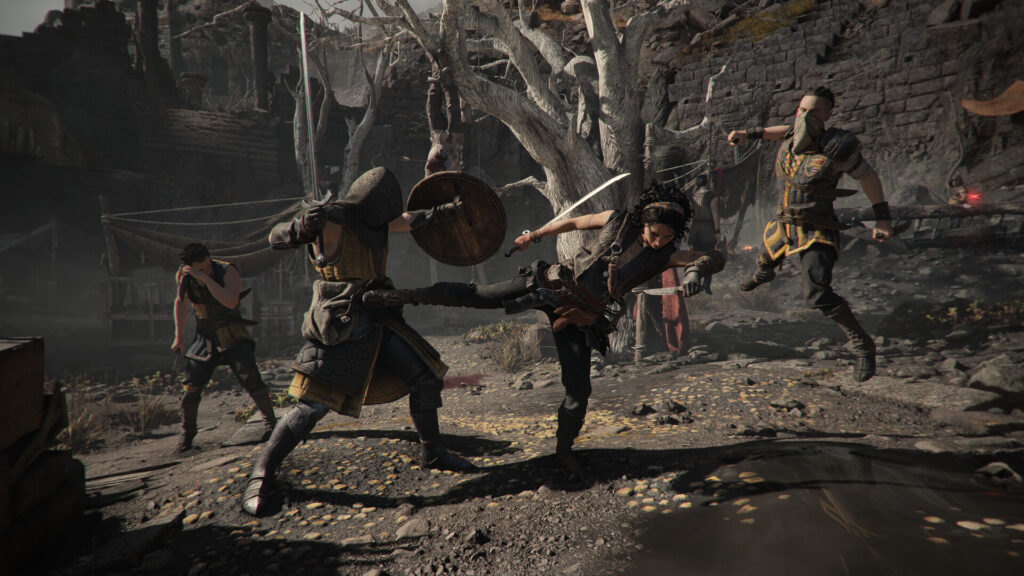
The game also deviates from the gameplay formula of its predecessor in significant ways, as previously mentioned. Shedding the stealth driven approach of Innocence and Requiem, Resonance instead takes a much more combat-centric approach.
"Combat is never too challenging, and you might not see anything here that you haven’t seen before in other parry-focused melee-based action games."
At its heart is a parry system that takes inspiration from Sekiro: Shadows Die Twice and the many pretenders it has spawned, with players tasked to finding openings in enemies’ stances and breaking their posture with sustained perfect parries to make them vulnerable to swift follow up attacks.
In addition to basic mechanics such as light and critical attacks, dodges, and parries, Sophia also has a roster of additional moves, from kicking enemies and pulling them with a grappling hook to unleashing a Theseus-inspired ultimate move and more.
In true Plague Tale fashion, Resonance’s core of gameplay mechanics always remains lean and focused and avoids bloat. That core, meanwhile, is slowly expanded throughout the experience with new variations, twists, and more, so that even with what seem like straightforward and simplistic mechanics on paper, the game ends up delivering an experience that never fails to keep things fresh, exciting, and varied from a gameplay perspective.
Combat is never too challenging, and you might not see anything here that you haven’t seen before in other parry-focused melee-based action games, but the execution of mechanics on display here deserves to be lauded. Resonance: A Plague Tale Legacy ensures that combat never gets repetitive, and always remains tight and enjoyable, with well thought-out combat scenarios, well-designed arenas, solidly executed mechanics, and decent enemy variety, among other things. In fact, it wouldn’t be an exaggeration to call this the best-playing Plague Tale game so far- which, as those who’ve played past titles will tell you, is very high praise.
If there’s one combat-adjacent area of the game that doesn’t entirely stick the landing, it’s the progression mechanics. Resonance allows players to purchase ability upgrades and enhancements with Resonance Points accrued through exploration, while you can also equip one of a handful of different swords. That said, there’s not too much on offer on either front in terms of variety or flexibility.
The pool of upgrades available in the skill tree is limited and barebones, while the few swords that are on offer don’t differ from each other in terribly significant ways either. Some changes and unlocks are surely appreciable, but for the most part, the customization and progression mechanics on offer here feel half-baked and tacked-on.
"Resonance, then, feels like an Uncharted game set with a medieval fantasy twist."
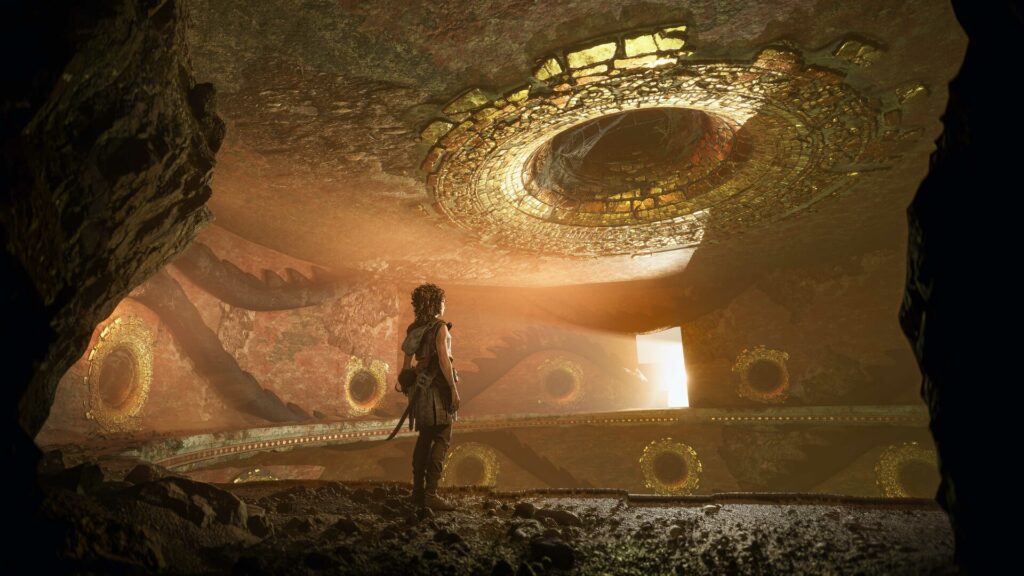
Combat isn’t the be-all-and-end-all for Resonance: A Plague Tale Legacy’s gameplay experience, however. Outside of combat, you’ll be spending a good bit out time exploring environments and solving puzzles. As far as exploration is concerned, much like its predecessors, Resonance delivers a rather linear experience. Every now and then, levels do slightly open up, offering branching pathways, optional areas, hidden secrets and more, but at all times, the game remains incredibly focused and tightly designed.
Coming to the puzzles, this is another area where the game shines- and heavily echoes a classic Uncharted experience. That in particular shouldn’t come as any surprise. After all, an engaging hunt is at the very heart of Resonance’s story, while the Plague Tale series has always echoed the single player narrative-driven strengths of Naughty Dog experiences from day one.
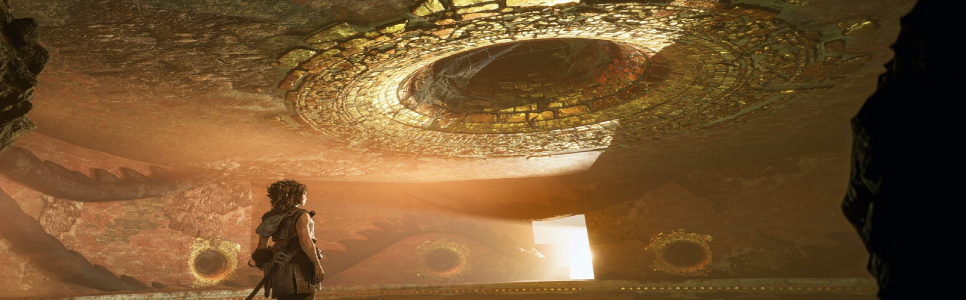
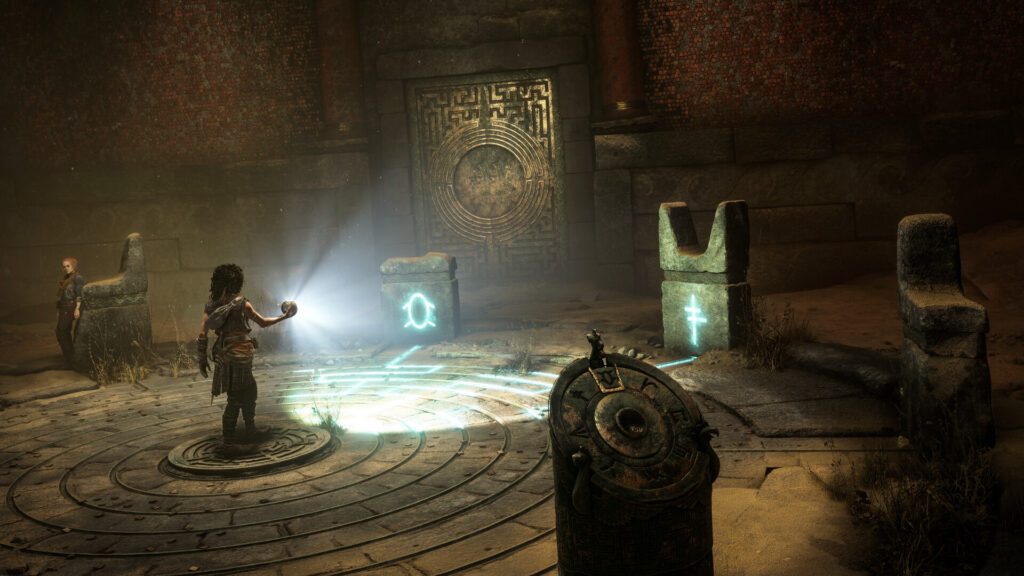
Resonance, then, feels like an Uncharted game set with a medieval fantasy twist. You’ll frequently encounter large scale mechanical contraptions that serve as elaborate puzzles. These light-based puzzles (in true Plague Tale fashion) are consistently well designed and impressively varied, and solving them in by surveying the environment and using Sophia’s Nathan Drake-esque journal always remains one of the game’s most fun aspects.
Another area where Resonance: A Plague Tale Legacy heavily resembles the classic Uncharted experience is its set piece moments and platforming mechanics. Though ultimately simple and none-too-complex, Sophia’s moveset of jumps, grapples, slides, and sidles allows for some fun platforming sections, as well as a number of adrenaline-fueled high octane set piece moments. Throughout the lengths of its experience, Resonance keeps throwing players into tightly designed, cinematic, breathtaking sequences that break up the moment-to-moment gameplay loop in spectacular ways.
On a visuals and technical front, Resonance is another impressive outing for developer Asobo Studio. Just as it did with past Plague Tale titles, the developer once again uses its relatively limited means and resources as an independent studio to deliver a game that, in terms of its tech and its graphics, can stand toe to toe with some of the best that the industry’s AAA side has to offer. Sure, I was, every now and then, met with some audio glitches, wonky animations, and the like, but those instances were fairly rare, and by no means affected my overall experience in any meaningful way.
I’ve been a big fan of the Plague Tale series since day one, and have loved everything that it has done up to this point, so it gladdens me to say that Resonance: A Plague Tale Legacy, its third and most experimental outing yet, might also be its most enjoyable and compelling. With both its narrative and its gameplay, it impresses and delights consistently from beginning to end, even if it doesn’t break any new ground. At the same time, it also tries to set itself apart from its excellent predecessors by offering a very different kind of gameplay experience, and succeeds spectacularly, perhaps even to the point of outdoing said predecessors.
This game was reviewed on the PlayStation 5.
Sophia is a great protagonist; Bombastic, swashbuckling story; Well-written and well-performed cast of characters; Compelling central twist with Sophia’s mysterious connection to Theseus; Connects with larger Plague Tale lore in interesting ways; Excellent new combat-driven approach; Tight, consistently enjoyable parry-based combat; Solid, well-built roster of combat moves; Well-designed, elaborate puzzles; Fun platforming; Thrilling, adrenaline-fueled set piece moments; Looks excellent.
Writing and dialogue can be occasionally clunky; Threadbare and simplistic progression mechanics.