





Insomniac Games has already proven itself with the quality of its Spider-Man titles, but Marvel’s Wolverine is a very different beast, and while the core progression systems share some similarities, players shouldn’t go in expecting the same kind of experience. Wolverine is far more focused in its structure, with its settings changing more frequently and the overall pacing moving at a noticeably faster clip.
The core of any Marvel media is its story, and dare I say, this is one of the most tightly knit narratives Insomniac has ever told, with an emotionally charged yet grounded approach that gives its characters plenty of room to shine. We would obviously like to avoid major spoilers so you can experience the story for yourself, but a brief synopsis is in order. After spending years trying to leave that part of himself behind, Logan is inevitably pulled back into the life he wanted to escape when a new threat begins targeting mutants on a terrifying scale.
"At the centre of it all is Wolverine himself, played by Liam McIntyre, who does an exceptional job portraying the character, capturing everything from his anger, grunts, and screams to his emotional lows and quieter moments of sadness with impressive precision."
His return to Team X places him in the middle of a conflict driven by Bolivar Trask, whose campaign against mutantkind quickly turns deeply personal, forcing Logan to reconnect with old allies and confront unresolved parts of his past. The journey takes him across several corners of the world, from Canada and Japan to Madripoor, giving the story a constantly shifting backdrop while keeping the focus firmly on Logan and the people caught up in the conflict.
It may sound like your go-to superhero plot on paper, but the way the in-game characters come together, backed by excellent performances, turns it into a gripping and emotionally charged story filled with action, drama, and betrayal. At the centre of it all is Wolverine himself, played by Liam McIntyre, who does an exceptional job portraying the character, capturing everything from his anger, grunts, and screams to his emotional lows and quieter moments of sadness with impressive precision. Hugh Jackman will probably always be Wolverine to me, but McIntyre comes remarkably close here and delivers a genuinely excellent performance.
Logan’s friction-filled relationship with Victor is also handled well, while characters like Essex and Mystique benefit from strong performances across the board, although the real highlight, as expected, is the dynamic between Jean Grey and Wolverine, which Insomniac absolutely nails. This is a banger of a story and easily one of the strongest reasons to experience Wolverine for yourself.
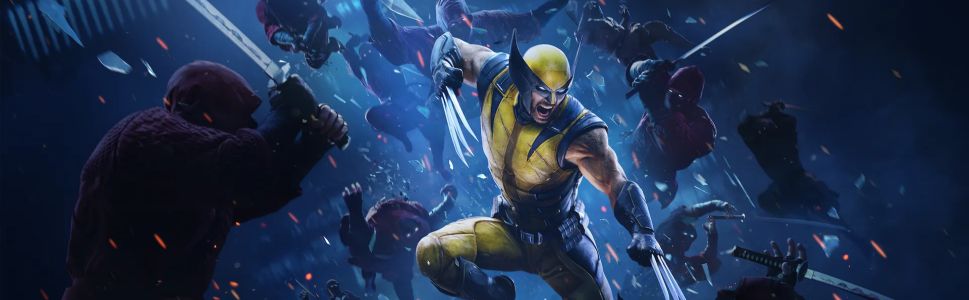
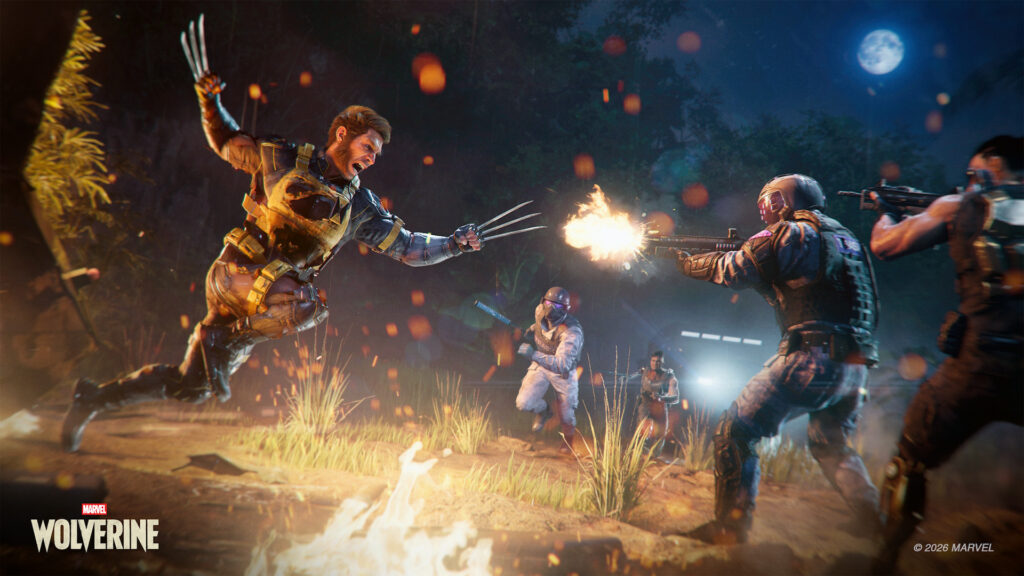
It’s not a great Wolverine experience if the story isn’t there to back it up, but a Wolverine game without great combat would be nothing short of insanity, and thankfully, Insomniac’s pedigree in this department shines through once again. The violence here is absolutely through the roof, with Wolverine’s brutal, borderline unhinged temperament translated brilliantly into every encounter, making him feel every bit as savage as the character demands.
His claws are naturally the main attraction, and every parry, slash, slice, and vicious takedown carries real weight, helped considerably by some excellent DualSense integration that makes every impact feel that much more satisfying.

"The Technique system is then amplified by Adaptations, which function more like passive buffs, offering benefits such as reducing incoming melee damage, restoring health after successful parries, or increasing the timing window for pulling them off."
You can lunge at enemies from a distance, leap over obstacles while closing the gap, and use objects placed around the battlefield to create some genuinely stylish and savage moments. There are launch points that let Wolverine hurl himself into enemies, opportunities to set his claws on fire for additional damage, and environmental kills that can be downright vicious. Whether you are kicking an enemy directly into a furnace, smashing them against nearby objects, or using the surroundings dynamically to finish them off, combat constantly finds new ways to make Wolverine look and feel absolutely lethal.
Speaking of brutal kills, Wolverine also features a Rage Meter that gradually fills as you keep inflicting damage on enemies, and once it reaches Tier 3, you can unleash some absolutely jaw-dropping attacks that see Logan quite literally tearing through anyone standing in his way. It is quite a spectacle to watch and, more importantly, rarely gets old. That is not all either, as progressing through the game also unlocks powerful area-of-effect attacks, allowing Wolverine to damage multiple enemies across a wider area and giving combat another layer of crowd-control options when encounters become more chaotic.
As is typical with Insomniac’s superhero games, progression is handled through a relatively straightforward system, with players earning XP as they progress and using it to unlock skill points, referred to here as Technique Points. There are roughly two dozen skills to unlock, allowing Wolverine to perform swift multi-target strikes, restore his health by pressing a specific button, deliver drop kicks, execute stealth takedowns, and unleash special moves like Tornado Spin, among several others. The Technique system is then amplified by Adaptations, which function more like passive buffs, offering benefits such as reducing incoming melee damage, restoring health after successful parries, or increasing the timing window for pulling them off.
For example, Tornado Spin can rip through several enemies at once and quickly build Rage, while the right Adaptation can further enhance that playstyle by making Rage easier to capitalize on and giving Wolverine more staying power in prolonged fights.
Insomniac has handled Wolverine’s healing mechanic quite intelligently by tying it to the Rage Meter. If Logan’s health is depleted while there is still Rage available, that meter is consumed to restore his health and allow him to regenerate. If there’s no Rage left, however, Wolverine will die, which does feel a little odd given the character’s abilities. On the lowest difficulty setting, the game removes that restriction entirely, allowing Wolverine to regenerate automatically whenever his health bar is emptied. It’s a fair compromise overall, balancing Wolverine’s famous healing factor with the demands of a video game.
Suits and claws also return, with a decent amount to unlock throughout the game, some requiring materials to craft, others unlocking naturally through the story, while a few are tied to challenges found behind Nightmare Doors, which we will explain shortly. It is genuinely fun seeing and unlocking designs pulled from Wolverine’s rich history, and interestingly, there is also a small progression element tied to them, as crafting more suits gradually provides additional health upgrades.
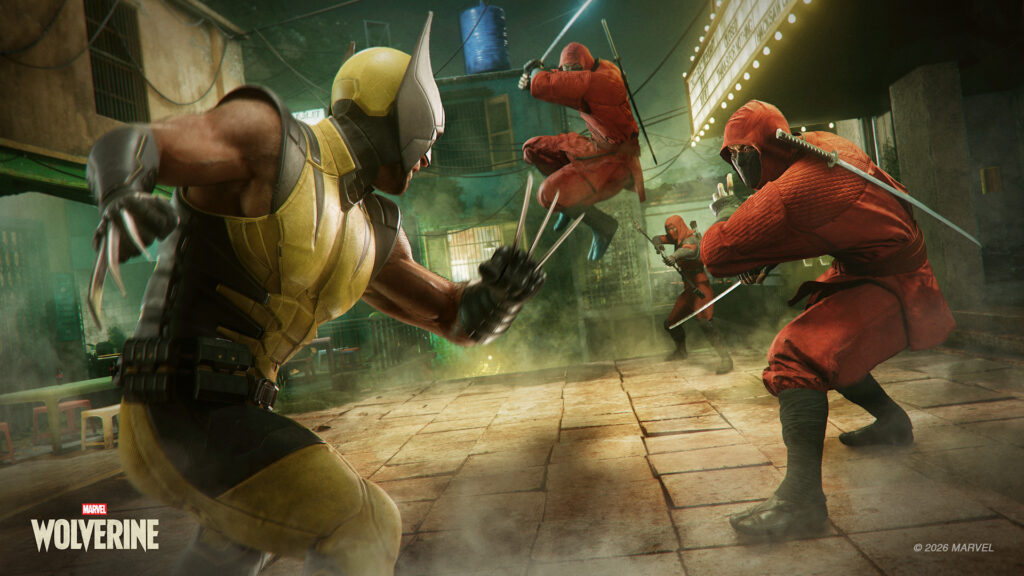
"The mission pacing also deserves plenty of credit because the game rarely keeps you in one location for too long, constantly pushing you forward into new environments and situations as more of the story begins to unfold."
Wolverine is not an open-world game, and frankly, I don’t think an open-world based on the character would necessarily work. Instead, Insomniac has built a focused, largely linear experience where you move from one mission to the next without being constantly distracted by meaningful side stories or activities. It allows the developer to maintain a much tighter narrative pace, while the level design itself becomes one of the biggest reasons why the experience works as well as it does.
This is very much a globe-trotting adventure, and the way traversal and exploration are handled can vary quite significantly depending on the mission you are playing. One mission may give you a larger section of Madripoor to move through, letting you track enemies using Wolverine’s senses and discover a bigger area to explore, while another in Canada may place a much heavier emphasis on climbing, platforming, and stealth. Traversal is an important part of the overall experience as well, with Wolverine feeling nimble and surprisingly fast as he slides across ziplines, clears huge gaps, scales obstacles, and generally pulls off the kind of larger-than-life movement you would expect from a superhero.
All of this eventually comes together in some spectacular set pieces, whether you are involved in intense story sequences, taking on a massive Sentinel, or speeding through multiple encounters on a bike. The mission pacing also deserves plenty of credit because the game rarely keeps you in one location for too long, constantly pushing you forward into new environments and situations as more of the story begins to unfold.
As noted earlier, there are no traditional side missions to tackle, but Nightmare Doors provide some optional activities, ranging from taking on multiple waves of enemies to parkouring through a level and reaching a designated destination. They are also tied directly into the progression system we discussed earlier, as completing them can unlock Adaptations while also revealing additional story fragments from Logan’s past.
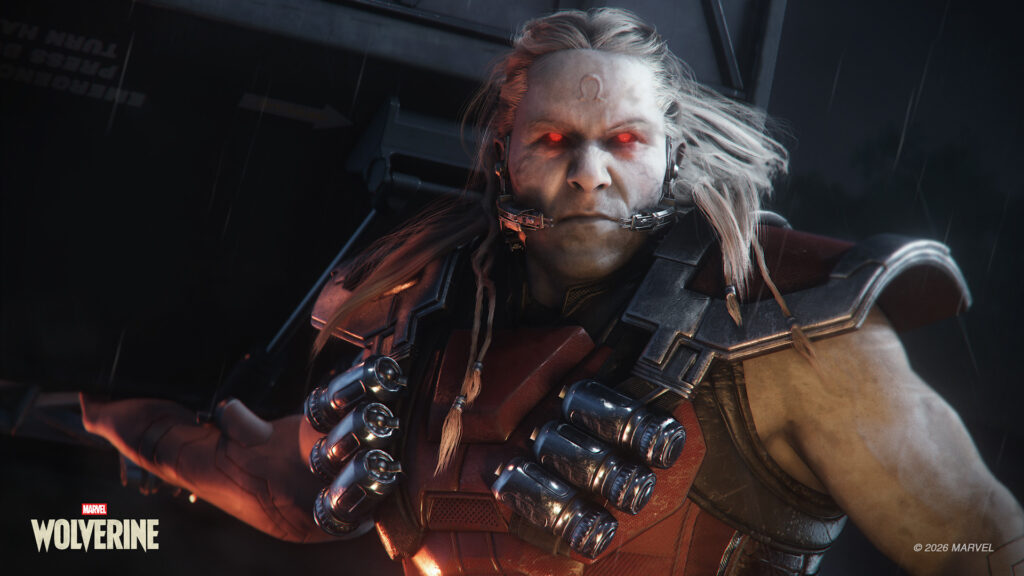
"I obviously cannot go into the later bosses without spoiling anything, but the early encounters against Omega Red and the Sentinel are damn good, even if the occasional QTE does pop up every now and then."
Most of these challenges essentially offer more of the combat and traversal already found in the campaign, but they provide a worthwhile reason to spend some extra time away from the main path. They may not dramatically change the overall experience, but they are a decent addition to what is already a spectacular game.
Speaking of enemies, you should not expect a huge amount of variety here, with most of the regular opposition largely divided between Cyborgs and Sentinels of different shapes and sizes, and that is unfortunately about it. It never detracted too much from the experience for me because these enemies can still be extremely dangerous when they gang up on you, although I can certainly see the lack of variety becoming an issue for some players.
Where the game really makes up for it is with its boss roster, which is spectacular, while the battles themselves are, as you would expect, cinematic showcases packed with scale and spectacle. I obviously cannot go into the later bosses without spoiling anything, but the early encounters against Omega Red and the Sentinel are damn good, even if the occasional QTE does pop up every now and then.
If there is one area I wasn’t particularly happy with, it would be the stealth sections. To be clear, the game never forces you into either a stealthy approach or an all-out assault, but there are a few levels where stealth is clearly encouraged, and I found those moments pretty underwhelming. I get it, Wolverine is more of a brutal predator who uses stealth when the situation demands it, but even then, these sections could have been handled better. Hiding in tall grass and picking off unsuspecting enemies works well enough, but it is definitely time for Insomniac to move beyond some of these basic stealth mechanics and introduce a little more depth.
"Insomniac’s take on the angry mutant may very well represent the character’s pinnacle in terms of presentation and story-telling."
I completed the game on PS5 Pro using the Performance Pro mode with advanced ray tracing enabled, and performance was excellent throughout. I noticed a few very minor drops here and there, but overall, the experience was remarkably smooth, while load times, as expected, are incredibly fast. Visually, the game is absolutely stunning, with fantastic character models, richly detailed environments, impressive visual effects, and accompanying sound design that all come together to deliver top-tier production values; I mean, just look at the detail in Wolverine’s innocent face.
There are also some rare bugs, however, such as Wolverine’s animations not always translating correctly when he gets stuck in a corner, along with one instance where the game simply refused to progress and forced me to reload a checkpoint. None of these issues stopped me from enjoying the experience, though, and given how minor they are, I would expect a patch to iron them out fairly quickly.
I thoroughly enjoyed my time with Wolverine, and while the complete campaign can be wrapped up in roughly 20 hours, the journey is consistently memorable and packed with moments that stick with you. We haven’t had a truly great Wolverine game in what feels like forever, with 2009’s X-Men Origins: Wolverine immediately coming to mind, but Insomniac’s take on the angry mutant may very well represent the character’s pinnacle in terms of presentation and story-telling.
It’s violent and surprisingly heartfelt, and about as close to the definitive Wolverine experience as you could hope for.
Welcome home, bub.
This game was reviewed on PlayStation 5.
Brutal and satisfying combat, Excellent story and pacing, Outstanding voice performances, Spectacular boss fights, Strong progression systems, Fantastic visuals and production values, Memorable set pieces, Focused level design and mission structure.
Minor bugs, stealth is underwhelming.