





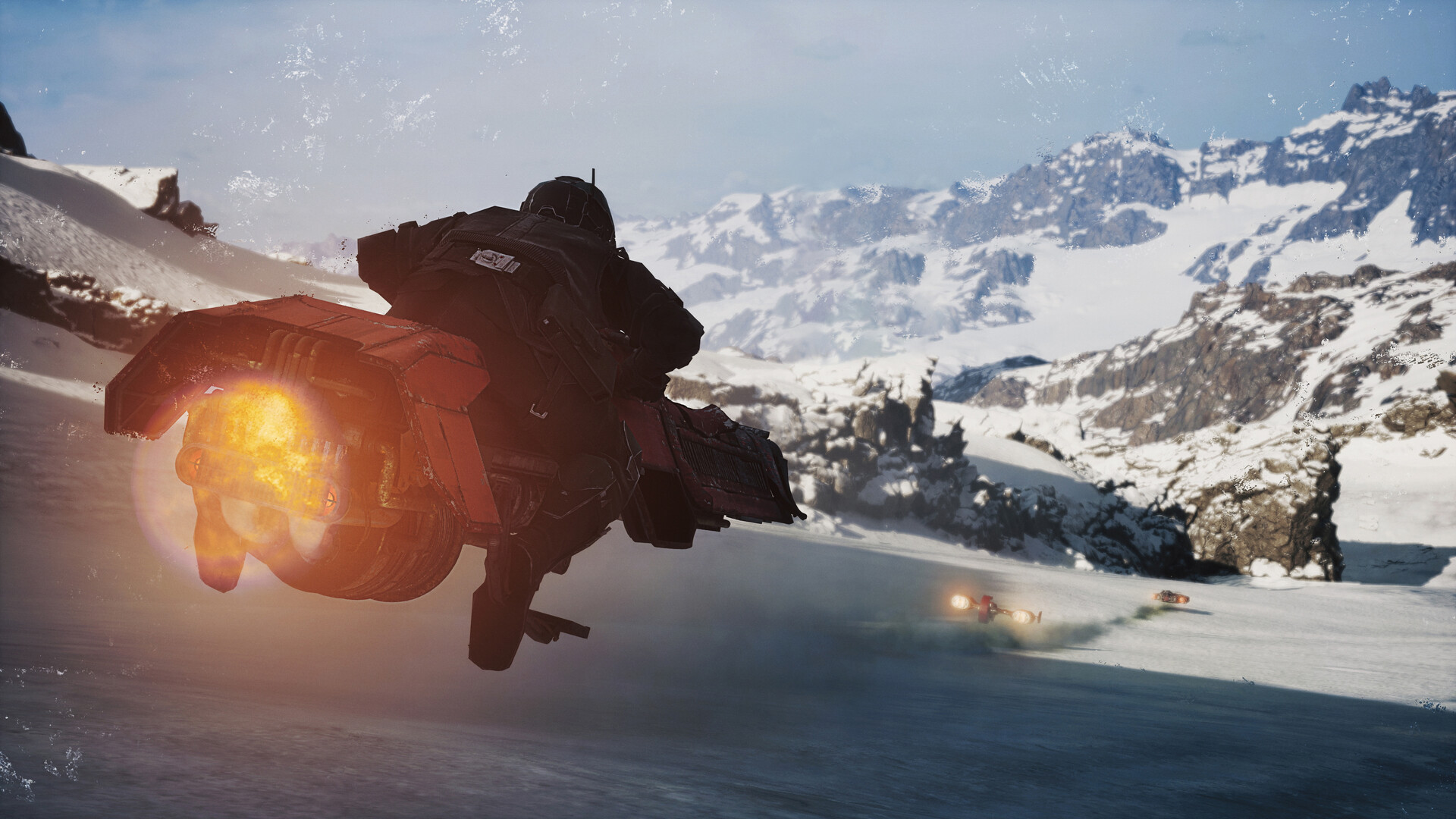
Celebrating the positive reception of Star Wars: Galactic Racer, Fuse Games CEO Matt Webster has revealed more details about how the team managed to make the racing game. In an interview with GamesIndustry.biz, he spoke about the traditional AAA game development structure that typically involves hundreds of employees working together. Fuse Games, on the other hand, managed to develop and ship Galactic Racer with a headcount that “averaged a lot smaller” than a big company like Rockstar Games.
Webster noted that Fuse Games relied quite a bit on external partners while keeping a small core. With this and what he calls “distributed development”, Webster noted that he doesn’t want to constantly keep growing and shrinking the studio depending on the needs of any given project.
“We want to operate at Premier League level. We know what that takes, but we didn’t want to grow and shrink for a bunch of different reasons. Because when you shrink, there’s a personal impact to people, but you also lose an incredible amount of knowledge, which I think is probably way more expensive to retrieve.”
Discussing distributed development further, Webster said that the team operates on three distinct tiers of game development. The tiers, split up depending on how distant they are from the core teams, involve outsourcing at the furthest tier and in-house work at its lowest tier.
“You give a brief, you get an output back, and you integrate it in. Which sounds transactional, but you shouldn’t treat it as transactional. It’s very important that you build relationships with those folks; you get a better result when you do so.”
A middle tier involves giving self-contained development work to an external team. An example of this, according to Webster, is the photo mode in Star Wars: Galactic Racer. This kind of work tends to be easy to hand off since the team can essentially just provide a brief and make use of cross-discipline teams.
“It’s clear to brief, clear to point to a set of features, and you need a cross-discipline team to bring it together, so you need production, art, UI, and code to create that thing. But because we’re in Unreal, it can be self-contained. So, someone can go off and build that, and we can slot it in.”
Closer still is what Webster calls co-development with workers that “are in our stand-ups, they’re in our Slack channels, they’re in our code base, they’re in all of our team stuff. They are, to all intents and purposes, an extension of our team. They just happen to work for another company.”
Star Wars: Galactic Racer was released on PC, PS5, and Xbox Series X/S earlier this month. In our review, we gave it a score of 9 out of 10 thanks to its tight core racing mechanics, satisfying takedowns, and an addictive roguelite structure that ensures that the campaign can offer plenty of variety thanks to the number of builds players can try out for their vehicles. For more on the racing game, check out what Webster has said about modern players’ cognitive loads and how racing games should challenge you.