



Two games that bring protagonists who are masters of their craft and are quite unapologetic about it. Two combat systems that can make each fight feel like it’s straight out of a movie script’s choreography. Two games in which you have several options at your disposal at any given moment, and a lot of potential to make you feel like your blade is an extension of your fingers.
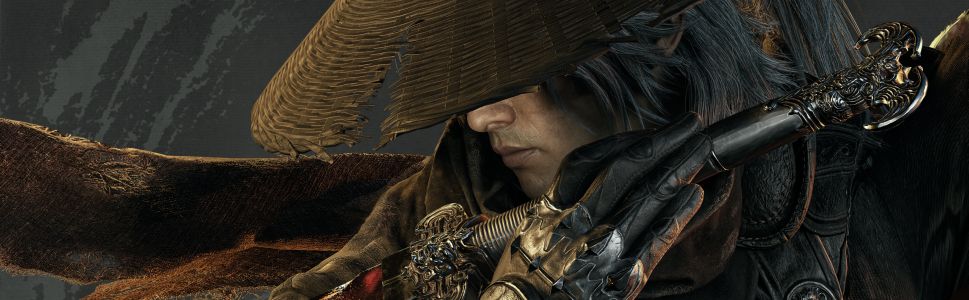
Soul may be tangibly more stoic and reserved when you compare his personality to Miyamoto Musashi’s affable arrogance, and their fighting styles might seem widely different when you look at them in action. But are they really that different? How are they the same? We’ve enjoyed time with both swordsmen, and we couldn’t help comparing the two distinctly different experiences they were a part of.
It’s Onimusha: Way of the Sword versus Phantom Blade Zero in a battle that’s going to be fraught with clashing blades and deadly elegance. We’re here to tell you when to duck, and when to look closely at moves that the naked eye might have trouble seeing if the lot of us weren’t such seasoned veterans of the action-adventure space. Let the fight commence!
Call and Response
It’s always great when an action title such as the ones we’re discussing feels responsive and snappy in our hands. It’s something that underpinned both Musashi and Soul’s movesets in their respective adventures. They move with fluidity and grace, although Soul does bring more flair and flourishes to the table, while Musashi is a more deliberate, calculating fighter who likes to move slowly as he waits for the perfect opening.
However, where Musashi commits to his swings and is locked into animations even if his timing is off, Soul remains a genius at improvising even in the middle of a swing to bring up a defensive move. The minimal wind-up on his defensive animations is incredible, and it’s something that Musashi only enjoys when he risks an Issen counter, his parries and dodges feeling just a shade slower when you compare how his animations cancel into each other in comparison to Soul.
Furthermore, with only his trusty katana and the Oni Gauntlet to aid his fight, Musashi must conserve his stamina to ensure he’s not left gasping for air in the middle of a brutal onslaught of attacks. That isn’t the case with Soul, who can just swap to his secondary weapon to keep the offense going.

Onimusha’s combat is all about exploiting openings in the midst of enemy attacks, strategically using parries, Issens, dodges, and the Blaze and Reflex meters to sustain an offense that wears down opponents, opening them up for finishers that act as tactical opportunities. Are you going to go for some big burst damage, or perhaps attack a specific body part to either remove a troublesome attack, or perhaps release a very useful bunch of orbs to fuel your offensive arsenal?
Phantom Blade Zero does things a little differently. Musashi’s calculating style is replaced by unadulterated aggression and sheer mastery of your weapon. Your combos are meant to be unleashed with the only consideration being how much of your sha-chi you want to commit to your flurries of attacks, and how much you want to hold in reserve to defend against enemy moves.
Of course, the blurred line between offense and defense is what’s going to make Soul stand out among the many other protagonists in the genre who seem to be limited to either one, Musashi included. It’s a subtle wrinkle in a familiar formula that immediately makes the pace and tension of each fight something that just permeates the game’s vibe, and it’s a feeling so heady we have no choice but to declare PB Zero the winner here, factoring in everything else we’ve spoken of so far.
Of course, the depth of those systems, and how free you are to mix and match between the tools you’re given, is a part of the allure, and Musashi is certainly a strong contender in this area given that he can either block, parry, Issen, or dodge an attack while responding with either his sword, bow, or whatever Oni weapon he chooses to wield, each of which comes with its own specific use cases. But that can feel quite limiting when you think about what Soul gets to wield in the Wulin.
PB Zero differs by letting you wield two main weapons and two Phantom Edges, leaving a lot of room for players to create builds and fighting styles that stand out. A sprawling arsenal of weapons, each bringing distinct capabilities to the table. As if two of those very potent tools of destruction weren’t enough, the Phantom Edges bring even more unique functionalities to the table, and the potential for build crafting is supported very well by a very generous approach to doling out upgrade mats and respeccing.
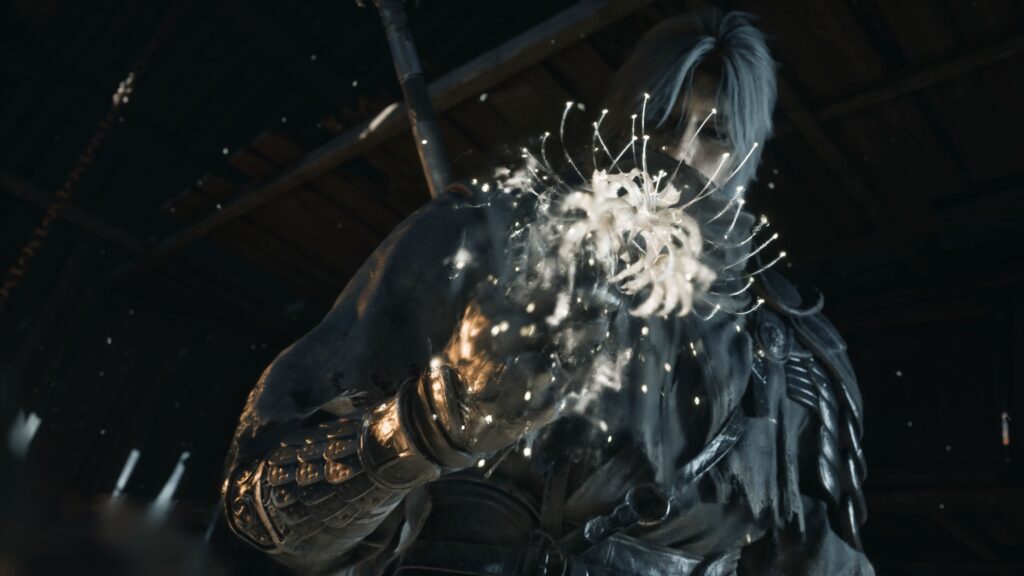
Where Onimusha gives you a limited set of tools but a lot of different ways to use them, PB Zero does both, and that’s exacerbated by equippable items whose buffs are arguably better than the ones that Onimusha gave to Musashi. We played both games on the hardest available difficulty, and PB Zero definitely gives you more utility out of your gear and weapons.
Musashi’s fighting style is his own, but Soul feels like malleable martial arts clay in our hands, his moves dictated by the choices we make as we explore the Wulin and help him on his way to his goals. Once again, PB Zero takes the win. Of course, any fight is only as good as the opponents you face.
Facing Your Foes
If you’ve been thinking that this contest seems oddly tilted in Soul’s favor, it’s time to change that. Onimusha’s rank-and-file enemies manage to present a more coherent challenge when you’re dashing around Kyoto and stem the growing threat of the Genma. They’re a nasty bunch, and there’s enough enemy variety to keep things interesting through the game’s runtime. It’s also awesome that enemy combinations in different scenarios force you to balance differing parry windows, attack patterns, and spacing in the field all at once, making things feel very involved, and the risk of a single mistake is always on your mind as you deftly wield your blade and pick off the Genma one by one.
Of course, the Oni Gauntlet does give you some breathing room with crowd control techniques and powerful attacks that can tear through enemy defenses, but fighting an enemy in Onimusha always feels like your enemy has an equally fair chance at emerging victorious.
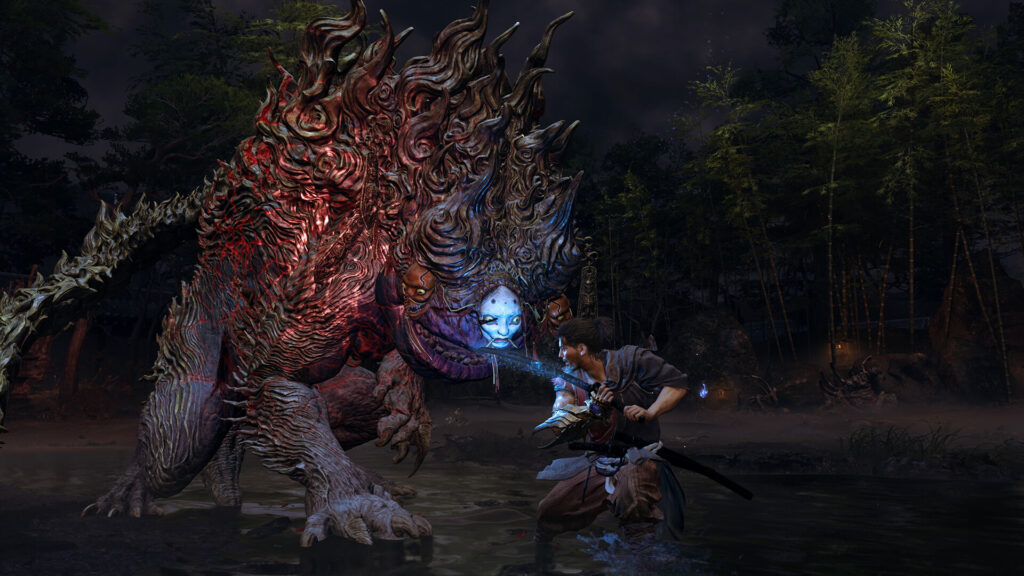
That isn’t the case in PB Zero, where grunt enemies fall far too easily even on the Hellwalker difficulty. It certainly feels like Soul is too good for them to even hope to be a match, but exploring the world feels oddly devoid of any danger, especially when you consider that defeating enemies once permanently deletes them from the Wulin. That’s a departure from Onimusha, which tries its utmost to ensure that Musashi is never too far away from an opportunity to show off his slick moves and skills. It’s also one that hands Musashi a much-needed victory.
However, get to the bosses that both men fight, and the tide once again shifts in Soul’s favor. Onimusha’s bosses are fantastic, no arguments there, but with so many repeat encounters, they begin to feel a tad boring. However, there are exceptions, such as every fight against Sasaki Ganryu that seems him become more unhinged, and correspondingly more unpredictable and deadly in a fight.
He isn’t the only great test of Musashi’s skill in Onimusha, but he’s definitely a boss who showcases the game’s potential to make even the same foe feel like a deadly new adversary thanks to the direction the story takes him in. But Kyoto’s rogues’ gallery is vastly outnumbered by PB Zero’s frankly astounding number of bosses, each one bringing something unique to the table to make them stand out.
The Gold-Masked One is our pick of the lot from a personal standpoint, thanks to how he feels like somebody who even Soul would be hard-pressed to beat. PB Zero often makes you feel like Soul is such a badass that the fight’s already won before it even started. The Gold-masked One is among the few bosses who changed that impression.
But as far as the challenge that any enemy in each game gives you is concerned, Onimusha definitely feels like a title where death is often close, and perhaps even closer than you might think. It takes a well-deserved win.
Coming Up In The World

Let’s move away from Soul and Musashi for a minute, and pit Kyoto and the Wulin against each other. As you might imagine, while Kyoto certainly has places that display their grandeur quite proudly, its vibe as a city under attack by the Genma can feel a little lacking in the variety that’s on display in the Wulin.
The level design is similarly outshone by PB Zero thanks to the verticality that’s baked into the Wulin. Yes, Onimusha does give you a few cool ways to get around, and more than a few places where Musashi must exercise his mind instead of his sword arm; things are pretty straightforward in Kyoto.
The Wulin, on the other hand, feels dense and packed with mystery. The Phantom Edges act as important keys to access closed-off sections in areas you previously visited, building the scope for meaningful backtracking, while the hand-crafted maps on offer hide their secrets well enough to allow your own curiosity to drive you to their deepest crevices and darkest corners.
That’s not really the case in Onimusha, where the combat takes center stage and refuses to give it up to any of the game’s other pillars. Yeah, you’ve got closed-off areas that you can come back to, but the tools you unlock them with are limited and spread out enough to justify backtracking instead of encouraging it.
The story does come close to unseating the combat from its throne, though, and Musashi’s tale is one that manages to make things quite interesting early on and keep them that way until the credits roll. Musashi’s a big part of the appeal, and the game does well to keep him at the center of the experience while the allies he meets are not just endearing, but have their own valuable skills that make them interesting.
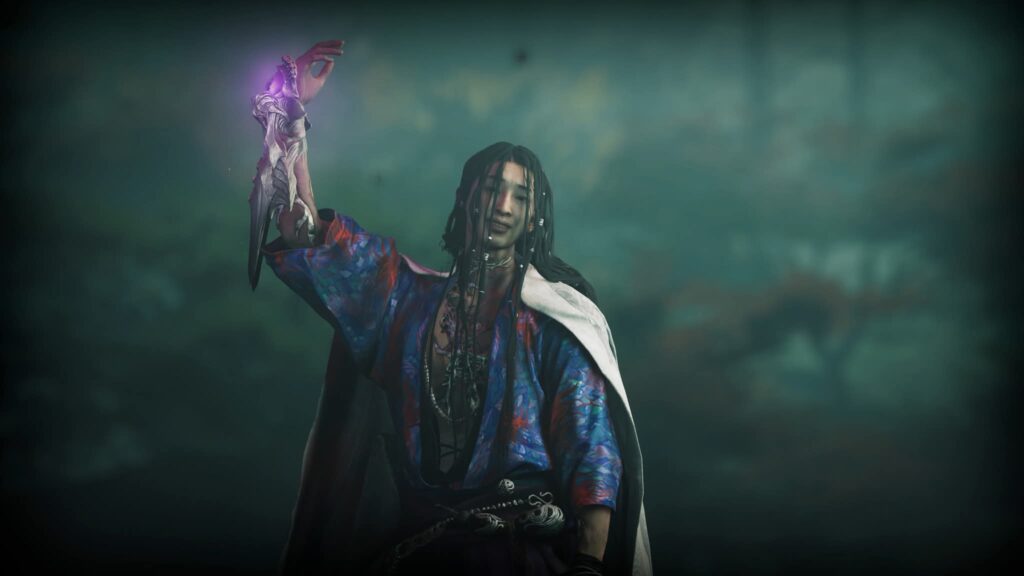
The cutscenes and pacing do well to keep the plot moving along well enough for it to be welcome, while the dialogue, characters, and the emotional context given to major moments are all great ways to keep you invested in what’s happening in the fight between the Oni and Genma.
PB Zero’s revenge-fuelled tale is equally good, but it’s let down by some dull dialogue and cutscenes that are high on polish but lacking the flair that makes the matters they present to us feel like they’re truly our problem. We never had trouble with accepting Musashi’s fight as our own, but Soul’s battle for a proper heart isn’t hitting those same highs.
It’s another win for Onimusha there, but the writing and story aren’t the only things we’re looking at. There’s also the way things are presented to consider, and this area is the first tie between both titles. Blades clash with satisfying clangs, explosions, and crashes sound out loudly enough to make them believable, while the animations, environmental detailing, and effects are just sublime in both titles.
PB Zero’s soundtrack does give it a slight edge thanks to the sheer variety and the intelligent choices that punctuate the steampunk and kung-fu inspirations that the game wears so proudly on its sleeve. But that isn’t enough for it to edge ahead far enough to take the win over Onimusha. As far as the presentation in both games goes, Soul and Musashi bow to each other with grudging respect.
That might have extended to the longevity of each experience if not for one detail. We kept going back to Onimusha’s Carnage Mode long after we finished the main story thanks to the added difficulty. However, if you’re like us and played the game on hard your first time around, there isn’t too much to keep you invested in the game other than the thrill of its combat system.
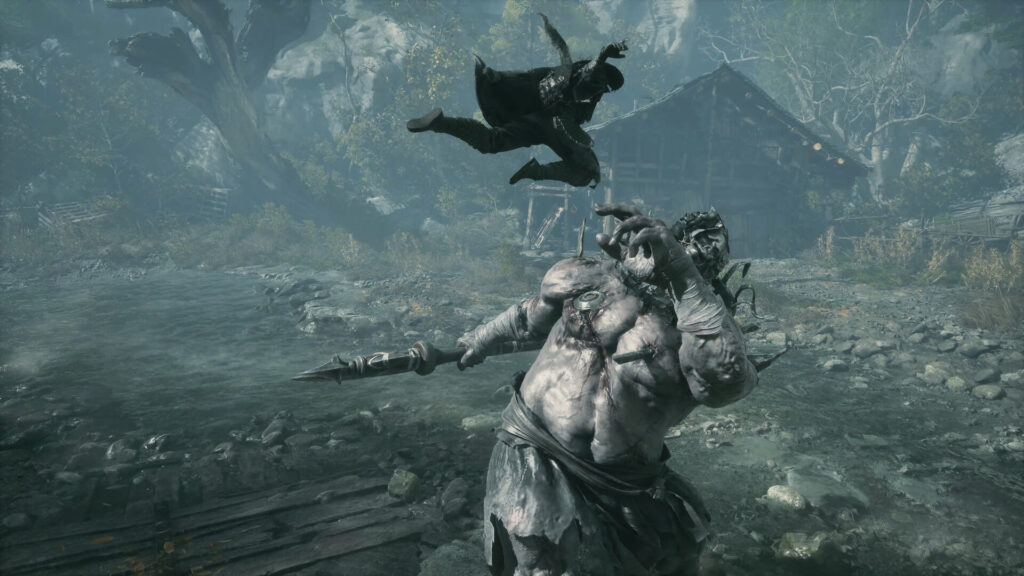
But PB Zero’s here now, and while its Hellwalker difficulty has been admittedly too easy to clear, there’s the 66 Days mode to consider. Personally, we believe it should have been the only option there was, as it feels like the perfect way to play the game. The narrative justification for the challenge was already there, and it feels like it was a wasted opportunity to make the game feel as deadly as it looks.
Of course, we see the appeal of collecting all weapons, equippable items, and Phantom Edges and approaching the risk of permadeath well-prepared, but it’s hard not to feel like S-GAME played things too safe on the challenge side of things to make the game as appealing as it could be to a wider audience.
However, having only 66 lives in a game that pits you against such deadly foes immediately adds a new layer of challenge to the experience, and when you think about how detailed the Wulin is, that second pass is also an opportunity for you to uncover stuff you might have missed the first time around.
Onimusha’s world isn’t built to sustain that momentum, sadly, and even its sublime combat isn’t great enough to sustain a second playthrough to its end. If you look at things from the perspective of replay value, we’d have to give PB Zero the win.
Only One Walks Away From This Fight
Phantom Blade Zero clearly emerges as the winner with a more pronounced emphasis on player freedom and expression in the heat of battle, and an overall quality to its presentation and design that sees it edge slightly ahead of Onimusha, which shares a lot of the strong points that S-GAME’s experience brings, but with enough differences to warrant this comparison in the first place.
Where Onimusha brought a clear vision and near-flawless execution to its world and combat, the vision itself might have limited its scope to Kyoto and perhaps held it back from being something like Phantom Blade Zero. Soul’s adventure displays its boundless ambition with such aplomb that it kind of infects you as you take on the insanely great duels it keeps putting in your way.
Musashi had his moments and more than his fair share of time in the sun, but Soul’s inner darkness and his exterior gruffness may not be winning any awards for his people skills, but nobody is going to question his ability to end you with relative ease, even if he’s far across the room.
When blades are drawn, it’s Phantom Blade Zero that feels like the one we’d reach for almost every time. It’s where you go when you want your blade to be a reflection of who you are.
Note: The views expressed in this article are those of the author and do not necessarily represent the views of, and should not be attributed to, GamingBolt as an organization.