



While almost every The Legend of Zelda game tends to be a great standalone experience with little connecting it to others in the series, the franchise has been plagued by a loosely defined timeline, which Nintendo first revealed with the release of the Hyrule Historia book in 2011 to celebrate the 25th anniversary of the franchise. The book noted that Ocarina of Time, due to the plot’s time-travel shenanigans, split the franchise timeline into three distinct paths, with many follow-up games being set along one of the three branches.
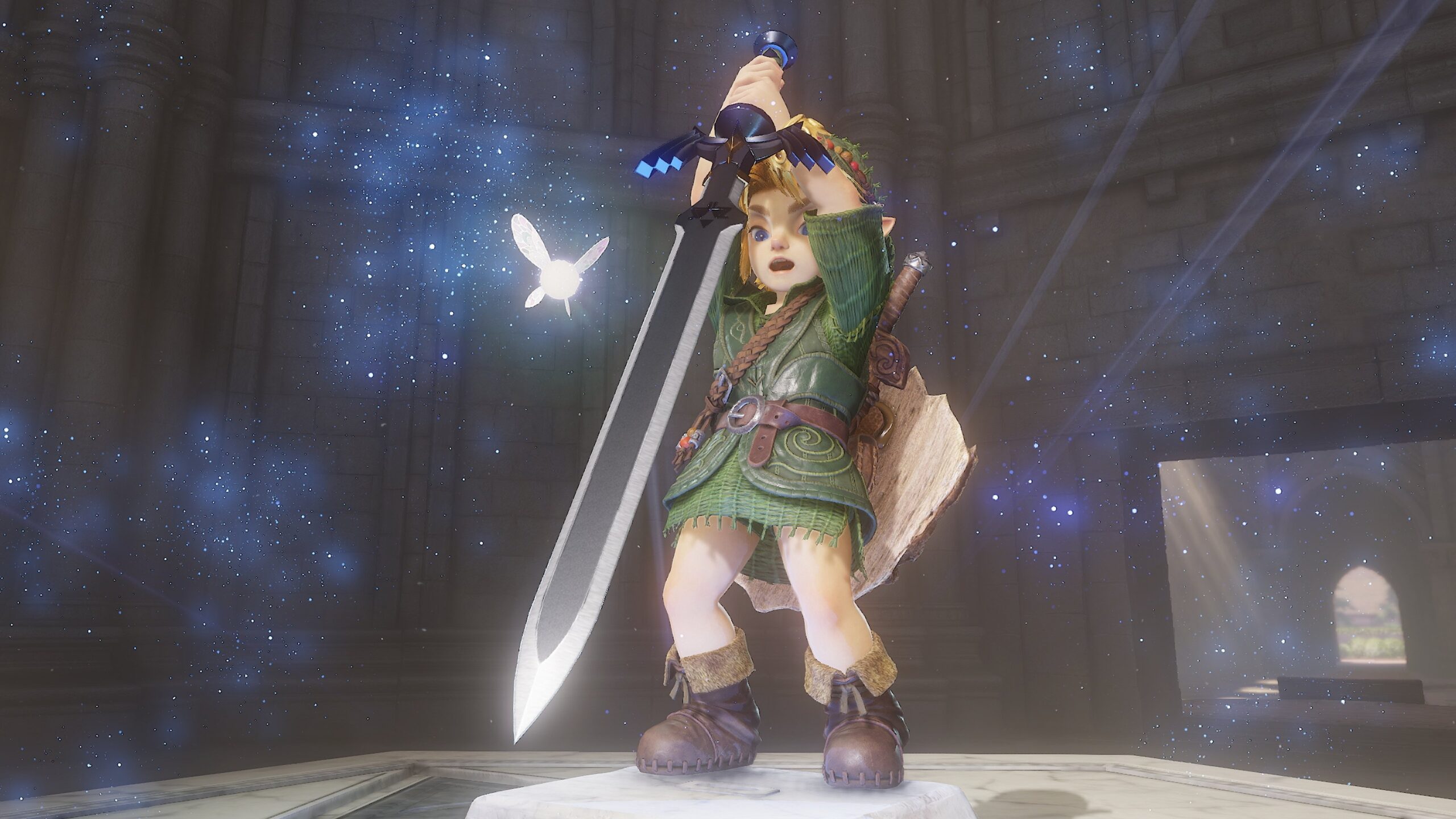
With the remake of The Legend of Zelda: Ocarina of Time, series producer Eiji Aonuma revealed in an interview with Game Informer that the development team wanted to include some nods towards the timeline and even references to other games in the franchise. He ultimately decided to shut these ideas down, however, having the team instead focus on making this “the best version of Ocarina of Time that we can.”
“It’s funny because the staff would sometimes ask me about the possibility of including nods to the timeline or references to the other game, and I actually, at the time, would say, ‘No, let’s focus on this game. Let’s make this the best version of Ocarina of Time that we can.’ So, the timeline was in the back of our minds, but we didn’t consider taking an approach to this game where we actually, explicitly included references like that.”
It is worth noting that all of this discourse about the timeline doesn’t really mean anything for anyone playing The Legend of Zelda: Ocarina of Time for the first time, regardless of whether they are experiencing the Nintendo 64 original or if they are spending time in the recently-released remake. The timeline itself doesn’t add much to the story of future games either, aside from small nods to games that supposedly take place in the past. An example of this is The Legend of Zelda: Twilight Princess featuring the Hero’s Spirit, who trains Link in new abilities. The Hero’s Spirit is hinted to be the spirit of Link from Ocarina of Time and its sequel Majora’s Mask.
The Legend of Zelda: Ocarina of Time Remake has been quite a hit since its Nintendo Switch 2 release, with critics praising not only the strong foundations of the Nintendo 64 originals, but also the enhancements and changes made by the development team for the remake. At the time of publishing, its Metacritic aggregate score sits at 96, with even the user score sitting at an average of 9.6, which the website describes as “universal acclaim”.
Among the changes made by the development team for the remake is a revamp of the original’s infamous Water Temple dungeon, which Aonuma has referred to as being “overdue homework.” While the original intent of the dungeon was ambitious, the era being the dawn of 3D gaming and the limited power of consoles at the time limited what the team could do in the 1990s.
The team has also added a jump button to the remake, which was done in order to make newer fans who got into the series with Breath of the Wild and Tears of the Kingdom feel more comfortable.