





Ace Combat 7: Skies Unknown gave the long-running flight series a modern revival, introducing new players to its accessible arcade dogfighting, cinematic storytelling, and huge aerial battles. Ace Combat 8: Wings of Theve retains the formula while introducing some significant changes, from first-person storytelling and squadron commands to newly reactive missions and a vastly expanded suite of multiplayer modes. Here are fifteen of the biggest ways Wings of Theve differs from its predecessor.
First-Person Give You The Eyes of a Pilot
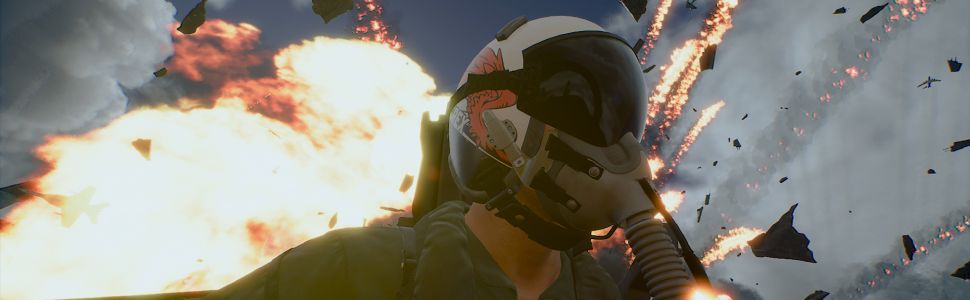
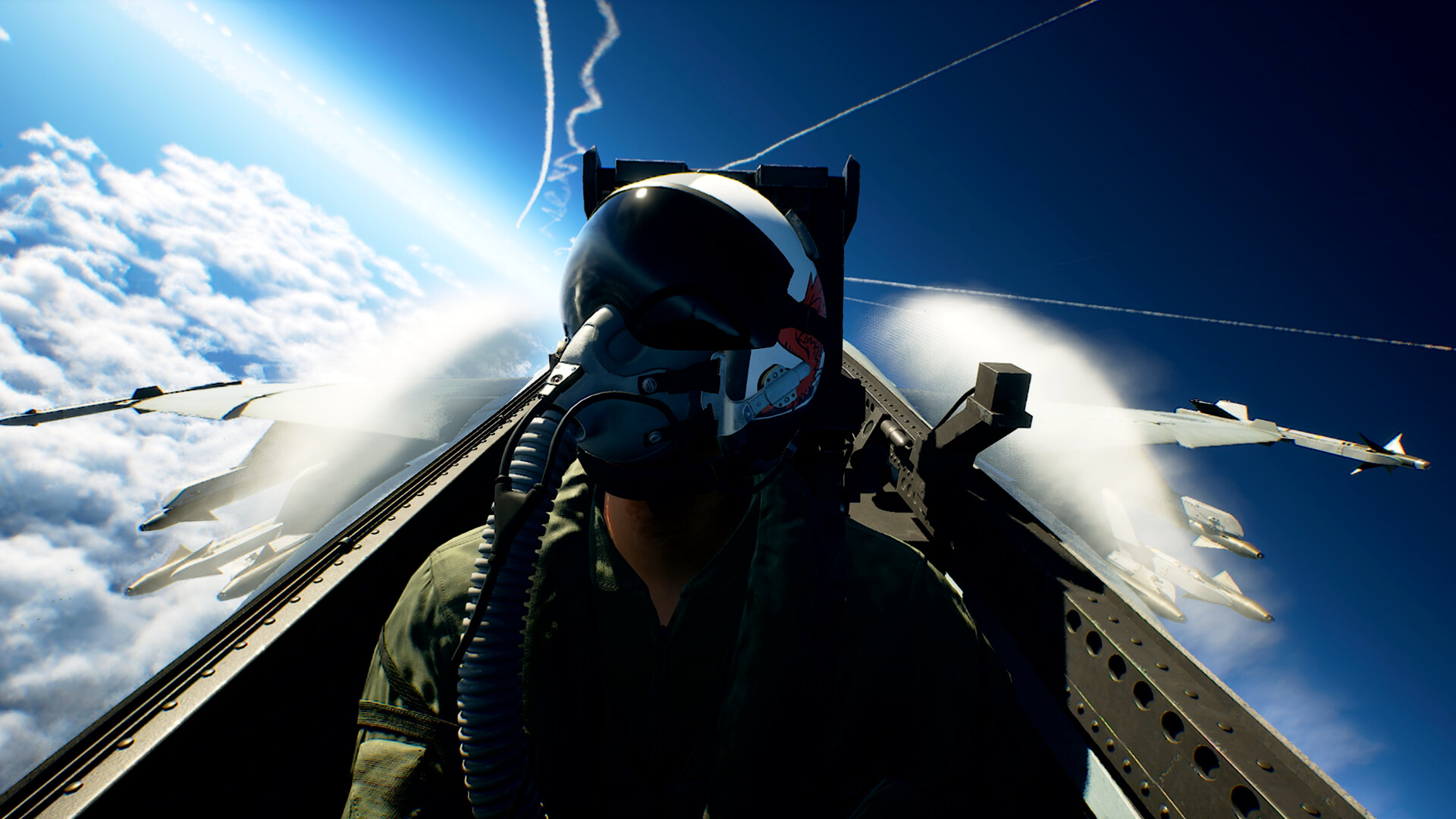
Ace Combat 7 told its story through third-person cutscenes, mission briefings, and in-flight squadron dialogue. By the end, many felt they’d witnessed someone else’s journey rather than feeling it for themselves. Switching it up for the sequel, now you’ll experience the rise to flying ace via first-person, from eating in the mess hall with your co-pilots, to stepping onto the flight deck and strapping on your helmet. It’s a more immersive viewpoint, sure, but it also frames the narrative’s comradeship themes. While you might inherit the propagandist mantle ‘Wings of Theve’, the first-person perspective ensures you live it shoulder-to-shoulder with your wingmen.
You Can Now Command Your Squadron
A returning mechanic from Ace Combat titles before Skies Unknown, in Wings of Theve you can issue commands to your squadron. Via directional D-pad inputs, you can tell your wingmen and women to cover your approach, attack a specific target themselves, switch between standard and special weapons, or break formation to engage at will. While you adopted leadership responsibility in Ace Combat 7, the ability to instruct your squadron simply didn’t exist. Ace Combat 8 reintroduces the tactical wrinkle missing from its predecessor, and effective team control could make the difference between victory and defeat.
Aircraft and Loadout Customisation Extends to Your Crew
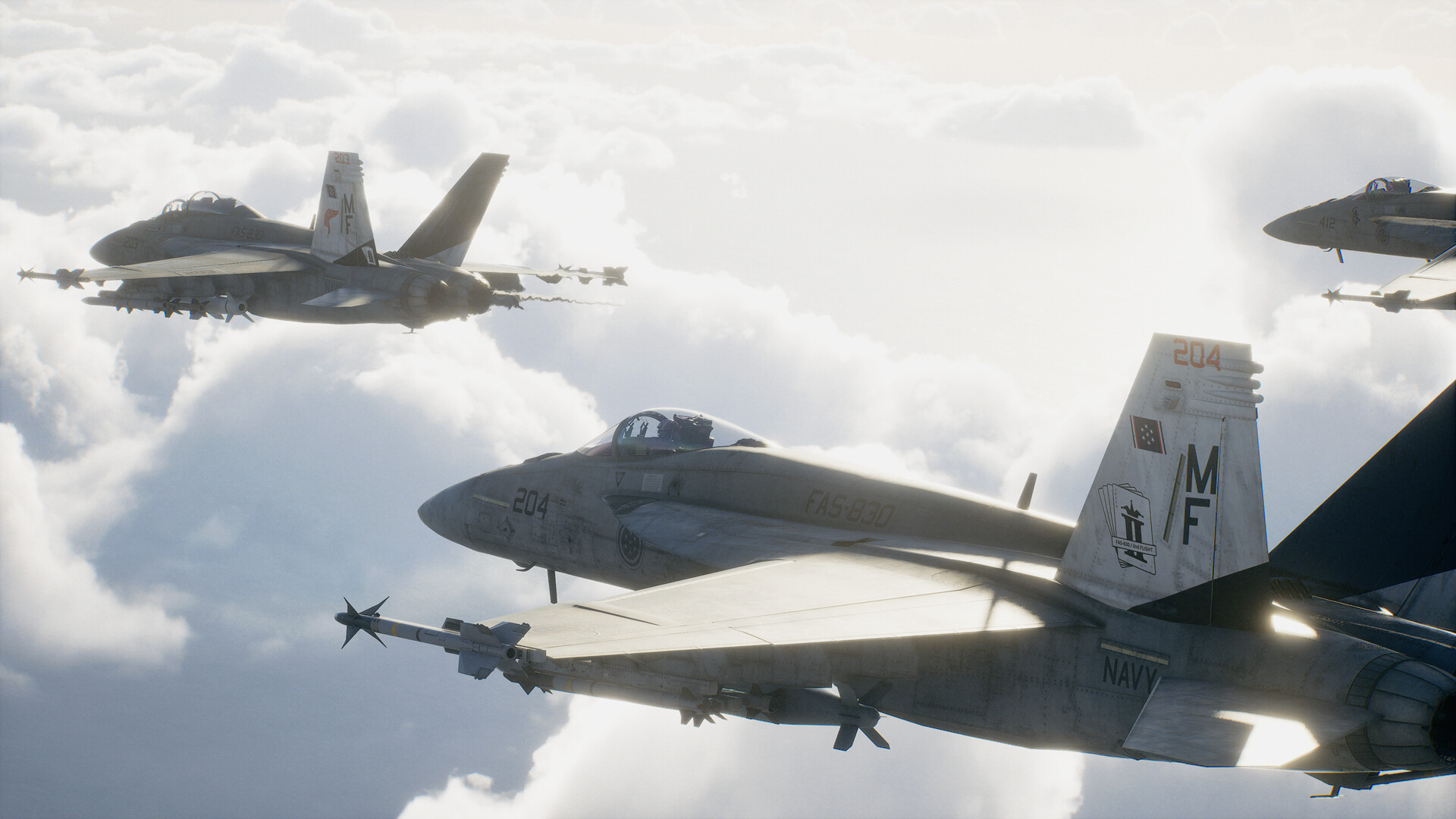
Ace Combat 7 lets you tune your fighter jet with parts, upgrades, and weapons, but Wings of Theve expands mission preparation beyond your own aircraft. As squadron leader, you can customise the machines flown by your wingmen alongside your own, giving an extra strategic edge that was absent in Skies Unknown. In setting your squadron’s loadout and choosing which pilot flies what, Wings of Theve emphasises the importance of pre-mission setup, where squad composition needs to be balanced with the sortie’s objectives.
Clouds Are Completely Overhauled
Clouds, alongside weather patterns in general, were a defining visual character in Ace Combat 7: Skies Unknown. Flying through volumetric clouds was an effective showcase of a fighter jet’s speed and velocity, and given the system’s success you wouldn’t have expected Wings of Theve to need a complete overhaul. Yet, with development shifting to Unreal Engine 5, the developers saw an opportunity to embed their own proprietary Cloud engine tech into the pipeline. Dubbed ‘Cloudly’, Ace Combat 8’s clouds now render in multiple layers, from dense rain clouds to atmospheric wisps, boosting immersion as you’re soaring at Mach 2.
Clouds Have a Greater Impact on Your Tactics
And, the impact of Ace Combat 8’s overhauled cloud system spreads beyond being purely visual to directly influencing your tactics in greater ways than in Skies Unknown. While you could use cloud cover to break missile lock and hide from enemy pilots in Ace Combat 7, now the clouds’ more visceral rendering gives you more opportunities to hide above and below, to lose enemies, and to use inclement weather to your advantage. Also, distinct cloud layers act as cues for assessing speed and approach angle, creating a more intuitive aerial battlefield and, ideally, more controllable dogfights.
Visual Tracking is More Viable Than Before
In Ace Combat 7, you’d have relied solely on your HUD and radar to find your aerial whereabouts, to understand your position in relation to your squad, and to locate enemies. Now, clouds act as readable combat markers, with you able to track contrails, plumes, and smoke through the air. Likewise, the aforementioned multi-layered clouds give you enough visual information to assess how high you’re flying without reading your altimeter. You can get a sense of altitude from the makeup of clouds and weather.
Chain Reaction Destruction Adds Yet More Tactical Layers
If you’re in any doubt Wings of Theve is abandoning its arcade roots, the introduction of chain reaction destruction should put those worries to rest. Akin to combo chasing, in Ace Combat 8 destroying certain targets can trigger cascading destruction, potentially taking out multiple enemies at once. There’s no comparative mechanic in Ace Combat 7; this one’s entirely new, and it changes the question of ‘who do I shoot’ to ‘who do I shoot first’.
Superweapon Battles Are More Elaborate
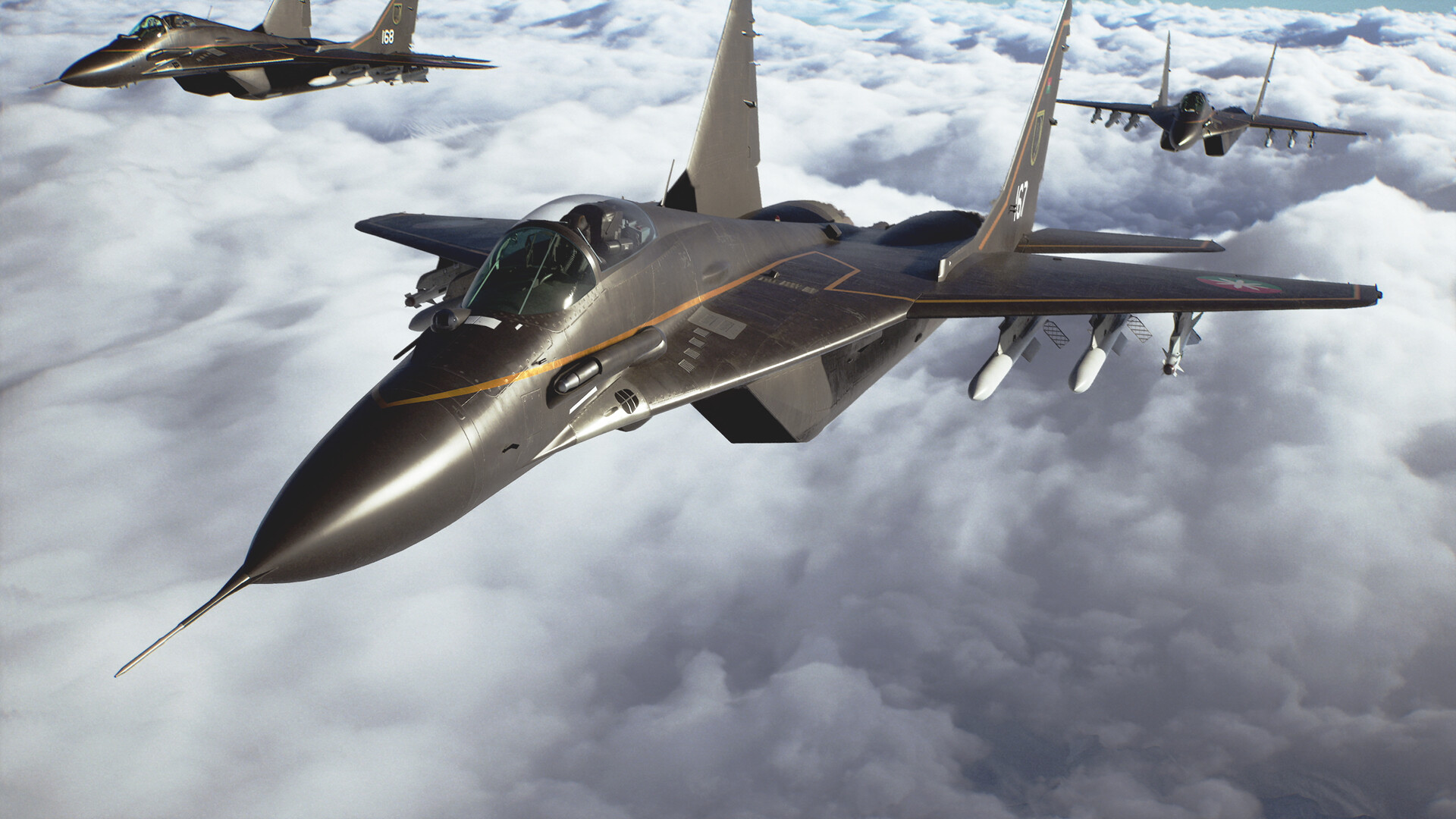
Now, superweapon battles aren’t new to Ace Combat. Indeed, Skies Unknown featured several colossal setpieces. However, Ace Combat 8 refines the core mechanics underneath how you engage with these massive threats, with the most notable innovation coming in chip damage. That is, whereas previously you could only deal damage by targeting specific boxes, in Wings of Theve any portion of a superweapon’s hull can take a battering. So, while weak points still exist, unmarked sections aren’t immune to your firepower. This makes strafing run accuracy less integral to success while ensuring the fights feel less punishing overall.
Ground and Naval Battles Get Bigger
Ace Combat 7 wasn’t limited to aerial dogfights, with its campaign regularly sending you after ground targets and naval forces. Wings of Theve builds on that foundation with larger, more varied encounters with missions that can throw aircraft, ships, ground installations, and sizeable weapons into the same arena, forcing you to switch between different types of targets rather than simply hunting a single threat. Furthermore, as seen in gameplay footage, you can now destroy environmental installations such as skyscrapers to halt enemy progress. As a result, each sortie will feel broader in scope.
Missions Are More Reactive
While Ace Combat 7 has its fair share of awestriking missions, the objectives and encounters you faced tended to follow predetermined sequences. Wings of Theve, instead, brings more reactive battles, with enemy behaviour, objectives, and even radio chatter changing based on what’s occurring during a mission. And, to counter these dynamically shifting objectives, Ace Combat 8 allows you to pack two special weapon types – air-to-air missiles alongside a ground attack speciality, for instance – whereas Skies Unknown allowed only one.
Disruption Systems Have Been Updated
In Ace Combat 7, you could disrupt enemy approaches, HUDs, and targeting systems through radar jamming, weather interference, and Electronic Warfare. While these systems are carrying over to Wings of Theve, Ace Combat’s eighth mainline entry updates how they behave. For example, Skies Unknown’s jamming functioned like an on-off button, scripted to specific moments or localised ‘jamming’ fields, whereas Ace Combat 8 degrades your lock-on distance depending on how close you are to the source of the jamming.
Onboarding Has Been Reworked
Aiming to retain players that were new to the series following Ace Combat 7, and perhaps capitalise on attracting further rookies, Ace Combat 8 ships with a reworked tutorial. So, even though, ostensibly, the game is about aligning the trajectory of your aircraft with your target before firing, Wings of Theve features lessons on understanding flight systems, reading UI, and selecting targets, alongside more advanced aerial combat manoeuvres. These training modes can run alongside the campaign, and will likely benefit veterans as well as newcomers.
Online Mode is Much Bigger
While the upgrades and additions discussed in this feature suggest Ace Combat 8 will be the most established entry in the series to date, the expansions coming to its online mode are arguably the most significant. Ace Combat 7 included just two PvP modes – an eight-player Battle Royale deathmatch, and a four-vs-four team dogfight – whereas Wings of Theve brings PvE co-operative assaults, and PvP-based battles featuring air, land, and ocean targets. Emergency sorties targeting campaign bosses and superweapons plus dogfights against NPC aces round out the modes, with everything contained in an air base lobby of up to 100 pilots.
Multiplayer Has Its Own Progression
Supporting Ace Combat Online’s newfound independence, participating in Ace Combat 8’s multiplayer modes contributes toward its own progression and save data, keeping it separate from the single-player campaign. You’ll create a new avatar and earn rewards to raise your rank, acquiring aircraft upgrades, unique abilities, and cosmetics such as skins, emblems, and weathering effects. Elsewhere, Ace Combat Online expands Ace Combat 7’s multiplayer bounty system with an individual Threat Level. Before, shooting down the highest scoring players netted you extra points, whereas now you’ll also earn points the longer your kill streak continues.
Ace Combat Online Brings a Wider Selection of Aircraft
In Ace Combat 7’s multiplayer modes you could choose between three aircraft categories: dedicated air-to-air fighters, hybrid multirole aircraft, and ground-assault attackers, with matchmaking balance coming in the shape of a ‘Total Cost’ system. Wings of Theve’s Ace Combat Online introduces an extra class: the Electronic Warfare support ship, outfitted with tools to disrupt enemies. The emphasis this time is very much on team composition too, with you and your squadron needing to balance your chosen classes to succeed. Through classes, loadouts, and ability customisations, Ace Combat Online also allows for dynamic team synergies to emerge beyond Ace Combat 7’s potential.