





We often say that repetition is an open-world game’s worst enemy, and far too many great concepts have fallen prey to gameplay loops that become variations of the same tasks. Just clear another camp, collect another resource, clear out another group of enemies who are hopefully not too similar to the ones you just fought off, and then get XP or gear that’s marginally stronger as a reward for the effort.
Yes, there’s a lot to fun to be had in doing them individually, but even stringing them together can often feel disconnected from the story and world at large, Black Flag changed that back in the day, and Resynced’s improvements have made that one’s daring approach to its open world more visually pleasing, and technically seamless, weaving every activity that the Caribbean offers you into a gameplay and progression loop that form a lovely symphony.
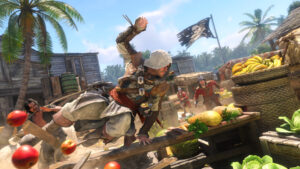
Assassin’s Creed Black Flag Resynced’s open-world takes a brilliant approach to its side content, not just because of the variety between its activities, but because they’re all contextualized and grounded in the pirate fantasy that’s being sold so well that it all becomes a part of the experience. It’s the perfect way to make you feel like you’re making the climb from a rogue to a respected presence among the Caribbean’s many factions, your fellow pirates included.
Join us as we look at why that’s important to its success and what that means for the future of open-world games at large.
Rooted Progression Loops
You could say that Resynced structures its progression around three core elements: Edward, The Jackdaw, and your hideout at Great Inagua. You’ve got contracts, hunting, whaling, treasure hunting, diving, and so much more, all feeding into a money- and resource-based crafting economy that makes Edward and The Jackdaw threats to watch out for on land and sea while the Inagua hideout churns out resources and passives that make them even stronger.
Of course, Kenway’s fleet makes a return and is a great option for trading and generating insane amounts of cash and resources, further cementing your progression while giving you multiple ways to generate what you need to sustain consistent progression. Add in stronger ships and forts for you to take down, and you begin to see how there’s always something to do and something meaningful tied to it, even as the game’s very premise and narrative frame it in a way that makes it appealing regardless of the rewards.
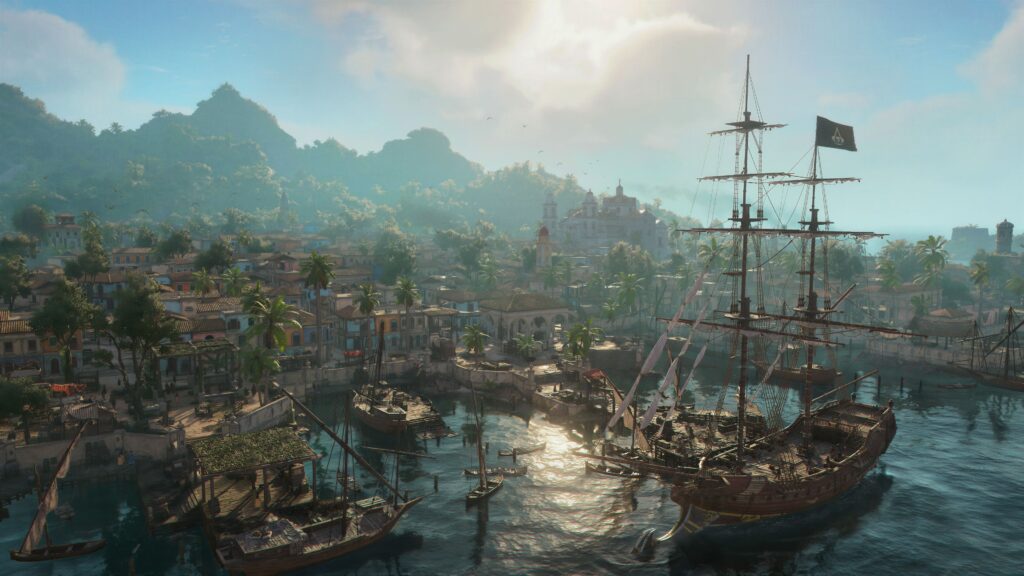
Great Inagua, in that regard, acts as the beating heart of Kenway’s adventure and his rise to be a man of reputation on the seas. Building out your Hideout is an expensive affair, but the rewards that come from doing so are directly linked to aspects of the gameplay loop that make it worth it. Of course, the narrative frames it as a place Edward hopes to use to win back Caroline, while also serving as a perfect base for his pirate empire. Upgrading it is a matter of duty, then, instead of being something a checklist tells you to do.
On the gameplay front, the Hideout’s progress influences Edward and The Jackdaw, unlocking passives, new missions and more opportunities for further upgrades, shops like the Harbormaster and General Store that sell upgrades and better gear for the ship and its charismatic captain, shops like the Fisherman’s Wharf that improve yields from hunting, increases to the profits shops generate, fleet trading returns, and even a Treasure Dealer helping with restoring treasure maps. That’s a lot of stuff that you’re better off pursuing instead of ignoring, and all tied to a place that the game keeps returning you to at conveniently placed intervals so you get a chance to spend all your gains, ill-gotten or otherwise.
It’s a great reason for you to stop and raid that warehouse you chance upon, or try to hunt a rare animal on the way to your next story mission. Indulging that temptation and coming back home to invest in the place also comes with visual confirmations of your progress, creating emotional ownership while making Inagua more than just the base of Edward’s operation, but tangible proof of what the player controlling him has accomplished during their time in the Animus.
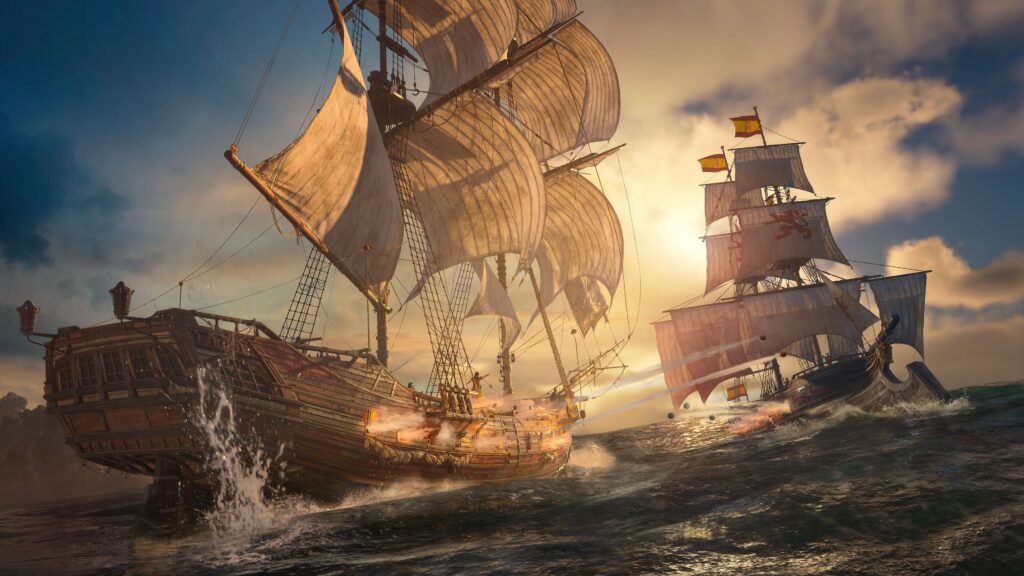
That extends to The Jackdaw, as it serves as your ticket to seeing more of the world the more you invest in it. It’s the mechanical spine of Resynced’s open world and kind of forms a loop of its own if you decide to upgrade it. That involves taking on Naval Contracts, diving to find lost plans, and hoping that the latest treasure map you found is the one that lets you get another solid upgrade to the ship, which in turn lets you hunt down more of them on the seas, while braving more dangerous waters in the process. It’s a long list of upgrades to chase down, with your hull, cannons, mortars, ram, chain shots, heavy shots, storage for different material types, rowboat capabilities, and so much more all available to upgrade, with complete freedom to prioritize one over the other as you see fit.
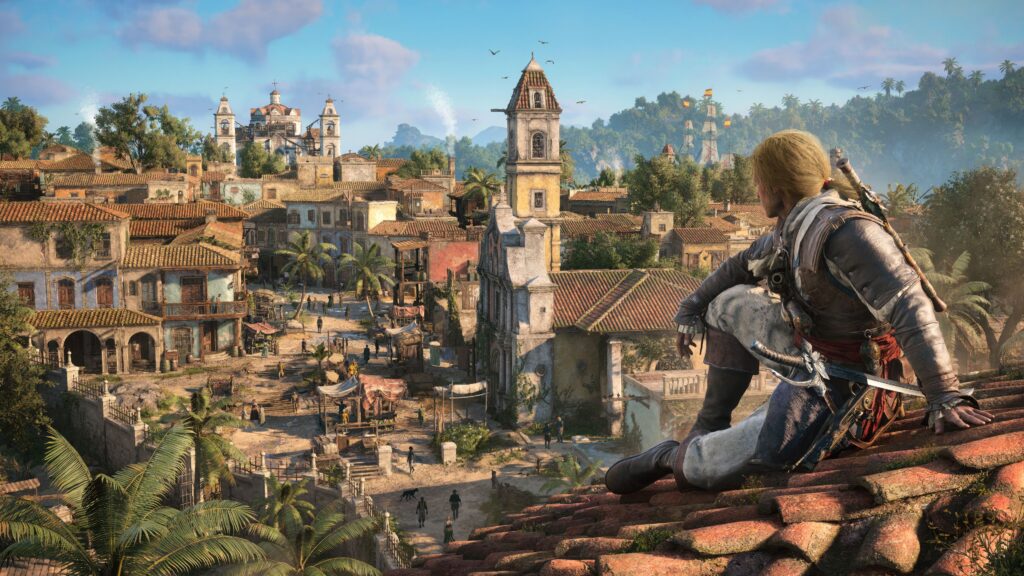
Considering how good the naval combat is, we’d say funnelling players into a jolly good time with their sails down, as they decide to explore every little detail their spyglass leads them to. Of course, your time at sea is going to net you a lot of cash and resources while also giving you more than a few ships to add to your fleet after you conduct repairs and perhaps lower your notoriety with the world’s pirate Bounty Hunters.
Well, you get to further upgrade Edward and your hideout. Let’s not forget that Edward is the connective tissue between the Inagua Hideout and The Jackdaw, and the rewards they both generate, such as gear, passive bonuses, and rare items, directly feed into making him a deadly Assassin and the worst pirate the Caribbean has ever heard of. Like the many factions that play off each other in the game’s story, Resynced’s open world brings its own brand of controlled chaos into play, and it’s something that goes deeper than interconnected systems.
It’s in the activities themselves.
A World of Opportunity
The Caribbean is Resynced’s stage, and it’s one where it feels like every square inch is used so well that it just hums with the opportunity for something truly unexpected and potentially spectacular to happen. That comes down to how each activity might actually be the same generic quest objective but is framed so narratively and mechanically well that it’s quite easy to ignore that repetition.
Take the newly added Officer Quests, for example. They’re self-contained stories that introduce memorable new characters, each of which brings something unique for you to use on The Jackdaw. Lucy gives you the Perfect Brace, which is great in battles against Legendary Ships that we didn’t have in the original Black Flag. There’s The Padre, who brings the very useful Ram Dash and serves as quite a useful ally when boarding enemy ships. There’s Tobias, who brings a very welcome additional volley for The Jackdaw’s broadside cannons.
It’s a great example of side content that comes with nuanced integration into the game’s story and premise, giving you new crew members with backstories and rewards that directly achieve the game’s larger goal of modernising a classic while also providing meaningful rewards that are going to be used quite often. The same goes for the Assassin Contracts and Templar Hunts, both of which mix things up so well, while the latter also brings self-contained stories to the table with an interesting reward at the very end of the entire quest chain.
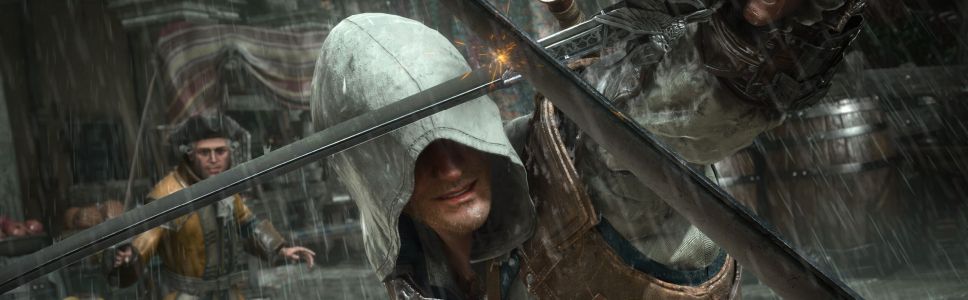
They’re great ways to dive into Edward’s journey into becoming a Master Assassin, one who earns the respect of The Brotherhood through his actions while his charm manages to win over a few of his sceptics. Doing so also helps the game avoid feeling mechanically one-dimensional, bringing in a different playstyle from the more bombastic naval combat system. In Resynced, it’s a great way to play the new stealth mechanics that make a significant difference to how things were done in the Caribbean back in the day.
Naval Contracts and Forts do the same thing for the seas, helping add more variety into the mix while giving players challenges that can push their skills if they choose to take them on. We even restarted a mission that required us to sink two ships using our mortars, a condition we absolutely forgot when tearing through a British fleet. It wasn’t even about the rewards but the satisfaction of getting that condition done thanks to the challenge it brought to the table.
With forts, Resynced brings an effective blend of its naval and melee combat, and it’s one that doesn’t lose its allure long after the first few you take on. Of course, you’re going to find a bit of repetition, and you’d be right in questioning it. But when you consider how each of these activities brings in enough to make every step you take feel unique and interesting, and how well that repetition is given context via the game’s narrative and framing, Resynced’s side content becomes an entire adventure all on its own, standing tall beside the main campaign to showcase more of Edward’s journey from pirate to Assassin, while making you the center of it all.
Variety Across The Board
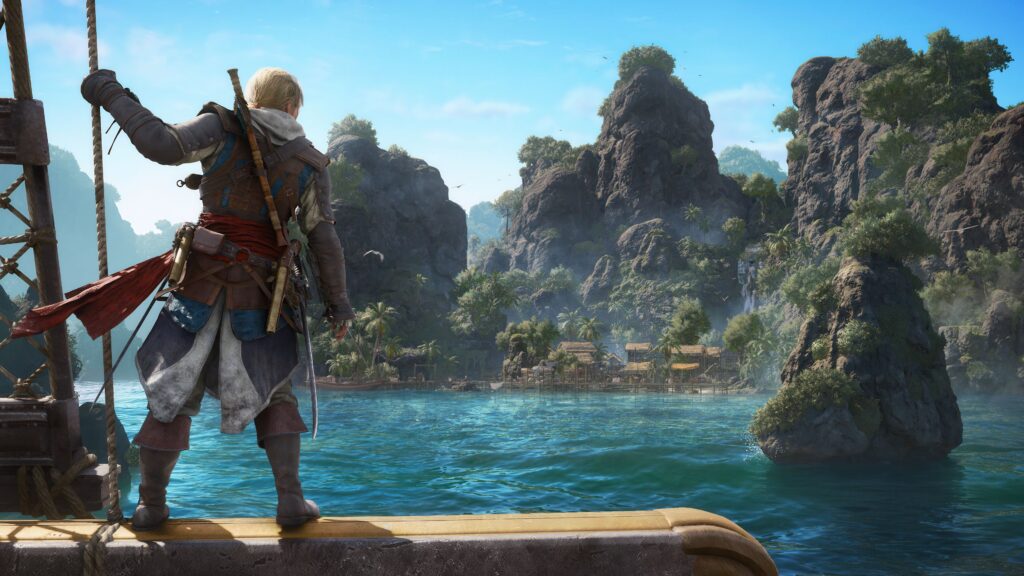
That’s not all Resynced is going to have you chasing down in its open world, though. There is Kenway’s Fleet, that addictive minigame that makes Edward become the captain of more than just The Jackdaw, growing a fleet that then becomes the centerpiece of his trade and income generation. Of course, forts unlock more missions while the fleet’s capacity is improved by upgrades at the Hideout, making progression feel looped back to improvements in other areas.
It’s a logical sequence that becomes an addictive loop that could have you ignoring the main story for hours on end. The Treasure Maps can have you travelling the seas, indulging in all they have to offer, with a destination that’s on the opposite end of your map from where the story wants you to go. Harpooning changes that rhythm of sailing and fighting off ships, giving you a nice mini-game that’s both challenging and satisfying to get right.
Those Diving Bell missions continue to be intimidating swims through dangerous waters, and hiding from the sharks continues to be as scary as it was back in the day. And of course, the Legendary Ships stand tall as endgame fights that are tests of all that you’ve accomplished during your time on the waters they patrol. That even these activities are tied meaningfully into the game’s progression loop signals a cohesion that makes the entire experience come together into such an immersive package that you’re more willing to forgive any minor repetitions that can come with it.
Pit that against other open worlds that are popular, and you begin to see why different activities using different verbage, rewards serving as recognizable objectives, tangible progress, and the consistent reinforcement of the central fantasy that everything you do provides are all important facets of a strong experience. Take Valhalla, for example. It did bring variety, but those activities felt so darn disconnected from the story and RPG progression that Resynced’s central loop feels stronger despite having less content in a smaller map.
Far Cry 6 is another title that comes to mind, where the world felt more layered and visually diverse, but the activities it offered felt too similar to make it as immersive as Resynced manages to be. Starfield’s a great game, but its systems don’t come together in the way that Resynced’s do to make it feel as cohesive as Edward’s adventure despite its significantly larger scale and ambitions. Ghost Recon Breakpoint crowded its map with objectives and buried a deep progression system under numbers and gear scores, while Resynced does away with disposable rewards altogether, making everything you pick up mean something to the gameplay, story, or your progression.
While the game’s we’ve mentioned and many others make you service a map, Resynced takes a map that services a pirate fantasy, and lets you loose in in as soon as it possible can to make it a fun time sailing the Caribbean’s seas, its new and improved visuals and mechanics making the world feel that much more alive, while blurring the line between main and side content.
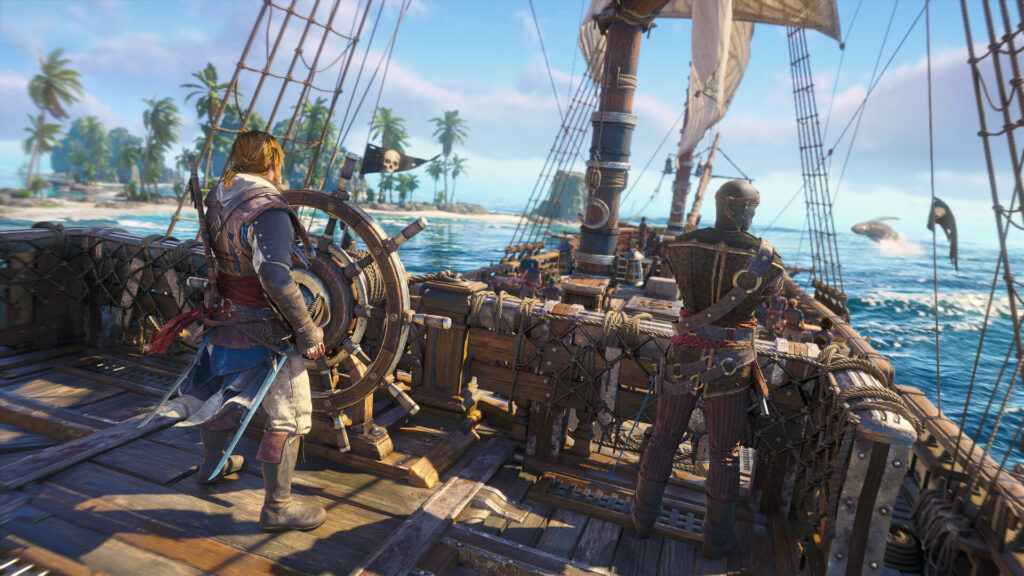
Sure, not everything you do is going to be revolutionary or reinvent the open-world design, but as long as you’re just engaging with the world on its terms, you’re going to see how everything you do complements something else, and you’re going to be knee-deep in the game’s systems of your own volition the minute you head off the beaten track. Heck, the seas are more than enough to have you veering off your path to the next story chapter far more often than you’d care to admit.
And that’s where Resynced can act as a guiding beacon for open worlds in the future. They don’t need activities that merely keep us occupied between campaign missions. Instead, they need to use side content to fulfil the fantasy that’s being set up by the story and world. It’s going to be interesting to see how open worlds evolve from here on out, but we’re sure that The Jackdaw and its captain are going to keep you coming back to the Caribbean for a while longer, at least.
Note: The views expressed in this article are those of the author and do not necessarily represent the views of, and should not be attributed to, GamingBolt as an organization.