






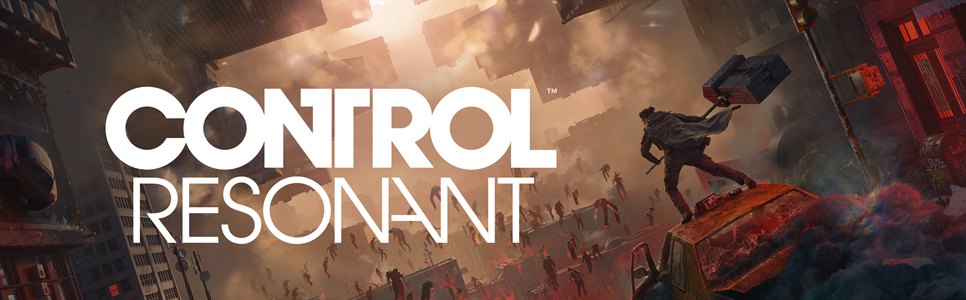
On first glance, Control Resonant looks like Remedy abandoning what made Control distinctive. Yes, both games share the same anomalous weirdness, but Jesse Faden’s foundational descent into the bowels of The Oldest House was much less a character-focused journey than Resonant appears. The setting itself – the amorphous concrete of the FBC’s headquarters – was the story. Now, Remedy is extrapolating that strangeness to a different location, and they’re asking you to go and find the hidden stories for yourself through the eyes of Jesse’s brother.
Resonant puts you in command of Dylan, with Remedy switching combat to close-quarters melee, deeper RPG systems, and open-ended exploration rather than traditional linearity. On paper, Dylan’s inclusion brings an awful lot of change, but the more footage we see the more the sequel’s modifications become converging pieces of Remedy’s long-standing formula.
See, Dylan is the perfect character to lead us into Remedy’s new era. If you’ve played any of the Finnish outfit’s earlier games, Resonant’s time-warping, shape-shifting, gravity-defying Manhattan might not seem especially unusual. And, indeed, it isn’t disarming for Dylan either, him having spent his childhood as a test subject for the FBC’s experimental Prime Candidate program. He grew up surrounded by the incomprehensible, so when Resonant throws impossible architecture, supernatural phenomena, and Altered World Objects at him, all he can do is shrug his shoulders.
This isn’t to say Resonant’s art direction isn’t as awestriking as its forebears. You’re still entering an unknowable world characterised by suspended souls and inanimate objects rearranged into geometric patterns, but it’s one that’s ultimately familiar. And, this is the response Dylan will share, too. For him, the weirdest thing about it is that he’s outside. And this, actually, is what gives Remedy the license to introduce new combat mechanics and progression systems without making Resonant feel like a departure. Dylan, like you, already understands the language of the paranatural, even if he can’t comprehensively speak it.
And, there’s a nice thematic distinction here, too. Dylan has spent his life being shaped by forces outside of his control, so Resonant’s mechanical deviations might finally be what gives him the freedom to decide what he becomes. Its RPG systems, open-ended zones, and expressive combat aren’t just differences for difference’s sake. They give both you and Dylan the space to move through a world that, ultimately, cannot be controlled.
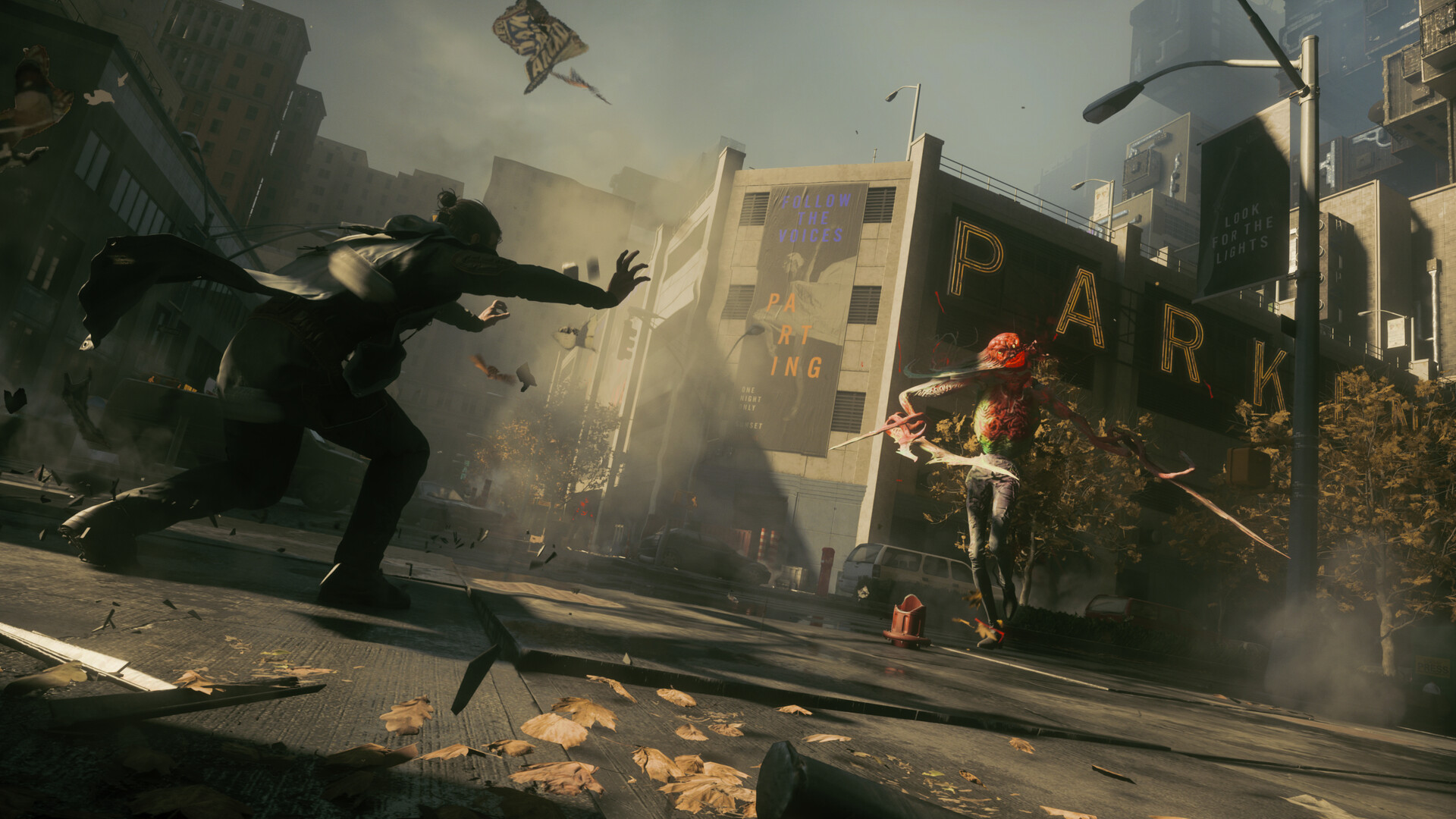
This emphasis on agency is supported by Resonant’s open-ended exploration too. See, the game isn’t open world, but its structure still gives you the prerogative in how you approach its stories and activities. See, the FBC, in attempting to contain the Hiss corruption tampering with New York’s physics, has divided the city into zones. Some areas might remain tentatively under the Bureau’s control, while the Hiss run amok elsewhere. Districts with the most dramatically kaleidoscopic Patterning likely harbour Resonants – that is, the sequel’s boss creatures. While each location might function initially like the individual floors of Control’s Oldest House, off each hub area spokes paths, deviations, and, crucially, meaningful activities. Every quest, event, even every city block, has a purpose, revealing something about the world rather than simply filling the gaps between objectives.
There’s something oddly refreshing about Resonant’s version of Manhattan, too. Even in Remedy games, we’ve seen numerous interpretations of New York, and countless takes on the post-apocalyptic city-scape elsewhere. Remedy, in contrast to typical disaster design, doesn’t seem interested in adding another set of abandoned streets for nature to reclaim. There’s an absence of overgrown vegetation, and New York’s most towering borough doesn’t appear to have been left to rot. Even the Mold has lost their hostile flora.
It’s an altogether more unsettling transformation because Resonant isn’t presenting a city that’s been destroyed. It’s been made to feel wrong by cosmic entities.
And, this design choice works because the most striking details in Resonant aren’t its empty streets but the things that shouldn’t exist within them. Gravity follows its own unknown rules, where its centre repositions itself during exploration. Space distorts around Dylan, while enormous screen-like structures glitch over intersections in ways that are difficult to describe. Even birds fly in unnatural patterns, lagging as if projections processed by underpowered machinery. There’s a sense that Manhattan is still functioning, but it behaves in unruly ways.
This makes Resonant feel closely aligned with Remedy’s signature worldbuilding. The Oldest House, in many ways, was Control’s main character, but it wasn’t compelling because it was a cavernous, shifting building. Its architecture was a manifestation of the mysteries surrounding the FBC, and the forces they evidently couldn’t contain. It took the everyday, and made it extraordinary. Resonant is taking this philosophy and applying it somewhere considerably larger.
If Resonant’s world gives you the freedom to decide where Dylan goes, its RPG systems appear intent on giving you multiple ways on how he gets there. In Control, Jesse’s abilities could be upgraded, but the scope of customisation was relatively straightforward. She was, in essence, a fixed build. Expanding on this, Resonant gives you Talents, abilities, and other upgrades that can be combined to shape Dylan around your preferred approach to combat and traversal.
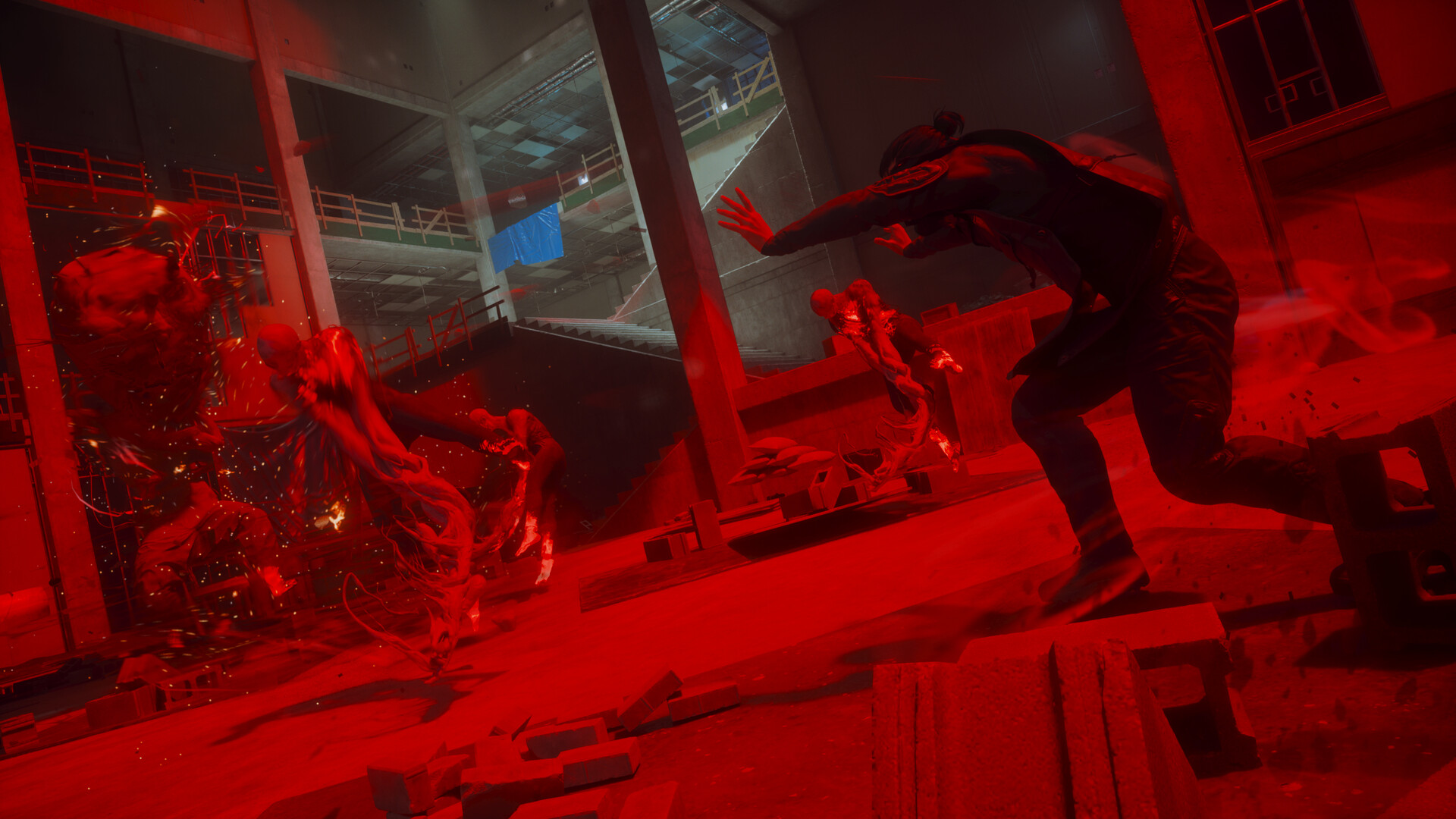
There isn’t a typical class system for the kinds of character you can craft either. Instead, the game’s Talents, for instance, are designed to bring noticeable effects on how Dylan handles through a suite of passive bonuses. Defeating Resonants also unlocks new ways of augmenting his cosmic power, with the ability to respec meaning you don’t need to commit to a specific style.
The game presenting these possibilities without dictating which one you should choose feels like the biggest confirmation that Control Resonant is Remedy’s most fully-realised game yet. Look at what the studio’s back catalogue has consistently explored: unreliable realities, psychologically damaged protagonists, strange environmental storytelling, conspiracies, hidden underworlds, characters and institutions who struggle to understand the reality surrounding them. Resonant doesn’t discard these things but weaves them intuitively, creating an experience that’s less about bringing something new and more about culminating all that came before.
And Dylan, as we’ve already suggested, is the perfect vehicle, nay, weapon, to experience Remedy’s evolution. Once he was someone to be studied. Now, he’s stepping into Manhattan as a person whose every bit as warped as the world. Yet, now, he’s doing it on his own terms.
This is the key to Resonant feeling more meaningful than any of its innovations and refinements. But, if we scrutinise just the combat, even the changes here can be interpreted as a way for Dylan to explore his suppressed humanity. See, according to Remedy, his greatest desire is for human connection. So, as brutal as his melee-heavy attacks are, they’re a way for him to ‘connect’ with others after spending so much of his life in isolation.
Control Resonant, then, isn’t Remedy moving away from what it does best at all. It’s the studio finally finding a way to make all their weirdest ideas coexist in a singular package. If they can make Dylan’s journey through this impossible world feel as purposeful as the world itself, then we could be looking at a sequel far more significant than an evolution of what came before. We could, instead, be looking at the overarching visions inside one of gaming’s most creative studios finally coming together in full.
Note: The views expressed in this article are those of the author and do not necessarily represent the views of, and should not be attributed to, GamingBolt as an organization.