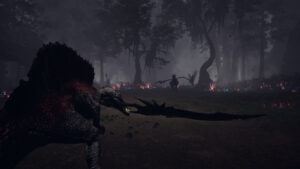







Crimson Desert isn’t aimlessly bloated or needlessly padded, nor does it chase your engagement with log-in bonuses. It’s just that, frankly, to see the game through to completion there simply aren’t enough hours in the day. See, every one of Crimson Desert’s myriad systems feeds into each other. Mechanics collide, new layers continually reveal themselves, and before you know it what you thought was a forty-hour open world adventure has turned into a major life commitment.
Realistically, for most players, to finish it means missing a lot of content (if multiplying systems means it can even be finished at all). So, with this in mind: here’s fifteen reasons why I already know I’m not going to see Crimson Desert’s end credits.
It’s Several Games At Once
There’s combat depth to master, basebuilding economies to manage, bounties to hunt, sheep to wrangle, mountains to climb, mysterious platforms in the sky… and so the list goes on. Each of these features could sustain a game on their own, but in Crimson Desert they merge into each other. Improving your fighting unlocks opportunities elsewhere, while establishing camp opens up trade routes, and so on. The game keeps evolving; new doors continually open. This point, the first entry on a fifteen-strong rundown, is admittedly a catch-all, but it demonstrates that Crimson Desert isn’t just big but something which exponentially grows as you play.
Camp is Practically Its Own Strategy Game
The Greymane camp, which you’ll establish early on, isn’t an automated stronghold but a near-fully-fledged management sim, complete with recruitment tasks, role assignments, specialisations, inventory control, supply routes, and more. The developer could have simply made this part of the game a narrative hub. Instead, they opted for excess, and crafted an immersive, homestead experience which proves hard to abandon even if there are more pressing matters to deal with elsewhere..
Challenges Are Multi-Step Lessons
Crimson Desert includes countless challenges, unlocked by finding Sealed Abyss Artefacts scattered throughout the world. Some are story-related (so may be soft-locked when you find them), while others improve your weapons’ mastery or train you in one of the game’s resource gathering activities like tree felling. If you want to be efficient, unfogging the map – thus making navigation and artefact finding easier – is a must. But, to do this, you must activate all eight hidden bells; however these won’t be marked on your map (neither are artefacts, for that matter). Either way, the sprawling list of challenges is worth tackling for the rewards, but finishing them all? No way. They’ll be a mega-timesink. So, if you’re a completionist, be prepared to spend at least half an hour defeating soldiers with banner pikes in the Demeniss region.
Progression, Sometimes, Is Observation
Don’t fancy refining your skills through a gauntlet of discoverable challenges? Why not pick a fight with the local militia to learn some new moves instead. See, Crimson Desert’s skill tree harbours upgrades which can be learned in the wild, but you must find the specific enemy who’ll unwittingly teach you what you want to know. On paper, this is an immersive game design ideal for adopting new skills, but in practice, with progress bars, enemies localised to certain regions, and tricky boss encounters, this one is a little untargeted.
Combat Needs to be Relearned
It’s not that you forget how to swing an axe or fire an arrow, instead, it’s that combat in Crimson Desert continuously reinvents itself. Those challenges we just mentioned, there’s ones for shields, spears, bows, cannons, rapiers, and more, each coming with its own mechanical language, meaning your progress isn’t focused solely on upgrading gear or accruing damage points but learning from an ongoing combat syllabus which simply can’t be rushed.
“Tech” is Already Being Discovered
In action games, builds are expected but “tech”, or techniques, are discovered, usually by combining skills into overpowered manoeuvres. One such discovery centres on Kliff’s spear-work; specifically, the Evasive Slash which can be used as a defensive stance with an automated counterattack. When combined with the easily unlockable Blinding Flash Finisher, Kliff’s spear becomes the single-most useful weapon to effortlessly wipe out hordes of enemies. If these kinds of techniques are being found already, then who knows how many such combinations exist throughout the entire game.
Loot is Transferable
Specifically Abyss Gears, which can be removed and transferred between weapons so long as you’ve unlocked the Witch’s Lair vendor. So, now, with this system accessible even inferior gear has value; potentially powerful relics can be found attached to weak weapons, meaning it’s still worth collecting. You just take the item to the witch and you can swap the Abyss Gear onto something you’re using. Beyond your weapon’s potential overspec, you can endlessly theorycraft amongst your arsenal to identify optimum builds, then head out there and find it.
Respec Encourages Endless Tinkering
Through collectible Faded Abyss Artefacts, Crimson Desert encourages skill experimentation through respec abilities. With such complex upgrade trees progressed by spending regular Abyss Artefacts and observing skills, there’s a high chance a mistake will set you down the wrong upgrade path. However, with a Faded Abyss Artefact you can reset all your allotted points; useful if you need to reallocate skills to overcome a tricky boss, but more so, it gives opportunity to endlessly tinker with your build.
Environmental Interaction Expands Over Time
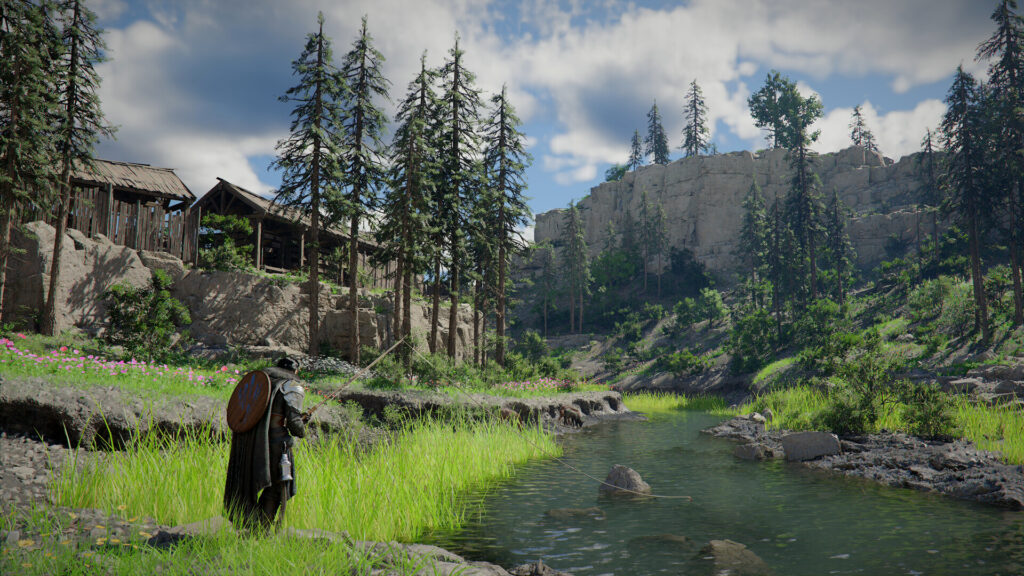
Through Axiom Forge and Force Palm, Crimson Desert gives you an ever-expanding toolkit that changes how you interact with the environment. Moving objects, manipulating systems, carrying items, solving previously inaccessible puzzles, the more abilities are unlocked then the more Crimson Desert’s world unveils new layers of possibility.
One Ability Can Influence Multiple Systems
We mentioned it earlier: Blinding Flash is, at first, an environmental puzzle solving tool capable of releasing crystal-locked doors by channeling its rays. However, Blinding Flash is also a handy combat tool capable of briefly stunning enemies. And, what’s more, it serves as a worthy exploration tool too, with it able to uncover fast travel points hidden throughout the world. This kind of cross-functionality changes how you view the world, making already discovered areas worth revisiting.
Progressing Your Abilities Encourages Revisiting
And likewise to the point just made, Crimson Desert also showcases platforming-style, non-linear exploration which further encourages you to revisit locations. See, many areas throughout Pywel are ability-gated, meaning that once you’ve unlocked the appropriate tools you’ll be circling back to find previously inaccessible secrets. And, because this loop is encouraged it’ll feel like rediscovery more than backtracking. With an open world as vast as Crimson Desert’s, seeing everything there is to see will take an unfathomably long time.
Horses Are a Long-Term Investment
Unsurprisingly, even Crimson Desert’s horses have their own skill progression, which you can level up by feeding, petting, and riding them around the plains. In fact, the more quality time you spend with your steed, the faster unlocks arrive: dashing, swimming, double jumping, and more. In many ways, mounts become an extension of your build, meaning they’re another path deserving of your time.
Even Pets Become Mechanical Tools
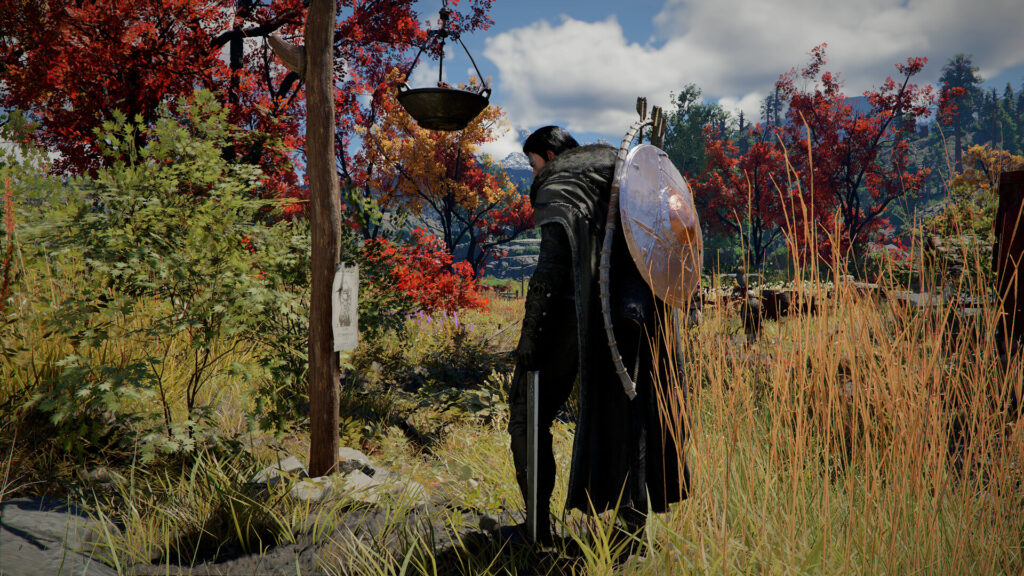
Auto-looting might sound like a minor convenience, but in a game this rich in hidden treasures it’ll prove a worthy time saver. Yet, optimising this feature requires you spend time with the game’s wild animals and engaging in the trust-based pet system. Turning stray cats into companions by petting and feeding adds them to your crew, so to speak, and then they’ll go and loot downed foes for you.
Crafting and Cooking Allow for Improvisation
In any other game, crafting and cooking would be simple side activities. Not so in Crimson Desert, where vendors restock ingredients at midnight, and recipes allow for substitutes. Even gathering resources isn’t limited to one method: fish can be grabbed by hand as well as by traditional rod, while unlockable telekinetic powers can bypass tools altogether to harvest wood and stone. If this was just collecting materials and putting it all together it wouldn’t be nearly as engaging.
The Outlaw and Merchant Systems Give a Glimpse of the Other Side
If you’ve time for a second playthrough (I certainly don’t) then eschewing the hero fantasy for a life of crime is perfectly viable given the depth of Crimson Desert’s outlaw and merchant systems. Goods can be stolen, transports hijacked, others’ valuables and wealth commandeered. There are risks to your regional reputation, of course, but living outside the law is certainly tempting given how well realised its in-game mechanics are.