







With Crimson Desert finding both haters and those who swear by its take on an open world action adventure, you might be wondering if it’s going to be a game you actually enjoy playing. After all, everybody has those few games that they absolutely loved, even as the rest of the world somehow didn’t catch on.
But this massive, sprawling adventure is a special case. It’s not exactly divisive in the true sense of the word, but a cursory look at its early reviews paints that very picture. It’s a title whose very strengths put off a lot of critics, while what may be perceived as its weaknesses might just be the reason many of you won’t be able to put it down.
But at the heart of it all, Crimson Desert is a game that’s unapologetic about its identity, and the kind of adventure it wants to be. It’s a game that demands your attention, and your patience, and delivers a payoff so rewarding it makes it all worthwhile.
The friction that results from that might be what makes it worthwhile to some players, and a dealbreaker to others. Let’s explore how that paradox works, beginning with what the reviews have to say about it.
Liked, Loved, And Hated, All At Once
We’d like to go back to the friction we mentioned earlier. Crimson Desert is a game where your appetite for it is going to dictate how you feel about it. For our part, we adore a game that leaves us to our own devices, and that’s exacerbated when the game in question is a fantasy RPG in a world that’s as vast as Pywel.
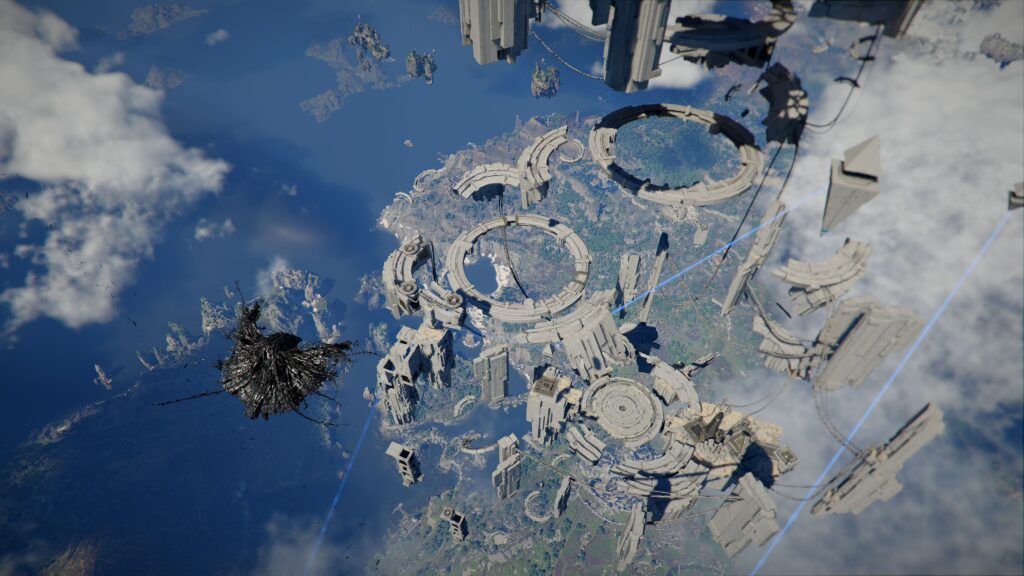
Pywel’s a major part of all the praise directed at the game, with its size and scope serving the visually stunning vistas it presents to you. It’s packed with things to uncover all on your own, a distinct lack of hand-holding that permeates all of the other systems you must engage with and learn before you begin to succeed with consistency at everything you attempt.
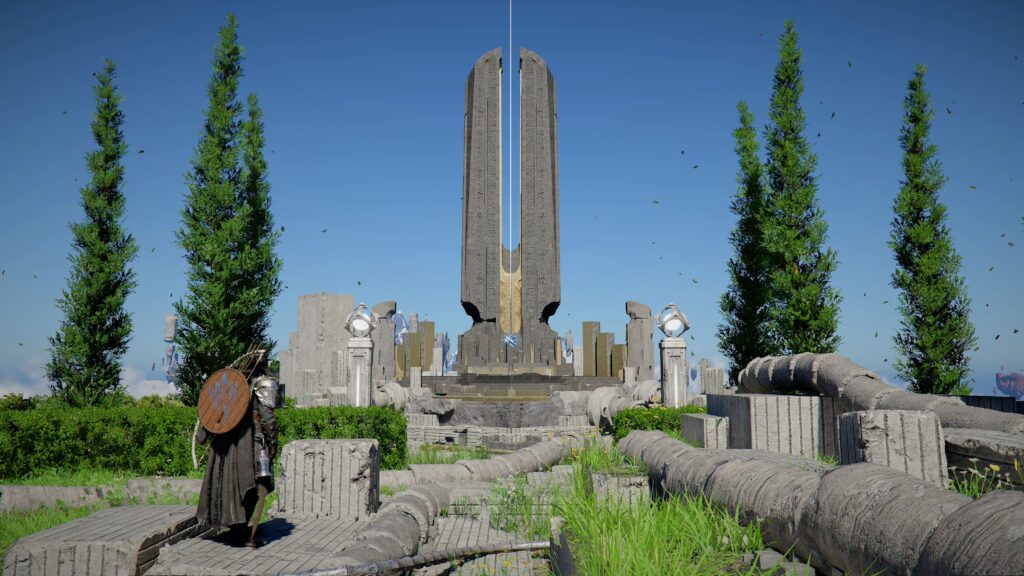
There is a broad agreement that, as an open world, Crimson Desert has killed it. But even those with mostly good things to say about it have conceded that there are annoyances, while mixed reviews do highlight facets of the experience that stand out. In a world as vast as this one, with so many different things to do, you’re bound to find stuff that you like and certain things you’d rather avoid, after all.
The divisive nature of the game’s reviews is thus less about confusion among critics and more about different people liking different things from their video games. And that brings us to an important aspect of modern AAA games: their ability to guide you through their many systems.
Balancing Agency Versus Guidance
The distinct lack of hand-holding in Crimson Desert is a recurring occurrence in criticisms levelled against the game, but is that really a bad thing? Is it bad that you’re left to solve puzzles on your own and to figure out a way to get to that point of interest that you’ve spotted?
Is it bad that you’re left to discover the game’s combat all on your own, forming your own strategies to deal with the threats that you come across as you travel across Pywel’s many biomes? To some, the answer to all of these questions is yes, and that’s a valid point of view. Learning complex systems takes time, and it can get confusing. You’re going to have to be patient with the game in question before you begin to find that you’re getting really good at it (Bloodborne, anyone?).
But that’s chunks of time and effort that many players may not have the luxury of sinking into a title, and to them, it can feel like the game is deliberately withholding useful information that can make the experience more enjoyable right off the bat. It certainly can seem like a bad design choice.
But to others, having the freedom to just jump in and take the experience at their own pace is going to be what keeps them coming back for more. To them, a game that lets them wander off and make their own entertainment along the way is what makes a game immersive. And yet, that freedom comes with a distinct lack of clarity, with you constantly wondering if you’re going the right way and if the challenge in front of you is meant to be as hard as it is, or if you need to come back to it once you’ve improved on your skill set and gear.
Crimson Desert is a game that lets you set your pace, yes, but that agency comes at the expense of comfort. That could be off-putting to a lot of players who are used to a more structured approach from their games. That lack of comfort leads us to our next reason why Crimson Desert isn’t going to please everybody.
Training Your Brains and Hands
There’s no way to sugarcoat the fact that Crimson Desert comes with a rather steep learning curve. You have to learn the ins and outs of not just its combat, which is its own beast, but also find ways to make its systems, limited inventories, progression logic, and traversal mechanics work in your favor. That’s certainly daunting, but also very satisfying when you finally realize you’re gaining ground faster than you were a few hours back. It’s a question of internalizing it all, ignoring how daunting it seems before you get there.
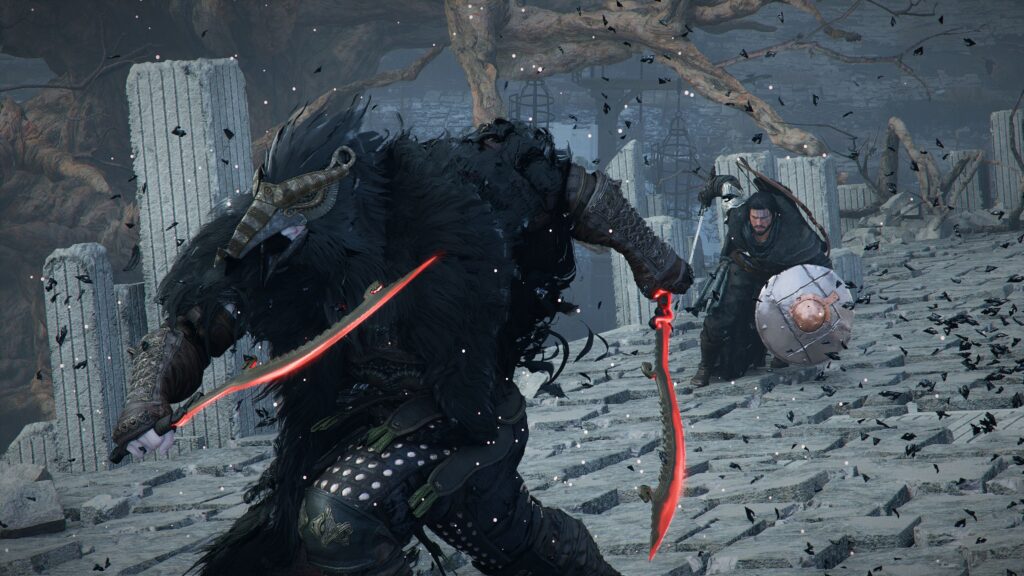
In combat, things get as demanding, if not more. Despite earning a lot of praise for its layered approach to your own effectiveness on the battlefield, it has drawn a bit of flak for what many are calling clunky controls. However, we believe that isn’t the case, and the game’s skills are so numerous that remembering them all is the real challenge. It’s a matter of learning what each move does, and then training your muscle memory to perform it at just the right moment. That’s especially true against bosses, where their aggression can get quite punishing if you’re not using every possible chance to counterattack.
It’s mechanically busy, yes, but also so full of options that succeeding often means using multiple systems in tandem with each other, building synergies that lead to payoffs that feel earned. It’s designed for players who like building familiarity through repetition, similar to how you learn a new musical instrument. Except that in Crimson Desert’s case, you’re asked to play as a whole darn opera.
It’s easy to see why such a learning curve can be daunting to a few, but that’s also why it’s such a satisfying game to engage with in the long run. This isn’t an open-world game you just get to casually sample, and it gets exponentially more rewarding the more you get in sync with what it has to offer.
It demands something that many of us may not be able to give it: patience.
The Price and Rewards of Perseverance
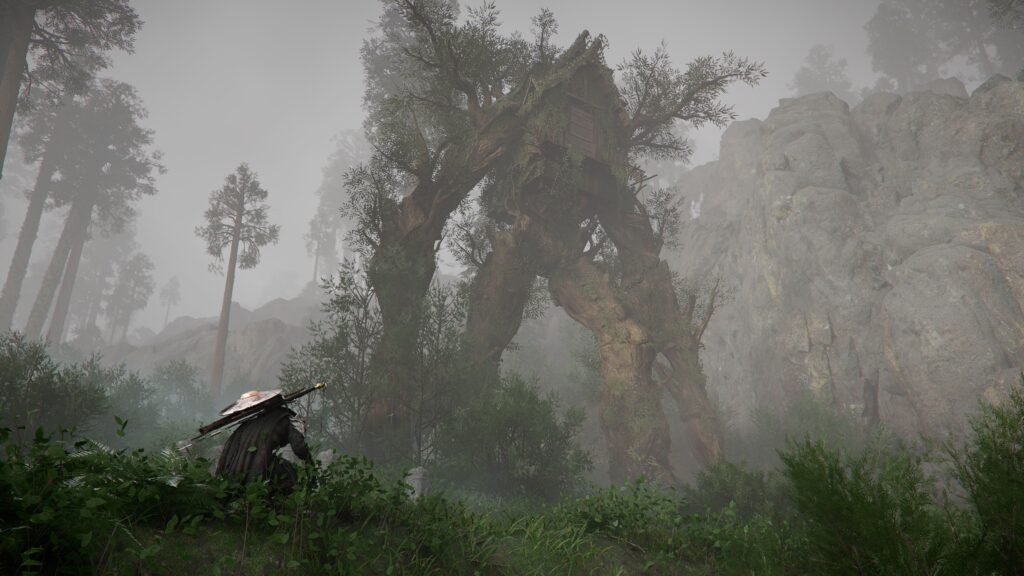
Pywel’s a pretty big place, and Kliff’s only one Greyamane. His story often takes a backseat to the journey he’s embarking upon, which can feel like the game is wasting its players’ time by forcing them to needlessly engage with side content. But it’s in those little stories that Pywel’s true beauty shines through, its denizens reaching out to you with requests that can range from grand quests to mundane fetch-and-carry tasks.
Granted, the inventory system could use some refining as it constantly forced us to choose between equally viable pieces of gear that we earned through diligent exploration, and there are several quality-of-life issues that cropped up, some of which even forced us to reload and lose a few hours of progress. But they tie in to our assertion that Crimson Desert both demands and rewards your patience.
It’s all a matter of perspective and how you choose to approach the game’s eccentricities. If you’re someone who finds constantly managing your pack an annoyance, you’re going to feel like the game wastes too much time forcing you to do something you’d rather not do. But if you look at it as a way to constantly keep yourself prepared for what’s ahead, and appreciate the fact that you’re making trade-offs that you cannot predict will work in your favor, it adds a delicious layer of uncertainty to the entire experience.
In short, patient Greymanes in Pywel see delayed gratifications, while those who cannot look past a need for due diligence are only going to see needless friction. Those two distinct perspectives are at the heart of why this game has proven to be as “divisive” as it seems.
The Good, The Bad, And The Best
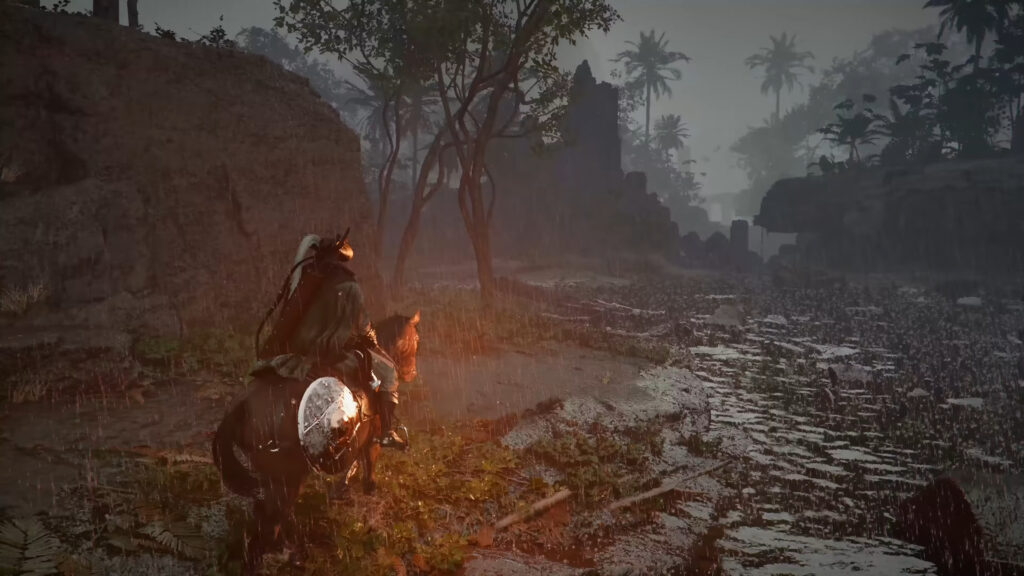
For critics who praised the game, Pywel’s sheer beauty and its almost audacious scope were highlights, joined by a sense of discovery that’s always welcome for anyone exploring a world as large and as dense as the one Crimson Desert offers. The sandbox took precedence over the story for people who liked the game, and if you’re the type who likes to wander and get lost in the fantasy, this one’s going to be a rare gem. Its best moments are when it doesn’t tell you what to do and instead lets you stumble into something incredible all on your own.
But for those for whom it didn’t click, its clunky controls, tedious inventory systems, uneven difficulty, and bosses that felt like they were designed to have an unfair advantage were all issues that are perfectly valid. The story was also a sore spot, with the narrative lacking the strength it needed to keep them invested. It could be hard to care about the characters you meet when the very next thing you do is saunter off into the wilds for hours at a stretch, after all. The very abundance that had some reviewers gushing over the game were factors that exhausted others.
Not A Universal Blockbuster
Modern AAA games come with certain expectations, such as smooth onboarding, even pacing, and minimal frustration. But that’s clearly not something that Crimson Desert has bothered itself with. It is intentionally opaque and frustrating, requiring its players to invest into all it has to offer before they begin to appreciate the true depth it brings to the experience. It was never meant to be universally loved, and that’s what allows it to stand out.
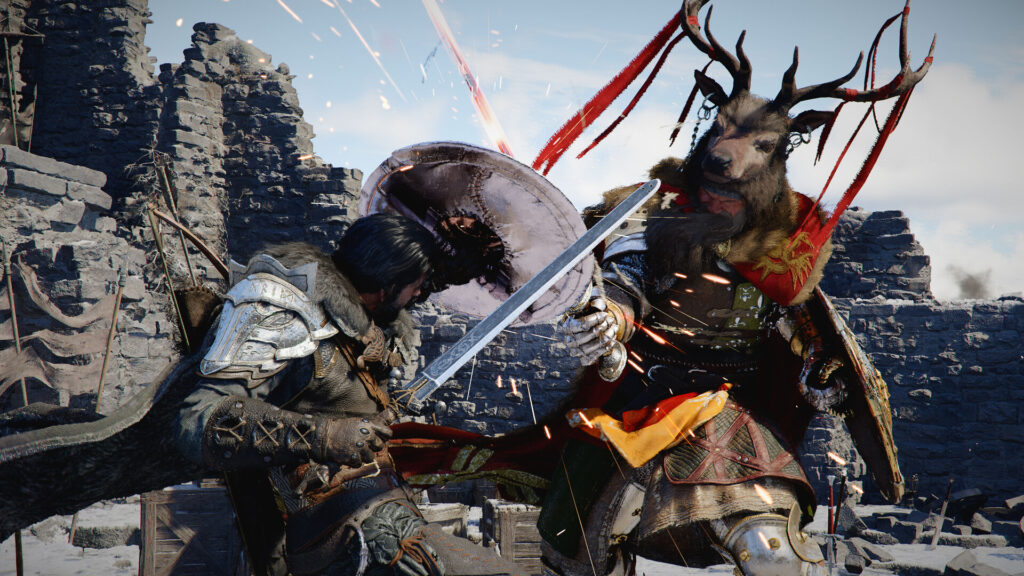
Sometimes, the most demanding and roughest of experiences out there are the ones that stay with the players they resonate with. Crimson Desert is a game that caters to players who enjoy agency, being free to figure things out while they fail at combat only to get back up, rethink their strategy, and try again. It’s for players who don’t mind a bit of quirkiness as long as the payoff is a part of the bargain.
It’s for players who love to wander as they make their own stories, the memories being more important than checking off objectives. Crimson Desert’s reviews aren’t a warning that things have gone wrong, but are a natural response to a game that refuses to conform to notions of broad accessibility.
If you’re the kind of player who wants a world that forces you to learn its unique language by exercising stubborn curiosity, this one’s going to be a winner that offers you something that other open worlds simply cannot. But if you’re not, that’s entirely okay too, and you might just find yourself sitting this one out.
Crimson Desert is a game that’s meant to be relished, not just liked, and it caters to a specific kind of player. And that boldness is perhaps its biggest strength.
Note: The views expressed in this article are those of the author and do not necessarily represent the views of, and should not be attributed to, GamingBolt as an organization.