





Crimson Desert is finally getting close to release, and we’ve spent a very enjoyable chunk of time with it on PC. Here, we’re going to dive deep into how the PC version of the game manages to hold up in the face of all it has to offer, and how well it manages to give it a distinct visual identity. Is Crimson Desert just a flashy title that aims to impress with its visuals, or does it try to do that with the efficient use of rendering and simulation technology under the hood?
That’s exactly what we’re here to talk about, so let’s dive right in, beginning with…
Our Setup And Performance
Let’s start with our testing rig so you can better match what we’re about to tell you to your own setup and think about what settings you can adjust to ensure you get the most out of the game when you play it. We ran Crimson Desert on an AMD Ryzen 5950x processor, a GeForce RTX 3080 Ti GPU, and 32 GB of RAM, making this build sit somewhere in between the High and Ultra recommendations from the developer.
Most of the testing was conducted during daytime in-game, as nighttime generally delivers better performance and is less demanding on system resources. Playing at night was an almost invariable boost to performance thanks to fewer NPCs and, by extension, lesser activity in the open world. We had DLSS 4.5 on while we had to turn off Ray Reconstruction as we found it tanked performance. Everything else was switched to Cinematic, which is the game’s maximum graphical setting.
On that setup, we found that Quality mode gave us anything between 35-42 fps, and Balanced churned out about 40-45 fps. Performance mode managed to bring that up to 48-52 fps, while Ultra Performance, which we highly recommend, gave us 64-68 fps. Obviously, it should be noted that the more aggressive the scaler we selected, the more noticeable image dithering became (although at an acceptable level.)
A Massive Open World
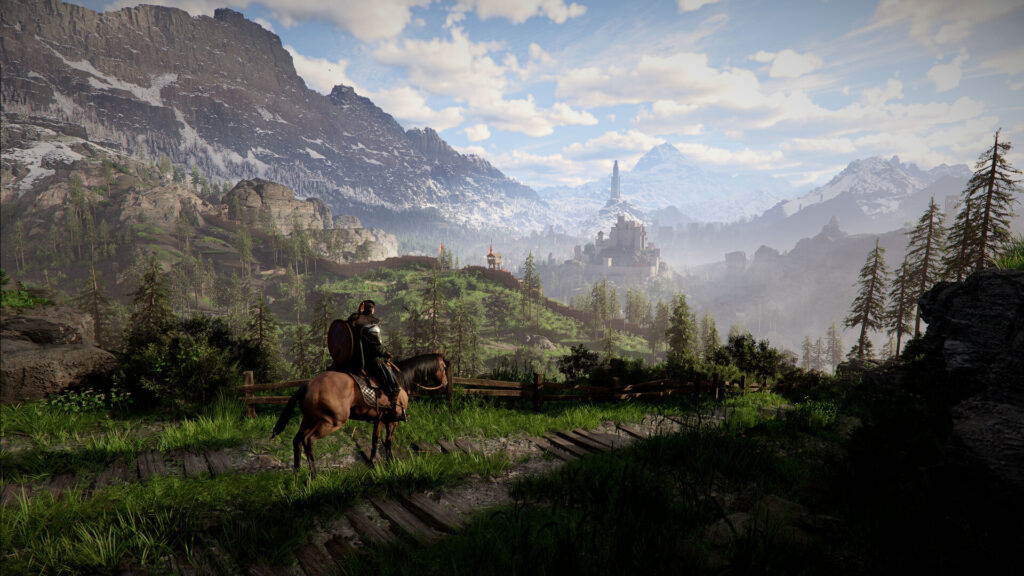
It was evident that Crimson Desert was going for an experience that was trying to present a fantasy adventure on an unprecedented scale from the game’s first few hours. It was evident from the moment we were let loose into the open world that this was a game that aimed for a blend of realistic fantasy with stylized spectacle thrown in at moments where it would have the most impact. We’re happy to say that the game’s look is quite unique, carried by both its art direction and effective use of modern rendering technologies to make the entire experience feel cohesive. Its systems work together quite well to present Pywell as a living, breathing world that’s just waiting to show you what it can do.
If we were to pick from various factors that could visually define a game such as Crimson Desert, we’d have to say that the sheer scale of the world it presents, along with its rich animations, are the stars of the show. However, that doesn’t mean that its weather, world density, and the spectacle it presents when blades are drawn are lacking. You simply uncover those facets of the experience only after you spend a little time with it.
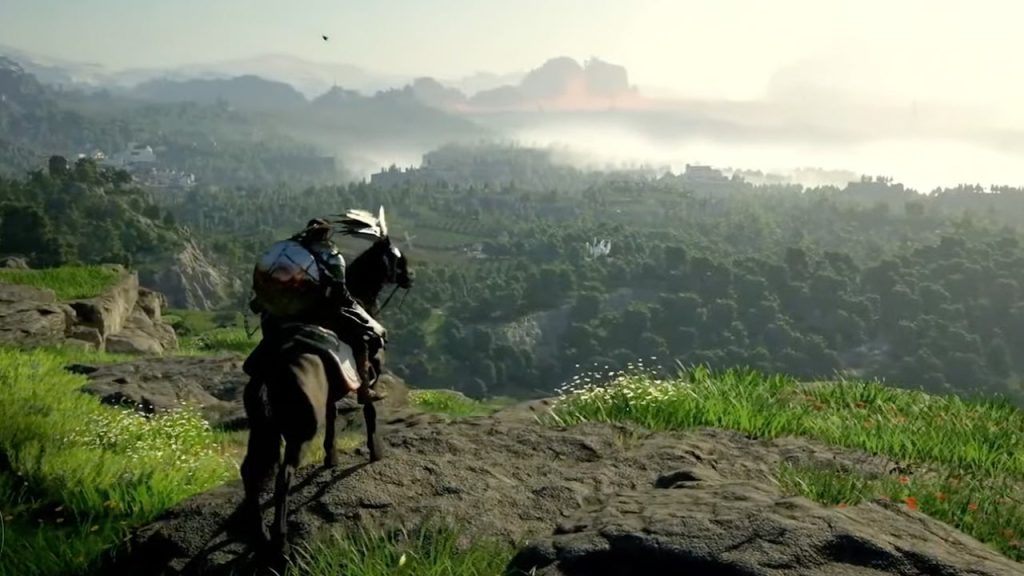
We’re going to be honest. This one’s quite a photogenic game. The terrain quality, for instance, has every surface in the game looking so meticulously detailed that it automatically catches your eye. Individual pebbles, blades of grass, leaves, flowers, and other important parts of the world stand out well enough to make you feel like Pywel’s biomes are thriving.
Rock formations look authentic, reflecting the years of weathering that helped them form. The foliage peppering the world you move through stands out too, responding quite convincingly to the weather.
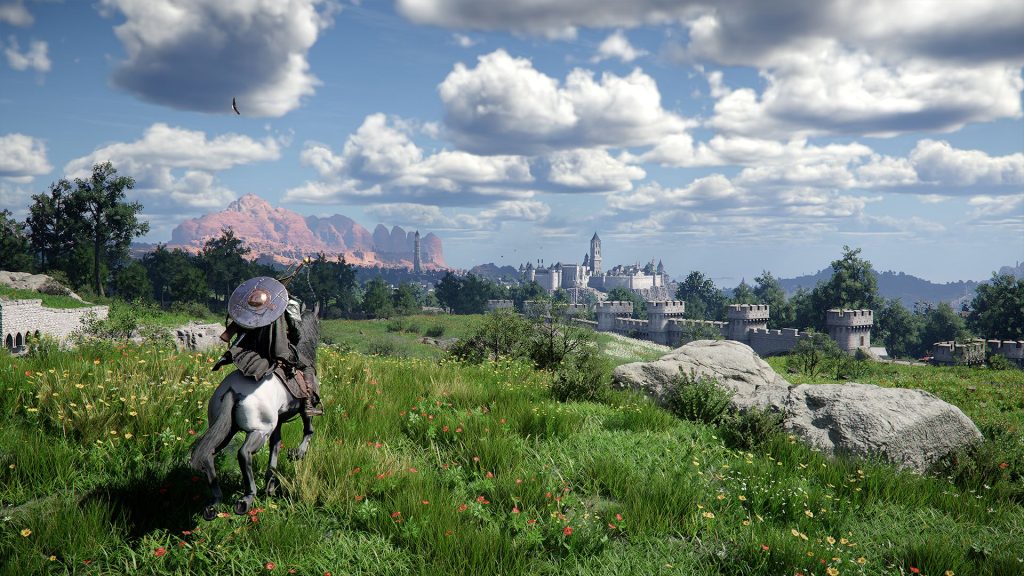
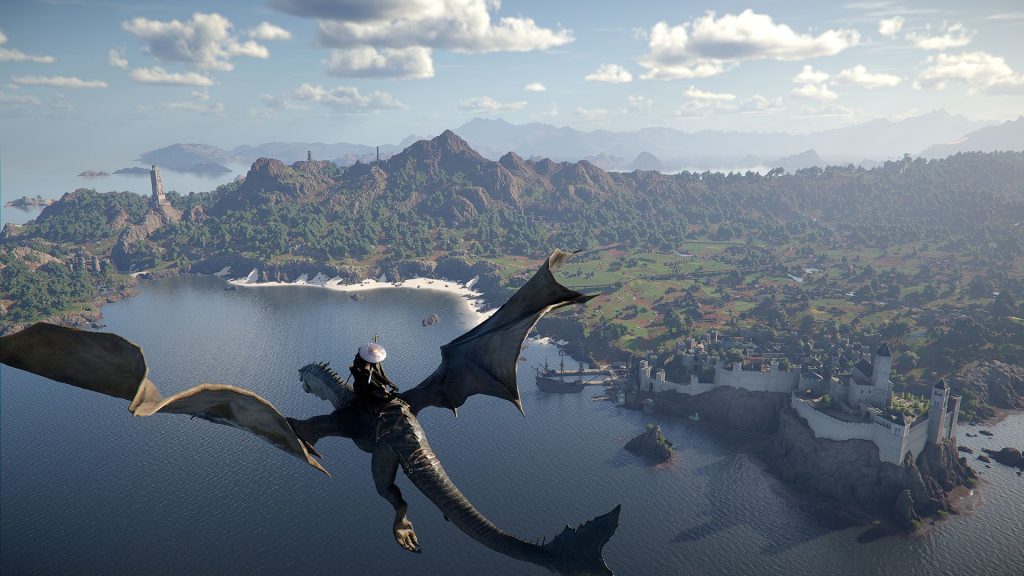
And don’t get us started on the draw distance. It’s absolutely jaw-dropping. Pywel is a sprawling world with so much to see that it almost makes you feel like discovering everything it has to offer is daunting. The sheer scope of the world you see is excellent, and dropping down from the Abyss to glide over the land below you is certainly a sight to see. Countless times, I found myself standing at the edge of a cliff, simply taking in the beauty on offer. At times, it felt almost unreal.
It’s easy to spot individual settlements and points of interest from the sky, and with so many places to visit, picking a landing spot can be surprisingly difficult. Being able to see all of it from up high never got old for us, and it probably never will.
It’s also impressive from a gameplay perspective, because gliding down is an exciting way to set off into the unknown. The draw distance and terrain quality hold up remarkably well even from afar, as you hurtle toward the ground. We often found ourselves changing direction mid-flight to investigate an interesting ruin or a camp full of enemies. Swooping down on them from above was always fun, and it also made for a great way to open combat against larger groups.
In settlements, you have a lot of crowds to make each place you visit feel like it’s lived in. NPCs had their own routines for the most part, while object clutter in such areas was always believable and implemented quite well. Unfortunately, noticeable pop-in was a frequent distraction. We observed numerous instances where objects abruptly loaded into the field of view, resulting in a jarring experience. But overall, prop quality and the general way assets respond to your inputs showcase a world that’s quite immersive for the most part.
All in all, the game’s geometry works really well and is even quite woven into gameplay elements like puzzles, where you use your powers to reassemble crumbled objectives to achieve your objectives. It works well with the environmental detail to sell Crimson Desert’s fantasy setting quite strongly. The sheer scale of the world makes this feel like a true next-gen title, but it’s what you discover within it that really draws you into the adventure across its vast lands.
Lighting Up The World
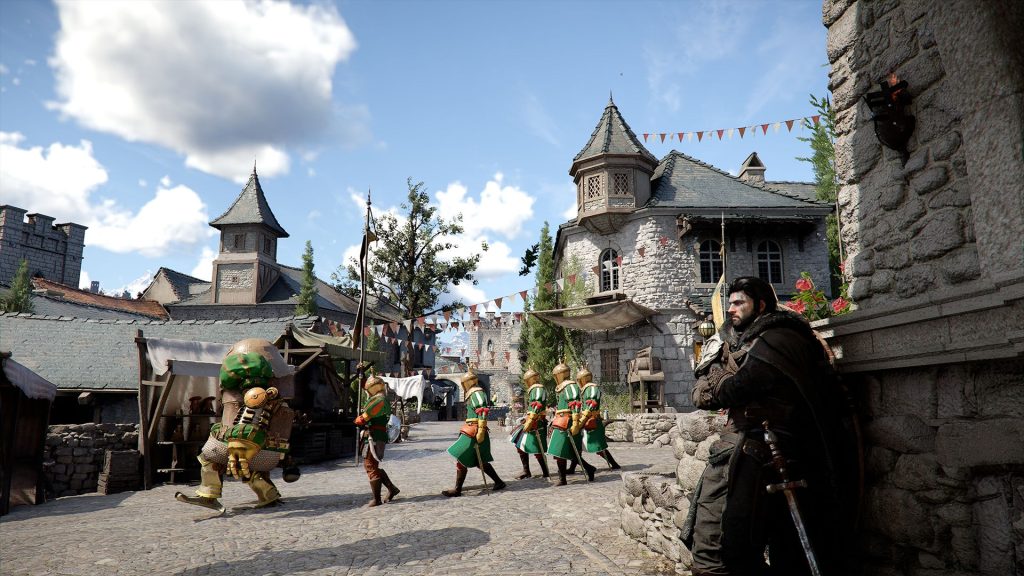
Speaking to our decision to stick to the daylight for a bigger part of our testing, we must admit that it was a pleasure. But there is an important factor about the game’s implementation of nighttime environments that we must discuss.
Going chronologically, the game’s lighting during the day is excellent. It’s almost as if the land and its people are soaking in the sun, basking in its warm glow even as they go about their daily lives, Kliff included. The sun’s rays bounce gently off of every surface you see, the game’s path tracing working very well to ensure that even indirect light feels quite authentic.
Enter a building and the game adapts quite well on the fly, ensuring that its lighting systems make that transition along with you. Dusk, for instance, bathes the world in a soft glow as the sun sets, while your shadows deepen appropriately, growing darker and more defined.
Your shadows, and those of people and objects around you, constantly react to rays of light in a way that feels very real. At night, the world’s colors get suitably muted, and while you might find it a tad too dark in certain locations, it’s quite immersive for the most part.
The glow from torches and lanterns becomes more pronounced as the darkness creeps up, but we didn’t feel the need to whip out Kliff’s lantern unless we were at some of the darkest locations possible, like a dungeon, for instance. The lighting is dynamic on all fronts, working well to bring the scenes it’s illuminating to life.
Most importantly, the lighting works in tandem with the game’s environmental detail to truly make this one feel like a next-gen open-world title. The best in the genre often rely on how well their various systems come together, and Crimson Desert has done very well to remember that.
An Immersive Atmosphere
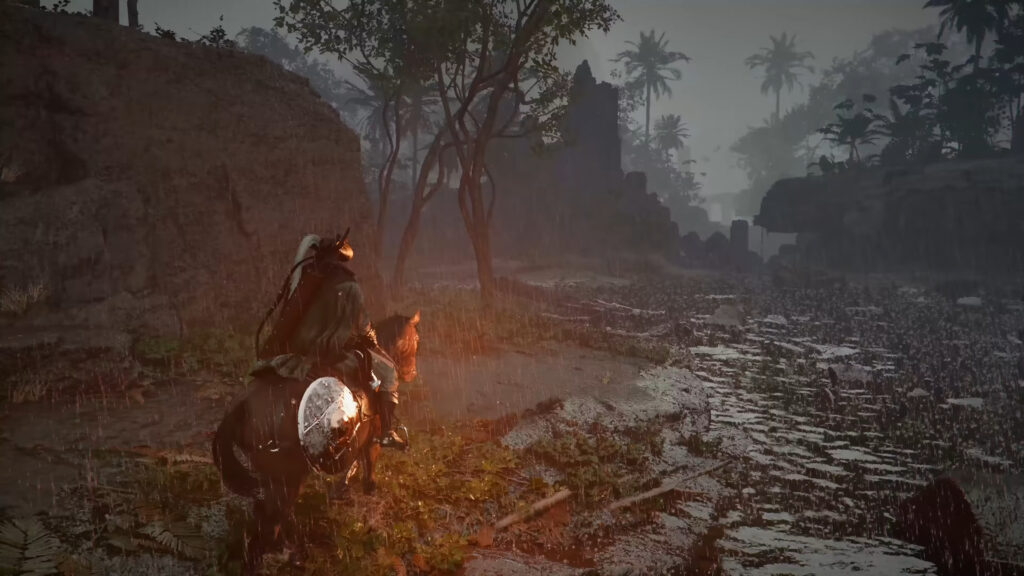
Working in tandem with the lighting and detailing are the game’s volumetrics, atmosphere, and weather systems. The fog quality is quite good in the places you encounter it, while mists in valleys and forests almost feel like you could reach out and touch them. They work very well to set a gloomy mood in places where you find them.
But in bright, sunny weather, the clouds above are rendered quite well, and move very believably as you tear across the ground. A gentle breeze is almost always throwing up leaves and dust as you make your way through the game’s various biomes, and it picks up quite well in the event of rain or storms, gaining an appropriate boost to its velocity.
The rain is highly visible as it falls, and when combined with the wind and the way bad weather transforms the world’s atmosphere, it creates an effect that’s easy to appreciate. That becomes even more apparent in story cutscenes, where shifts in the weather can instantly set the mood and enhance the impact of a scene.
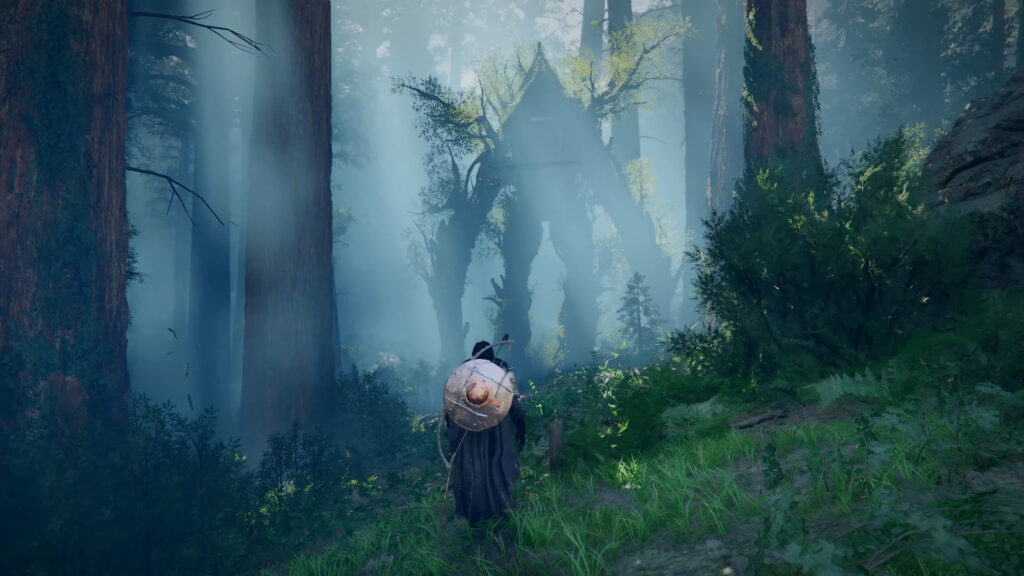
It also does the same for when you’re travelling around the world, working to present a strong contrast with the bright and cheery scenes where the game’s lighting systems are playing to their strengths. These atmospheric systems highlight the game’s impressive low-light rendering, sometimes even more effectively than a clear night sky.
Flowing Rivers and Streams
The water physics in Crimson Desert are quite impressive. We didn’t see a water body that felt static, with rivers, shorelines, puddles, and waterfalls all reacting to what was happening around them, be it in their terrain interactions or environmental simulations. The waterfalls, in particular, were spellbinding and are great places to take a minute and process all that you’ve encountered since you last left camp.
Still waters are equally enthralling, reflecting the world around them while gentle ripples from the breeze move those reflections around so well they could become a very welcome distraction. Waves come in very believably before crashing onto the shore, the sea breeze making Klyff’s cape flow very dynamically in the direction it chooses.
Your footsteps on puddles and still ponds create realistic splashes, and your footprints on damp grounds are also a highlight when you get to see it all in action. In all of it, the water is a part of the simulation that works very well to make Pywell a land that’s equally suited for quiet, contemplative moments as well as one in which your emotions run high.
It’s a good thing, then, that the character models are as good as they are.
Character Models
Kliff stands out as the game’s protagonist thanks to the developers’ strong attention to detail when it comes to his character, and it seems that the rest of Pywell’s people are also quite pleasing to the eye. Irrespective of whether the person you’re looking at is a friend or a foe, the character models are a very immersive part of Crimson Desert’s fantasy setting.
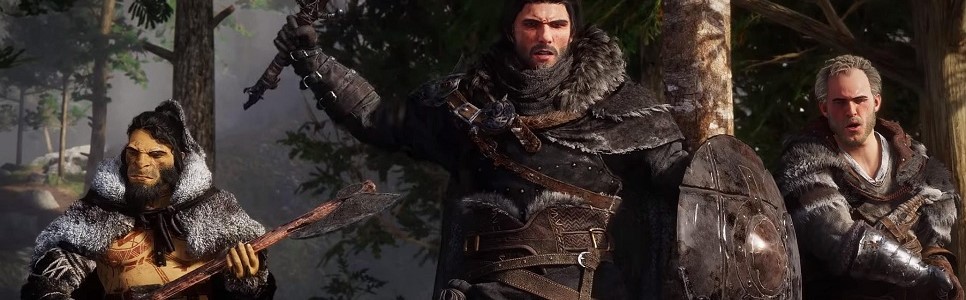
The quality of faces in cutscenes is passable, with emotions coming across effectively enough to have you invested in the events unfolding in front of you. The impressive material rendering of the armor will frequently motivate you to equip Kliff and your Greymane companions with gear that is both effective and visually stunning.
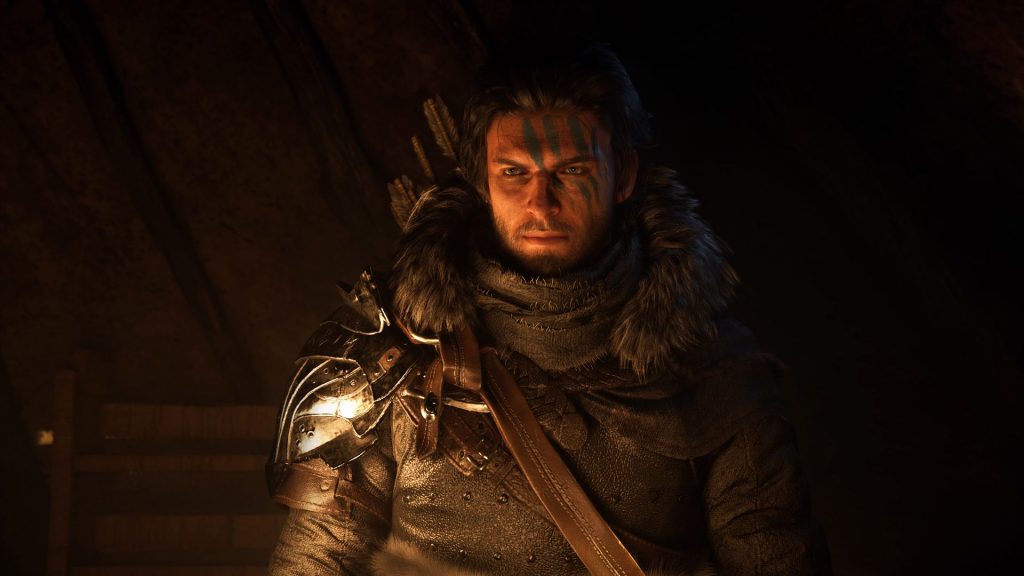
Cloth simulation is excellent, with capes behaving very realistically and interacting with any gear slotted onto your back very well. The hair movement on both your characters and NPCs is done really well, which is especially pronounced thanks to the fantasy setting where long, impressive beards on warriors give them a distinct identity.
The lip-sync and general flow of animations in conversations are acceptable for the most part, although a few NPCs could stand to show a little more expression. It felt they were a tad too slow to put some emotion on their faces, and it’s something that stood out enough for us to notice.
As far as combat animations are concerned, the character models do a great job of reinforcing a clear visual distinction whenever you switch between playable characters, though the game is at its best when a boss is on screen. We loved the variety of bosses throughout our time with the game, especially the quality of their visual rendering, whether in the detailed armor of human foes or the fur of monstrous enemies. Each one feels visually impressive and distinct, with attacks that flow naturally from one move to the next, while your own animations carry a satisfying sense of weight in response.
Motion blur is implemented quite well, helping with the cinematic side of things along with screen shake and excellent destruction cues that make each fight intense and even daunting at times. Boss introductions are handled well, and give them an imposing flavor before we even draw our blades. When they’re in action, the game does well to communicate elemental attacks well enough to give you the right amount of time to respond, another factor that helps the game sustain a smooth flow of combat. It’s a strong part of the experience, and it certainly helps that the fights themselves are just as enjoyable.
The Spectacle of Great Combat
Kliff’s moves are a sight to behold, with each new one you unlock coming with particle effects that add a very realistic touch of fantasy to the experience. There are cool effects and animations that accompany them that make for fights that are very nice to look at. That’s also in operation when you glide around, but it’s combat where they truly shine, considering just how much is happening on-screen.
Use a move that’s supposed to slam the ground, and you see stone crumble at the weight of your attack, and it’s likewise for enemies. Debris flies up from such destruction, and the world reacts quite well to your actions to make things stand out even in the heat of battle. That holds for other moves whose effects interact with the world around you, or enemies.
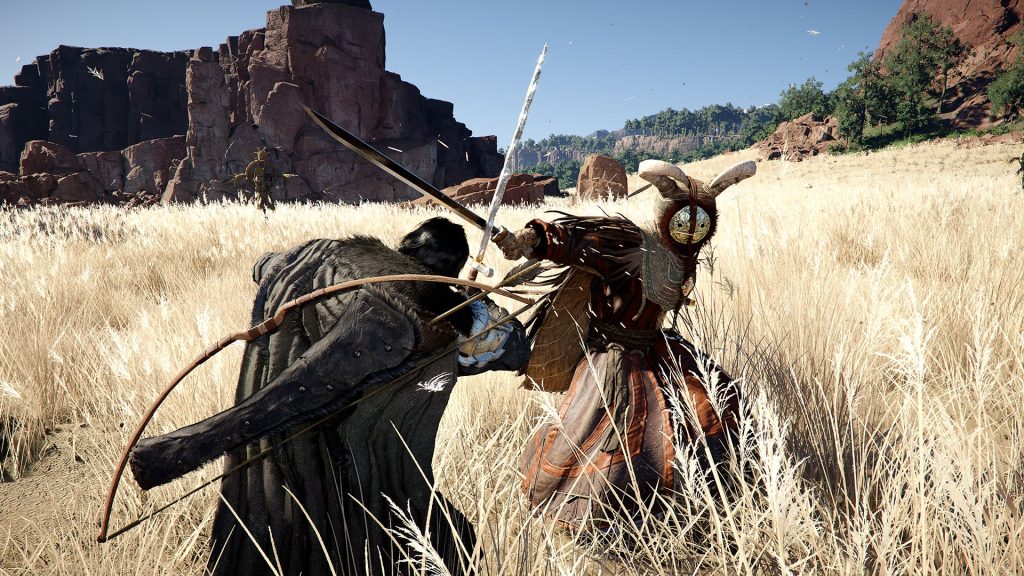
There are a few animations with effects that can prove distracting enough to break the flow of combat, but it’s quite easy to get back into a rhythm once you start to anticipate them and react accordingly. It’s still worth mentioning and is an area where the graphics could work against you, at least in the game’s early hours.
It’s a factor in our opinion that the game favors cinematic chaos a tad too much at the cost of gameplay readability, although it’s not imbalanced enough to be a problem. Aside from combat, we think that the game’s ray-tracing systems deserve some attention.
Reflections And Rays
Crimson Desert’s ray tracing and reflections are quite impressive for the most part, which made it all the more frustrating that we had to disable ray reconstruction because of its impact on performance.
Even with that setting turned off, though, ray tracing still added a noticeable layer of polish to the world as a whole. As we’ve already noted, shadows are highly dynamic, while light interacting with water produces convincing, accurate reflections. Metallic surfaces are handled just as well, and overall, ray tracing does make the game world feel more believable.
That said, on our system at least, the visual boost didn’t quite justify the performance cost. Your experience may vary depending on the hardware you’re running, so this is one of those settings that’s worth experimenting with to find the right balance. Given how quickly the game can become demanding, maintaining stable performance should be a priority. Fortunately, even when things get hectic, image quality remains consistently solid.
A Clean, Stable Image Quality
This one’s always a major talking point for PC players, and we’re glad to say that the game’s image quality holds up quite well across the various upscaling modes we tested. The anti-aliasing worked well in both gameplay and cutscenes to make it feel polished; although noticeable dithering was present, it wasn’t very aggressive.
A stable image quality was maintained, irrespective of whether we were riding, sprinting, or gliding. There wasn’t any input latency either, and things were largely stable across the board.
For a game that’s as big as this one, that’s definitely a compliment. But that doesn’t mean that things were all perfect, an impossibility thanks to that very size.
A Few Shortcomings To Consider
We did encounter a bit of stutter on rare occasions, along with instances of low-res textures. The former ironed themselves out but lingered long enough to catch our eye. We were also annoyed to find a few glitches where our character got stuck while he was out and about, but we appreciate the in-game system that helped resolve the problem fairly easily. The loading times were too long for our liking.
Conclusion
As an open-world experience clearly aiming to stand alongside the best the genre has to offer, Crimson Desert puts up an impressive fight. Its world is strikingly ambitious in both size and scope, and in some respects feels comparable to something like Horizon Forbidden West, particularly in terms of its visual style and lighting.
Its physics and animations also come close to matching some of the genre’s heavy hitters, including Elden Ring, though they are not quite as precise, likely in service of making combat more accessible to a wider audience.
When it comes to the world itself and the way it reacts to the player while continuing to function independently, Red Dead Redemption 2 still remains the benchmark, but Crimson Desert makes a remarkably strong case for itself.
Ultimately, Crimson Desert feels like a hugely ambitious project that aimed incredibly high and came close enough to fully realizing that vision to earn a place among our favorite open worlds. Much of that comes down to how well its various systems intersect, creating a world that feels reactive, dynamic, and constantly ready to respond in ways that are both believable and visually impressive.
It’s a world we don’t see ourselves leaving anytime soon, and that’s perhaps the best compliment you can pay to a game with ambitions this grand.