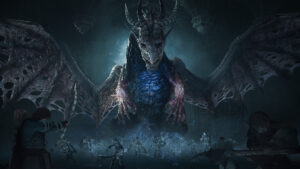





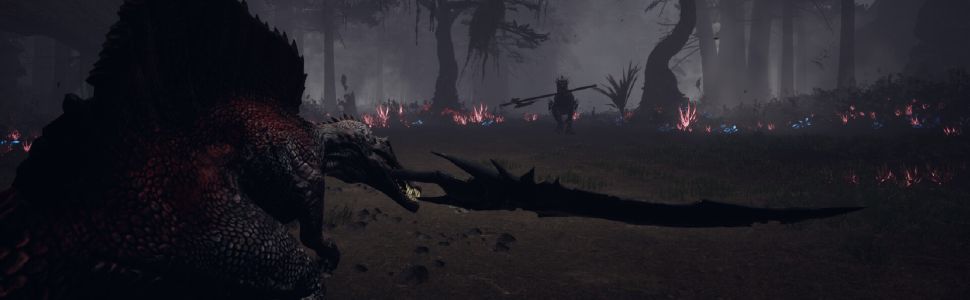
Even before its release, Dinoblade had managed to garner an impressive cult following with its free demo, thanks in large part to its ridiculous premise and incredible animation system. The latter should come as no surprise since its development has been headed up by Jean Nguyen—known for his work as a senior animator on Ghost of Tsushima and Ghost of Yōtei at Sucker Punch Productions. Dinoblade has you playing a Spinosaurus armed with a greatsword, and while its demo gave us a great taste of what we can expect with smooth animations and funny fights between dinosaurs, the central question is whether there is enough in the game to offer the amount of variety and polish that one would expect from a full game.
"Dinoblade manages to retain much of what made its demo a charming affair"
With its full release, Dinoblade manages to retain much of what made its demo a charming affair, right down to its inclusion of cheesy heavy metal music for intense battles. This, paired with its gorgeous animations for not only your own dinosaur, but also your enemies, including awesome bosses, made a strong first impression.
The core gameplay uses a Souls-inspired system that gives you light and heavy attacks, along with the ability to dodge (complete with invincibility frames), all limited by your stamina. Defensive options also include blocking and parrying, which might help you in fights since the latter also opens up enemies to counter-attacks. There’s some extra depth brought in by the existence of the Resonance bar, which acts as your “mana”, allowing you to use abilities like Meteor Slice and Meteor Zone. Even the healing system is quite similar to Dark Souls’ Estus Flasks; you get a limited pool of heals between checkpoints, and progressing through the game also gives you stronger heals that also increase in quantity.
Over the course of the game, you will pick up two distinct currencies: SP and Boss SP. The former can be spent on leveling up your health, strength, resonance, and stamina, while the latter can be used to unlock and level up abilities, like the aforementioned Meteor Slice. Over the course of the game, the same abilities can also be powered up in fun ways, making them do more damage, or giving you an even wider parry window when certain conditions are met. One noteworthy ability – the roar – even acts as a “rage mode” after you level it up, going from simply a way to stun enemies to radically switching out your attacks and staying on as long as your stamina allows it.
"One noteworthy ability – the roar – even acts as a “rage mode” after you level it up"
Thankfully, you’re never losing any of your progression, and you can spend the SP and Boss SP at any moment you want. The SP costs for stats never go up, and you don’t even lose any spare SP you’ve been carrying around if you die. This makes the general feeling of progression quite lenient, and as a result, you’re constantly getting stronger. The fact that you can’t really reset your attributes also never really matters, since there isn’t much in the way of build variety anyway. All four of your attributes are important, and you’ll find yourself distributing your SP quite evenly throughout the game.
Interestingly, defeating bosses also allows you to summon their spirits in for a quick attack. They also provide passive effects. The Stick, for instance, gives you a slightly wider parry window. Shield (my personal favorite summon), on the other hand, boosts your stamina regeneration when you successfully parry an attack. Unfortunately, these summons tend to add little to the general rhythm of combat aside from being another button you occasionally remember to press to deal some extra damage, since they just involve the dinosaur showing up, doing an attack, and disappearing.
On the defensive side of things, your most common move is going to be parrying. Sure, you can also block many attacks, but that eats into your stamina. Parrying, on the other hand, often tends to be the superior choice thanks to the fact that it replenishes your stamina and resonance, with the latter giving you more chances to use your abilities.
When facing off against bosses, however, you’ll also find yourself occasionally dodging. Many boss attacks are unblockable but can still be parried with strict timing. These are telegraphed by a red glow, though a handful of attacks are entirely unparryable and require you to dodge. However, some bosses, as I learned from trial and error, also have the rare move that’s entirely unparryable, making dodging your best option.
Generally speaking, Dinoblade’s combat is quite basic, and is largely carried by the responsive controls and fluid animations. There’s also little choice in equipment-driven buildcraft, making defensive play largely revolve around blocking, parrying, and dodging. Even the progression system is simple; you’re going to find plenty of SP and Boss SP simply by playing the game, and it doesn’t take too long before you’ve unlocked all of your early abilities.
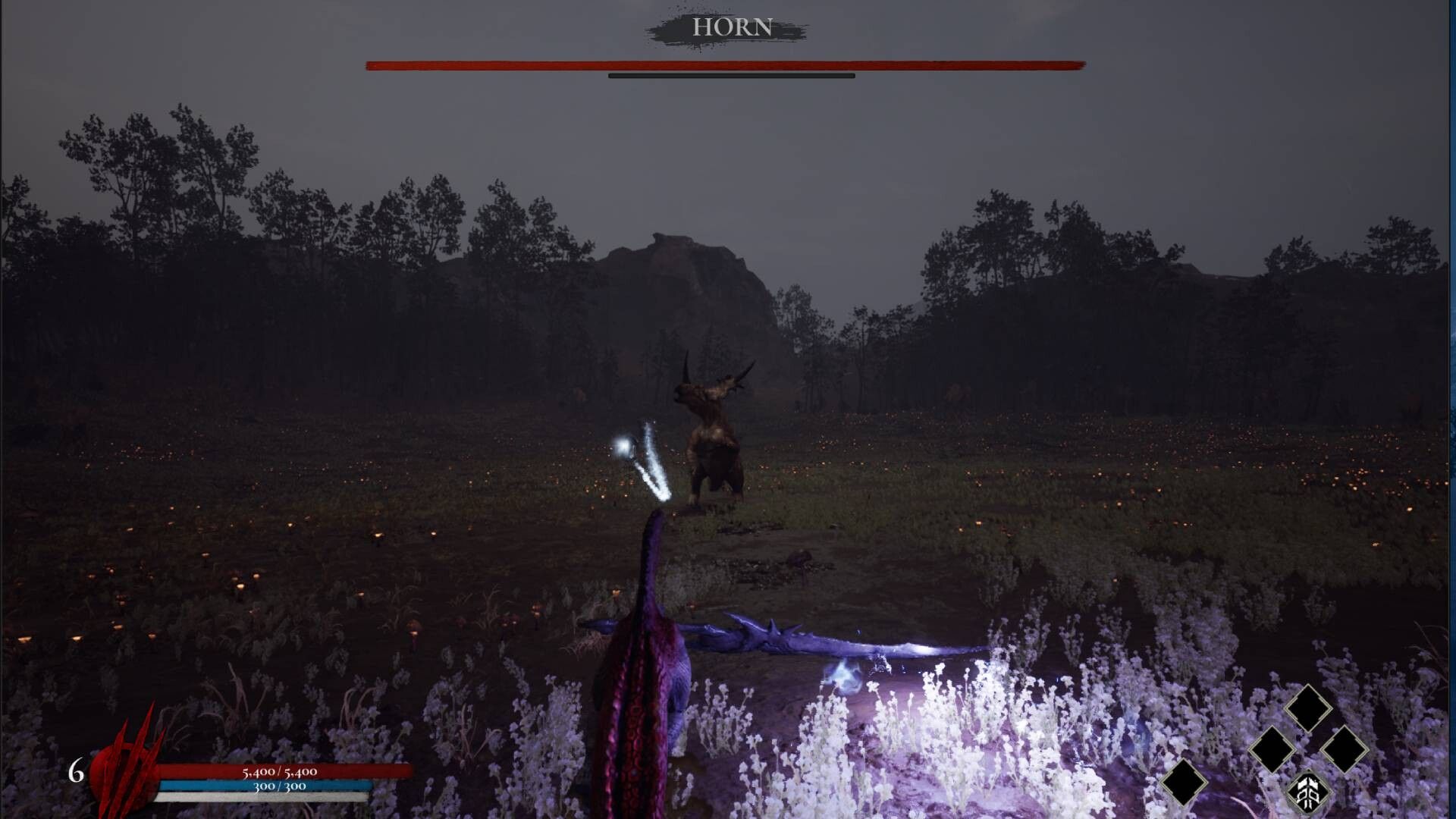
"Generally speaking, Dinoblade’s combat is quite basic, and is largely carried by the responsive controls and fluid animations."
That’s not to say that there’s zero progression or buildcraft surrounding equipment. As you make your way through the game and beat the Alpha bosses of various regions, you’ll start unlocking more weapons. While many of these are still ultimately greatswords, they tend to offer tangible benefits, like the ability to cause shockwaves with heavy attacks, or having quicker fast attacks due to its lighter weight. There are also a few late-game surprises that give you entirely new weapons altogether, and while the moveset doesn’t really change as much, they do affect general combat by, for instance, giving you wider sweeping attacks.
Of course, any discussion of Dinoblade’s gameplay would be incomplete without discussing its animations, and this is definitely one of the action RPG’s greatest achievements. Just about every action performed by the dinosaurs flows seamlessly into the next, without the animations looking like they have definite start and end points. Things feel fluid and smooth in a way few other action games can manage. Aside from just looking great, however, these animations also play a vital role in gameplay, since they give you great indications of when you should be dodging or parrying attacks.
Rather than focusing on the more realistic way large weapons would be used in the real world, Dinoblade’s animations also seem to take heavy inspiration from battle anime like Bleach or even more recent ones like Demon Slayer: Kimetsu no Yaiba. Just about every attack has incredible flourishes, and staggering a foe for long enough even results in a glorious aerial attack that puts them down for good. Similarly, abilities such as Meteor Zone lean heavily into the exaggerated visual language of anime and samurai fantasy.
The story in Dinoblade is similarly over-the-top. After being ambushed by a few predators, our Spinosaurus hero finds itself stuck at the bottom of a cavern, severely injured. Here, they encounter a dinosaur that has been impaled by several blades, who tells them that, if they want to survive, they’ll have to pick up the blade. This is then followed by yet another ambush, but armed with an awesome greatsword, you make quick work of them. This, unfortunately, was most of Dinoblade’s story. There’s little further exposition, and even the environmental storytelling is quite lacking aside from a few quips you might hear from bosses and some hints about the kind of battle-filled lives they may have lived before your arrival from a glimpse at their arenas.
There are also some vague hints about a larger storyline in the world, largely revolving around just why dinosaurs decided to pick up weapons to begin with. However, these aspects are largely just alluded to for big parts of the game, and the narrative never pays off in a satisfying way. Even the save points tend to allude to some grander narrative in play, depicting several duels between humans. However, up until the very end of the game, these allusions are little more than pretty pictures on some stones.
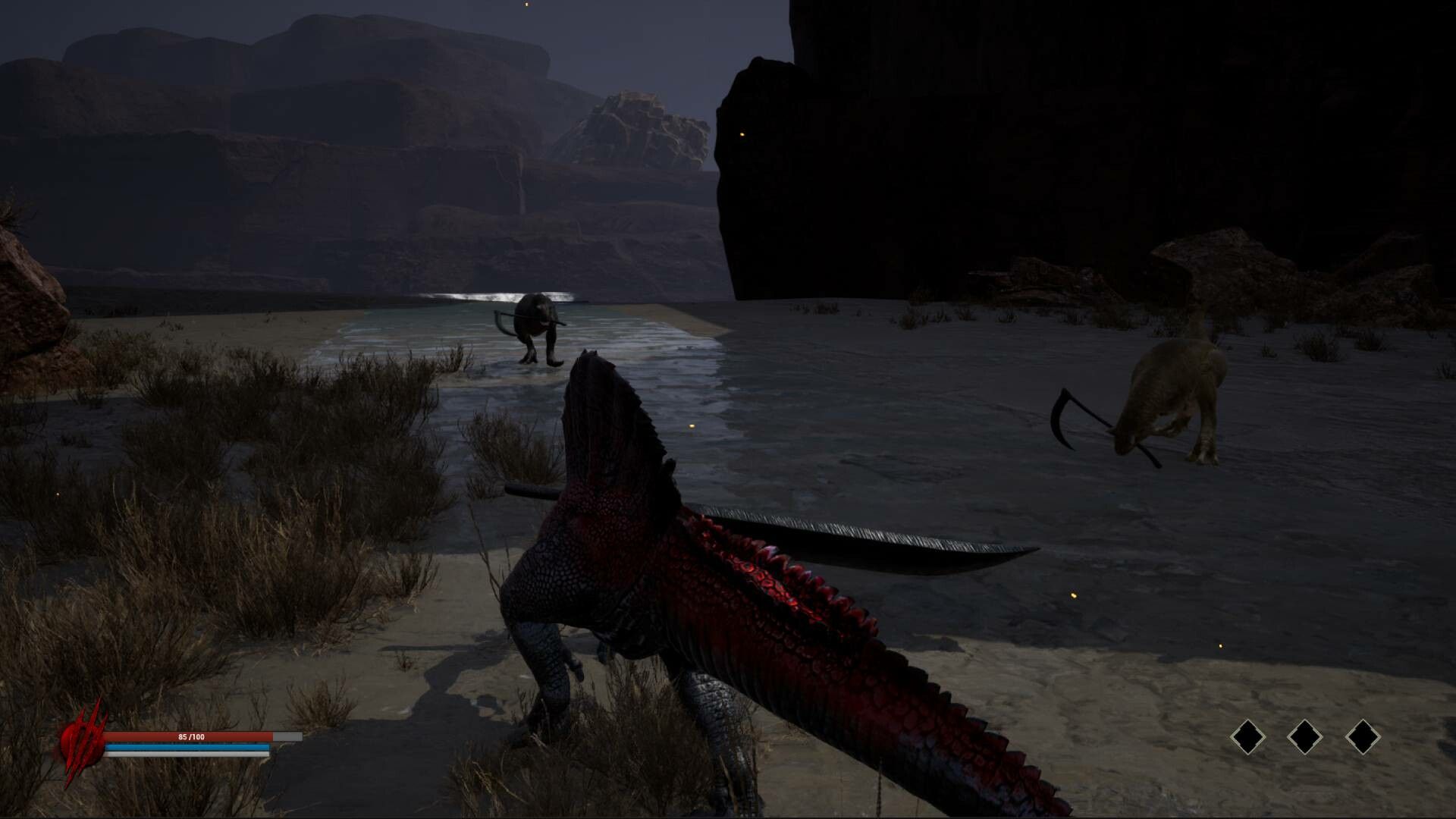
"There are also some vague hints about a larger storyline in the world"
While there isn’t really much of a narrative throughline that explains why you might be going around causing yet another extinction event for all dinosaurs, or even why the fauna has decided to arm itself with gigantic bladed weapons, Dinoblade never stops being fun. It feels like the developers knew exactly what they were doing when they gave you only the barest hint of a justification to kill some dinosaurs. The fact that there isn’t a narrative thread to follow, or even Soulslike storytelling through item descriptions, doesn’t hurt the game as a whole. The fact that you aren’t being interrupted by cutscenes and conversations on a regular basis helps keep its overall pacing quite tight.
As you make your way through the story, you will inevitably come face-to-face with a given biome’s Alpha dinosaur, which essentially serves as the final boss for the area before you can move on to the next zone. These bosses are where you’ll end up spending the majority of your time with Dinoblade, since they offer a fantastic level of challenge, balanced well enough to never quite feel too overwhelming. The variety on display with these bosses, and even some of the optional ones, are pretty great, and battles can range from being against slow, lumbering heavy-hitters like Mokusei, to fast-paced clashes of blades against opponents like Speed.
The bosses also tend to be a great way to test out how well you’ve mastered the various gameplay mechanics of Dinoblade. Stick, for example, will put your parrying capabilities to the test. On the other hand, Shield will make sure to test your ability to maintain the perfect amount of distance between you and your foe. Unfortunately, the arenas where you fight these bosses don’t tend to offer any unique experiences, and act as little more than the backdrop to your fights. Thankfully, they also don’t get in your way, since a lack of clutter means that boss attacks remain readable throughout the game.
The developers definitely seemed to know what they had on their hands, since Dinoblade also offers a Boss Rush game mode on finishing the core campaign. The Boss Rush mode is definitely a welcome addition, since it eliminates many of the weaker parts of Dinoblade as a whole. Since the boss fights are basically the most fun parts of the game, a quick way to jump back into these fun bits is a great reward for actually finishing the title.
The more standard enemies, on the other hand, don’t really do much to stand out. They are often quickly beaten in just one or two light attack combos, and their movesets don’t tend to be terribly varied, often involving just an attack or two every now and then. Generally speaking, the smaller dinosaurs feel like little more than a way to grind out some SP, with the game lacking any real challenge from interesting encounter design between the bosses.
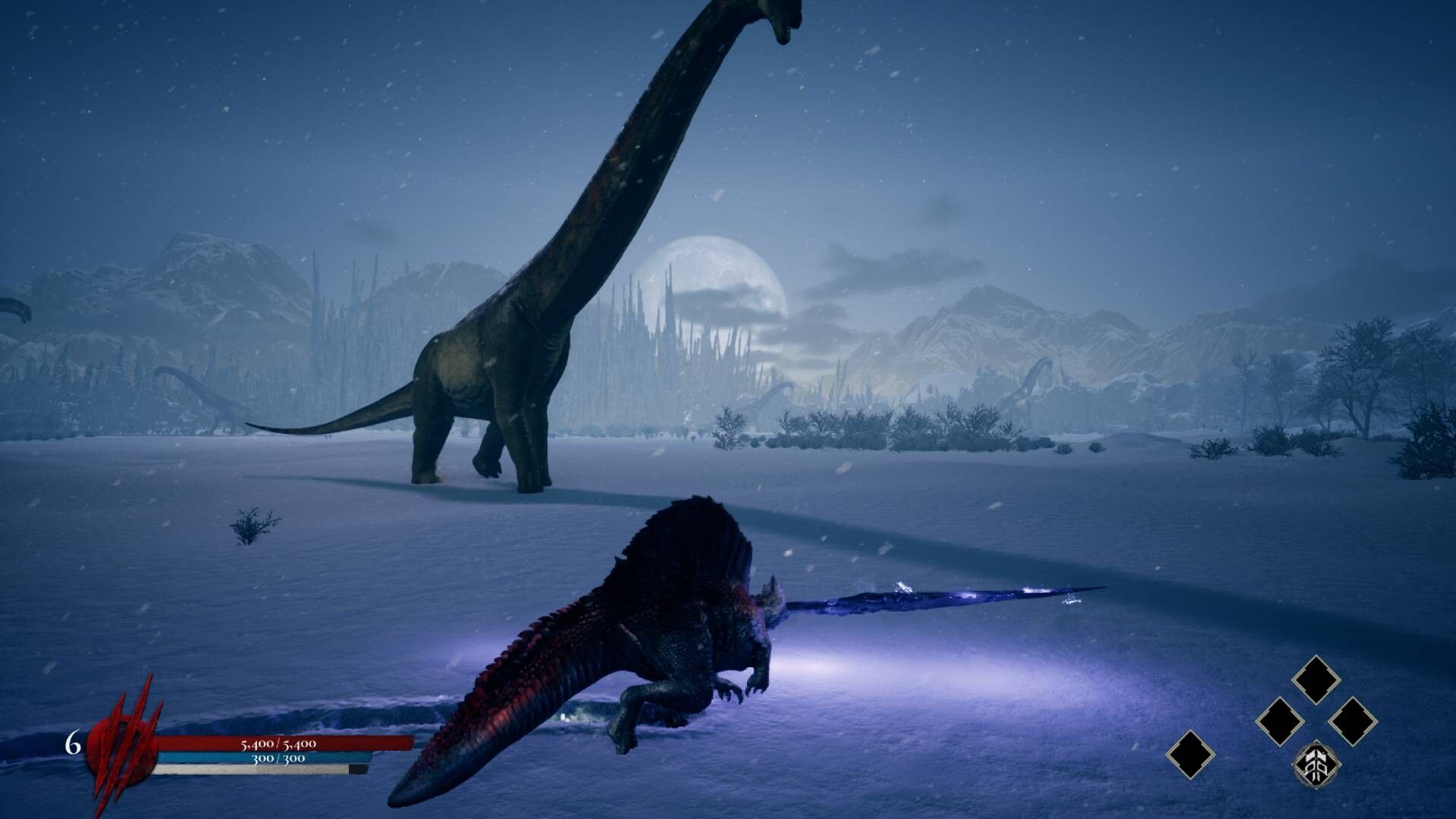
"The developers definitely seemed to know what they had on their hands"
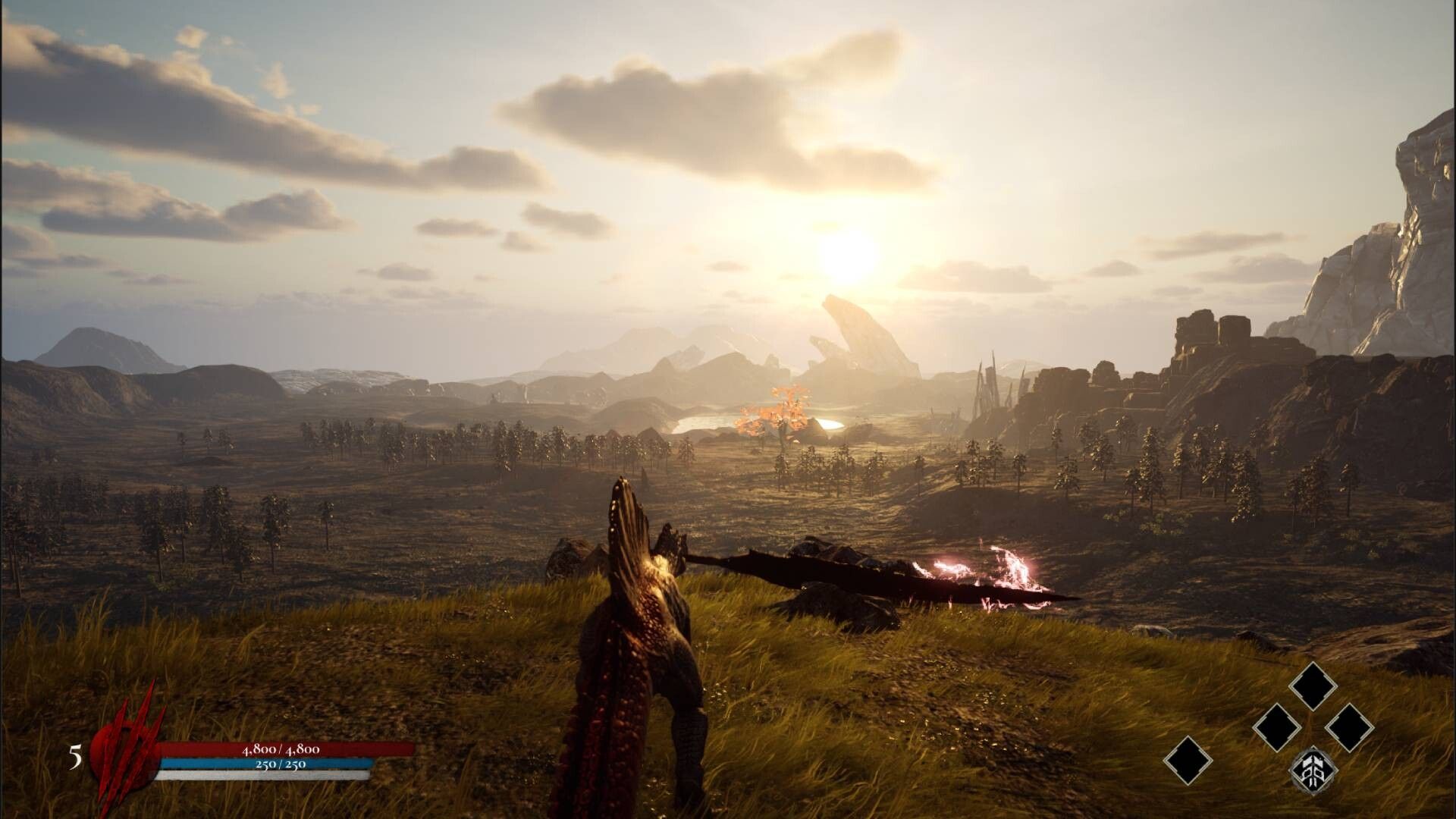
Unfortunately, while the animations are all phenomenal, Dinoblade does suffer from a distinct lack of polish when it comes to the overall visuals. Even in the best of times, the world looks quite muddy and bland, and the level design doesn’t do much to hide these shortcomings either. Sure, there are extra paths to explore that can often reward you with some additional Boss SP or other fun encounters, but much of the game tends to revolve around bland linear paths with a lack of interesting sights and sounds. This also tends to have a negative impact on gameplay since some of the smaller dinosaurs tend to be difficult to spot if you can’t see their blade.
Thankfully, some of the level design woes are alleviated thanks to the abundance of checkpoints, which also means that you won’t be wasting too much time between boss attempts if you happen to die.
Similarly, even the UI looks quite basic, with menu options that often feel like they were meant to be placeholders until better assets were designed. This can even be seen when simply pausing the game doesn’t really provide a colored background for the buttons.
Thankfully, the same lack of polish doesn’t exist when it comes to performance. Playing on a PC with an AMD Ryzen 7 7800X3D CPU, a Radeon RX 7800XT GPU, and 32 GB of RAM meant that I was able to enjoy smooth frame rates of over 100 FPS much of the time, all while keeping the visual settings maxed out and the resolution at 1440p. Dinoblade was also quite stable for me throughout my time with it, with no crashes or notable stuttering, and just one or two visual artifacts that sorted themselves out after a quick reload.
Despite these issues, it’s difficult to deny that Dinoblade is fun. It’s the perfect level of cheesy to ensure that you’ll be smiling throughout, and the music and combat do much to keep the entire experience quite engaging. Sure, it won’t exactly set the world on fire with its simplistic approach to Soulslike combat. Ultimately, however, Dinoblade is plenty of fun, especially if you enjoy fast-paced combat that takes some of its cues from Soulslikes.
This game was reviewed on PC.
Gorgeous anime-inspired animations; Excellent boss encounters; Responsive combat.
Bland environments; Placeholder-looking UI; Underdeveloped narrative.