







EA recently released the newest entry in its UFC series – UFC 6 – and as you can see from our review, we’re certainly fans. However, we were also left wondering about quite a few questions about UFC 6. Thankfully, EA Sports has been kind enough to indulge us by providing details on a variety of subjects, from post-launch support, to console performance targets.
UFC 6 is placing a much bigger emphasis on fighter identity and personal stories this time, especially through The Legacy, Career Mode, and Hall of Legends. What was the core creative goal behind making the experience feel more personal, rather than just building another fight-to-fight sports game?
One of our core ambitions for UFC 6 was to deepen players’ connection to the fighters and the sport. We felt that if we were going to invest heavily in making fighters look, move, and fight more authentically than ever before, we also needed to give players a reason to care about who those fighters are.
That philosophy shaped a lot of the game. We wanted to move beyond simply recreating fights and instead help players understand the journeys, rivalries, challenges, and defining moments that make these athletes special. Every fighter has a story, and UFC 6 is built around bringing those stories to life both inside and outside the Octagon.
That thinking ultimately led to experiences like The Legacy and Hall of Legends, while also influencing how we evolved Career Mode. Whether you’re following Chris Carter’s journey, reliving iconic moments from UFC legends, or building your own path through the UFC, we wanted every fight to feel like it mattered because of the people involved, not just the result.
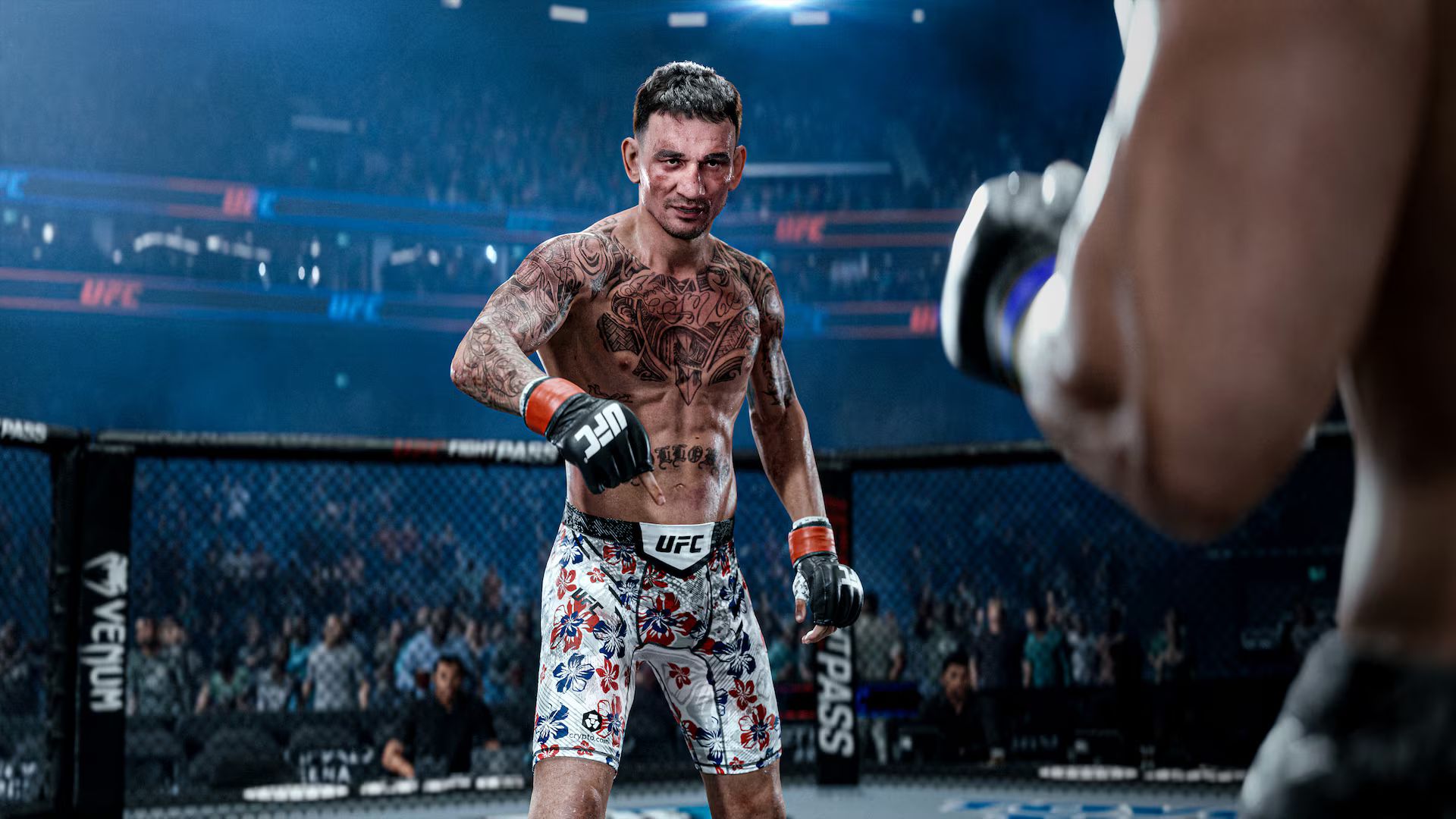
"One of our core ambitions for UFC 6 was to deepen players’ connection to the fighters and the sport."
The Legacy introduces Chris Carter’s journey from the regional MMA scene to the UFC. How does this standalone prologue help onboard players into UFC 6’s systems while also giving them a proper narrative hook before Career Mode begins?
One of the challenges with previous Career Modes was balancing onboarding with long-term progression. New players needed to learn the systems, while returning players often found the mandatory onboarding long and repetitive, especially as it was tied to each new Career run.
The Legacy allowed us to solve both challenges simultaneously. It acts as a narrative-driven prologue that introduces players to the fundamentals of gameplay, training camps, progression systems, and decision-making through the context of Chris Carter’s story.
Because players are emotionally invested in Chris’ journey, the onboarding feels much more natural. Instead of teaching mechanics through isolated tutorials, we teach them through meaningful moments that support the narrative. By the time players reach the UFC, they have learned the core systems organically while also developing a connection to the characters and rivalries that define the story.
Once The Legacy concludes, players transition directly into Chris Carter’s UFC career, carrying their choices and experiences forward into the larger Career Mode experience.
Career Mode has been reworked to get players into the UFC much earlier, with more emphasis on choices, rivalries, social media, training, fitness, and long-term momentum. How much more reactive is this mode compared to UFC 5, and what kind of consequences can player decisions have over the course of a career?
Career Mode is significantly more reactive than it was in UFC 5. One of our major goals was increasing player agency and making decisions feel meaningful.
We overhauled our dialogue and narrative systems, expanded the number of events dramatically, and introduced more situations where player choices create lasting consequences. Decisions can influence finances, training opportunities, relationships, rivalry development, progression paths, and even the types of opportunities that become available later in a career.
Dialogue tree complexity has been considerably expanded, far beyond a single decision leading to new outcome loops, usually triggering a complex set of branching opportunities that are revealed to the player throughout multiple weeks/fights. The back end structure we built targets fans playing multiple career runs: our goal here is to offer a wide array of depth and breadth that makes each run feel different and refreshing, while organically reflecting their actions with much higher accuracy than UFC 5.
We also wanted Hype and Fitness to have a more meaningful impact on player decision-making. Players are constantly balancing short-term gains against long-term goals, and there is rarely a single “correct” answer. The result is a career experience where players feel more ownership over the journey and where different playthroughs can evolve in very different ways.
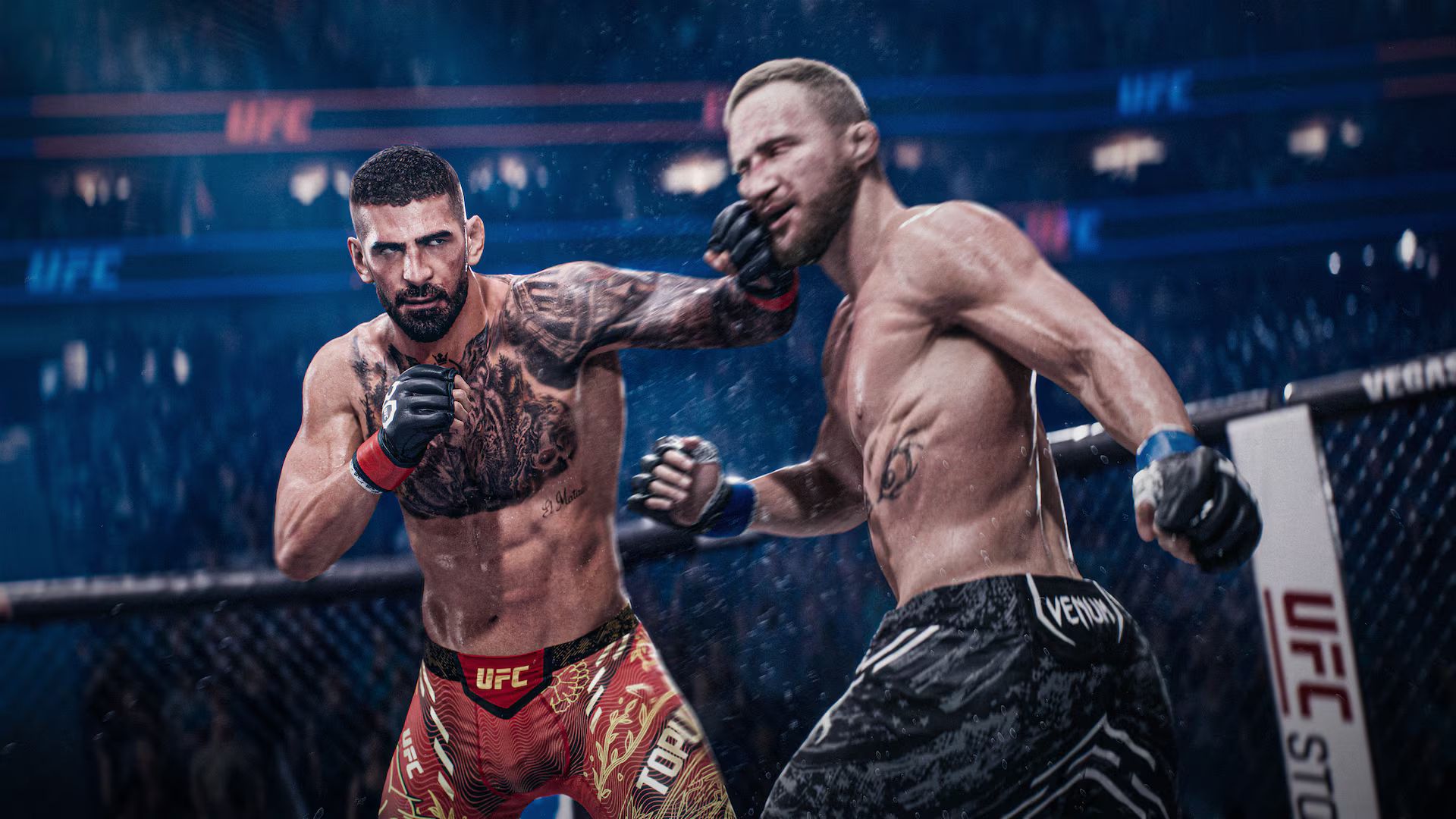
"We also wanted Hype and Fitness to have a more meaningful impact on player decision-making."
UFC 6 reportedly expands the number of story events and dialogue choices significantly over UFC 5. How do these systems change the pacing of Career Mode, and how often should players expect meaningful decisions outside the Octagon to affect what happens inside it?
We expanded our narrative systems considerably in UFC 6 because we wanted decisions outside the Octagon to feel just as important as decisions inside it.
Compared to UFC 5, UFC 6 features significantly more narrative events, dialogue trees, and branching outcomes. Many of these events present players with choices that have meaningful gameplay consequences, whether that’s improving training opportunities, earning additional resources, developing rivalries, or influencing progression.
Our goal wasn’t simply to add more dialogue. We wanted narrative moments to serve as meaningful decision points that shape how players prepare for fights and build their careers. Players should regularly encounter situations where choices made between fights directly impact what happens when the cage door closes.
With training camps, fitness, hype, social media, and fighter condition all playing a bigger role, how does UFC 6 make the out-of-fight life of a UFC athlete feel important without slowing down the overall pace of the career experience?
We spent a lot of time refining that balance. We wanted the life of a UFC athlete to feel authentic and meaningful, but we also didn’t want players buried in menus or administrative tasks.
A big part of that effort was rebuilding our hubs and streamlining systems so players can quickly understand the impact of their choices. Information is presented more clearly, decision-making is more intentional, and actions tend to have more noticeable outcomes.
The result is that players spend less time navigating systems and more time making meaningful decisions. The out-of-fight experience becomes an extension of the overall strategy rather than something that interrupts the action.
Hall of Legends focuses on Max Holloway, Alex Pereira, and Zhang Weili. What made these three fighters the right choices for this mode, and how did the team approach representing their stories, cultures, rivalries, and defining career moments authentically?
Hall of Legends was built around the idea of celebrating the athletes who have helped define modern MMA and giving players a deeper understanding of why their stories resonate with fans around the world. Max Holloway, Alex Pereira, and Zhang Weili were natural choices because each represents a very different path to greatness. Their careers are filled with iconic moments, memorable rivalries, and personal journeys that have left a lasting impact on the sport.
What made the trio especially compelling was the diversity of experiences they brought to the mode. Max’s journey from Hawaii to becoming one of the most beloved champions in UFC history, Alex’s rise from kickboxing superstar to two-division UFC champion, and Zhang’s role in helping elevate MMA on a global stage each gave us unique stories to tell and distinct experiences to build.
Authenticity was a major focus throughout development. We worked closely with UFC archival footage, conducted extensive research, and collaborated with cultural consultants to ensure each Hall reflected the fighter’s background, achievements, and identity in a respectful and meaningful way. The environments, storytelling, and visual themes were all designed to capture the spirit of each athlete and the moments that defined their careers and the videos featured throughout the Halls were curated and edited by our team from hundreds of hours of UFC footage.
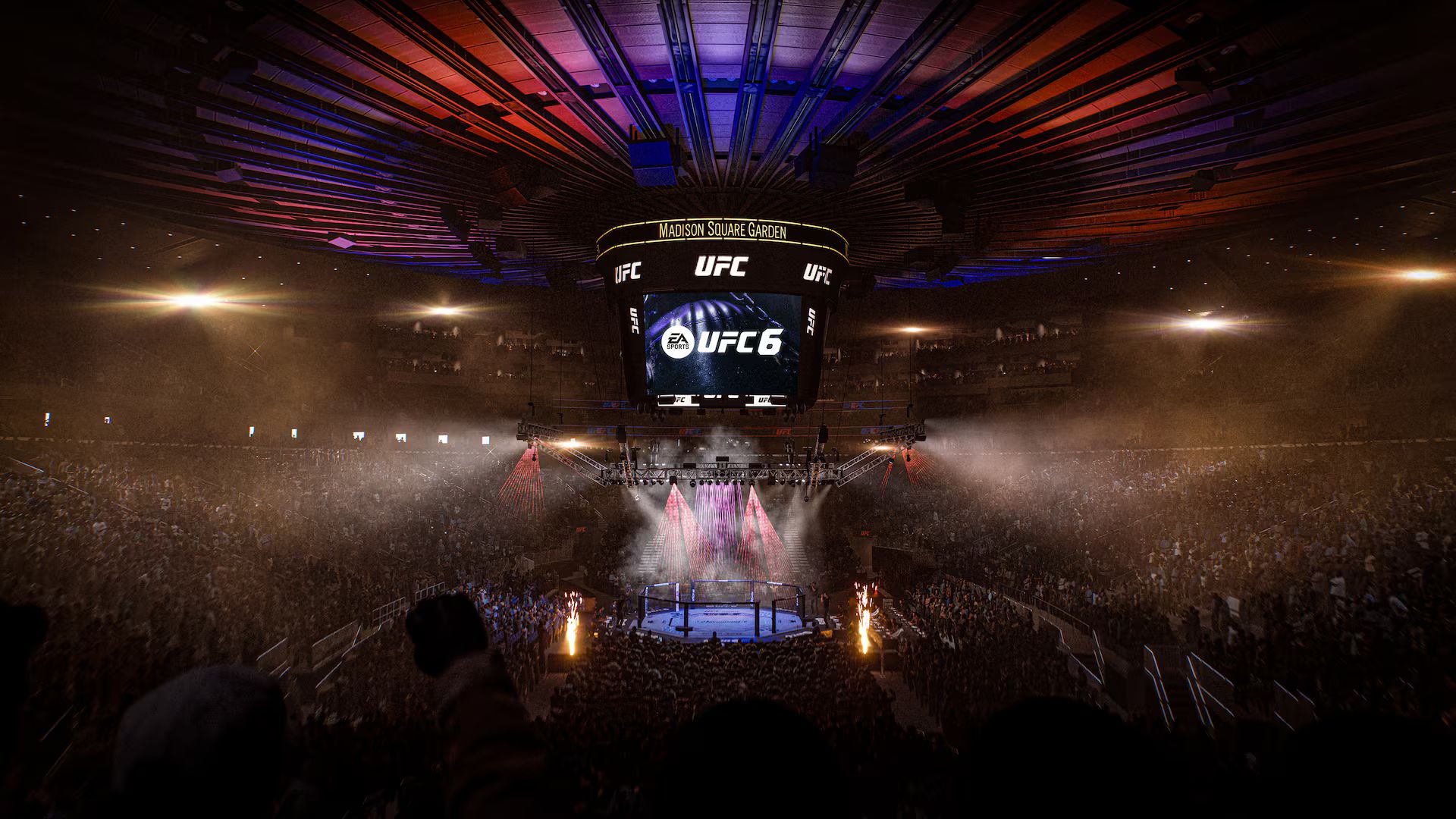
"Authenticity was a major focus throughout development."
Hall of Legends seems to be part museum, part documentary, and part playable challenge mode. How do the interactive fight podiums work, and how much freedom will players have when exploring each fighter’s legacy?
Hall of Legends was designed as an interactive celebration of each fighter’s career, blending exploration, storytelling, and gameplay into a single experience. We wanted players to feel like they were stepping into a living museum where they could discover the moments, rivalries, and achievements that defined these athletes, rather than simply selecting challenges from a menu.
The interactive fight podiums are the centerpiece of that experience. Each podium represents a pivotal fight or career-defining moment. When activated, players transition seamlessly from curated UFC footage and cinematic storytelling into gameplay challenges inspired by what happened in the real event. Our goal was to create a stronger connection between the history of the sport and the gameplay itself, allowing players to experience and feel these iconic moments firsthand.
Player freedom was equally important. Every Hall can be explored at your own pace. You can spend time watching videos, interacting with exhibits, learning about a fighter’s journey and accomplishments, or jump directly into challenges and rewards through the pause menu. Nothing forces a specific path forward. We wanted the experience to feel personal and self-directed, giving players the freedom to engage with each fighter’s legacy in whatever way interests them most.
The new Flow State system is one of UFC 6’s biggest gameplay additions. How did the team balance making each fighter feel more authentic without letting certain Flow State perks become too dominant in competitive play?
The foundation of Flow State is authenticity, not power.
Our goal was never to give fighters arbitrary bonuses. Instead, we wanted to reward players for embracing the styles, tendencies, and strengths that make each athlete unique. The best Max Holloway player should feel different from the best Alex Pereira player because they’re succeeding through the same kinds of approaches that make those fighters effective in real life.
Flow State reinforces those identities by recognizing and rewarding authentic behavior. Whether it’s pressure, precision striking, counter-fighting, volume, or aggression, the system encourages players to lean into what makes a fighter special rather than treating every athlete as a collection of ratings.
From a competitive balance perspective, we were careful to ensure Flow State creates momentum, not inevitability. Entering Flow State can provide meaningful advantages, but players still have to earn those moments through smart decision-making and execution. Just as importantly, opponents have opportunities to recognize, disrupt, and respond to that momentum before it becomes overwhelming.
Ultimately, Flow State adds another layer of strategy while making fighters feel more distinct and authentic. It rewards players for understanding who these athletes are and how they fight, which aligns directly with our broader goal of bringing fighter identity to the forefront of UFC 6.
What kind of post-launch support can players expect after release? Beyond fighter updates, how substantial will the two planned expansions be, and can players expect new modes, Hall of Legends content, gameplay tuning, new fighters, or seasonal live-service updates?
Supporting UFC 6 after launch is a major priority for the team.
Players can expect continued roster updates, gameplay balancing, fighter additions, Fight Week content, challenges, rewards, and ongoing live-service support. We also have two major expansions planned as part of the Expansion Pass.
While we’ll share more details closer to their release, our ambition is for these expansions to deliver meaningful new experiences for players rather than simply incremental updates. We view UFC 6 as a long-term platform and we’re excited to continue supporting the game with new content and experiences throughout its lifecycle.
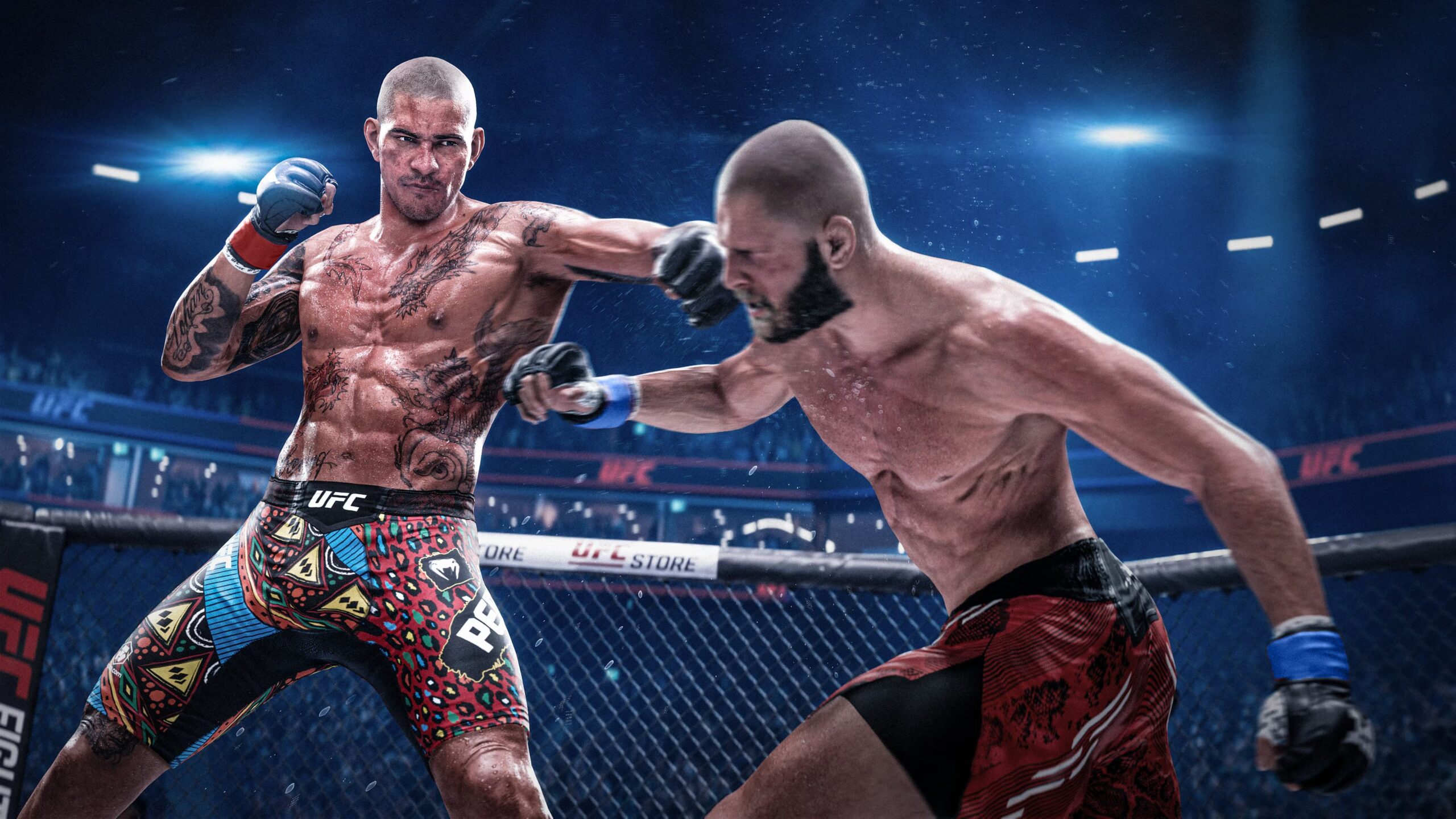
"Supporting UFC 6 after launch is a major priority for the team."
On the technical side, what are the target resolutions and frame rates for UFC 6 on PS5, PS5 Pro, Xbox Series X, and Xbox Series S? Will each platform have separate Quality and Performance modes, or is the game targeting one unified visual/performance profile?
In general, we offer a single preset, handcrafted to guarantee the desired balance between performance and level of fidelity. This translates into different techniques and target resolutions across the supported consoles.
Diving more into specifics, here is a full breakdown:
Cinematics (30 fps)
- PS5, PS5 Pro, Xbox Series X: TAA 4K DRS [1800p-2160p]
- Xbox Series S: TAA 1080p DRS [900p-1080p]
Gameplay (60 fps)
- PS5: FSR3 Native + DRS [1080p-1800p]->1800p + bilinear upsample from 1800p to 2160p. Typical internal resolution 1200p
- Xbox Series X: FSR3 Native + DRS [1080p-1800p]->1800p + bilinear upsample from 1800p to 2160p. Typical internal resolution 1300p
- PS5 Pro: Upgraded PSSR Native + DRS [1200p-2160p]->2160p. Typical internal resolution 1600p
- Xbox Series S: FSR3 Native + DRS [600p-1080p]->1080p. Typical internal resolution 720p
Front End Main Menu (30 fps) Ray-Traced Direct Illumination enabled
- PS5: FSR3 Native + DRS [1080p-1800p]->1800p + bilinear upsample from 1800p to 2160p. Typical internal resolution 1200p
- Xbox Series X: FSR3 Native + DRS [1080p-1800p]->1800p + bilinear upsample from 1800p to 2160p. Typical internal resolution 1300p
- PS5 Pro: Upgraded PSSR version Native + DRS [1200p-2160p]->2160p. Typical internal resolution 1600p
- Xbox Series S: Ray-Traced Direct Illumination disabled, TAA 1080p DRS [900p-1080p]
Our intent is to target a unified visual/performance profile on all the platforms.
Will UFC 6 support PS5 Pro-specific enhancements at launch? If yes, is the game using PSSR or Enhanced PSSR, and what improvements should players expect in image quality, internal resolution, anti-aliasing, crowd detail, hair rendering, sweat, skin, cloth simulation, or replay quality?
Yes, specifically:
- Latest version of PSSR instead of FSR3, providing reduced aliasing and ghosting.
- Higher internal and target resolutions, increasing overall image clarity.
- Improved shadow maps filtering, providing improved shadows and reduced jaggies.
Ray-Traced Ambient Occlusion (RTAO) is fully supported during gameplay and replays, making the overall scene feel more grounded by using scene wide information (vs screen space on other platforms which would present disocclusion artifacts), being able to capture finer details, small cavities and precise objects contact.
For PS5 Pro, is the goal to deliver a higher-resolution 60 FPS experience, a cleaner 4K output via PSSR, improved visual settings over base PS5, or any 120 Hz/high-frame-rate option for supported displays?
The main goal for PS5 Pro on UFC 6 is to deliver a higher-resolution 60fps experience, cleaner 4K output via the latest PSSR version, and improved visual settings over base PS5.
On Xbox Series X, what is the target resolution and frame rate compared to PS5 and PS5 Pro? Are there any platform-specific differences in visual settings, loading, crowd density, physics quality, replay frame rate, or animation fidelity?
Xbox Series X is at parity with PS5, but runs slightly faster and is able to typically push a higher internal resolution than PS5 (1300p vs 1200p).
PS5 Pro is able to push higher internal resolution, higher fidelity settings, AI upsampler and even raytraced effects within the same frame budget.