







After Gears of War: Reloaded and Microsoft Flight Simulator 2024 planted their flags in PlayStation territory, Halo remained steadfast as Xbox’s last bastion of exclusivity to cross the divide. That was until Halo: Campaign Evolved emerged late last year, a ground-up remake of Master Chief’s seminal debut primed for Sony’s home console. And, at the time, this felt like the culminating first wave of Microsoft’s multi-platform ‘Project Latitude’ strategy. The expectation was, now the walls were well and truly down, that platform exclusivity will become increasingly rare, and that Microsoft’s ‘Play Anywhere’ mantra really did mean anywhere.
Fast-forward three months and Xbox’s new CEO Asha Sharma draws a new battleline; a cultural reset beckons as she hinted Microsoft plans were to reel its exclusives back into their own ecosystem, all while renewing commitment to Xbox players. As we’d find out later, for unannounced titles this was basically the death knell, but for games already expected – Halo: Campaign Evolved included – well, the cat was already out of the bag. Microsoft don’t plan to walk this one back, appeasing many a PS5 owner. See, Master Chief on PlayStation is historically significant, whichever way you look at it. The face of Xbox, who helped establish the platform’s legitimacy, soon-to-be playable on its fiercest rival.
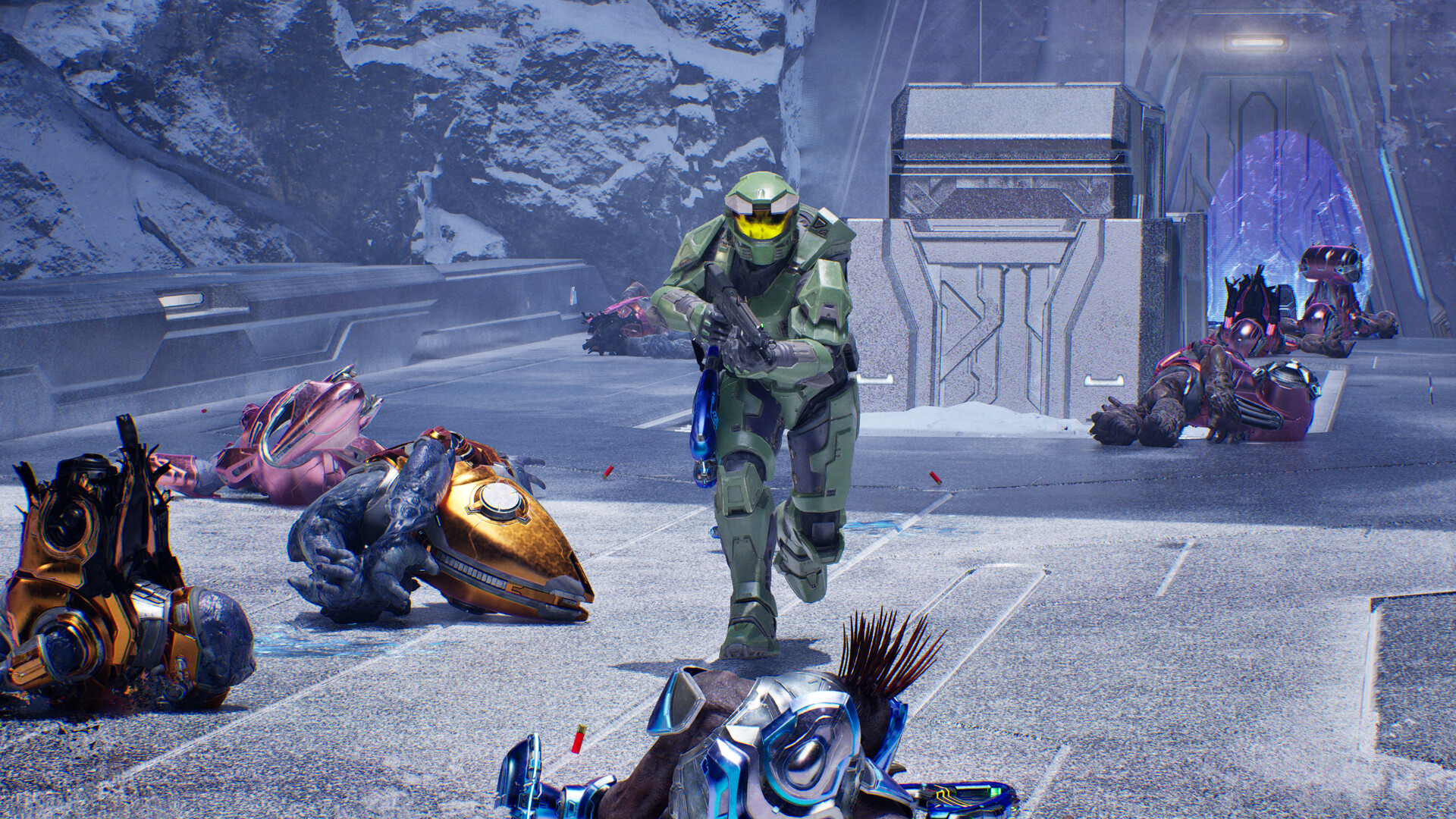
"The expectation was, now the walls were well and truly down, that platform exclusivity will become increasingly rare, and that Microsoft’s ‘Play Anywhere’ mantra really did mean anywhere."
Indeed, even Halo Studios themselves described the remake as “Halo for everyone”, with the team seemingly proud to introduce the iconic series to new players. Future titles and remakes were inferred, although the studio stopped short of confirming if these would be multi-platform too. Still, it was reasonable at the time to interpret Halo: Campaign Evolved as the first step in Master Chief’s multi-platform future.
By June’s Xbox Games Showcase, Sharma’s declaration from earlier in the year bore fruit as Microsoft explicitly characterised Gears of War: E-Day and Clockwork Revolution as Xbox console exclusives. There’d be no timed arrangements; the promise of renewing commitment to Xbox players was coming home.
Yet, this commitment has not been without its sacrifice. Less than a month after the Xbox Games Showcase, Microsoft began brutally downscaling its Xbox division, with first-party studios behind DOOM: The Dark Ages and Avowed, plus unreleased titles Senua, and State of Decay 3 affected. Studios like Double Fine were returned to independent ownership, with Avowed developer Obsidian losing a quarter of its workforce and cancelling Avowed’s not-officially announced sequel. They’ve confirmed work on a new Fallout, however, which should see the light of day given Sharma’s comments following the mass layoffs: “None of our first party publicly announced games or projects are being cancelled as part of these reductions.” Hopefully this statement remains the case.
To put it mildly, this is a difficult time for game developers. Yet Xbox still plans to double down on exclusive games while exploring avenues for growth throughout its ecosystem. The hope is this year-long restructuring, where 20% of the division’s workforce is being let go, is the sledgehammer needed to steady the ship. Once the dust settles, it seems Microsoft plans to add even more exclusive titles to its platforms. We don’t have any confirmation yet as to which games this plan includes – Obsidian’s upcoming Fallout game? The next Elder Scrolls? What about those future Halo titles Halo Studios previously said were for everyone?
"Microsoft began brutally downscaling its Xbox division, with first-party studios behind DOOM: The Dark Ages and Avowed"
Less than a year ago, Microsoft was pushing their games into as many hands as possible – other platform players included. Now, CEO Sharma is pursuing ecosystem growth. Xbox’s aim is to give you an unmissable reason to buy their hardware. Yet, given the memory crisis currently strangleholding RAM production, buying consoles is going to become exorbitantly expensive. Now, of course, this isn’t a problem exclusive to Microsoft. Sony arguably has the larger bank of platform-exclusive sellers despite the waning goodwill of its PS4 era in response to lengthy development times and the future eradication of physical releases.
But, say Xbox continues to release Halo on PlayStation beyond Campaign Evolved, what would Microsoft be evaluating to arrive at that decision? Well, unit sales and revenue, for one, but the number of new Halo players, cross-platform co-op participation, and whether PS5 sales cannibalises Xbox’s sales too. Performing well on PS5 might convince Microsoft that the series is too valuable to restrict to its own ecosystem, but conversely, it could demonstrate that Xbox needs a series like Halo to push exclusivity on its own platforms.
What could happen is what is expected to occur through Minecraft-developer Mojang’s reshaped relationship with Xbox. In short: fun, exclusive integrations between Minecraft and Xbox consoles, with Microsoft possibly leveraging Minecraft’s popularity to market their next console. Halo, could follow suit, whereby Microsoft doesn’t remove the titles from other platforms entirely, but adds exclusive benefits to you if you play the game on Xbox.
Either way, Halo: Campaign Evolved is a safe property in which to experiment. It’s a remake of a twenty-five year old game, yes, but one with a cultural impact significant enough to occupy the peripheral vision of any console gamer whether they’ve played the original title or not. What could the result of this experiment be? Well, the game, in all likelihood, will sell well, creating the possibility that PlayStation’s positive Halo reception will be weaponised for its continuation on Xbox and PC. In a nutshell: PS5 players might be hungry for more, but Xbox will be the place they’ll need to go to get it.
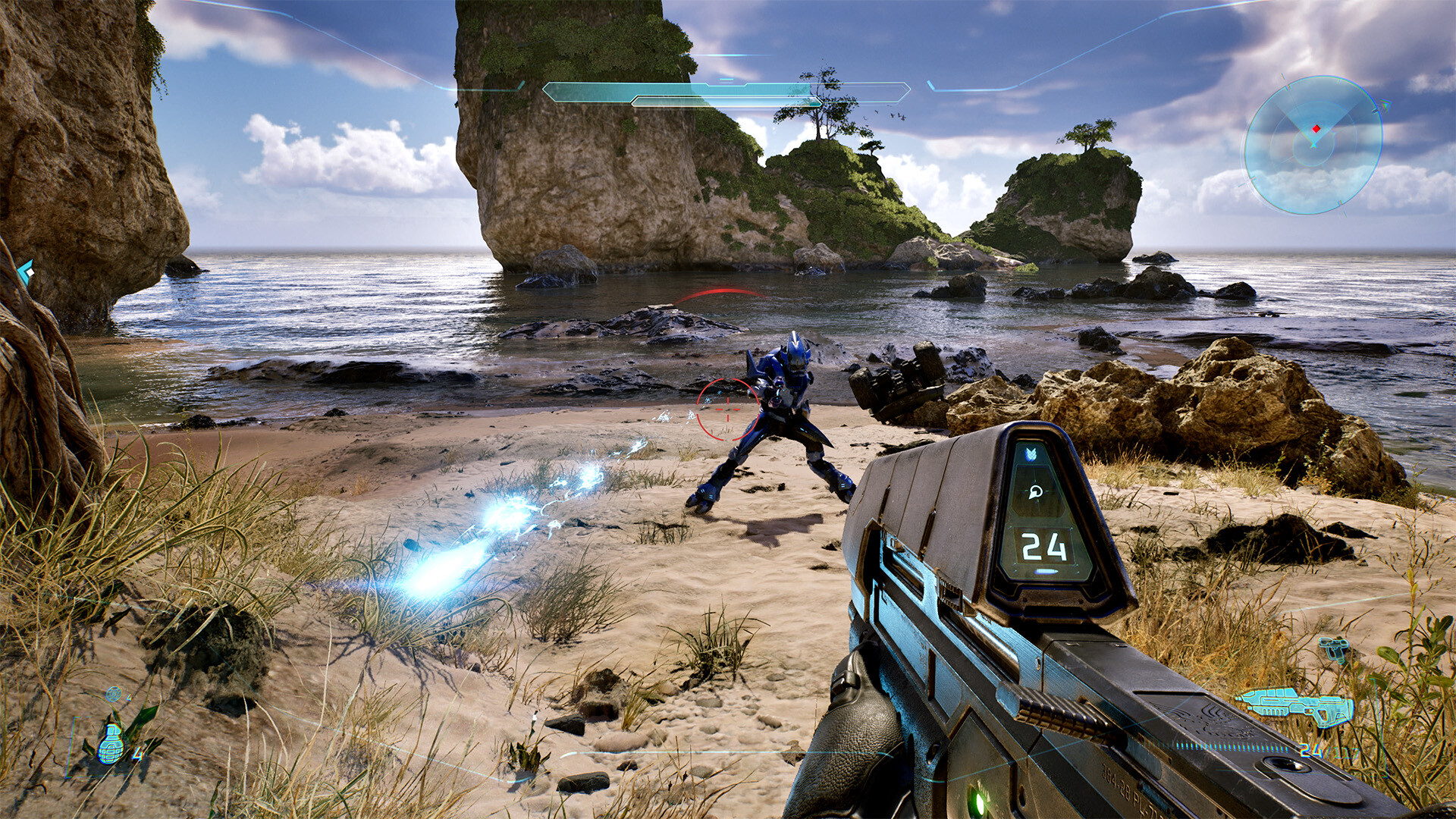
"Either way, Halo: Campaign Evolved is a safe property in which to experiment."
But. there’s another potential outcome here too: long-term timed exclusives becoming standardised. Starfield, for instance, spent two-and-a-half years as an exclusive, although there is debate as to how influential Bethesda’s space-faring adventure would be to Microsoft’s strategic U-turn had it been one-hundred percent exclusive. Forza Horizon 5 is another example, coming some four years after initial release to PlayStation, and purportedly selling well enough to greenlight Forza Horizon 6 on the platform, albeit six months down the line. The question for Halo on PS5 is this: would a four year exclusivity layover convince enough players to jump ship to Xbox, or does Microsoft need to develop numerous platform exclusive titles. Remember, Xbox plans to double down on exclusives to foster ecosystem growth, and it seems likely Halo will be a part of this strategy. But if there was a lengthy exclusivity period, with other core features such as Campaign Evolved’s notably absent multiplayer component never coming to platforms outside of Microsoft, then the chances of PS5 players also buying into Microsoft increases. Yet, of course, Campaign Evolved could remain a genuine one-off, but given the complexity of Microsoft’s restructuring, that outcome appears too basic.
The reality is Xbox is still stuck between being a platform holder and a publisher. They want the revenue of selling to PlayStation’s audience, but they need to bring back some identity to their hardware. Whilst this feature mentions other properties – Gears of War, Minecraft – Halo is arguably the company’s most evocative series, and thus its most potent exclusive.
If you’re a PlayStation player, you need to hedge your expectations. Whilst the future is not clear cut, any presumption that every Halo title following Campaign Evolved needs to be tempered with caution. Yes, Halo arriving on PS5 is an extraordinary moment, but given Xbox’s planned resurgence – driven by renewed emphasis on platform exclusivity – it seems likely that Halo: Campaign Evolved will be the first, and only, Halo title ever to cross the divide.
Note: The views expressed in this article are those of the author and do not necessarily represent the views of, and should not be attributed to, GamingBolt as an organization.