






When a game has been in development for years, there’s invariably a set of expectations that comes with it. When it’s a sequel to Hollow Knight, one of the best games ever made, and originally started as DLC before becoming a full game, those expectations probably skyrocket into unreasonable territory. Following up on everything that made the original so good while striking out and standing tall as its own entity is something that Hollow Knight: Silksong inevitably had to struggle with, to say nothing of the non-stop memes, Silksanity, and years of begging and pleading for any news.
After a little less than 20 hours to reach the credits, the question, “Is Hollow Knight: Silksong worth it?” has become “Is it worth it for [insert your name here]?” There won’t be universal agreement. Nearly everyone will ask if it justifies the seven-year development period, regardless of the $19.99 price tag. Such is the price of hype and waiting, maniacally, for something that fans came to love so dearly.
But was it worth it for me? Yes. One thousand six hundred and ninety-three times, yes. Even with the ever-present friction and teetering on the edge of frustration and curiosity towards mastery.
"The fast-paced violins upon entering Pharloom for the first time; the calm despondence and depression of Bone Bottom, coming alive courtesy of the piano; the vocals and orchestration during the major boss fight in the Deep Docks – everything is simply world-class."
Hollow Knight: Silksong follows Hornet, taken from Hallownest to a mysterious land and kingdom called Pharloom by an unknown troop. After recovering enough of her strength and making it to Bone Bottom, she learns of the Citadel and the climb that Pharloom’s residents make to reach it. Thus begins her journey for answers, including the curse that’s seemingly haunting the kingdom. And while there is an ample amount of mystery, this is a relentless hunt above all else.
Having a protagonist who converses with the various NPCs is already a huge change, but much of its success lies with Hornet’s character. She’s chivalrous and polite, sometimes taking a gentle but firm hand when conversing with citizens about Pharloom’s troubles. However, she can also be blunt and downright threatening when she’s not outright smacking fools who get too close. Even speaking nothing but bug language, there’s a natural charisma to her which draws others to her side.
And thankfully, she’s not the only one. Between Shakra, who murders enemies as effectively as she crafts maps; Garmond and Zaza, a clear nod to Don Quixote; and even the various residents, each character is brimming with charm, their demeanor cleverly belying their complex motives. This extends to the enemies and bosses as well, even if they’re lacking in dialogue.
Traversing the length, breadth and depths of Pharloom highlights the strengths of Team Cherry’s stellar presentation direction. In terms of pure artistry, Hollow Knight: Silksong is simply breathtaking. Everything is hand-drawn and full of detail, from the quiet lights and ominous backgrounds of Greymoor to the Citadel’s grandiose architecture, with gorgeous animations. There are so many little touches – a repaired bench slightly sagging when Hornet sits on it, the sole source of light while resting in a facility buzzing with clockwork contraptions and literally buzzsaws, enemy corpses getting skewered on spikes – that it’s difficult not to stop and admire everything. Even admittedly drearier locations like the Blasted Steps delight in things like sand piling up on bodies and deteriorating structures.
There’s also the music, composed once again by Christopher Larkin. The fast-paced violins upon entering Pharloom for the first time; the calm despondence and depression of Bone Bottom, coming alive courtesy of the piano; the vocals and orchestration during the major boss fight in the Deep Docks – everything is simply world-class. My personal favorites are the clockwork-themed songs, and I imagine they’ll be yours as well. Sound design is also top-notch – footsteps changing depending on the surface is but one of many points of praise.
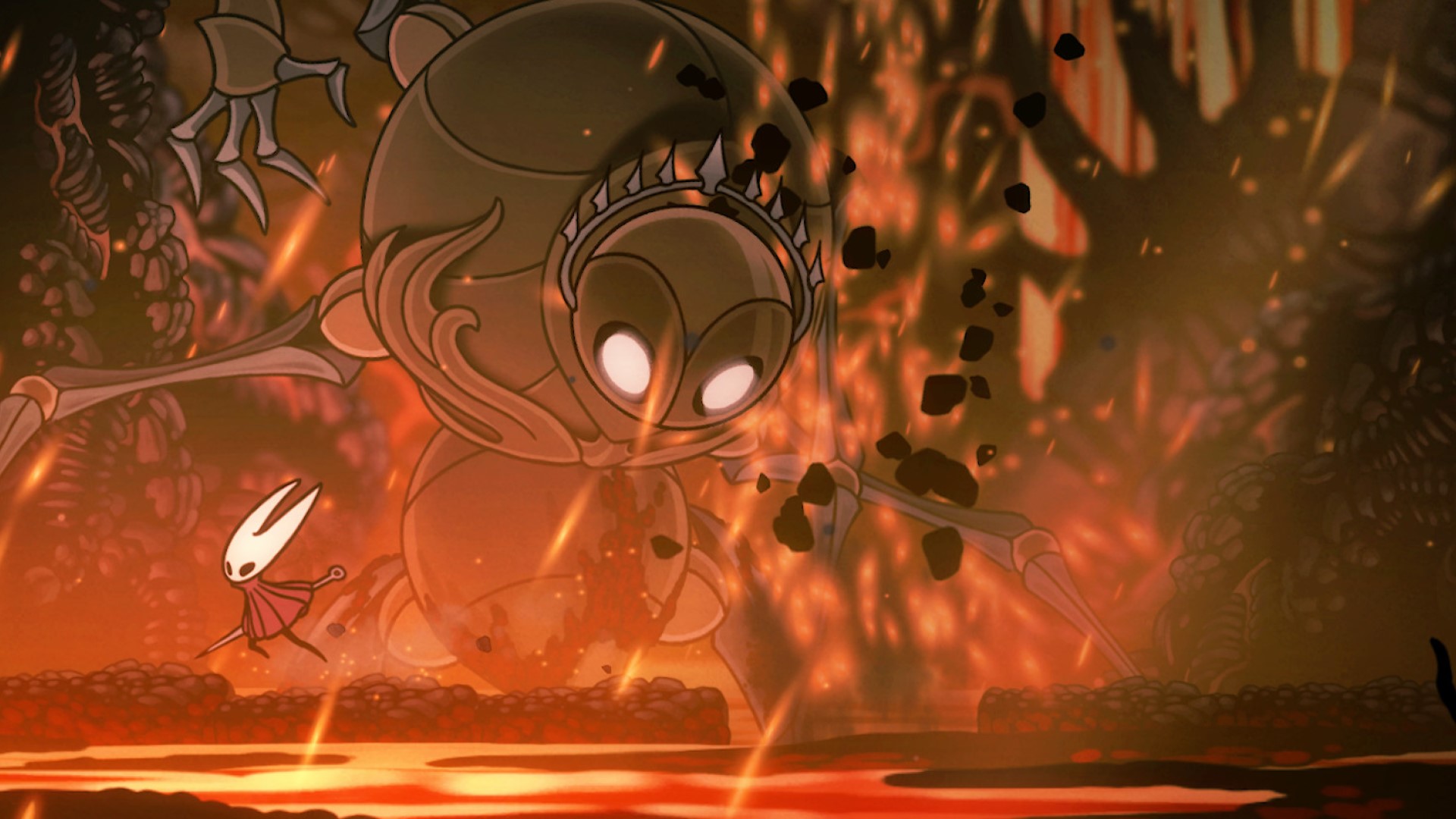
"The more nuanced enemy design means that it won’t always be the most straightforward option, especially as more threats with shields and parries become available. But adapting to Hornet’s fast-paced combat style is one of the more rewarding elements of Silksong."
Of course, these environments are more than just beautiful backdrops, rife with enemies and incredible tunes. Platforming and really feeling out your surroundings, solving puzzles, delving into hidden pathways, and even some minigames are also important, but Silksong makes it look so effortless. Each area flows into another seamlessly. It’s akin to exploring an actual living world rather than transitioning from one collection of rooms to another. All of this ties into the lore as well – the vibe of the Underworks serving as a stark contrast to the beauty of the Citadel is but one example. But more importantly, even without an area’s map, I never felt lost or confused about where to go next (the odd backtracking to a familiar place or two notwithstanding). Having activities like Straight Pin throwing to nail a flying target for prizes or a simple game of dice is also nice.
Speaking of backtracking, it’s a core component of the genre, and Team Cherry knows it. While it may initially seem imposing, even with fast travel becoming available, abilities like Swift Step increase the tempo significantly, coinciding with larger swathes of the world opening up at the same time. Returning to locations and crossing numerous enemies feels absolutely seamless with Hornet’s ability to sprint, which is a good thing since you’ll fulfil different requests called Wishes, like hunting beasts and collecting items.
Hornet is generally fantastic to control, brimming with mobility options that the Knight could only dream of. While the usual assortment of genre abilities is here, including wall-jumping and double-jumping, the trademark downward slash is more of a diagonal plunge this time. It obviously takes some getting used to, especially when judging the distance to enemies (sometimes stopping short and taking damage as a result). Master it, however, and you’ll sail over enemies, maybe getting behind them to deliver another strike, or executing another dive to recreate the pogo-ing of Hollow Knight.
The more nuanced enemy design means that it won’t always be the most straightforward option, especially as more threats with shields and parries become available. But adapting to Hornet’s fast-paced combat style is one of the more rewarding elements of Silksong. Transitioning from a dashing strike into a mid-air attack, then a downward dive to vault over a target, feels good, even if one of the most valuable abilities – grappling with the Needle – doesn’t become available until much later. It’s perhaps the biggest game changer when it comes to dealing with flying threats and feeds into her high-tempo combat that much better.
If you’re not a fan of the new downward slash, don’t worry. Crests and Tools replace the Charms from the first game, with the former altering Hornet’s moveset. You can have a more traditional downward slash akin to Hollow Knight, complete with striking enemies to obtain additional Silk, and an even quicker version of the same, albeit with shorter range. Each Crest has different sockets for your Tools, so if you fancy exploration, the Crest of the Wanderer is ideal since it can equip more yellow Tools like the Compass and anklets that increase your sprinting speed.
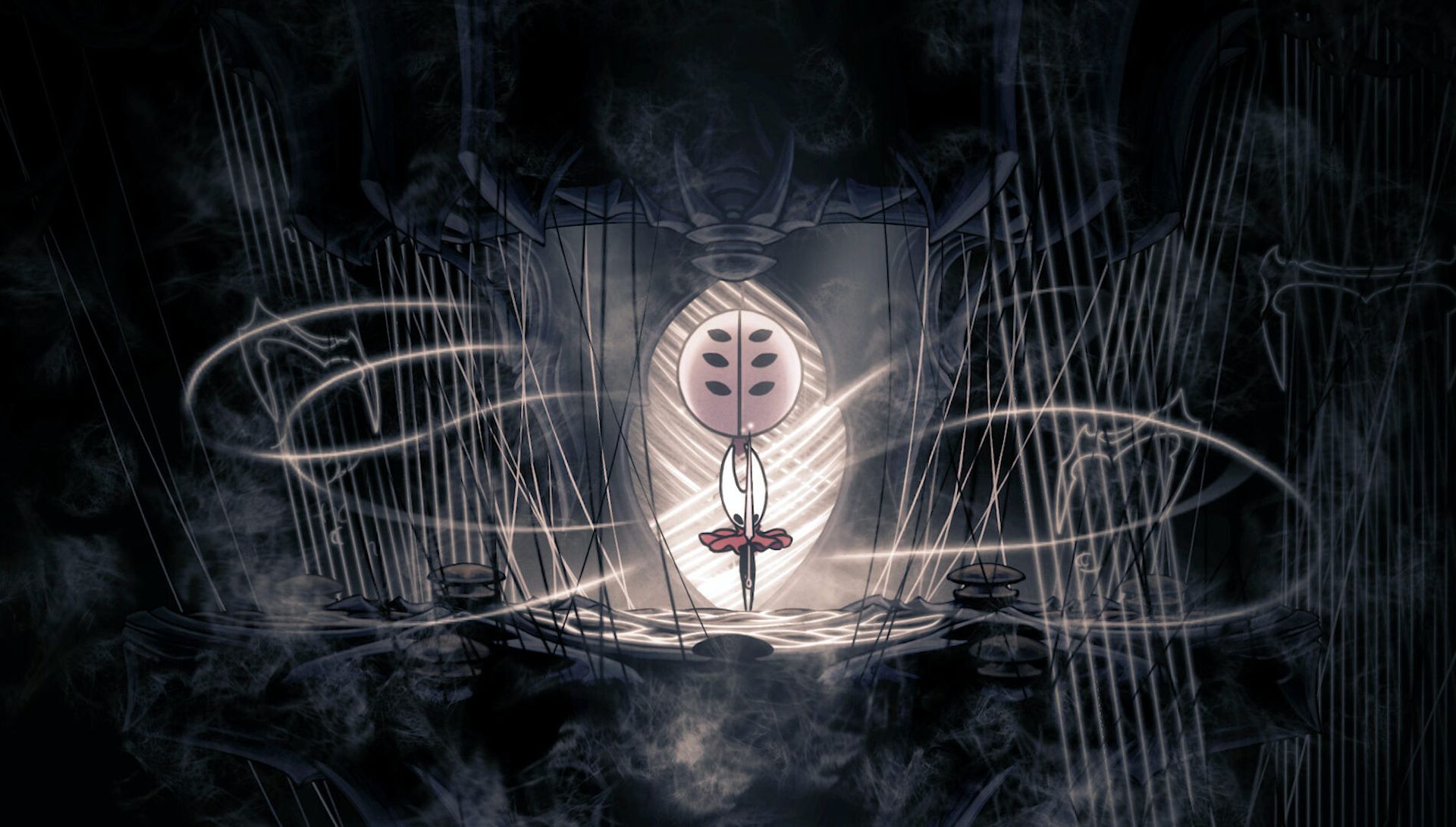
"It can be rough, but I felt that the higher skill floor and ceiling for Hornet was invigorating. Positioning and knowing when to Bind is key, but performing all kinds of aerial maneuvers, flipping onto walls before jumping back to continue the assault, and so on, felt great."
The Tools themselves are consumables, each with a set number of uses before requiring Shards to repair. Thus far, I’m really enjoying the variety – throwing out Straight Pins and harpoon-like Longpins may sound dull initially, but soon, you’ll be setting buzzsaws on the ground, throwing out Sting Shards that expand to hit multiple times, and even dealing damage to enemies on Binding. I haven’t gotten into some of the truly crazy options, like turning Hornet into a downward drill or summoning little automaton bugs that will attack enemies, but they’re on the agenda.
Which brings us to one of the most contentious points: the difficulty. Make no mistake – Silksong is more challenging than Hollow Knight. Some of the bigger enemies and environmental hazards can deal two health points of damage just by coming into contact with Hornet, and since you only have five health points, this makes for a more stressful experience. Enemies who only deal one health point of contact damage also have attacks that hit multiple times, and if you’re unlucky, it can be very easy to die. Combine this with non-Shard currency used to purchase Tools and other items dropping at the location of your death, runbacks can be quite harrowing.
Hornet is capable of Binding to heal three health points when she has enough Silk and can perform this in mid-air. But enemies can interrupt the process, resulting in all that Silk lost. Even if they don’t, the same amount of Silk is consumed to heal three HP as one. Do you hang onto it until you’re down to one HP instead of three to maximize the efficiency? Or do you heal those missing two points, knowing that touching an enemy and taking one of their attacks will be the end? The fact that health upgrades aren’t raining from the sky also doesn’t help.
It can be rough, but I felt that the higher skill floor and ceiling for Hornet was invigorating. Positioning and knowing when to Bind is key, but performing all kinds of aerial maneuvers, flipping onto walls before jumping back to continue the assault, and so on, felt great. Sure, I was frustrated with some enemies, but obtaining new skills and integrating them into my arsenal to effectively trivialize them made the wait worth it.
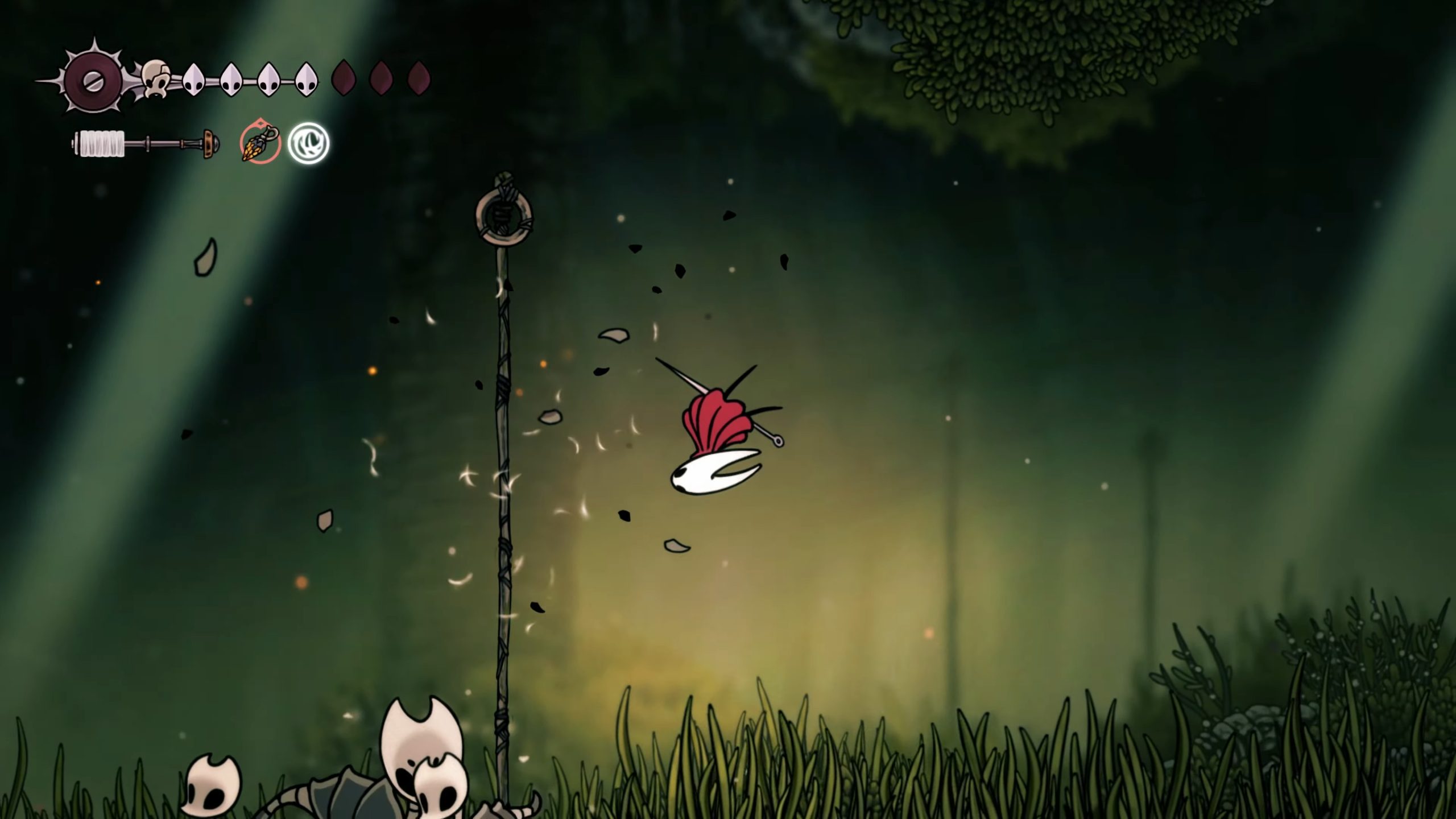
"Regardless, even if you finish the story in record time, there’s still so much left to discover. I want to find more enemies and fill the journal with Hornet’s thoughts about them. I want to explore locations like Mount Fay, just to figure out what’s going on."
Subsequent Tools, including protection while Binding and quicker Binding speed, also helped more often than not. Of course, I didn’t appreciate suddenly being ambushed by a large foe in a narrow corridor, who proceeded to hit me right smack into a spinning blade, cutting off four points of health immediately and delivering death. I want to say such instances are few and far between, but they’re not, and map knowledge, combined with Tools and quick reflexes, is sometimes the only way to survive (and even then, just barely).
The bosses may prove frustrating for some, since almost every one of their attacks can deal two HP of damage. But there’s no denying that they’re fantastic fights, with complex movesets that required quick thinking and readjustment as much as pattern memorization. I won’t get into spoilers, but past the initial bosses, who are more for tutorial purposes, every single boss brings something unique to the table, perhaps encouraging you to change things up.
Perhaps the only downside is that few drop any upgrades or rewards. Not that I wasn’t obtaining currency and items at a pretty healthy clip, but I wouldn’t mind if some Tools were moved over as free drops, especially since it shouldn’t really disrupt the lore.
While there is a main story path to follow, Silksong offers abject freedom. If you possess the requisite ability/key or figure out how to pogo on enemies properly, then great. That also applies to optional bosses like Skarrgard, who can be tackled or skipped entirely. I thought it was a means of teaching the value behind the new downward slash, and proceeded to trounce him with it. I later learned that you’re supposed to pick up Swift Step in a later area and then come back to challenge him. Oops.
Regardless, even if you finish the story in record time, there’s still so much left to discover. I want to find more enemies and fill the journal with Hornet’s thoughts about them. I want to explore locations like Mount Fay, just to figure out what’s going on. I want to smack more walls and unearth hidden locations, venture into potential deathtraps for that one conspicuous area, unlock more Tools and Crests to try out different playstyles.
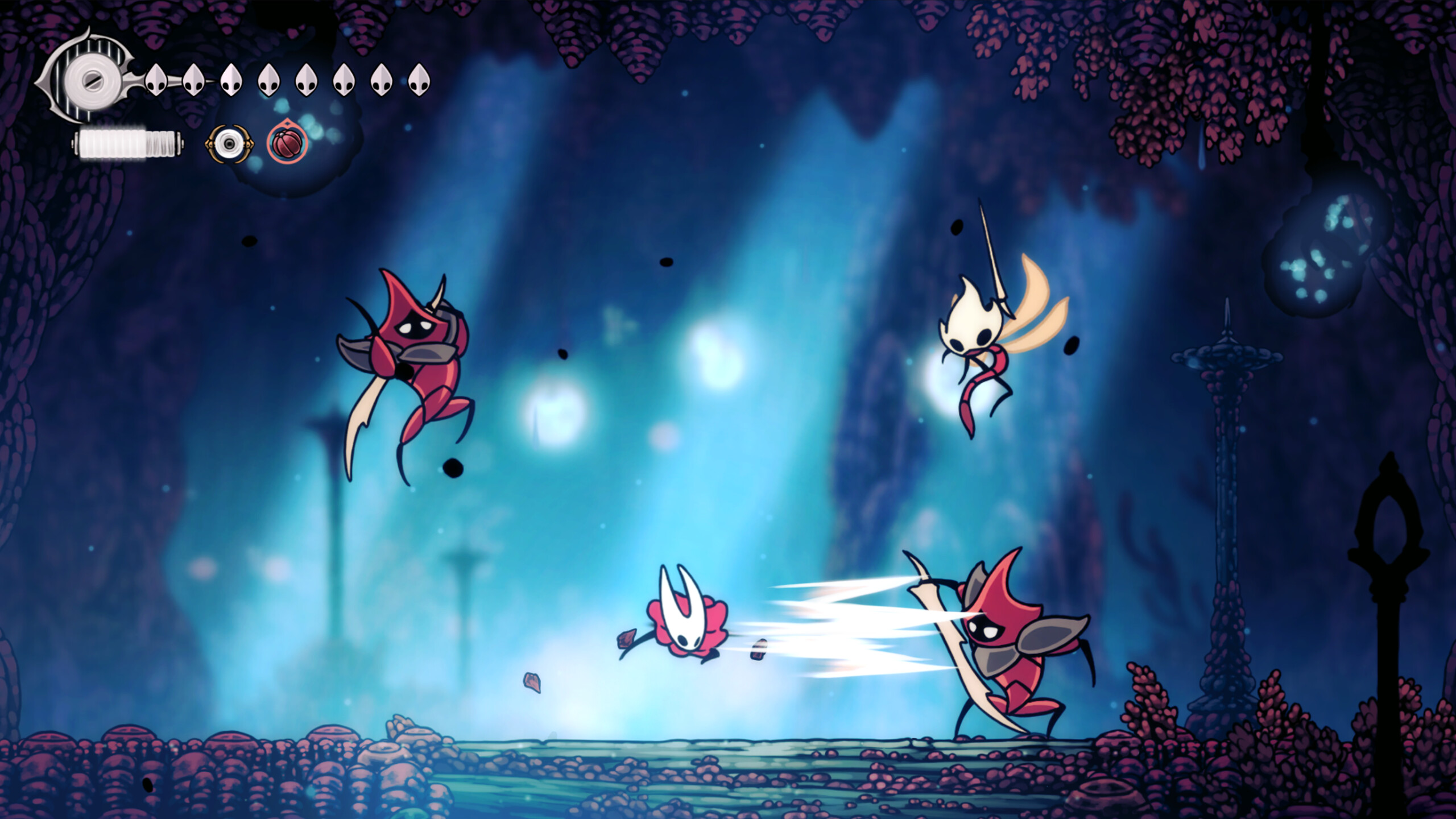
"Yes, some things annoy me (which may be outright deal breakers for other players), and I wouldn’t mind a few changes here and there. However, as it stands, Hollow Knight: Silksong is simply sublime."
I want to spend more time with the denizens of Pharloom, whether it’s playing the Needolin for my favorite impromptu singer, obtaining more maps and conversing more with Shakra, finding more Fleas for the Caravan or venturing forth to hunt more beasts. I don’t think I fought even half of the 40+ bosses in the entire game, and I’m eager to see what the rest have to offer.
Silksong has been my obsession over the past few days, and despite all the frustration culminating in satisfying victories, all the hours not tracked in-game of trying and retrying to beat certain bosses, I can’t wait to get back to it. My only worry is that I’ll eventually finish everything and have to move on (or attempt a Steel Soul run for some permadeath shenanigans).
Yes, some things annoy me (which may be outright deal breakers for other players), and I wouldn’t mind a few changes here and there. However, as it stands, Hollow Knight: Silksong is simply sublime. It’s the culmination of passion, meticulous design, and stunning presentation that aims for something beyond a simple sequel, expanding on the atmosphere and exploration while delivering higher tempo movement and more creative combat expression. I can’t say if it will influence other titles for years to come or prompt wistful remembrance. In this moment, just like its predecessor, Silksong weaves its many excellently crafted parts together into a fantastic experience.
This game was reviewed on PC.
Gorgeous artwork, animations and environments, from the lovable character designs to the incredible attention to detail. Incredible flow between locations, with each feeling distinct and offering unique enemies. Fantastic boss fights that constantly push the player. Hornet feels great to control and combat is expanded significantly thanks to new Tools and Crests. Stunning soundtrack and a staggering sense of scale. Stands on its own while channeling everything that made Hollow Knight so great.
Frustrations can arise from the sheer number of regular enemies that deal two HP of damage. Some bosses could stand to offer rewards.