




In a world where even good games can sometimes not get the recognition they deserve, it can become very easy for even true greatness to fade into obscurity once players move on to a new, fancy title that catches their attention. From that perspective, Silent Hill’s aggressive return to the modern spotlight in recent years is a story that stands out.
It was once synonymous with horror in gaming, being a pillar of the genre within the medium with innovative ideas, well-written stories, insightful interpretations of complex themes, and of course, gameplay that had you on edge for a significant part of your playtime. But that rise to glory had been balanced out by a fall from grace marked by inconsistent releases, cancelled projects, and a loss of the creative identity that set its games apart in the first place.
But all that’s in the distant past, and a more recent appraisal of the franchise’s fortunes, beginning with that excellent remake of Silent Hill 2, paints the story of a comeback worth examining as we look at a busy, and potentially bright, future for the franchise.
How has it shaped that turnaround? What has Konami done differently this time around to warrant its newfound success? We asked the same questions, and we’re happy to tell you more about what we found along the way. Let’s begin!
Back To The Beginning
Silent Hill’s newfound glory is better understood through the lens of what it has managed to achieve in the past, and the decisions that led it there. It’s important to remember how the first four titles in the franchise created an identity distinct from Resident Evil, another strong presence in the horror space at the time.
Where human greed and its consequences guided the stories in Raccoon City and its surroundings, Silent Hill took a more psychological approach, diving deep into human depravity and how it could manifest in the worlds the franchise’s protagonists found themselves in.
Every title brought an atmosphere so oppressive it became a frightening presence in and of itself, while the excellent use of each soundstage, subtle symbolism, and very insightful storytelling were once hallmarks of the franchise. Silent Hill 2 became a benchmark thanks to how well all of these elements came together to make it a title that didn’t really have anything to compare it against at the time.
But all of these positive traits would have meant nothing in games that didn’t manage to keep their players invested in what was unfolding in front of them. And while the franchise’s early lineup didn’t need to worry about such concerns, the same can’t be said for the ones that followed.
A Frightening Lack of Direction
Silent Hill: Origins is probably a good game to examine what caused the franchise to lose much of the momentum it had built through its earlier successes. The prequel was quite good as a Silent Hill title, but you could already see that it lacked the inspiration and insight that made its predecessors as famous as they were.
It was still a moody, atmospheric return to the titular town, but it lacked the subtlety of the franchise’s other entries, a facet that often made it feel like a lore drop rather than a full-fledged story that took the franchise in an interesting new direction. Homecoming felt largely the same, although it did bring technical improvements like a controllable camera and some excellent visual upgrades to the franchise’s formula.
But Alex’s search for his brother began to feel like the franchise’s ability to innovate was beginning to run out of steam despite a fairly strong offering from Double Helix after it took over from Climax Studios, which handled Origins.
Climax Studios would return with Shattered Memories, a radical reimagining of the original Silent Hill that drew praise for its bold ideas but rather shaky presentation, with the weaponless chase sequences not feeling as potent as they could have been thanks to the game distinguishing between safety and danger too strongly.
Vatra Games’ effort with Downpour was a similarly flawed experience, drawing both praise and criticism alike, and bringing an important aspect of the situation to the forefront. Despite each title’s individual strengths, it was clear that the Silent Hill franchise was lacking direction and focus, and different interpretations of its best features weren’t necessarily making the most of them all.
But does that mean the franchise had already lost its potency and potential? We’d argue that that was hardly the case.
The Comeback That Never Was
There was still P.T. in the mix, and it came out of nowhere to revive hope in a franchise that could have been easy to write off as past its prime. Hideo Kojima, Guillermo del Toro, and what was slated to eventually become Silent Hills.
Not only did it revive interest in the franchise, but the potential from such a collaboration of great minds could also blend very well with a formula that was already proven to work when it was targeted at things beyond the ordinary. A detail that becomes significant as we move a little later down the line.
But for now, we return to the cancellation of Silent Hills, and the loss of a potentially exciting future for the franchise at the time. It would mark the beginning of a long period of dormancy, one that would see the franchise’s reputation survive only through its community and word of the heights that it was once capable of. It also marked an era where the competition continued to delve into psychological horror, a territory that the franchise once had firmly in its grasp, and perhaps even helped define.
The vehicle for the franchise now felt like it had been abandoned along the side of the road it once helped pave, blazing a path that other titles were now speeding along. But Konami didn’t give up on a franchise that was as great as this one, and the next few years might already be familiar to you, but merit a close look to understand why the new bevy of Silent Hill games have succeeded where others have not.
Regaining Its Form And Footing
2022 marked the beginning of a new chapter for the franchise, although there was no way of knowing about all the great memories it was going to give us at the time. We didn’t get news of just one game from Konami, but were told about the remake of Silent Hill 2 from Bloober Team, two new games, and a new movie!
Producer Motoi Okamoto would later explain that Konami never really intended to “test the waters” with one remake before committing to the franchise again, but was rather choosing to bet big on it right from the get-go. However, the intent behind the move doesn’t negate the valid skepticism that surrounded the announcement given the franchise’s history with external studios working on Silent Hill games.
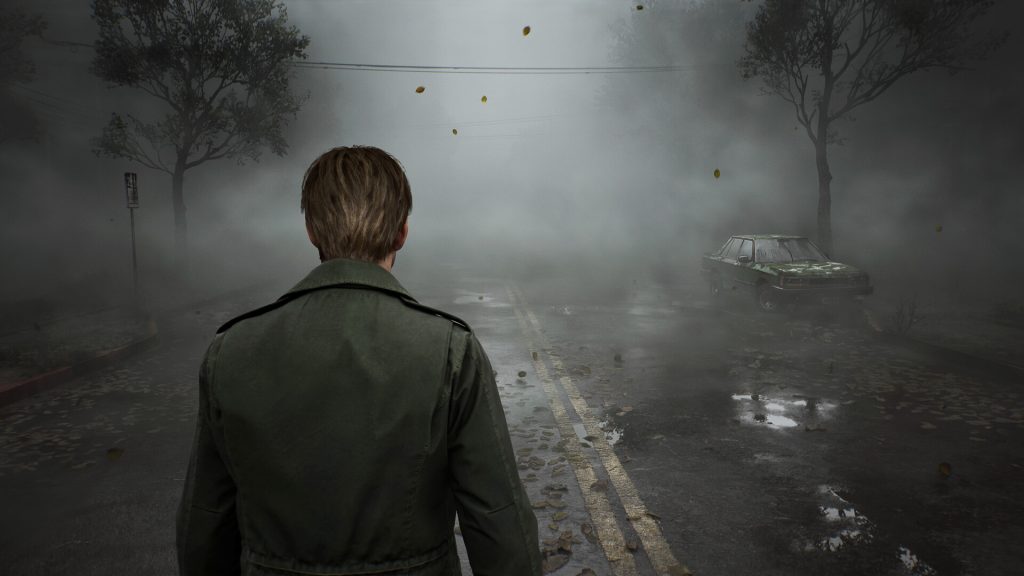
That Silent Hill 2 was the game being remade was a big enough reason, given how much reverence it has garnered from fans over the years. Bloober had its task cut out for it, having to modernize the classic without sacrificing any of its original appeal. But the remake didn’t just manage to impress its critics, but also generated revenues that were impressive.
Five million cumulative players over combined sales metrics isn’t a joke after all, and is perhaps the best example of how the franchise regained its relevance in the current generation of games. Of course, the remake’s success could not dispel apprehensions about the game that followed it.
Silent Hill f was bringing several departures to Hinako’s story that could have, and perhaps even did, put off a few hardcore fans before they actually got to play it. It was based in Japan, in an entirely new location for starters, with combat mechanics that looked like they were putting too much of an emphasis on action instead of the franchise’s horror-focused roots.
And yet, what we got was a game that was quintessentially Silent Hill, packaged in a new world, premise, and story that helped sell everything that was great about the franchise so well, it made 1960s Japan feel like a natural new home for the experience it aimed for.
Hinako’s deeply personal story, her harrowing confrontations with her own inner demons, and the way all of it resolved was nothing short of extraordinary, and perhaps the best reflection of what the franchise was capable of when it fired on all cylinders back in the day. Konami was quick to point out that it was the first new Silent Hill game in a dozen years, and it reaching a million sales in two days is a showcase of the franchise’s unfading allure over the years. Townfall’s our next stop on this examination of the franchise’s current fortunes, and it marks an exciting new chapter for it.
A More Modern Silent Hill
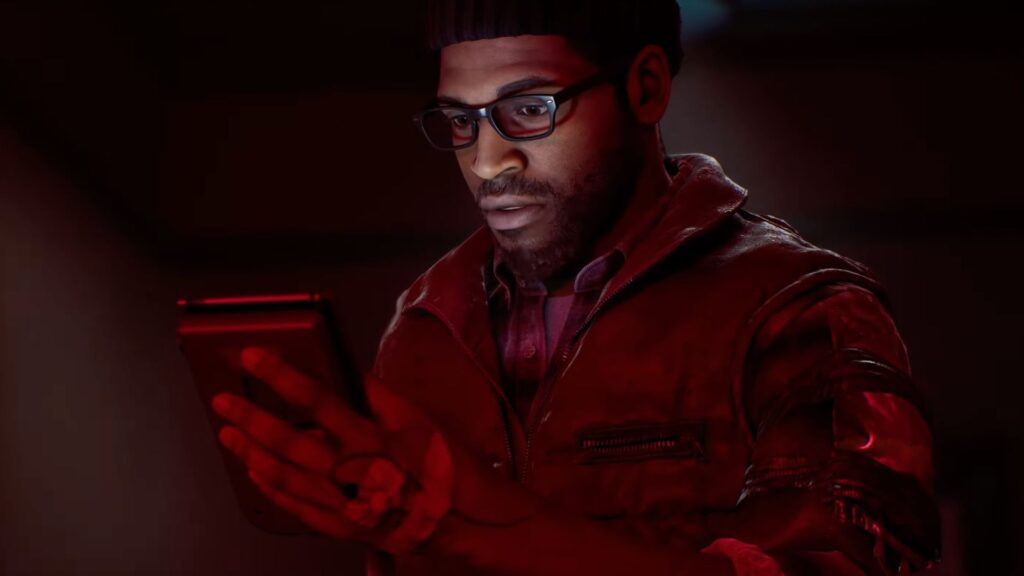
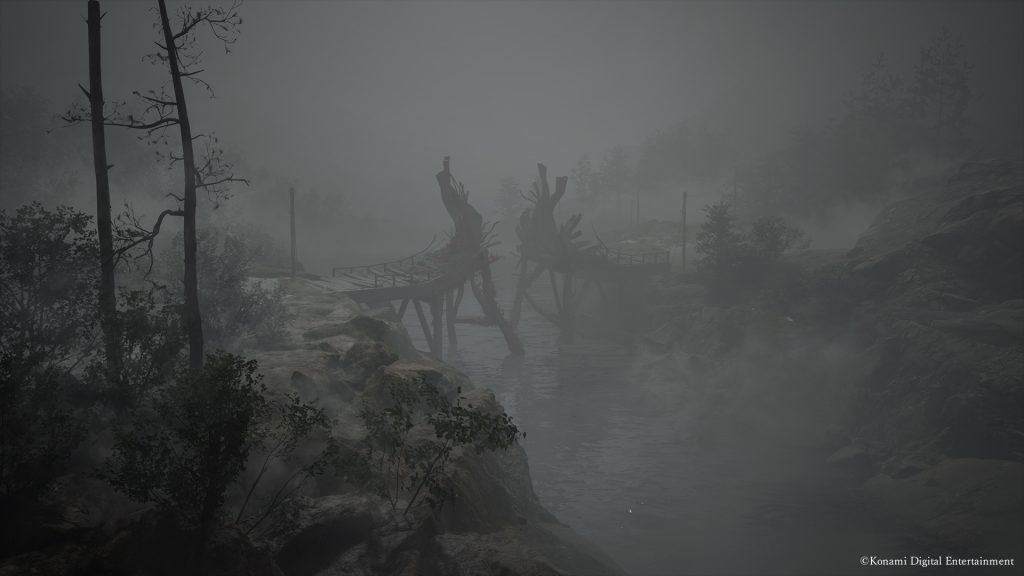
If you think about it, Townfall is the third piece of a revival trilogy that showcases what has worked well for Silent Hill this time around. The first-person perspective was a welcome touch in an experience that used it well to bring a new location, art style, and narrative angle to life.
We didn’t expect examinations of the relationships between individuals, corporations, and societies in small towns to be effective vehicles for the kind of story beats that the franchise is used to telling, but Simon’s time in St. Amelia is definitely among the finer outings it has given us.
Okamoto’s assertion that it was intended to bring yet another axis to the franchise after the remake’s traditional approach and the new Japan-focused title showcases a revival that isn’t relying on a standardized formula, but on creating thoughtful interpretations of what the franchise has always examined, through the lenses of different creative teams.
With SH2 Remake, Bloober Team was able to successfully preserve those examinations while presenting them in a modernized classic. Silent Hill f took things to a new setting, story, and very unique art style to prove that it could be fresh yet familiar. Townfall has now reiterated that, while also proving that new external studios can radically reinterpret its formula while preserving its best elements and psychological horror foundations.
That variety is perhaps the best feature of Silent Hill’s current-gen revival, and it’s great that Konami isn’t asking every developer to deliver another SH2, but is instead asking them what the franchise means to their particular teams and creative perspectives. That’s probably the biggest difference between the franchise’s less successful years and now, as it has found success today despite some common factors.
Various developers working on different titles is an obvious one, as are the varying interpretations of the franchise’s story and gameplay loop. However, one crucial difference is that three successive titles could not give us a sense of deliberate strategy, and the feeling that each new game was building on the ideas before it.
However, diversity and a sense of forward momentum have felt like they’ve been baked into the underlying pillars of the latest titles, and it’s an irony that isn’t lost on us. Silent Hill has rediscovered its identity by accepting that it doesn’t have to be one specific thing, and operate within a limited framework of creative and technical options because of it.
A Long Road Ahead
It’s all well and good that the franchise has found a solid enough purchase in a modern gaming industry where even great games might not get the recognition they deserve from time to time. But how does Konami aim to sustain the momentum it has built for it?
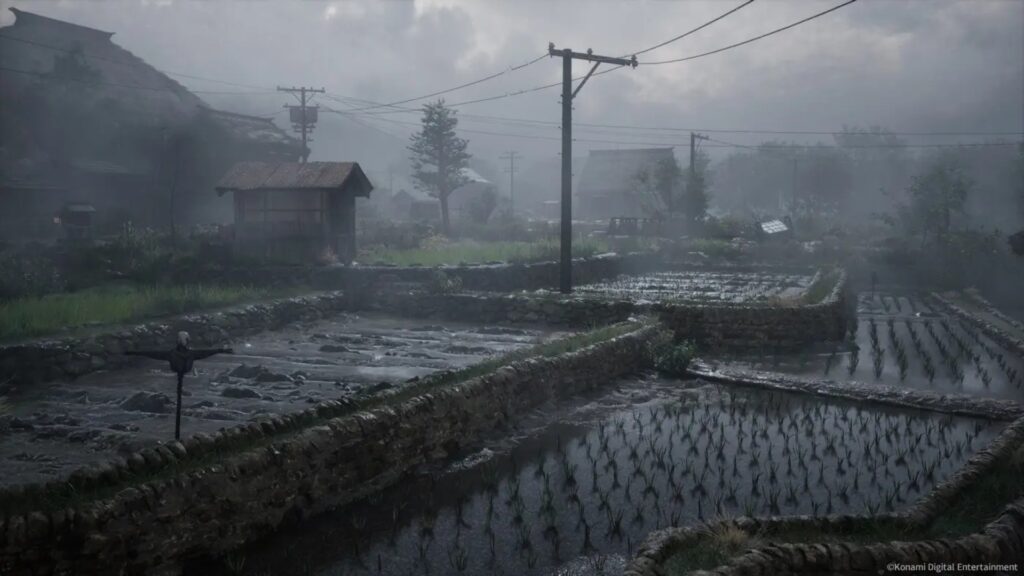
We think the news is good, or at least a reason to be optimistic about the franchise’s chances. The remake of the original Silent Hill from Bloober is on the cards, and we see no reason to doubt that studio’s outing after the excellence it has displayed with its previous effort and with Cronos: The New Dawn. It’s a solid next step, and perhaps indicative of a newfound confidence.
Modernizing Harry Mason’s journey while rebuilding the 1999 game to make for a new experience that doesn’t just feel like SH2 Remake again. We’ve no information on how combat and exploration are changing yet, or about whether Bloober plans to expand the town, but we cannot understate the significance of making the original game that started the franchise’s journey more accessible to a modern audience.
Konami’s ambitions for the franchise might have seemed surprisingly aggressive to us when it first announced its plans for the franchise four years ago, but with Okamoto expressing hope for an “annual release of new games”, and that players should look forward to future experiences that take the franchise’s formula in bold new directions, it’s easy to see that it certainly has high hopes for its continued success.
The company has since stated it aims to go beyond the confirmed remake and Townfall too, which means we’ve got more Silent Hill on the horizon. But what would it entail? Remakes of Silent Hill 3 & 4 are definitely options to look into, considering how those games mark the franchise’s golden years and have been benchmarks against which the ones that followed them were judged.
But there’s the risk of bringing in too much Silent Hill to a franchise whose greatest problem was not having enough of it at one point. Once again, the irony is evident, but that doesn’t mitigate the risk of an ambitious release cadence diluting Konami’s ability to quality-control releases well enough for them to sustain the standards its recent titles have now created.
This is a franchise that relies heavily on its atmospheric storytelling and gameplay to bring distinctive creative voices and narrative insights to life through the eyes of its characters. A yearly release cycle could make things a tad too predictable, a fallacy that has often brought problems to even the finest of stories and innovative series of games.
Silent Hill’s exciting revival could become the very reason it loses steam if it doesn’t manage to meet the standards that its latest titles have now established as its baseline. However, this is a franchise that has already weathered one rise and fall, rising again and managing to stand tall in the process.
Its return isn’t as remarkable to us in hindsight, though. It’s in how it achieved the comeback that fascinates us, and also gives us confidence that whatever’s coming next is going to cement that revival by making clever use of new ideas grounded in the franchise’s familiar penchant for weaving in the unexpected into the very fabric of its games. There’s been no doubt in our minds that Silent Hill is back after our time with Hinako, and Simon has now made us confident that it’s here to stay for a while yet.
And we can’t help but feel a thrill even as we tremble at the thought of what horrors it’s going to bring our way when it does.