





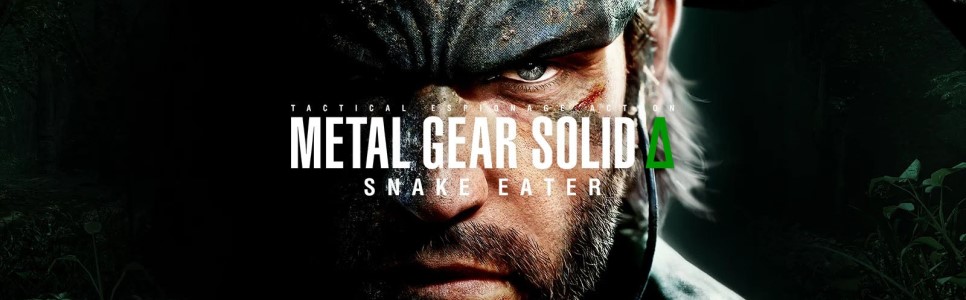
The Metal Gear series has been in limbo for almost ten years, ever since The Phantom Pain released back in 2015 (and no, we don’t count 2018’s Survive, which was Metal Gear in name only). Konami’s famous fallout with Kojima, the man behind the saga, and the company’s poor reputation among gamers meant the series had to be kept on ice until the team figured out how to take it forward. For many, Metal Gear was dead. But then something happened.
In 2024, Konami, in collaboration with Bloober Team, delivered one of the greatest remakes of all time with Silent Hill 2. Earlier this year saw the release of the much-anticipated Suikoden I & II Remastered. This gave fans and newcomers alike hope that Metal Gear Solid Delta: Snake Eater would see a similar outcome.
However, unlike Silent Hill 2, which was a drastic remake in the vein of Resident Evil 2, Delta plays it safe, keeping most of the content faithful to the original while adding plenty of quality of life changes. Konami has been clear about this ever since they announced the game two years ago, and to be fair, I wouldn’t have had it any other way. With only a few of the original Metal Gear developers still at Konami, doing something drastic, like making MGS3 an open world game with sloppy ideas (something I would have been curious but nervous to see), could have buried the franchise for good.
"Make no mistake, Delta: Snake Eater is an absolutely gorgeous game to look at."
And despite some shortcomings and areas where I would have liked to see improvements, Delta: Snake Eater is an excellent remake with enough updates and polish to feel like a love letter to fans.
Snake Eater is the true origin of the series, the very starting point of the long and often complex Metal Gear saga. Players step into the role of Jack, codename Naked Snake, who is sent deep into the Soviet Union by the newly formed FOX unit under the command of Major Zero with the objective of rescuing Sokolov, the scientist developing the deadly Shagohod weapon, before his work can be completed.
Among Kojima’s works, MGS3 is often considered the peak of his storytelling, standing alongside Sons of Liberty as one of the finest narratives in the series. The game asks difficult questions about loyalty, enemies, and the shifting nature of truth, and it delivers answers that resonate with equal power. Konami has not made any alterations to the story in Delta, yet the plot retains all of its impact more than two decades later. I had played Snake Eater many times on the PlayStation 2 and thought I knew every detail, yet experiencing it through Delta everything felt new, almost as if I was encountering it all for the first time. While nostalgia certainly played a part, even without that lens the story remains so powerful that I know I will find myself replaying it several times in the weeks to come, made all the more compelling by the breathtaking production values that elevate every moment.
Make no mistake, Delta: Snake Eater is an absolutely gorgeous game to look at. The cutscenes have been recreated one to one with the original, yet the improvements in lighting and art direction make them stunning to watch. Unlike the 2004 release, the characters now animate and react in a far more realistic manner, the English voiceovers are properly synced with lip movements, and everything from the atmosphere to the way light filters through the environments has been implemented with remarkable care. Graphical upgrades are to be expected when reimagining a twenty year old title, but Konami has gone above and beyond, delivering visuals that feel modern without losing the original’s identity.
The music and majority of the voice acting have been carried over directly from the original, and while ideally these should have been re-recorded, the performances from 2004 were already of a very high standard. By applying a higher bitrate in Delta, Konami has managed to make the audio stand out more clearly, giving it a renewed sense of presence.
Taken together, the production values are impressive across the board. I did notice occasional slowdown on the PS5 Pro, which offered no graphical modes that I could find, but considering how demanding Unreal Engine 5 has been this generation, I was overall satisfied with the game’s performance. It certainly looks and sounds the part, but the real question is how it plays.
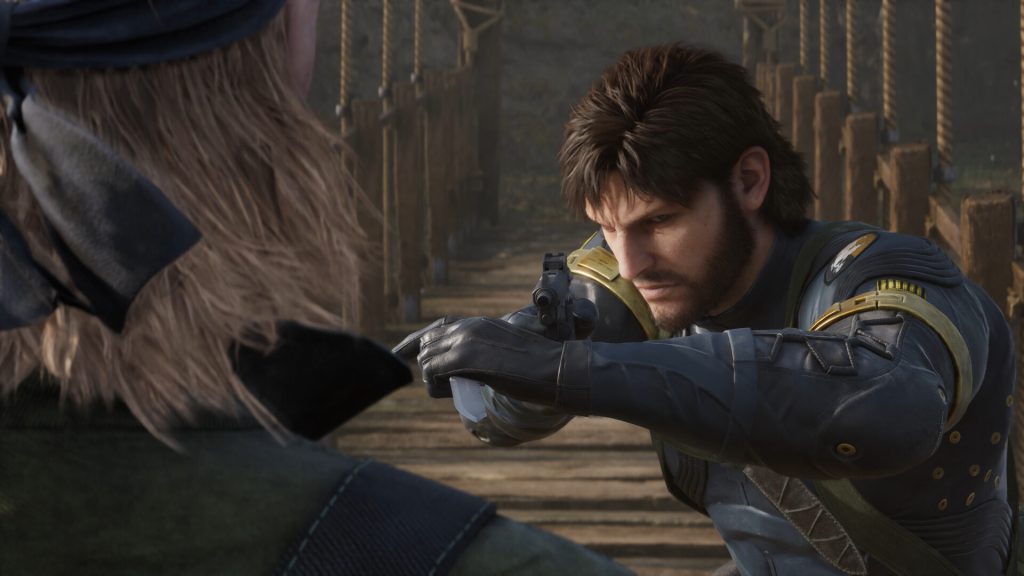
"While MGS5 is often considered one of the greatest stealth games ever made, Snake Eater takes a different approach, offering a more rawe and more deliberate experience."
Konami has introduced two camera options in Delta: the legacy style that mirrors the original release and a modern third person view. For the purpose of this review I played entirely with the new perspective, and after spending hundreds of hours with MGS5 I simply cannot imagine going back to the older system. The updated camera suits MGS3 surprisingly well, bringing it closer in feel to MGS5, and although I had some initial doubts about how it would function in environments originally designed for the PlayStation 2, those concerns quickly faded once I realized how naturally it fits. Combat benefits the most from this change, with shooting feeling noticeably sharper and more responsive thanks to the refined controls. As is customary for a Metal Gear title, Snake’s wide arsenal of weapons and tools integrates seamlessly with the new camera perspective.
While MGS5 is often considered one of the greatest stealth games ever made, Snake Eater takes a different approach, offering a more rawe and more deliberate experience. Enemies are clever in their use of the environment, often hiding in ways that make them genuinely difficult to spot, and this forces the player to move carefully and think through every step. Stealth here demands patience and precision, and when executed successfully it leads to moments of incredible tension and satisfaction. For those who enjoy pursuing a no detection playthrough, Delta delivers some of the most rewarding stealth gameplay you can ask for.
MGS3 features a camouflage system that allows Snake to use different face paints and uniforms to blend into his surroundings, making it more difficult for enemies to detect him. In Delta, Konami has introduced a quicker method of selecting suits, while still retaining the original, more time consuming menu system. I personally found the new option far more convenient, as it makes experimenting with different outfits seamless without breaking the flow of gameplay. The codec system has also been given a shortcut, and once again I preferred this streamlined approach since it can now be accessed instantly rather than requiring multiple steps. A completely new addition is the compass, and while I appreciate the effort to include it for the sake of newcomers, I found it largely unnecessary because Snake Eater is still a fairly linear game.
"The cure system remains largely unchanged, but Delta introduces a new battle damage mechanic that appears to be dynamic based on how much punishment the player takes."
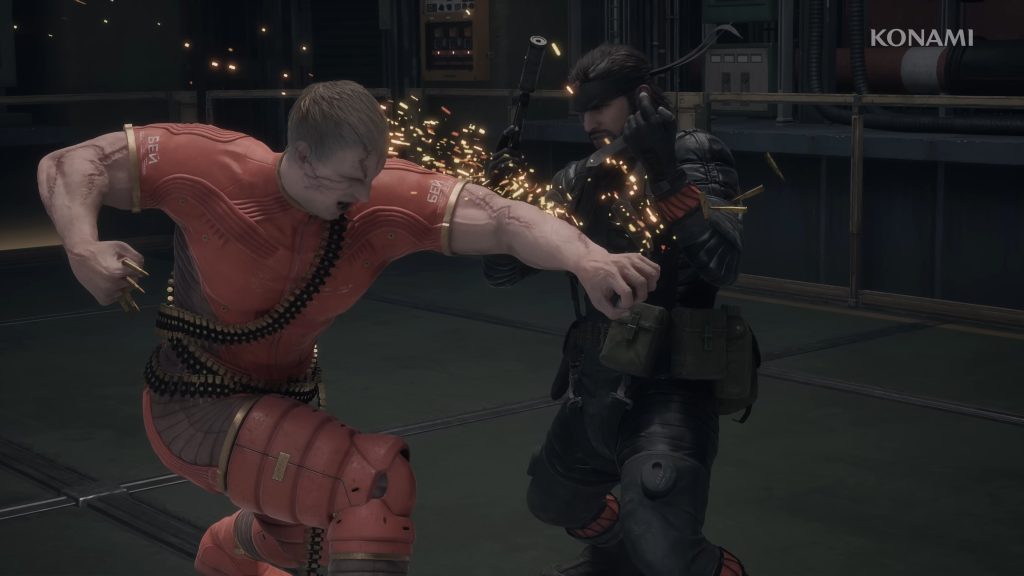
Snake’s movement animations have been completely overhauled, giving the game a feel that comes closer to The Phantom Pain. The new CQC moves are also a welcome addition, and honestly, tossing Volgin around with the updated CQC camera never stops being satisfying. One improvement that stood out to me was the behavior of the enemy AI, which feels noticeably sharper than in the original. Enemies are slightly more aggressive and they display strategies that make encounters more dynamic.
It still does not reach the level of The Phantom Pain’s AI, but that would be an unfair comparison since the level design here places different limitations on how the AI can be structured, yet the improvement is clear and appreciated. On the downside, I did encounter some bugs in enemy vision. In one instance it became frustrating because it completely ruined my stealth approach due to enemies spotting me through walls, which seemed like a collision issue.
Hopefully, problems like this can be ironed out in a patch, but in the moment it was irritating. Still, despite the rare technical hiccup, the overall stealth systems in Delta are excellent and provide an experience that feels modern while retaining the heart of the original.
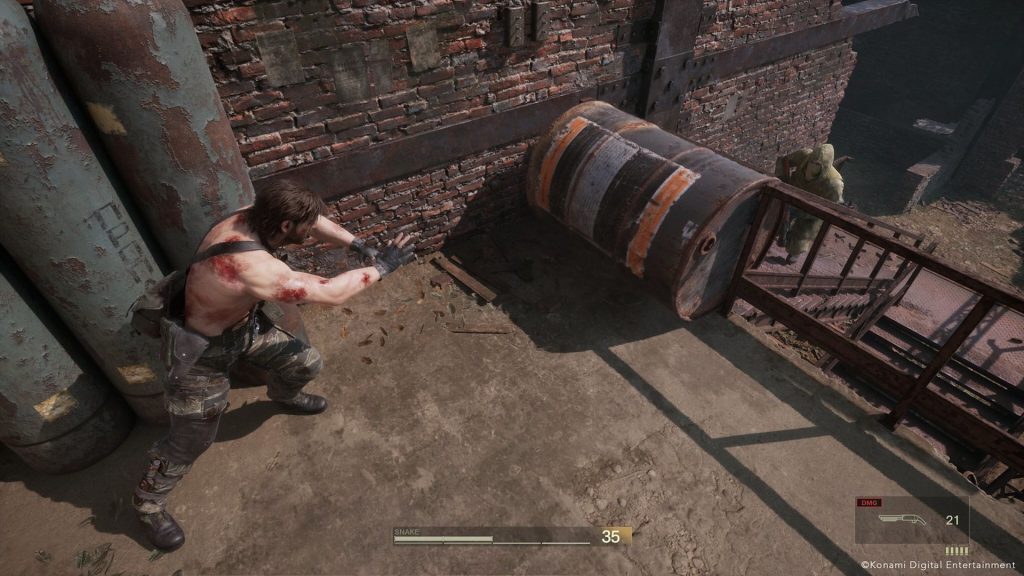
The cure system remains largely unchanged, but Delta introduces a new battle damage mechanic that appears to be dynamic based on how much punishment the player takes. The more hits Snake absorbs, the more scars, burns, and visible marks he carries, and by the end of my playthrough he looked completely battered. It is a small detail, yet it adds an extra layer of realism and reinforces the sense of danger that comes with such a high stakes mission.
The load times in Delta are incredibly fast, to the point where the level names displayed on loading screens feel almost pointless. I understand that Konami wanted to preserve the original gameplay logic when transitioning between areas, but with the technology available today it would have been far better to remove those static transitions entirely and replace them with something more seamless, such as a short cinematic.
A good example of this approach can be seen in Marvel’s Spider-Man, where fast travel sequences are cleverly masked with subway rides. I found myself wishing for a similar solution here since the black transition screens serve no real purpose and end up feeling out of place in an otherwise polished presentation.
"Playing on the PS5 Pro, I had access to Snake vs Monkey, which includes around a dozen levels and serves as a lighthearted distraction from the main story."
At the heart of every Metal Gear game are its boss encounters, and this is one area where I would have liked to see some improvements in Delta compared to the original release. Perhaps it is because of my familiarity with the original version, but I found many of them to be noticeably easier this time around. These fights were originally designed with the older camera system in mind, and with the new third person perspective it becomes much easier to track and hit the bosses, which naturally reduces the challenge.
I remember The Twin Snakes suffering from a similar issue, and while it would have been ideal to rebalance these encounters for the updated presentation, the option of raising the difficulty level may help to offset this. Even with that drawback, most of the boss battles remain exciting, memorable, and satisfying to complete, delivering the same sense of accomplishment they did two decades ago.
Delta also comes with a few extra features, including the Demo Theatre where you can rewatch cutscenes, and just like in the original there are alternate versions of certain scenes depending on player actions. Before launch there was some speculation that Konami might include brand new cutscenes, but that’s sadly not the case. So no, you will not suddenly see Skull Face or XOF making an appearance at the end of the game: MGS5 fans you know exactly what I mean.
The Secret Theatre makes a return as well, now offering a handful of new clips, though this time they are unlocked as collectibles. Alongside them, the familiar Kerotan frogs are back, joined by new Gako collectible ducks, giving completionists plenty to hunt for. Classic unlockables such as stealth camouflage also make a welcome return. However, my personal favorite bonus is the revival of the Savage Guy mini game from the PlayStation 2 version, now completely remade and it is an absolute blast to play through even after all these years.
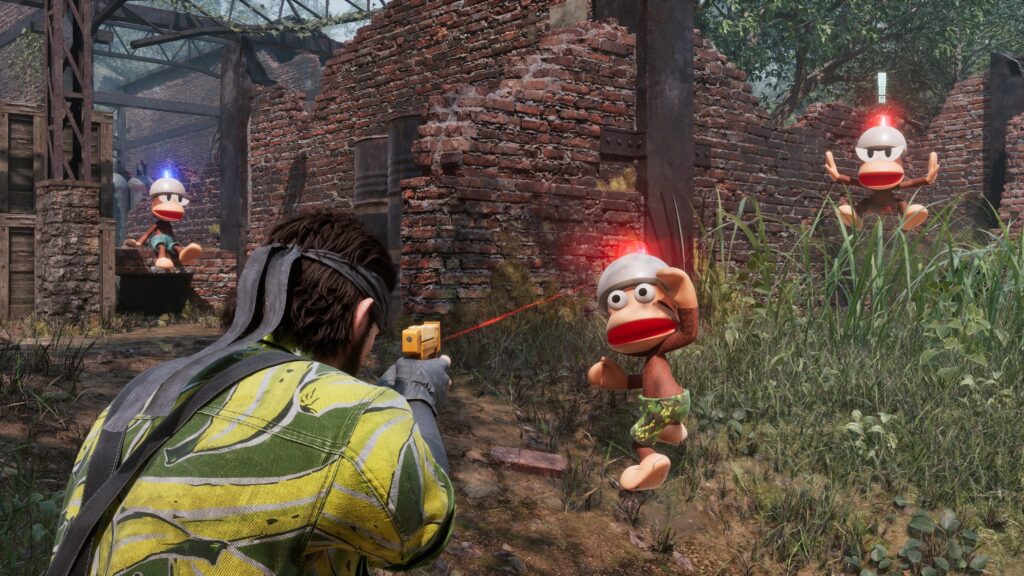
Playing on the PS5 Pro, I had access to Snake vs Monkey, which includes around a dozen levels and serves as a lighthearted distraction from the main story. It is simple yet endlessly fun and the codec exchanges between Snake and Campbell never fail to put a smile on my face. The monkeys themselves are animated with surprising charm, and their playful movements make the entire mode feel like a quirky but memorable bonus.
In an ideal world, I would have loved to see a remake of Snake Eater built in the mold of The Phantom Pain. The thought of exploring an open-world Tselinoyarsk is undeniably exciting, yet we also have to accept the realities of what this remake represents. Metal Gear is one of Konami’s most valuable properties, and its future hinges on how well Delta performs. Making drastic changes could have alienated longtime fans, while changing too little might have left newcomers uninterested. With Delta, Konami has managed to find the right balance, much like Kojima originally did with MGS3 between gameplay and cinematic storytelling.
"Welcome back, Snake. We truly missed you."
The end result is an excellent throwback to the golden era of video games, the kind you could lose yourself in over a weekend, and it stands as a worthy revival of the saga. It is a must play experience for both fans and newcomers alike. All the fun callbacks and references have been faithfully preserved, including quirky touches like the classic trick to make Snake vomit. There is also FOX Hunt, which is scheduled to arrive later this year, and if it delivers on its promise it will add even more value to an already strong package.
This new team at Konami should feel proud of what they have accomplished, and if the game performs well, any future remake has the potential to be far more ambitious and creative. For now, Delta is a strong beginning, a statement of intent, and a heartfelt return to a franchise that has been absent for too long. With the stellar remakes of Silent Hill 2 and Metal Gear Solid 3: Snake Eater, Konami has proven they’re truly back, and I can’t wait to see what they bring next.
Welcome back, Snake. We truly missed you.
This game was reviewed on the PlayStation 5.
Excellent story that more than holds up, Gorgeous visuals and lighting, Revamped animations and CQC, Modern third person camera works great, Tighter combat and controls, Streamlined camouflage and codec system, Improved AI feels more aggressive, Classic music and voice acting in higher quality, Fun extras included.
Some boss fights are now easier to defeat due to the new camera style, Rare bugs and glitches break stealth, PS5 Pro has slight performance issues.