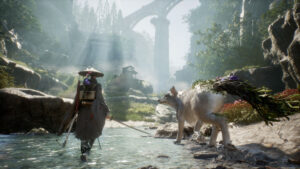






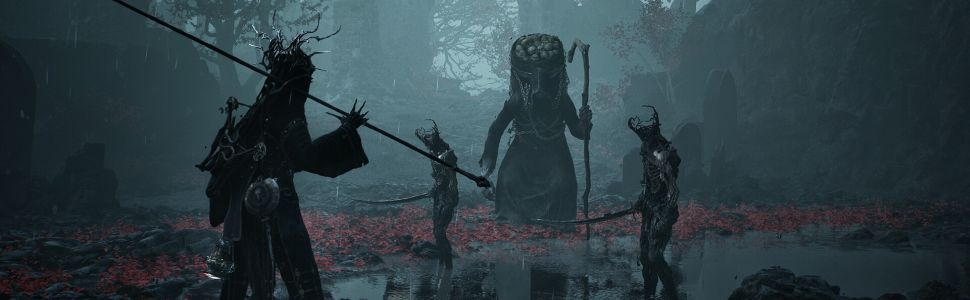
There’s something about Bloodborne that keeps us coming back to it for more. We’ve always loved the methodical, painstaking approach of other Souls titles, but getting a combat system that literally made shields redundant for the first time continues to be among our favorite experiences in a massive collection of video games that we’ve played between us.
There have been other Soulslikes that emphasize offence more than defence, with varying twists on the formula to have you choosing to go right up to your enemies to bring them down without fear or hesitation. But Bloodborne’s unique combination of Trick Weapons, guns, the regen system, and precise use of the tools you’re given continues to be a challenge that’s as addictive as it was all those years ago. It’s been missed, and with good reason.
But with Mortal Shell 2 now quite close to its global release, we think that we’re getting an experience that comes pretty darn close to what Bloodborne offers, with systems and mechanics built around aggressive play, and tactical use of your reflexes and abilities. We come armed with solid reasons as to why we think so, as always. Let’s begin.
Your Attacks Are Your Openings
Unlike the usual Soulslike fare that requires patiently waiting out enemy attacks to seize the perfect moments to strike, Bloodborne’s remembered fondly for a shift towards an offensive playstyle. The Hunter’s enemies were a ferocious bunch, and were implacable in their desire to send them packing to the nearest lamp. They could overwhelm you if you tried to take things slowly, and aggression was the only certain way to bring them down while still standing.
In the little slice of Mortal Shell 2 that the demo gave us, we found that we were constantly on the move, dodging arrows, swipes, stabs, slams, and other attacks to position ourselves for follow-ups when surrounded. In encounters with single enemies, it almost felt natural to just stand our ground and parry them into oblivion, our Seals working well to let that be as viable a strategy as staying mobile in fights was.
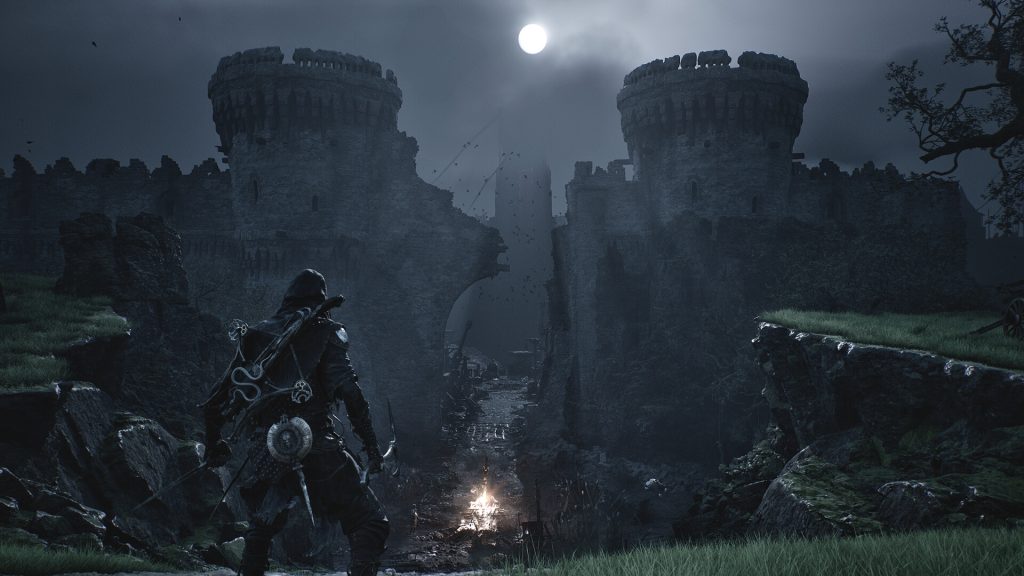
Both games bring an offensive mentality to the table, albeit with different systems guiding them. While Bloodborne’s regen system meant calculating how much damage to tank before you earned it all back with some well-planned offence, your stamina was often a factor that could make or break those plans. You needed to ensure you had an escape route when committing to attack strings, staying ready to improvise at a moment’s notice in fights that you could never be sure of winning until victory was all that remained on the field alongside you.
Mortal Shell 2’s removal of the stamina bar is already drawing a lot of praise from people who’ve played it, as it frees up the Harbinger to stay on the offensive, parrying attacks, dishing out damage, and retreating when their Resolve is high enough to further unleash more damage via the other tools they carry besides melee weapons. And that’s where things get interesting.
Firearms are our first port of call. Guns weren’t a backup plan in Bloodborne, but were a crucial part of successful assaults. They were what you used to parry attacks and set up those brutal Viscerals, for starters. But with a bunch of points sunk into the Hunter’s Bloodtinge, they could become ways to decimate opponent health bars, with enough variety between the ones on offer to fit into a variety of playstyles. They changed the usual Soulslike dance enough for them to be a very exciting presence.
Mortal Shell 2 is doing something similar, although It’s taking a different route to get there. The first firearm from the demo was quite a lovely shotgun that was effective at stopping enemies in their tracks and building up Stagger, although it didn’t function as a way to parry attacks. However, with its use tied to the Resolve meter, it means that using your guns needs to you to get right up in an enemy’s face, get a few attacks or parries in, do some damage, and retreat only to continue the assault from afar.
Cold Symmetry’s insistence that they’re a crucial part of your combat toolkit is certainly true, and their presence expands the choices you have at any given moment in a way that makes their utility undeniable. But guns aren’t the only way Mortal Shell 2 weaves in the best of Bloodborne.
An Offensive Defence
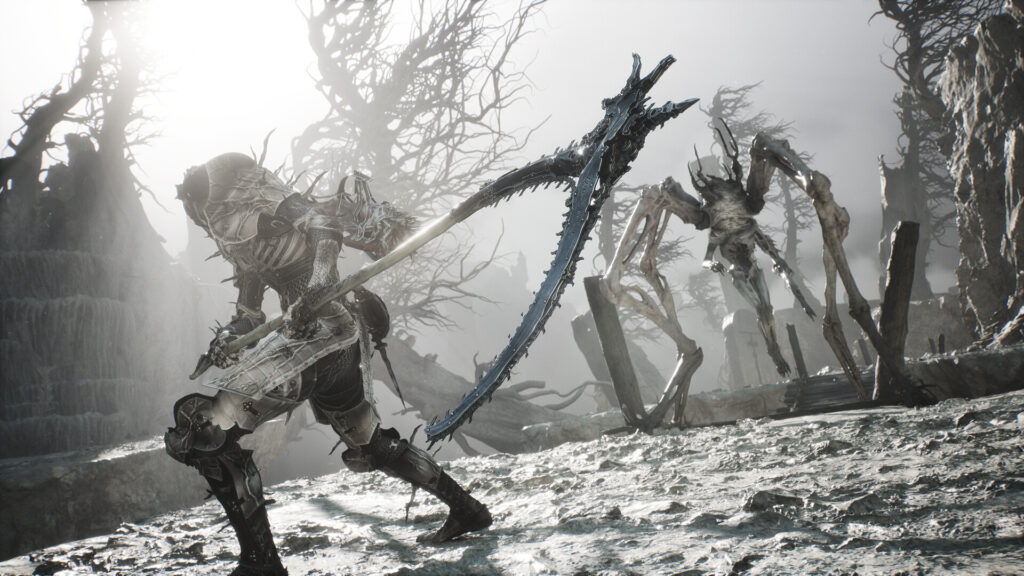
There’s Mortal Shell 2’s Harden mechanic, which we think acts quite similarly to Bloodborne’s pistol-based parry system in that you have an immediate way to ward off an enemy’s attack while opening them for a counterattack of your own. Where the latter encourages you to tank damage and counterattack to regain health, thereby blurring the line between offense and defense, the former is doing so by giving you something to weave into your attack rhythm.
However, with things turning out the way that they do with the tutorial boss, it isn’t a default part of your arsenal, but its very existence is evidence of a combat philosophy that’s built around aggression and improvisation. That works well with the removal of stamina in MS2, because it encourages an attack-focused mindset with Hardens or parries at your fingertips to defend against anything your enemy responds with.
That’s an interesting change from Bloodborne’s reliance on stamina as a means to keep your Hunter in check, requiring tactical use of limited attack potential in any exchange before retreating to plan your next assault even as you dodged through an onslaught of attacks from your opponent. Of course, MS2 still needs you to be careful and position yourself properly while picking the right moments to attack; there’s the sentiment that hesitating to launch an offensive is almost a guaranteed way to put yourself on the backfoot, which can get quite tricky thanks to enemies that come at you with vicious intent.
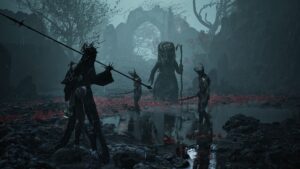
Of course, the Harbinger is no walk over, and the sheer violence and gritty vibe that Falgrim brings immediately took us back to Yharnam. Its desolate streets and increasingly disturbing transition into the world of the Old Ones was an unsettling exploration of a nightmare, whose Eldritch origins made themselves known via a slow-burn that could have piqued your curiosity even as you thought apprehensively of whatever was lying ahead.
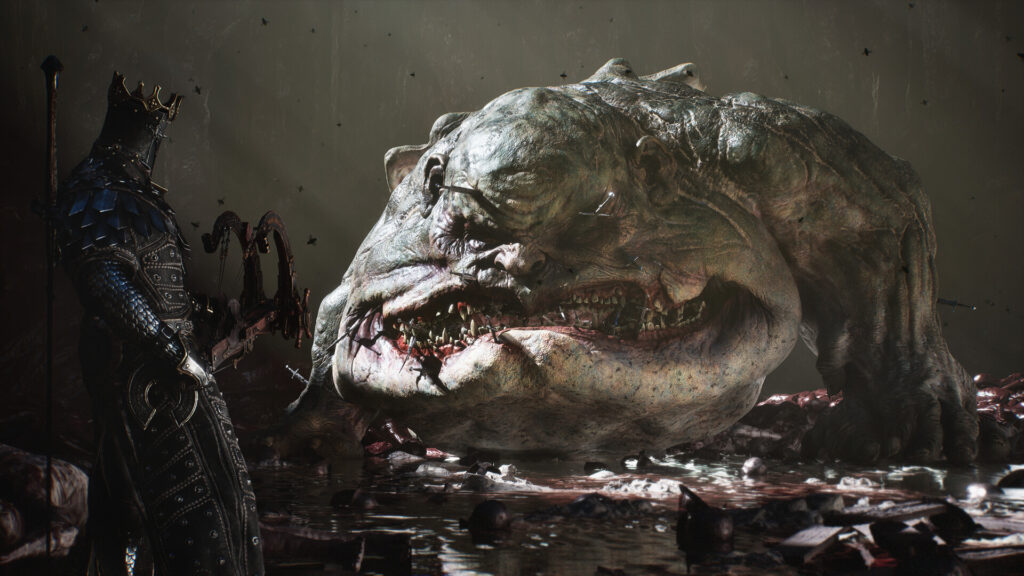
Fallgrim isn’t as overtly horrifying in that sense, but the visual direction it does offer does come with its own mysterious entities, mutated terrors, brutal executions, a whole lot of blood and gore, and enemies that you’re not likely to forget even after you’ve put them in the ground with indiscriminate force. It all feeds into the sentiment that in an unforgiving world, the only way forward is to push through, and thankfully, both games give you everything you need to get that done.
Bloodborne’s Trick Weapons went for utility and that cool factor, their transforming forms and varied moves allowing for a lot of player expression when blades were drawn. With the ability to access entirely different movesets mid-combo, your weapons were not just ways to keep the odds in your favor, but were the tools with which you practiced the art of killing, the entirety of Yharnam a gruesome canvas for you to paint.
While MS2 might not have that, the expanded arsenal of weapons you can wield in comparison to its predecessor, coupled with the fact that every Shell can now wield all weapon types, the melee system blends very well with the rest of your kit to encourage a similar form of player expression that’s rooted in making the most of everything you have at hand in fights where survival isn’t guaranteed.
The Need For Caution
While everything we’ve said sounds like MS2 could devolve into mindless button-mashing to get ahead thanks to emphasis on speed and aggression, that’s hardly the case. Bloodborne was all about using your speed and weapons to get yourself in positions where you could do the most damage to an enemy in an attempt to end fights quickly. MS2 is aiming for a similar combat focus, where having no stamina governing your attacks doesn’t automatically make each offensive effort you attempt sensible.
You’re still going to have to pick the right moments to push forward, the right ones to back off, the right attacks to parry, the right ones to dodge, and the best occasions to go for gold as you make your way through its grim dungeons and somber locations. Aggression’s only part of the combat DNA on offer in both games, and mindful offense is an equally important strand of its gameplay loop.
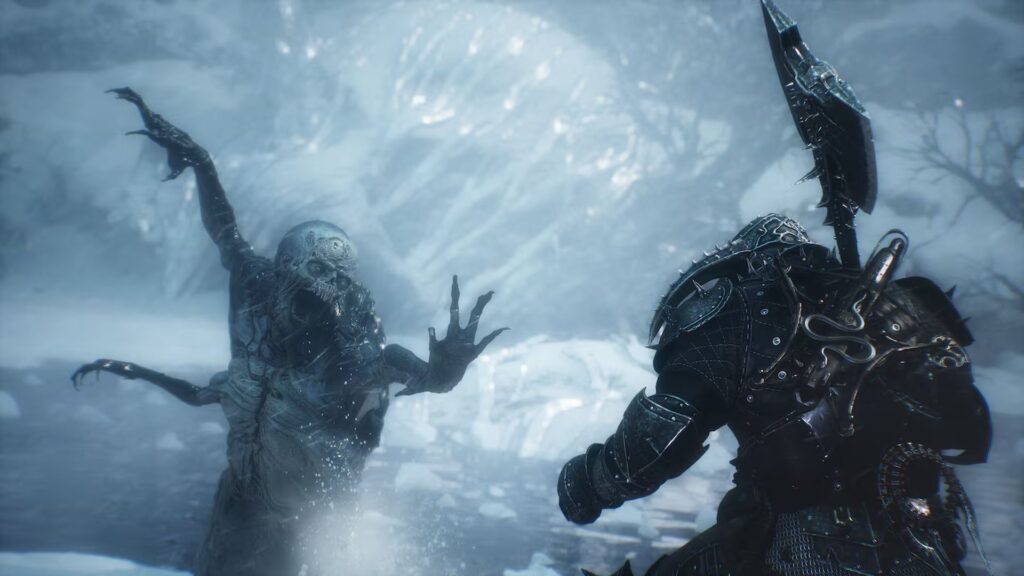
We’re glad that MS2 is only imitating the philosophy of Bloodborne’s combat system while retaining enough of the original game to make it stand out on its own. It still has the Shells, Hardening, stamina-free combat, Shell-specific abilities, firearms, a posture system, and Falgrim’s intentional interconnectivity. A mere copy wouldn’t make it a spiritual successor to Bloodborne in the way that we’ve discussed. By reinventing ideas from that beloved title instead of reproducing them, Cold Symmetry has ensured that its own offering has enough merit to make it viable all on its own.
Perhaps the studio understood that all the clamor for a Bloodborne sequel isn’t just about the Hunter, Yharnam, the nightmare, and FromSoftware? Perhaps it realised that relentless offense, risky counters, a sublime blend of guns and blades, and the sentiment that not backing down in the face of creatures that should have you frozen in your tracks were more important facets to focus on?
If that’s the case, MS2 scratches an itch that has bothered Soulslike fans for more than a decade now. It might not be the Bloodborne sequel we want, but it sure as heck feels like the one we deserve.
Note: The views expressed in this article are those of the author and do not necessarily represent the views of, and should not be attributed to, GamingBolt as an organization.