






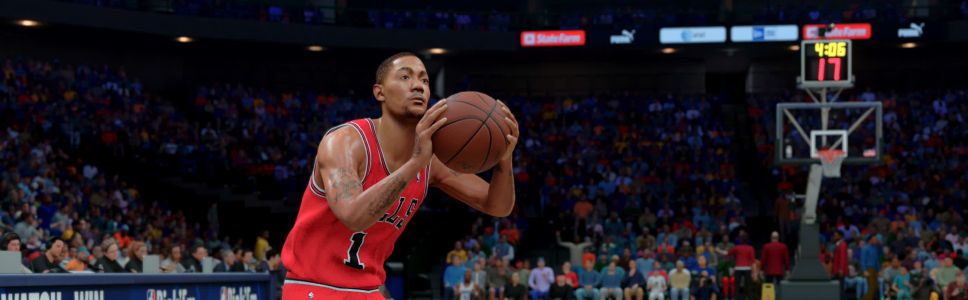
The NBA gives us a little bit of everything. Whether you want your detailed analytical breakdowns or your reality TV style off-the-court drama, you can find it all in this league. More than ever, with NBA 2K27 it feels like the 2K franchise is trying to do the same. From year to year, developer Visual Concepts gives us a playground to experience the NBA in every way you can ask for, from focusing on an individual player to managing a real team or building your own.
This year, with noticeable gameplay tweaks and some significant changes to MyCareer and MyTeam, virtually everything on and off the court has taken a step up, making it more interesting whether you’re a developing superstar or an aspirational owner. While lingering annual problems persist, I was more engaged with the minute-to-minute gameplay of 2K27 in a way I haven’t in some years, with one of the better all-around experiences the franchise has put together on every front.
"Player movement is enhanced overall with some new animations"
That starts on the court, where 2K27 feels markedly improved, particularly on defense. Defenders are more influential over the ball handlers, and you have more minute control over your defenders’ movements, which means that you have more of an ability to lock down your matchups as a user. You can more easily control your posture and arm position with just a push of the right stick, so it’s simple now to put your hands up to block a shot without fouling or get in the way of a pass.
Player movement is enhanced overall with some new animations, and the improvements really show themselves when you’re contacting someone else, whether you’re posting someone up on offense or closely guarding them on defense. On the offensive side of the ball, ball handling has gotten the most notable upgrade, as the more refined movement system translates to allowing a more dynamic feel, like how it now shows you with a highlight on the floor which direction your weight is leaning. That allows you to better use the left stick to either commit to dribbling one way or switch directions for a potential ankle breaker, which I felt were more common this year.
The universal green or miss shot meter is back again this year, feeling like it requires more precision than ever. The meter feels even more closely tied to the shooter’s shooting motion, which means it’s widely variable from player to player and the timing required to get a perfect release changes constantly. The green part of the “green or miss” meter also grows and shrinks based on the shooter’s stats as well as how heavily they are covered and whether they’re standing still or on the run, and while this can make it frustrating when you’re struggling to pin down someone’s timing, it alternatively makes it that much sweeter when you’ve truly nailed a shooting motion and can start to hit virtually any shot on the floor.
What plays well into the refined movement and deeper control is the takeover system, which has been expanded from a single bar to incorporate each of the tools in a player’s arsenal: shooting, finishing, playmaking, rebounding, and defense.
Each attribute moves independently based on how a player is playing within the game, and when an attribute reaches its threshold, the takeover abilities more directly match the attribute that’s been activated, like the shooting meter improving accuracy and the defense meter improving your chances at a steal. I like this change because it allows takeovers to be more common and more directed at what a player is actually good at, rather than having to fit the mold of every player at the cost of more targeted boosts.
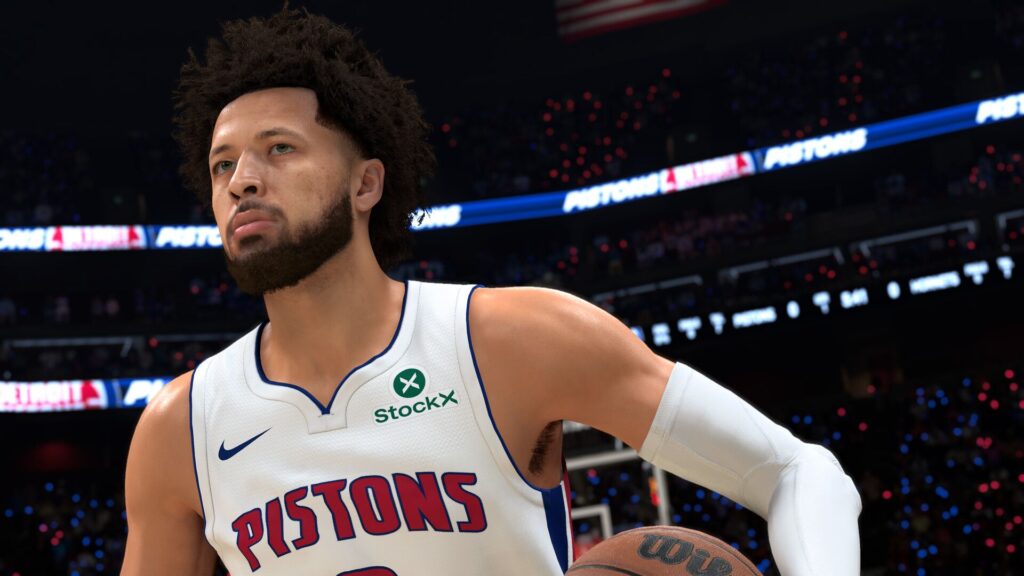
"The universal green or miss shot meter is back again this year, feeling like it requires more precision than ever."
Where the takeover abilities come into play most noticeably is in MyCareer, alongside the GOAT abilities that provide only your MyPlayer with a significant stat boost after reaching a certain in-game goal. This year’s MyCareer, which is now playable in both single player and co-op, puts a couple new spins on the formula. First, you can play MyCareer Eras, which lets you play in various decades that represent different eras of basketball, similar to MyNBA Eras.
Playing across eras is interesting, if a little anachronistic for how the actual game plays, but playing in any era except the Modern Era precludes you from playing Fire & Concrete, the story mode that represents MyCareer’s other big draw. You play, as you do every year, as MP, this year as a highly-recruited high school prospect whose college prospects are dashed when he gets severely injured in a car accident. The journey through Fire & Concrete, then, shows MP two years later, rehabilitated and playing basketball at a high level again, making his way through a G League season to try and reclaim his spot atop the prospect rankings and become the number one overall pick in the draft, above real-life top pick AJ Dybantsa.
Fire & Concrete is longer than most MyCareer stories in the past, totaling 11 chapters that span both your season in the G League and your first season in the NBA itself. For the most part, it’s a run of the mill story of this type, and throughout the early G League portion I was a little bored by how predictable and repetitive the story became, especially because it didn’t seem to matter how I performed on the court as long as I could fulfill some arbitrary story-based goal, like getting a teammate a certain number of points. But as the story progressed, it ultimately won me over.
Seeing MP get back to the top of the draft board and have the opportunity to continue building his legacy as the top pick was never overly emotional, but I found myself rooting for MP and the people around him, as well as rooting against the flat but very dislikable antagonists he faces.
One of those people around MP is his so-called Running Mate, Trace Miller. Trace and MP meet early in the story as teammates and become fast friends, and Trace plays a major part in Fire & Concrete both on and off the court. He is a major character and the most well-written and well-acted part of the story, showing a real personality and motivation for both he and MP to make it in the NBA. MP and Trace are best friends on the court, too, and the new Running Mate meter allows you to activate a skill that affects both of you in-game, in the same way that the GOAT skills activate. These can be activated after achieving certain combined goals, like having a total of 10 shots made or 20 points and rebounds, and the abilities boost attributes that allow you both to improve your game.
Of course, you have direct control over MP’s progression, which continues to have a pay-to-win structure, but this year you also have control over Trace’s progression and build, which allows you to mold him into whatever type of player you most want to play with. I made Trace the Nikola Jokic to my Jamal Murray in the pick-and-roll, but it’s also possible to create two big men that own the paint or two shooters that mimic the Splash Brothers. While I wasn’t always engaged with the story in Fire & Concrete, I found the relationship between MP and Trace, as well as how that played out on the court, to make it a legitimately different experience, and it became one of the highlights of 2K27 overall.
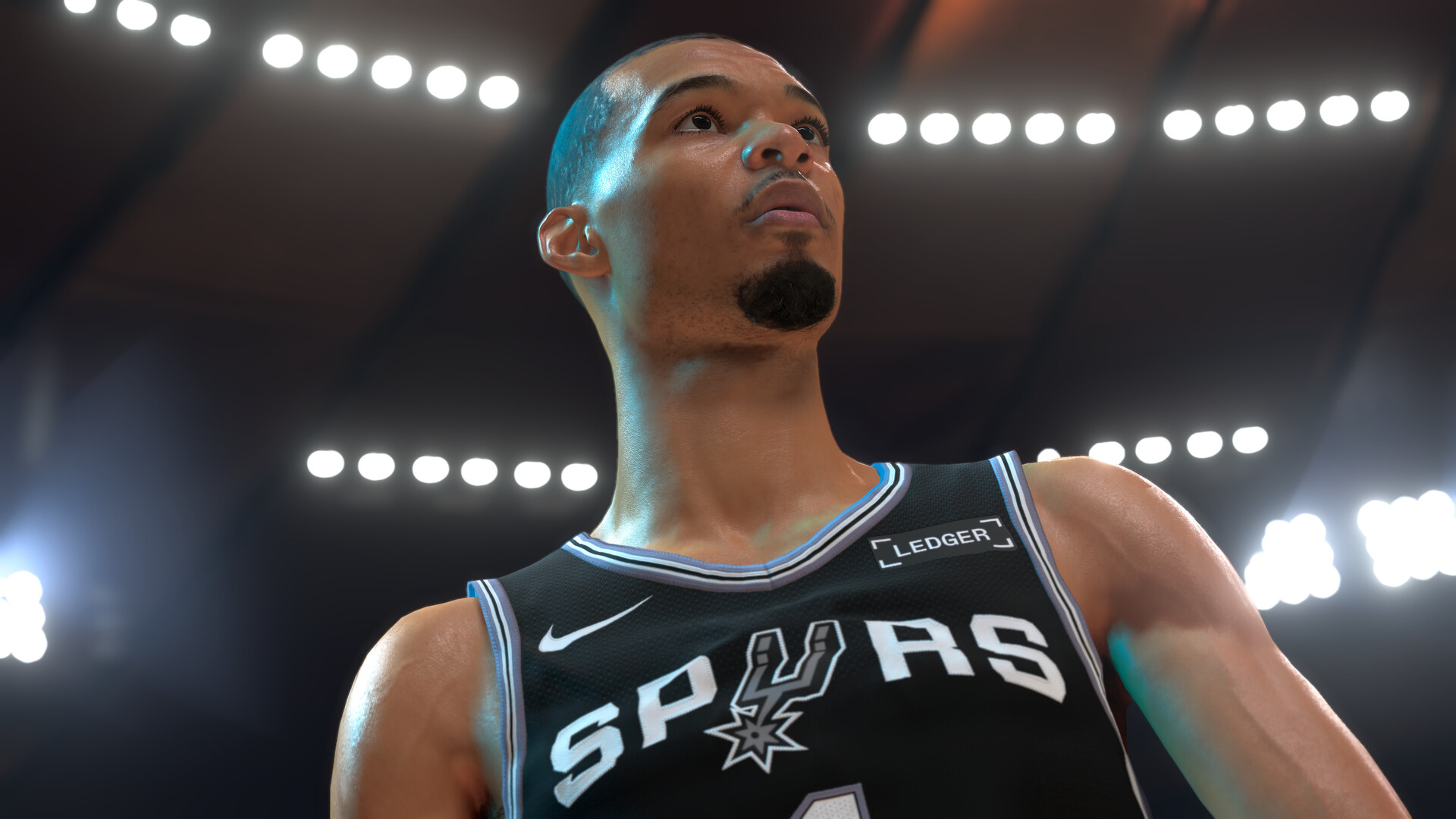
"Trace and MP meet early in the story as teammates and become fast friends, and Trace plays a major part in Fire & Concrete both on and off the court."
Of course, MyCareer also blends with The City, where MP can again explore to play in PvP or PvE games that mostly live in the realm of street ball and pickup. These include the traditional modes like Street Kings and the 3v3 pickup games you can play almost anywhere, but new this year is the more developmental mode Casual Corner, which gives players a PvE experience meant to ease you into PvP with a similar style but easier opponents. It’s not particularly substantial, but it adds to the feeling in The City that you can play virtually any type of street ball you can imagine, and I found myself bouncing around different game modes to match my mood, or just riding around the square on my hoverboard, more so than in recent years.
The other major updates live in MyTeam, though these are more superficial. MyTeam menus have been overhauled to make it easier to jump into online matches or offline challenges more easily, and the card shop, while still predatory in its implementation of microtransactions, is at least more navigable. What’s more interesting this year is the opportunities with the cards you don’t need anymore.
There’s been a major update to The Exchange, which lets you have more opportunities to trade in your cards in on a weekly or seasonal basis in ways that don’t require a ton of cards to trade in or a specific matching set. There’s also an ability to send your cards on asynchronous missions to develop, where they won’t be available to play on your team for a certain amount of real time.
The actual gameplay in MyTeam follows a largely similar track as it always has, forcing you to play game after game to level up and earn card packs that you hope will improve your team. But the modes themselves feel somewhat improved, particularly in single player.
Gauntlet and Breakout have both been expanded significantly to allow you more variety in how you play each bite-size game, and they complement the more comprehensive Domination that forces you to beat every NBA team. The overall MyTeam experience still feels as deflating as always when the weight of the microtransactions becomes apparent, but the highlights are a little bit brighter this year and made me a bit more interested in continuing to organically improve my team.
I wasn’t blown away by NBA 2K27, if that’s even possible anymore, but the expected marginal improvements this year feel somewhat meatier and more meaningful than normal. The streamlining of MyTeam makes it somewhat more enjoyable, but the improvements to MyCareer, in both the addition of eras and the Fire & Concrete mode, make the experience really come together.
What starts as a milquetoast experience ends up housing one of the better create-a-player modes in a 2K game in some time, with largely differentiated gameplay and a surprisingly unique set of characters. This all complements noticeable gameplay tweaks that make you want to continue finding a way onto the court, however that may happen.
This game was reviewed on PlayStation 5.
Surprisingly deep Fire & Concrete story, Noticeable gameplay refinements, MyTeam streamlined
Littered with microtransactions, MyCareer starts slow