




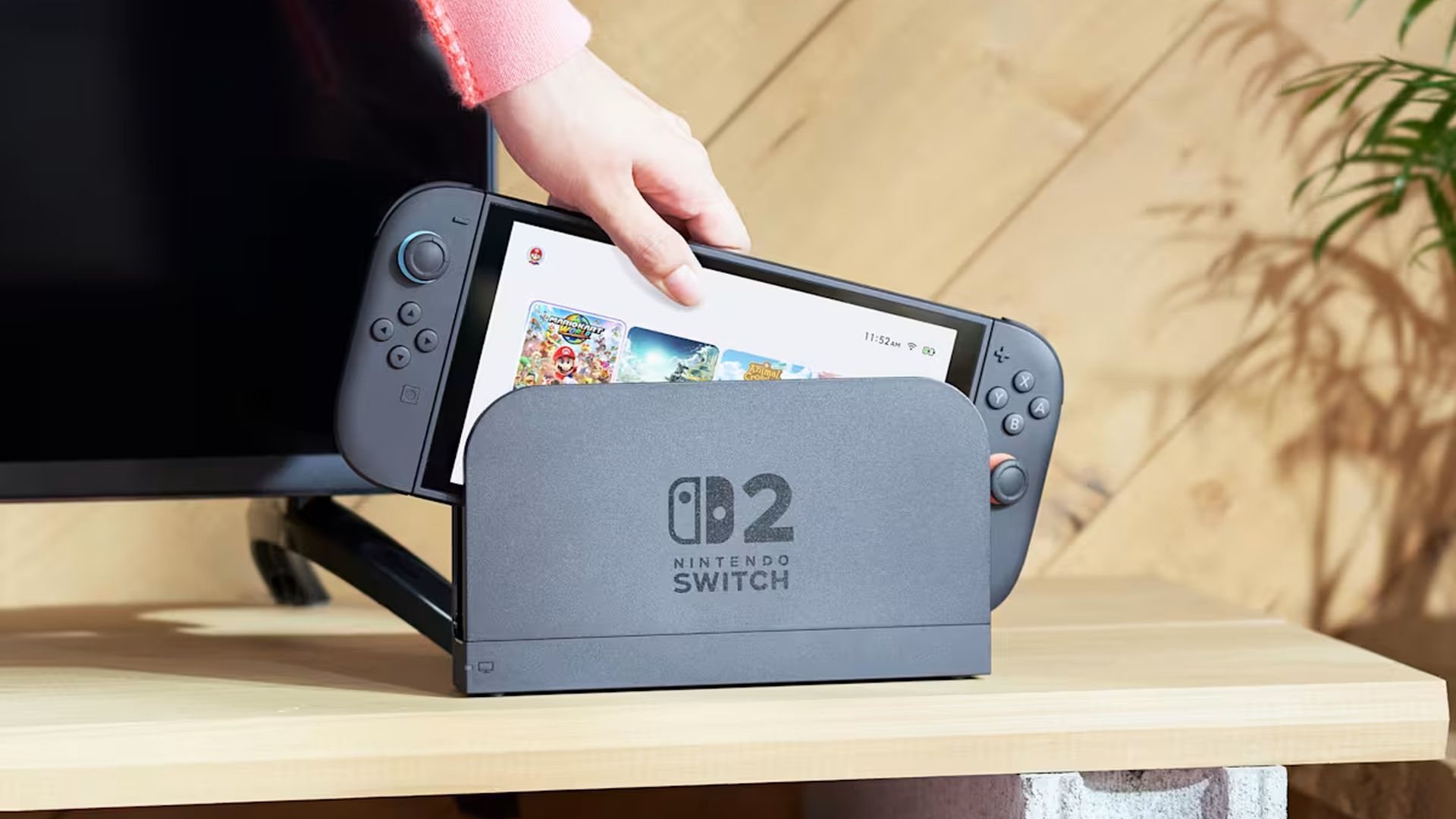
Nintendo has announced that it is temporarily suspending sales of the multi-region SKU of the Switch 2 in Japan. In a statement, the company has said that it has been able to confirm that several orders for the console have been for hoarding purposes. In its efforts to ensure that the console is available more widely across the world, there are going to be more restrictions on who can buy a multi-lingual Switch 2 in Japan.
“Regarding sales of the Nintendo Switch 2 (Multi-language Version) at the Nintendo Store, we temporarily suspended sales after identifying multiple orders suspected of involving bulk purchasing or reselling,” announced the company (via machine translation). “To ensure the product reaches as many customers as possible, we will now limit sales to customers who meet the following criteria. We appreciate your understanding.”
The conditions listed by Nintendo have been designed around the idea of making sure that people who are buying the consoles are interested in actually playing games on it, rather than just hoarding it to potentially sell it at higher prices in the secondary market. A new buyer will only be able to get a Nintendo Switch 2 if their total Switch play time was 50 hours or higher as of May 31st. Meeting this condition grants them eligibility to buy a single multi-lingual Nintendo Switch 2. The company has also noted that those who already own a Switch 2 will not be eligible for the offer.
It is worth noting that Japan is the only country where two models of the Nintendo Switch 2 are available – the multi-lingual model that is available worldwide, and a cheaper Japanese-only model exclusive to the country, of which the language settings can’t be changed. Interestingly, the recent price hikes of the console in Japan were only applied to the Japanese model of the Switch 2, raising its price from ¥49,980 ($310) to ¥59,980 ($375). The multi-lingual model retained its ¥69,980 ($435) price tag.
When the pre-orders for the Nintendo Switch 2 first started last year, an informal survey conducted by social media users had indicated that Japanese gamers were more likely to pick up a Japanese-only model of the Switch 2 thanks to the fact that it was considerably cheaper than the multi-lingual model. However, considering the nature of the survey, it is best to take this data with a grain of salt.
More recently, Nintendo president Shuntaro Furukawa spoke about the decision behind raising the prices of the Nintendo Switch 2 in just about every market. During an earnings report last month, he revealed that the company would have avoided the price hikes if the increases in manufacturing costs were likelier to be temporary. He ultimately said that the decision was made “not due to any one specific factor.”
“Regarding Nintendo Switch 2, the basic approach to our dedicated video game platform business remains unchanged: first expand on the hardware installed base, and then drive software sales,” he said. “If the increase in costs were seen as something temporary that would subside relatively soon, then we could have pursued other options, such as working to improve productivity and expand the installed base while maintaining hardware prices.”