






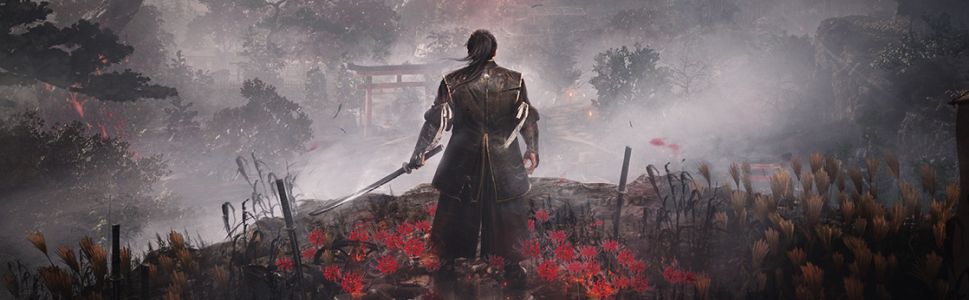
It’s been an interesting journey for Team Ninja since Nioh 2 rose to fame as a Soulslike that brought interesting twists to a tried and tested formula. It made things a tad easier but a lot more ambitious in Rise of the Ronin, introducing a well-designed open world that had a lot going for it. Wolong: Fallen Dynasty brought back the difficulty with the added twist of its Reputation System, making you fight to stay relevant in every level you explored along with parry mechanics that were quite effective at encouraging precision and finesse.
Underlining each of these innovations is a certain fearlessness to try out new ideas in its games, and, more importantly, learn what works and what doesn’t once they make their way into their players’ hands. It’s that bold approach to innovation that now has us believing that Nioh 3 is going to be a title that brings all of their experience to the table. The playable demo has been the only slice of the game that players can experience, but it does showcase that it’s a title that isn’t backing down from its vision.
It could have been easy to make the game an iterative improvement over Nioh 2, which was already a solid title to begin with. But with sweeping changes to its combat and level design spurred on by all of the things it has tried in the intervening years since Nioh 2, the studio is making this threequel stand tall as a true (and worthy) successor to the franchise’s legacy.
Standing as a cornerstone of it all is the new open-field design, which serves as a testament to the ambitions that Nioh 3 is bringing to the table. Every facet of the experience is made better by a bold approach to its world design, and we could not be more excited to dive right in. Let’s take a look at how the open-field in Nioh 3 makes it all the more attractive to us.
A Distinct Visual Identity Made Grander
Nioh and other Team Ninja IPs have often drawn flak for a rather safe approach to their visuals. But love them or hate them, there’s no denying that these titles have become a distinct visual identity for the studio. When we first booted up the demo for Nioh 3, we instantly saw that the signature style that the franchise was known for was right there, but things were different this time around.
There was a layer of polish to the whole thing that shows how the developers took the feedback about their visual style constructively and worked to make the most of it. Intricate details pop out of the environment, lending immersiveness to the flourishes that Nioh 3 aims to present visually. Character models and skin textures were excellent, even in what was likely an early build. The visuals in Nioh 3 are better than any of the titles that have preceded it, even as they retain the distinct visual language that has set them apart over the years.
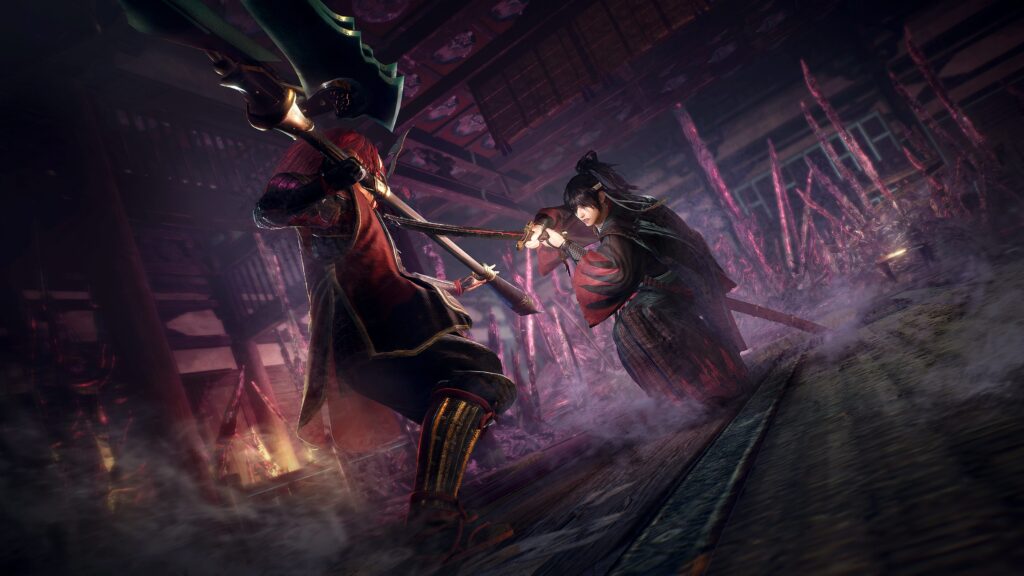
But the new open-field is where those visuals truly get a chance to shine. As a title for both the PS5 and PC, Nioh 3 gets to leverage current-gen hardware and harness it to present a title that’s immediately more ambitious than the franchise’s best ones while weaving in ideas from other IPs in the studio’s back pocket.
For starters, it mixes Rise of the Ronin’s excellent open-world design, condensing those ideas to a more focused experience. As an open-field, that one certainly made the search for our Blood Twin feel like a journey worthy of the best adventurers. We met so many people along the way and navigated social complexities that were well-integrated into the world-building.
While Nioh 3 may not need to be as grand as that world, having an open field allows it to address an issue that is often pointed out in games of its calibre: that of linearity. Nioh 2 did give you the option of tackling side missions on your own terms, but the levels you explored were often different routes through familiar areas. That’s easily addressed with an open-field that encourages exploration over a rush to finish the story, and Nioh 3 is a way for its makers to tackle those complaints head-on.
Just like it aims to let you experience the game on your own terms in ways that the franchise previously couldn’t achieve, Nioh 3 being open-field is a great way to bring area variety into the mix. It adds flavor to the experience in a manner that gives Team Ninja the scope to go big on its own terms, preserving its unique visual style while taking things to the next level.
Similar to its visuals, Nioh 3’s mechanical changes are also made even better by the open-world design.
Great Gameplay Made Greater
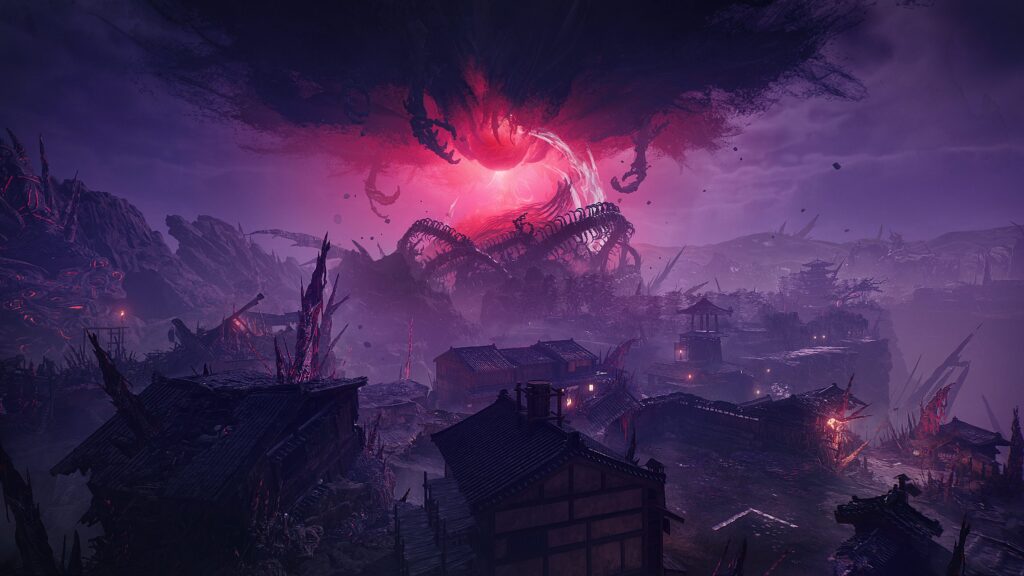
While Nioh 3 might not have you fighting for every square inch of the land you’re exploring in the manner that Wolong did, its reputation system is supported by the open-world design. Indeed, by encouraging exploration to take down different enemy types and achieve a variety of milestones to unlock bonuses for your character, exploration forms a great way for you as a player to achieve a sense of momentum.
That’s always welcome in a Soulslike title where diligent players are rewarded with abilities that may not necessarily make the battles to come easier, but do confer them with advantages that make those battles worth fighting. An open-field design lends itself to that sentiment, something that Elden Ring used to great effect. It’s more opportunities to engage with a combat system that brings interesting wrinkles to an already great one from the previous game, and that’s definitely not something we’re going to complain about.
But Nioh 3 takes things up a notch with stealth mechanics that are finally viable as a way to thin out crowds of tough enemies before you take on the ones who remain. Once again, an open-field design means open areas in which you’re not limited by set pathways to take enemies down, with the potential to avoid enemy sightlines being exponentially greater than an experience with linear level designs.
Another aspect of a Soulslike experience made better by an open-world is that level farming is set to be more fun than it could be in linear titles. The option to flit between areas to grind out a few levels and cheese a potentially tougher enemy might have some purists scoffing at the very idea, but to most players, it could mean the difference between a reasonably easier win versus hours of staring at death screens.
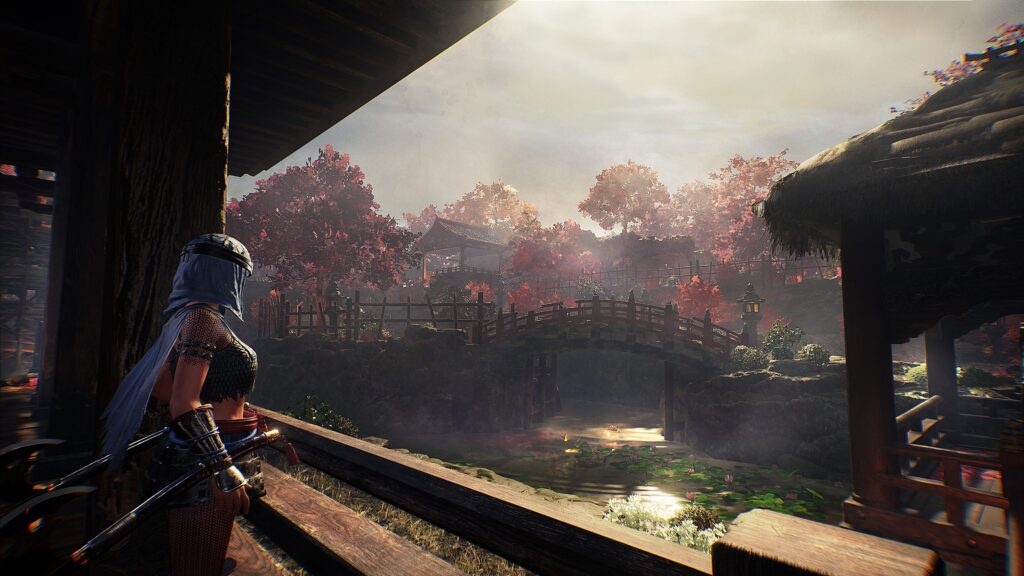
More ways to do that and familiarize yourself with the Samurai and Ninja stances, and the potential variety that comes with it is always welcome in our book. It could mean an easier path to completion for players who might be balancing real life against a gameplay loop designed to keep them coming back for more. And speaking of completion, we believe that the open field in Nioh 3 could work wonders for its story.
A Personal Narrative
Team Ninja might have had a reputation for putting its stories on the back burner to focus on the action in titles like Nioh 2, but after Rise of the Ronin, we’re cautiously optimistic that Nioh 3 might be a pleasant surprise on that front. We know that it’s already quite personal for your protagonist as they seek to ascend to the position of Shogun despite their younger brother betraying them and channelling the power of yokai to do so.
The open-field lends itself to this story, making the entire map your future kingdom and lending a layer of authenticity to the story. In that sense, every activity in the world reflects your goal as the story’s hero, as you’re literally fighting for your kingdom whilst earning your place in it from the ground up. If things turn out as well as we hope they’re going to, the open field in Nioh 3 could feel like a place that should feel like home but isn’t, thanks to the machinations of the game’s antagonists.
That makes the world feel less like dressing for the gameplay loop and more like the beating heart of the story that Team Ninja is trying to tell. Exploring it isn’t just about clearing out enemy presences and collecting cool gear. Instead, it’s a fight to protect the land you’ve been entrusted with against those who clearly intend to bring harm to it and its people.
A Bold New Direction
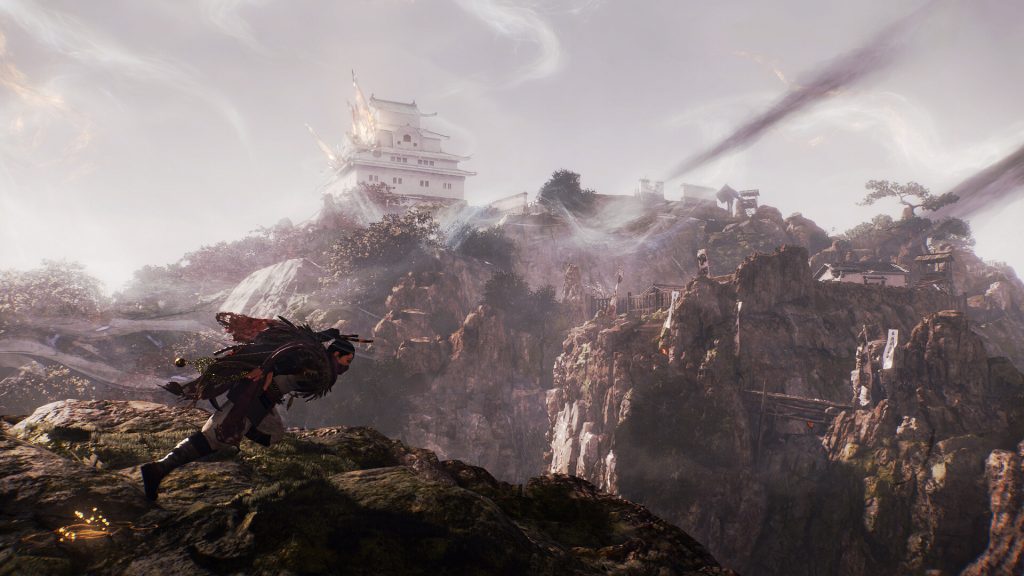
The new approach to Nioh is a welcome step that does take inspiration from titles like Elden Ring, but does so in a manner that’s true to the franchise’s roots, making it feel familiar and personal in ways that matter. From what we’ve seen so far, Nioh 3’s open-field is a flag-bearer for its vision, blending the franchise’s signature difficulty with a design that gives us more of what it does best.
It’s a sublime approach and is one that brings all of the developer’s past innovation to a single destination that could allow the game to stand out in a genre that’s been getting quite crowded lately. It is the culmination of years of solid games, and a true evolution of the franchise and the perfect stage for all of its ambitions to play out.
Note: The views expressed in this article are those of the author and do not necessarily represent the views of, and should not be attributed to, GamingBolt as an organization.