







You’ve likely been paying attention to the storm that NVIDIA currently finds itself at the center of, with the latest version of its DLSS tech coming under heavy fire from certain corners of the gaming world, while others have risen to defend its utility in the process. It’s quite an interesting debate, and one that raises several important points that we believe are worth discussing.
Well, that’s just what we’re here to do as we dive in to what’s good and what’s not about DLSS 5’s AI-powered upscaling abilities, and give you our opinion on whether the latest iteration of a feature that’s been around for a while is going to take away the autonomy of developers who use it.
We’re looking beyond the memes and mockery on what was supposed to be a major leap in graphics for modern games, but instead devolved into a PR disaster that NVIDIA would rather have avoided. But as things stand, the company could have done better to introduce it in a way that didn’t automatically cause derision and distrust. How, you ask? Join us and find out.
The Basics
Let’s get done with the basics first. In this section we will talking about what we know about the situation, gamers’ reaction and Nvdia’s response. So, what is DLSS5? An abbreviation for deep learning super sampling, DLSS 5 is merely the latest iteration of NVIDIA’s real-time neural rendering model that’s quite handy when it comes to enhancing lighting and materials in games. It reportedly includes a suite of controls that make things easier for developers to ensure that a game’s artistic vision is properly implemented, allowing for artists to decide on important parameters in the scenes they are trying to create.
It’s the artists who ultimately decide where and how it’s applied, and it isn’t being pitched as a one-click beauty filter as many of us have been led to believe by the outrage over its implementation in showcases.
With that out of the way, let’s dive into the heart of the controversy: reports that DLSS 5 is trying to override developers and artist’s vision for the games they work hard to create.
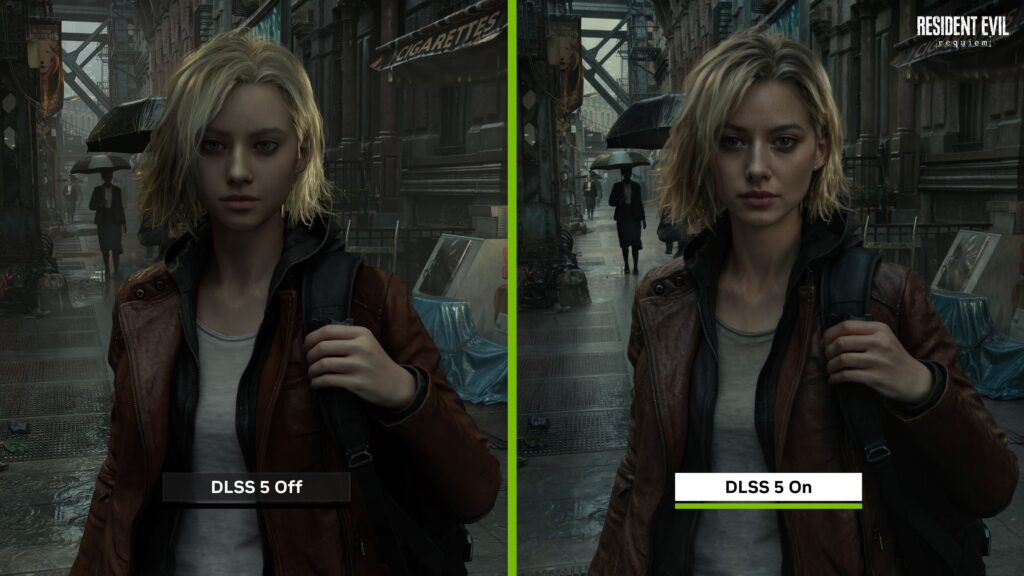
It’s crucial to address why DLSS 5 has gamers worried about the new tech. Some believe that the tech is going to be forced into modern games against the wishes and visions of their creators. That’s apparently not the case, and NVIDIA has been quick to try addressing that particular facet of the conversation.
It has since clarified that it is the studios who retain control over its implementation, a position further reinforced by a supporting assertion from Bethesda who have since argued in favor of it. It’s going to be under the control of artists and creators, and completely optional for players. That’s all well and good, but what has caused the tech’s reveal to draw the ire of such a huge chunk of the gaming community?
Well, that might be on NVIDIA, and it’s decision to showcase the tech in action on games that were already widely known and recognizable by the public. Take the widely circulating photo of Grace in Resident Evil Requiem, for instance. We must admit she did look quite different from her appearance in the game, and the same can be said for showcases in other games like Starfield and Hogwarts Legacy.
The adverse reactions to DLSS 5 didn’t come from abstract white papers on what the tech could do, or related SDK documentations. They came from noticeable shifts to lighting, faces, and tone in games that they knew and loved, their emotional bonds to their experiences coming into conversation with worries about AI and its implementations in modern gaming. It came across wrong, looking more like AI-fuelled restyling rather than developer-focused enhancement.
In its eagerness to show off just how good DLSS 5 could be, and the advantage it would give developers as they made new titles, NVIDIA failed to duly consider an important facet of keeping its fan base engaged: trust.
NVIDIA’s fervor to unveil a piece of tech that probably comes with benefits (which by the way isn’t clear yet) failed to properly address concerns that are rooted in a deep mistrust of AI, and its documented impact on development processes in video games.
In a world where layoffs due to AI implementations already have people on edge, the question of whether audiences can trust neural rendering software to serve the vision of its developers comes into play, and it’s one that NVIDIA should have accounted for. Previous iterations of DLSS haven’t whipped up a debate as fierce as this one, after all, even though there have been conversations about upscaling, frame generation, and ghosting in the past.
Somehow, DLSS 5 has raised the issue of aesthetic ownership, and has made players wonder about how the tech could gradually reshape games into experiences that are far removed from what they were originally intended to be. And the tech’s rollout might have just made things worse.
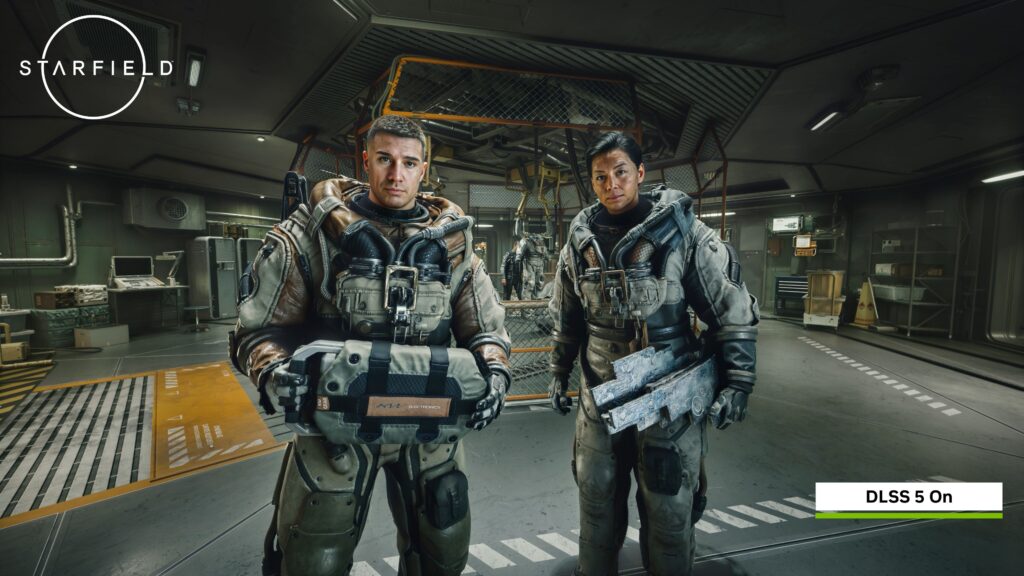
We’ve already spoken about how showcasing it in games that players were already familiar with invited ridicule and criticism. Those before and after comparisons are all over the internet now, and it’s easy to see why there would be concerns about the tech overriding what a studio originally intended for a game.
NVIDIA’s no-holds-barred approach to defending the tech is another factor. While they can probably see where they were coming from in his assertion that the criticisms levelled against DLSS 5 were “completely wrong”, but from a personal, more emotional note, their arguments conveyed a dismissive attitude towards what players believed were valid points they were making against a feature that they believed would take value away from the games DLSS 5 was meant to enhance.
It’s a good idea to look deeper at both sides of this argument at this junction.
The Two Sides
Let’s start with what DLSS 5’s critics are saying about it. These are all valid complaints, starting with concerns about the tech homogenizing different games across genres, giving them an AI-powered look that could be seen as a way to impose NVIDIA’s own ideas about how a game should look over the artistic visions of the studios that create them.
In the case of Grace from Requiem, the tech seemed to completely change her look, giving her a sort of “exaggerated” glow-up that seemed far removed from her look in the actual game. It further reinforced fears that the tech could make games look like what NVIDIA dictated they should look like considering that it owns the software.
Nvidia’s defense might not have addressed those fears satisfactorily enough, but the reports that it was a controllable and deterministic tool that was going to operate off of a game’s own 3D framework shows that DLSS 5 is far more than a sort of black-box beautification filter,
It’s more of a way to grant developers generative control at the geometrical level as opposed to a post-processing filter that operates on the frame level. However, all of these important nuggets that lend credence to Nvidia’s defense have been overridden by their apparent blunt dismissal of valid concerns.
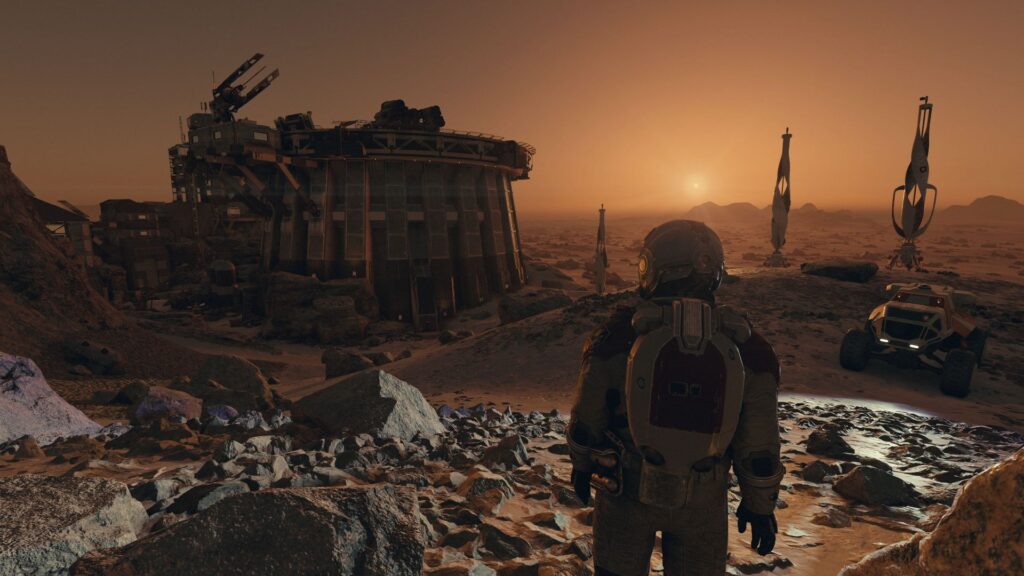
Bethesda, who took on a more placatory position, by asserting that the tech was still in its early stages while also reiterating that it was a tool that left control of its implementation completely in the hands of its developers.
In Bethesda’s response to the entire DLSS 5 episode, there was one simple component that stood out. As a studio that has earned the goodwill of its fans over the years (and badwill recently), it seemed far better poised to attempt assuaging their fears. Whether it worked is a different topic altogether.
Which brings us to our own position on the subject.
Striking A Balance
We believe NVIDIA’s demo strategy should have accounted for concerns about AI taking over the creative vision of games that it’s powering, no matter how sensible those concerns were. In failing to do so, it created the situation it now faces.
But that doesn’t mean that reports about the tech taking visual control away from developers shouldn’t be taken as seriously as they have, especially in the light of public statements to the contrary. We’re not saying there’s no reason to be wary, because there absolutely is. The current demos do an absolutely pathetic job of enhancing the games, thereby destroying the art style of those products. On the other hand, let these companies deliver actual real time implementations in games running on retail platforms first. We’ll be in a much better position to judge the results then.
And the whole thing needed a bit of nuance from Nvidia. Is it that hard, Nvidia? The tech exists, and reportedly it’s quite flexible as things stand. The onus is now on NVIDIA to ensure that its true potential comes across in a way that’s able to convince us gamers, and the best way to do that is to show us what it looks like when it’s fully utilized by talented studios in the final release build of an excellent game, rather than static moving screens which look like AI face filters.
Note: The views expressed in this article are those of the author and do not necessarily represent the views of, and should not be attributed to, GamingBolt as an organization.