
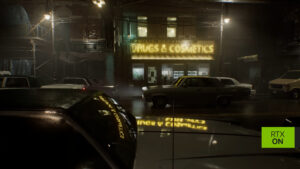
The new trailer with RTX enabled showed off enhanced path traced lighting for scenes that were revealed in another trailer earlier this week.

Players who pre-purchase or subscribe to PC Game Pass can experience all these features in the upcoming open beta on August 6th.

The newest iteration of the technology makes use of improved models that can offer better visuals and performance thanks to DLSS 4.5.
Eclipse Glow Games has also been in touch with Nvidia for "detailed performance analysis" and received assistance from Tencent.
Capcom's engineers needed a year and a half to finish integrating path tracing into RE Engine, and had to use DLSS Ray Reconstruction.

This one’s definitely up there with the best-looking games, and should perform as well courtesy of Nvidia DLSS 4 support at launch.
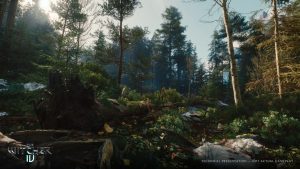
While this doesn't represent actual gameplay from CD Projekt RED's sequel, it is impressive seeing the technology deliver such dense scenes.

Daniel Vávra noted that DLSS 5 might be in its early days for now, but the technology has the potential to replace ray tracing.

NVIDIA hasn't managed to stick the landing as far as its latest iteration of its upscaling tech is concerned, but does that make DLSS 5 as bad as it's been made to sound?
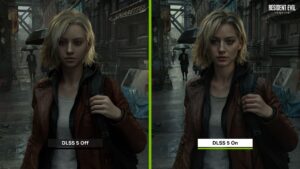
"DLSS 5 is 3D conditioned, 3D guided," said Jensen Huang, noting that it doesn't make changes to any of a given game's geometry.
Nvidia evangelist Jacob Freeman revealed a few more details about the much-maligned DLSS 5 technology in an email interview.
In an analysis video, Mike York spoke about how DLSS 5 was generating entirely new images rather than making improvements to existing ones.
One anonymous Ubisoft developer noted that they learned about DLSS 5 the same time as the rest of the world - with Nvidia's showcase.
"It's not post-processing at the frame level," said Jensen Huang at GTC 2026, "it's generative control at the geometry level."
"The SDK includes things like intensity, color grading and masking off places where the effect shouldn't be applied," said Nvidia.
Despite this issues, many have noted that DLSS 5 seems to have more better utility in improving lighting for environments.
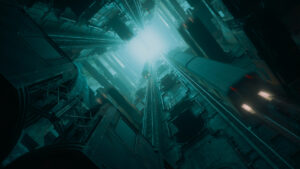
After employing the tech in Alan Wake 2, Remedy is once again employing RTX Mega Geometry to quickly create ray tracing structures.

In its statement, Asus cited miscommunications with PR representatives for the idea that the GPUs were considered end-of-life.

A clear breakdown of Resident Evil Requiem’s confirmed cast so far, plus the rumored returnees and why they’re being discussed.
DLSS 4 will also assist in "boosting frame rates, reducing latency, and enhancing overall image quality" across a range of PCs.