





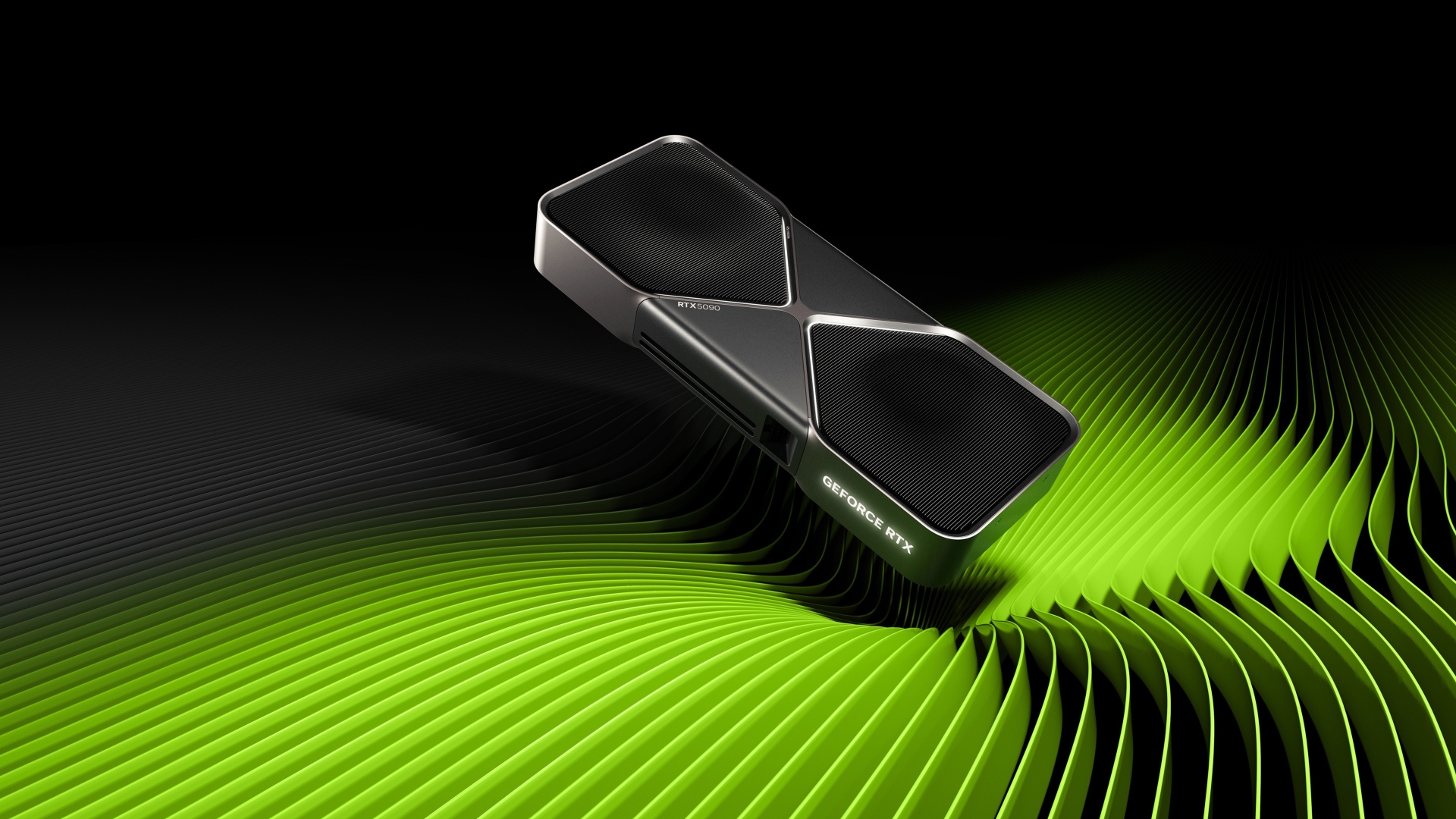
While the Nvidia GeForce RTX 5090 and RTX 5080 were supposed to have been available today, both graphics cards have suffered from severe stock shortages. As caught by IGN, stores have already run out of stock, and scalpers seem to have gotten their hands on a few. An eBay listing reveals prices as high as $6,000 for an RTX 5090.
The GPU is supposed to be priced at $1,999, while the RTX 5080 has a market retail price of $999. The scarcity and scalpers echo the state of the GPU market from the cryptocurrency boom.
Potential buyers for Nvidia’s new graphics cards have also complained about the lack of stocks on the company’s forums. Some claim to have seen GPUs available for 30 seconds before they sold out.
The fact that Nvidia’s latest high-end graphics cards shipped in such low stocks should come as no surprise – companies, including MSI, reportedly warned potential buyers earlier this week. Retailers like Overclockers UK indicated that they had only single-digit stocks of the RTX 5090 and triple-digit stocks of the RTX 5080.
“We are expecting greater demand than 40 series, but with the launch just before CNY and lots of other rumours circulating, initial waves of supply are poor and will probably take some time to build up,” posted Overclockers UK staff member Gibbo on the company’s forums. “So the stock we have will be made available from the launch via the webshop, but I know what we have is likely to last only seconds, minutes at most.”
The cause for these stock shortages is likely due to lower processor yields for Nvidia when it began manufacturing the new Blackwell-based GPUs. According to earlier reports, Nvidia CEO Jensen Huang cited a design flaw in Blackwell, resulting in lower yields.
The GeForce RTX 5090 and RTX 5080 were both unveiled during CES 2025 earlier this month alongside the RTX 5070 and RTX 5070 Ti. The former is the highest-end GPU currently offered by Nvidia, with 32 GB of GDDR7 VRAM, a memory bandwidth of 1,792 GB/sec, 21,760 CUDA cores, 680 fifth-generation Tensor cores, and 170 fourth-generation ray tracing cores.
The RTX 5080 is a slight downgrade, with 16 GB of GDDR7 VRAM, and 960 GB/sec memory bandwidth. The GPU is marketed to stand over the mid-range RTX 5070 and RTX 5070 Ti, however, which feature 16 GB and 12GB of GDDR7 VRAM.
The release of both GPUs is joined by the launch of DLSS 4, which brings with it new features like multi-frame generation and a new transformer-based model.
Nvidia’s closest competitor, AMD, also unveiled new graphics cards – the Radeon RX 9060, RX 9060 XT, RX 9070, and RX 9070 XT – but they’re meant to target the mid-range market.