





From taking on grunts, monstrous demons, or fellow samurai whose skills rival your own, every strike on Onimusha: Way of the Sword feels like it matters, be it one you attempt, or one that your enemy tries to land. We say tries because you’re encouraged to stay within striking range to either parry or deflect the latter since each gives you buffs that fuel your aggression. It’s a heady mix that has you pulling off superhuman feats with style, or failing so spectacularly you can’t help but grin and take the loss.
It extends beyond the visual fidelity and stylized violence to gameplay systems that bring audiovisual feedback, enemy reactions, and mechanical rewards to lend an impact to every move you make in a combat loop where those decisions are often made quickly on the fly.
Does it feel too good to be true? We can’t honestly say it doesn’t, and there are a few concerns along the way in this one. But let’s begin with what we like.
Building on Inspirations
It’s easy to compare anything with a good parry system to Sekiro and fail to see unique additions that it brings to the table. Beast of Reincarnation’s facing the same situation, but Way of the Sword is certainly a lot more than a parry-based combat loop. It’s one where your blocking technique could set up the next few moves in a fluid combo that you build on the fly, responding to your enemies with speed and precision.
You could opt to just block and attack and get some basic protection against a light attacks, or try to parry that attack to create an opening for some serious damage thanks to Musashi’s sword getting a temporary damage buff when you pull one off. Deflect that attack, and you’re directly draining your enemy’s stamina, slowly chipping away at their composure before you open them up for devastating finishing blows.
Of course, Issen counters are where you risk it all, allowing you to get in some devastating damage at the cost of a very tight timing window that needs you to know precisely when to use it in a tough fight. We often found ourselves saving them for the very last chunk of a hard encounter, bringing it out as a means to ensure a victory that might otherwise be out of reach.
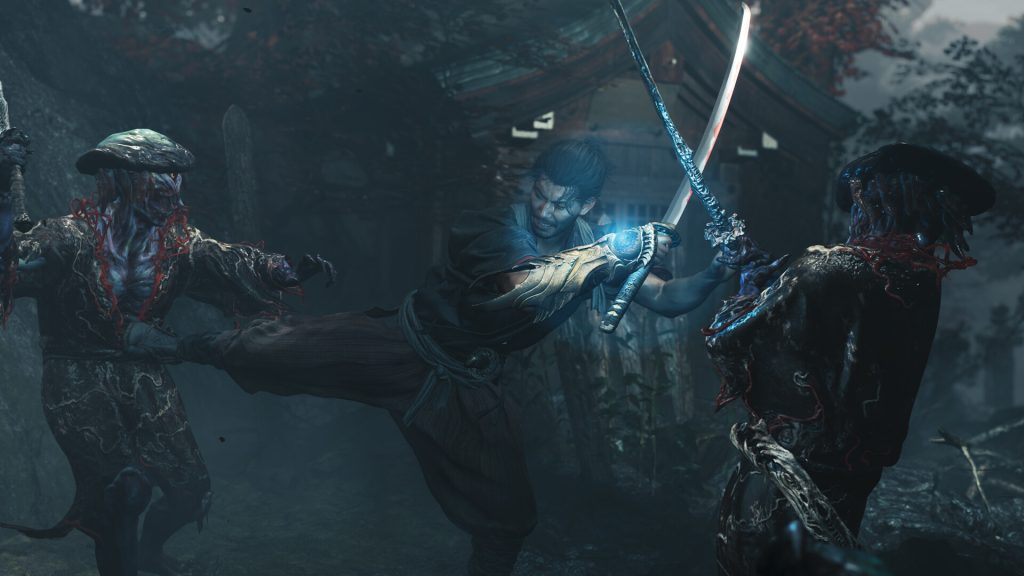
But their presence, amid all the other options you have at your disposal in response to any enemy taking a swing at you is quite exciting, and a great way of using defence more creatively than just waiting for the right moment to parry. Of course, the shared health and stamina system is another parallel that does work similarly, making each fight into a personal duel where Musashi wears a foe down to unleash a Break Issen.
Of course, he’s also vulnerable to low stamina, so you’re on your guard, strategically using your defensive options in an approach where you’re encouraged to take the fight to your enemies, but use each blow to your advantage no matter who among you is throwing it. That’s a combat loop that immediately differentiates itself while being immensely challenging and satisfying. Just the moment where a dramatic pause and camera angle accompany a well-executed Break Issen is a reward on its own, but the standard counter’s high-risk, high-reward potential in a fight made it so darn rewarding to execute correctly.
It made reading enemy attacks and responding to them become a natural part of how we were approaching combat encounters, the mechanic helping to bring the other systems into the loop with ease. It’s encouraged defensive mastery by being a defining part of the series since Warlords, after all. If you’re the type who likes to stand their ground and repel attacks instead of constantly striking and retreating, this one’s an absolute treat.
It’s in how a good defence that blends parries and reflects directly feeds your offence, making Musashi a very dangerous protagonist once you allowed him to read his enemy’s moves and respond accordingly. Defensive moves, when managed correctly, could leave you with a damage buff facing an enemy who was totally open to your most devastating attacks. Of course, that’s as good a place as any to throw in Oni Powers, which use absorbed souls to power attacks that break through enemy defenses or ones that add explosive movements that you can then use to great effect.
Of course, even downing an enemy leaves you with ways to control the next few moments of a fight, giving you a choice of where to strike for more damage or extra health or souls. It’s a system where the fight happens in your hands and in your mind, and it’s a lovely interpretation of a samurai using a demonic arm to survive intense battles. However, it’s time to dive into those concerns we mentioned.
Conflict Everlasting
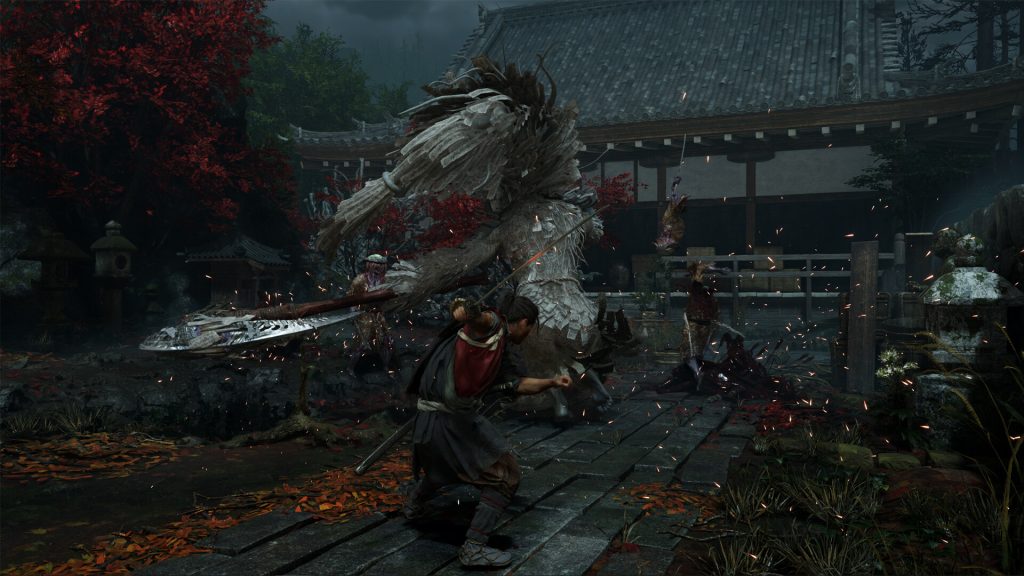
While the enemies we’ve seen so far in Way of the Sword have certainly been a test of our brains and brawn, it’s that very challenge that has us worried if every foe we’re yet to face can manage to find ways to keep us on our toes. It’s easy to see ourselves coming back to this area with enough new skills and better gear to make decimating these hapless opponents be an activity that would be high on fun, but low on the glory befitting a samurai such as Musashi.
In an ironic twist of fate that the franchise is no stranger to, it’s the enemies Musashi is scheduled to mow down who are going to determine just how much his character’s skills blossom as the adventure wears on. They’re going to have to force him to use every tool at his disposal, pushing him into desperate encounters where even a single miscalculation of a case of abd timing can shift the favor of the fight in one direction or the other.
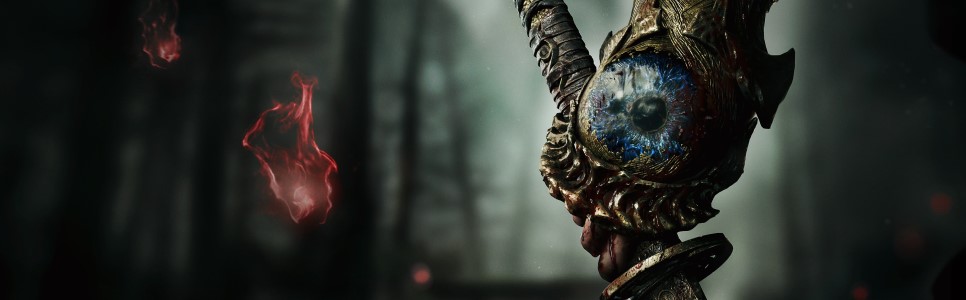
We’ve already seen a foe wielding a weapon that grows more powerful the more of Musashi’s blood it tastes, and having such a foe in what’s likely an early section of the game indicates that there are other ways that our hero’s foes are going to try messing with his groove. But it could also mean that there isn’t too much variation in boss mechanics, with each one affecting one crucial system or the other in ways that might quickly become predictable. Indeed, predictability is probably the enemy we’d say poses the biggest threats in Musashi’s fight.
Every instance of a drawn blade often felt like it could end badly, we worry whether enough upgrades are going to deepen the mechanics instead of overpowering the challenge that’s on offer. Enemy variety is certainly a factor in that equation, and of course, using that variety to force unique ways to use the systems on offer to make Musashi’s responses feel fluid and unique to the unfolding situation.
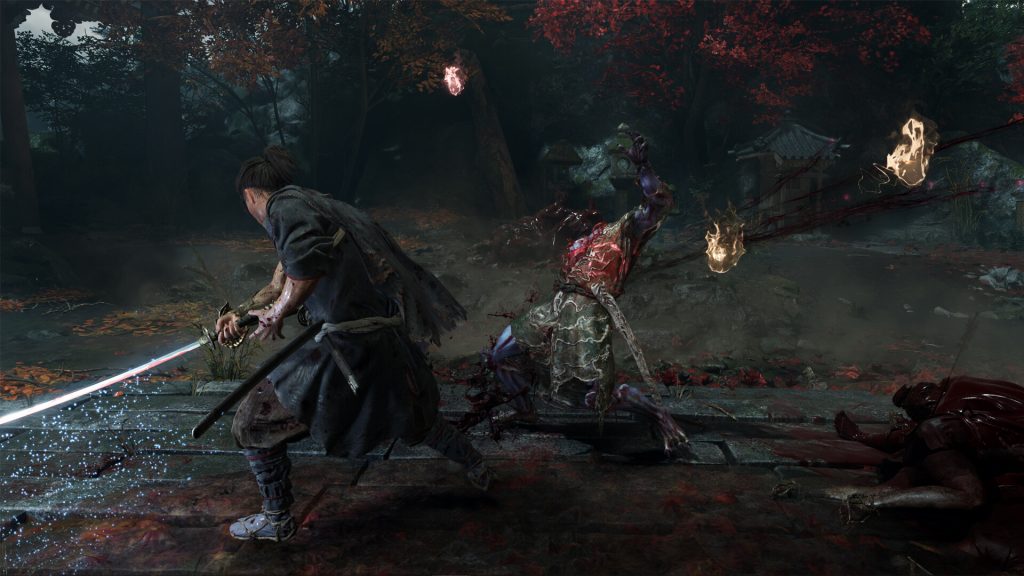
But has Way of the Sword set expectations a tad too high? Can every encounter in the game offer the same weight and intensity we’ve seen in that curated gameplay segment? Are advanced capabilities going to complement the ISsen system instead of trivializing it? We’re going to have to wait and see if the full release is able to give us satisfactory answers to these questions. But of course, what we’ve seen is evidence that there is certainly a lot of potential on offer.
Way of the Sword seems to recognize that it doesn’t need to have the largest moveset of 2026, overwhelming players with combos to learn and forget while they rely on the basics on easy difficulties to experience the story. Instead, it expands the utility of a focused set of actions, making each outcome you’re aiming for feel earned, distinct, consequential, and, most of all, spectacular. Your every move strengthens your blade, upsets your enemy’s balance, or takes a bold risk for the ultimate payoff.
Making those choices is a part of what makes Way of the Sword feel like it’s a combat loop that’s going to keep feeding itself, bringing depth to its systems the more we get to engage with it. Something this good does come of crashing and burning because it flew too close to the sun, but if it’s able to sustain itself at the lofty heights the slice of it we’ve seen manages, this upcoming title could reawaken a dormant franchise in a year where it’s already dropped some legitimate hits.
Musashi might be the icing on a cake that has already given us a lot of modern gaming’s best flavors, although the rewards in his adventure are going to need some work on your part. We believe it’s all going to be worth it, though, and that Way of the Sword is going to stand out despite Phantom Blade Zero, Beast of Reincarnation, and Mortal Shell 2 putting up a competitive fight.
Note: The views expressed in this article are those of the author and do not necessarily represent the views of, and should not be attributed to, GamingBolt as an organization.