




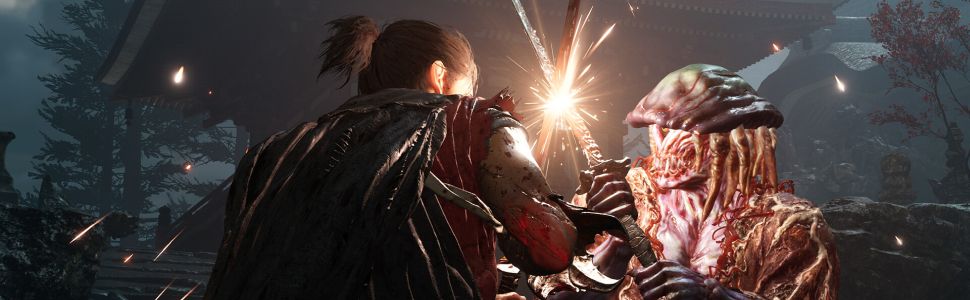
It’s so easy to forget just how brutal Onimusha could get if you hadn’t had the privilege of dealing with the franchise’s past entries. They were difficult romps that needed you to pace yourself and make good use of limited supplies, a facet of what they offered that drew a few fairly justified Resident Evil but with samurai and demons comparisons.
But they’re also noteworthy thanks to being very unafraid to try new ideas, be it with the story or gameplay, to make each title stand out. That’s definitely among the reasons Onimusha continues to command respect even though it’s coming back from two decades of dormancy, with a brand new protagonist in tow.
Of course, you already know that Miyamoto Musashi is definitely an entertaining protagonist, and is also one hell of a swordsman. But what makes his blade sing out so well that it’s a song we keep humming to ourselves when we’re not steering it into the innards of Genma with our controllers? Why do we keep thinking about our last few fights, and what we might have done differently to make a well-earned victory seem more stylish?
We’re diving into all of that and more, so draw your blades and let’s start swinging.
A Capable Warrior
It’s a good idea to begin with the tools Musashi has at his disposal in case you’re here after a little time with the demo and not enough with the full release. If you thought things were easy in the demo, know that it was a slice of the game meant to get you leaning into the various mechanics before the full depth of the combat system opens itself up to you. Of course, that also means that the full force of your foes also gets unleashed, but we’re going to talk about Musashi first.
It’s a stroke of narrative genius to frame him as a samurai on the path to mastery of the blade, since that’s exactly what you’re encouraged to do in Way of the Sword. Your katana isn’t just a deadly tool for killing, but an extension of your fighting philosophy, and a brush with which you paint gruesome yet morbidly beautiful pictures. There’s a lot of potential for player expression, and it begins with the emphasis on using your defensive options as well as you swing your blade.
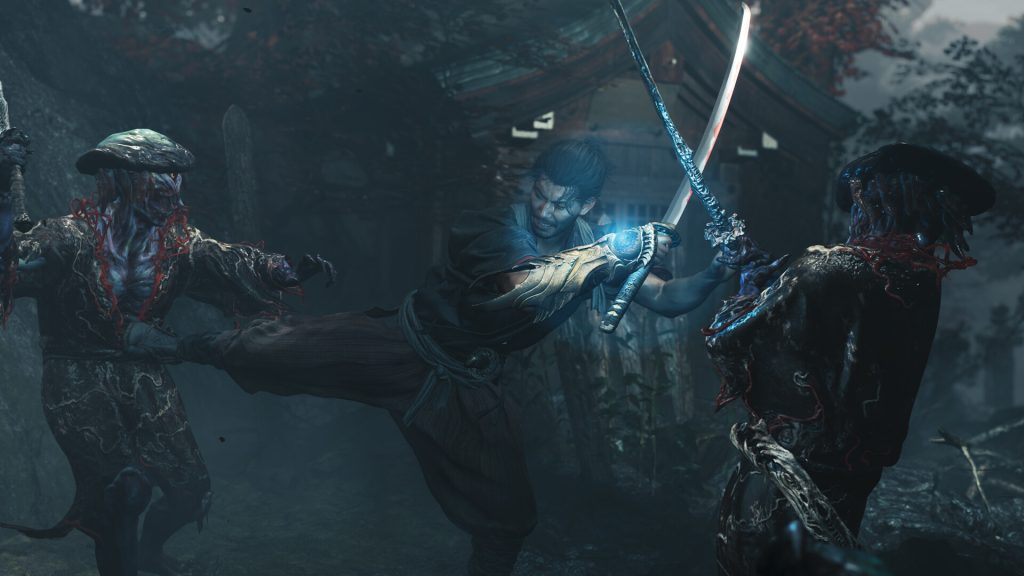
It’s very satisfying to see a narrative justification work so well to sell the mechanical emphasis on a flow state between attacking and avoiding enemy attacks, and Way of the Sword makes Musashi’s search for mastery a pillar of its combat. It requires nothing but the best swordplay you can produce in any given moment. The intersectionality between its mechanics is a means to produce a spectacle in which you weave between attacks while slicing away at enemies, crossing blades with your enemy with intent instead of merely going through the motions of a simpler combat system.
That Musashi himself is at the center of it all is a huge plus that makes each fight one in which taking even a little damage feels personal. You’re immediately spurred on to see how you could have responded better to it, which then brings a very addictive loop of learning enemy attacks, and then making those moves instinctive in a fight. You know, like training to wield a sword, which is something the man you’re playing has clearly done for a significant part of his life.
Of course, a plethora of options are given to you, but with precision behind their utility and excellent enemy variety thrown into the mix, using it all in the heat of battle becomes a flurry of swings, slashes, dodges, and attacks that soon becomes a medley that you’re just making up as you go along. Think of it as picking up a sick-looking guitar and learning how to play it before you’re just belting out solos to an audience that’s just you. Way of the Sword demands the same dedication of you, and the rewards are just as satisfying to earn.
It isn’t a title that wants you to survive the battles it makes you fight. It wants you to absolutely dominate them. Musashi’s serious about getting better with his sword, and the way that the sentiment is naturally embodied in the fluid combat animations he pulls off is among our favorite parts of playing him. Attack animations cancel into dodges or parries so naturally, while enemy attacks are so readable, responding to them feels like an instinctive effect instead of a calculated button press.
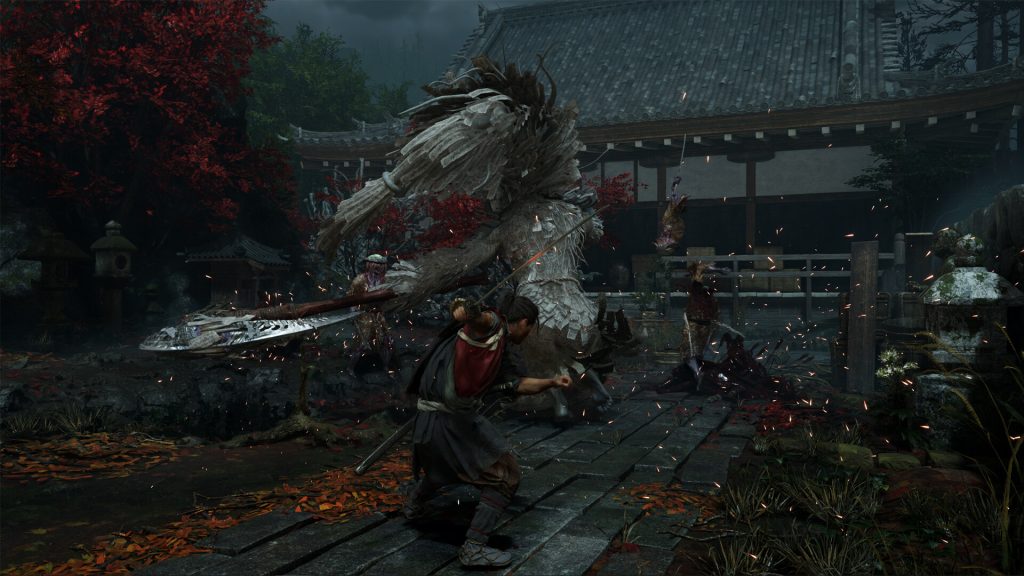
You immediately feel like he’s a warrior who’s kept up with his training, and he’s capable of the speed and precision that the Genma he faces down demands of him, Gauntlet notwithstanding. It’s almost like the game’s systems are doing all they can to encourage you to study your opponent and strive for perfection just as Musashi does.
An enemy attack that you haven’t faced yet is merely an opportunity to get better at a mechanic or two, weaving them into your strategy as you familiarize yourself with a new set of attack patterns, strengths to counter, and weaknesses to exploit. A new fight means you block an attack the first time, your mind already thinking about the perfect moment to trigger a parry or deflect the next time the same attack comes your way before you face it a few times and make an Issen Counter muscle memory.
It’s a combat system that gets you to embody the warrior you’re controlling, making you think tactically and do it fast in situations where split-second decisions can make or break your effort to tear through an opponent’s defences, or perhaps have the tables turned on you if you happen to decide poorly. It makes every fight immediately feel like the stakes are higher for Musashi simply because it isn’t enough to merely wield your blade. Instead, you need to make it an extension of yourself, and your fighting style.
The bow you eventually get becomes another valuable tool in your arsenal, as it can be used to interrupt attacks that are giving you trouble, and perhaps even hit weak points in case you can’t reach them otherwise. It quickly becomes a tool that you use instinctively rather than something you remember to pull out from time to time. It’s a showcase of how Musashi gets many options to bolster his implacable determination to be the best fighter in the land, dealing quite ruthlessly with Genma who wants nothing more than to bring his effort to a premature end.
Worthy Adversaries
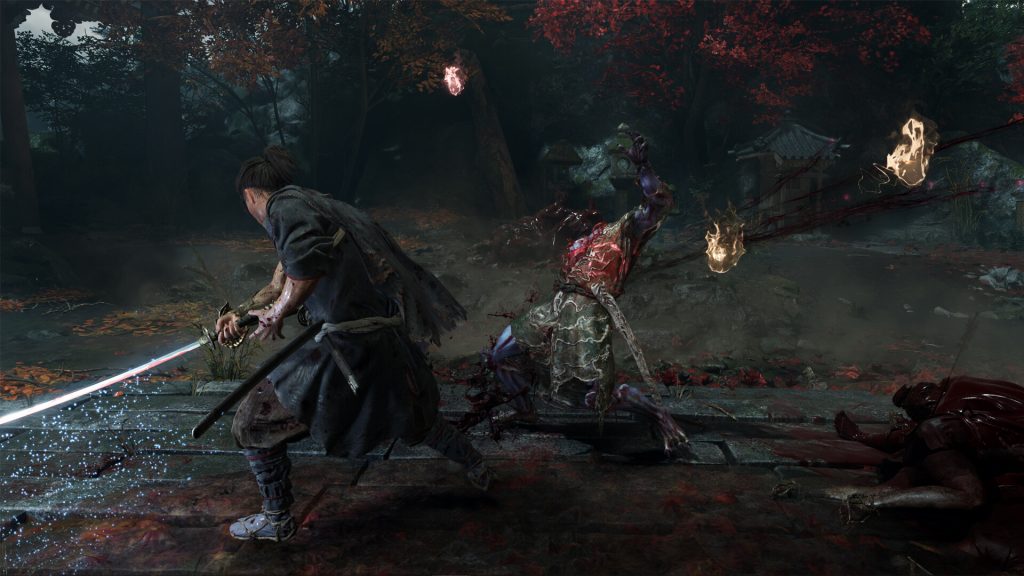
Other options like your Break and Reflex Gauges are also at your disposal, and they’re important because they present an interesting undercurrent to the game’s combat system when considered as a part of a bigger picture: it doesn’t want you falling into familiar patterns of attacking and defending, something that can become all too easy in a game like this. And it manages to achieve that goal by using a very important part of the fight: the foes you’re facing.
We’ve already talked about the enemy variety on offer, but it’s equally important to think about how each of those foes comes with unique strengths, weaknesses, and several attack animations for you to remember and learn to respond to in the heat of the fight. They vary those attacks very well, and we’d say the enemy AI is a very important part of what makes this one’s combat as enjoyable as it is.
Let’s also consider that the game throws different combinations of them at you quite consistently, and having to keep track of them all might seem impossible. However, you must remember that this is a combat system that wants to make responding to those attacks feel like it’s second nature to Musashi, and by extension, you. One of our favorite parts of making progress in the game was how taking on an enemy that might have given you trouble a few hours earlier becomes an almost disdainful exercise in dispatching them with clinical efficiency.
Of course, getting there means hours of careful study, and a lot of trial and error in getting the timings right. But with fights that are so tangibly rewarding when you control their flow, as well as the gameplay benefits that you get from fights well done, getting things right is rewarded so well you can’t help but strive for mastery of your blade and knowledge of your foes so you can wield it against them with the best possible strategies and preparation.
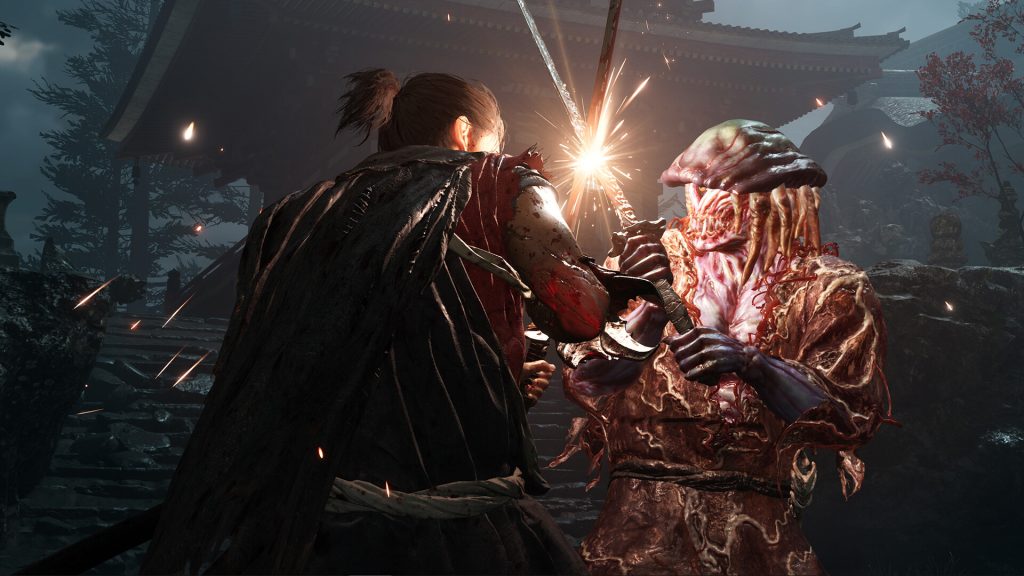
It’s important to remember that you’re also encouraged to vary your own attacks. If you’ve fought the Byakue, you already know that it gets a serious buff when it’s covered in its own blood. We wish we’d realized that our light attacks were hastening that process before it got that boost. We paused and marvelled at the myriad ways with which the game was actively pushing us out of our comfort zone, forcing us to change tactics on the fly as soon as we realized what was happening. That was one example of how the game calls you out if you’re on autopilot, forcing you to sit up and pay attention to the enemy in front of you.
Conversely, it’s both aesthetically and practically rewarding to one who does, as Musashi’s upgrades aren’t just an extension of his abilities. Every one of them, and each of your victories, is a reflection of you, and the journey you’ve undertaken to get there. It’s a clever way to make Musashi’s character arc feel like it’s your own, and we’re here for all of it.
That you can enable combat prompts at will to help with learning enemy moves before you feel confident enough to take them is evidence that Way of the Sword wants you to learn every enemy and its moves, and unleash the full force of your skills with the creative liberty its systems offer you. Done right, the visual spectacle of a swordsman tearing through enemies while their blades or claws whiz past him almost as if his very aura deflects their attacks is a reward in and of itself.
It all comes to a head with every boss you meet, the fight soon becoming akin to a song that you’re writing on the fly, your fingers flying away on your controller as if you’re performing a particularly challenging solo, while Musashi lets the magic unfold on the stage. The satisfaction isn’t from bringing those fearsome foes down to zero health. Instead, it’s about making that battle feel like a showcase of your own style, and the skill that Musashi lives and breathes for as he takes on the role of an Onimusha.
A Deadly Dance
At its heart, Onimusha: Way of the Sword makes its combat systems force you to embody the very perfection that Musashi strives for by turning it into a crucial pillar of its combat and progression. You’re encouraged to use every move you have, in different ways based on the situation, and against different enemies who come with their own twists for you to keep in mind.
There’s unpredictability and danger baked into every second you’re holding a drawn blade, but also opportunity packed into it all that it feels like the game’s bursting at the seams with a restless energy that comes from facing life and death on the battlefield. It’s only when you’re in danger of dying that you feel the most alive after all. Musashi understands that, and Way of the Sword has a lovely way of hammering the lesson home.
Now excuse us while we go on another Genma-slaying rampage through Edo-era Kyoto.
Note: The views expressed in this article are those of the author and do not necessarily represent the views of, and should not be attributed to, GamingBolt as an organization.